
On the Wye — History & Facts
In the soft embrace of color, a world unfurls, where hues whisper secrets and landscapes come alive with emotion. Look to the left at the gentle flow of the river, its surface a dance of blues and greens that reflect the soft sky above. Notice how the artist employs earthy tones in the foreground, grounding the composition while contrasting against the vibrant palette of the backdrop. Each brushstroke seems deliberate, revealing textures that invite one to trace the curves of the hills and the ripples of the water, forging a connection between viewer and scene. Yet, the emotional depth lies in the contrasts—a tranquil river juxtaposed with the tension of looming clouds, hinting at a storm both literal and metaphorical.
The interplay of light and shadow plays a critical role, crafting a sense of anticipation, as if life in this idyllic setting is on the verge of transformation. The muted tones suggest a moment of reflection, where serenity meets the undercurrent of change, perhaps echoing the artist's own inner landscape. In 1832, David Cox painted this work during a period marked by personal loss and societal upheaval in England. Having established himself as a prominent watercolorist, he was deeply engaged in the Romantic movement, which sought to capture the beauty of nature as well as the emotional responses it evokes.
As he painted On the Wye, Cox embraced a scene that mirrored both his contemplative spirit and the broader artistic shift towards expressing inner feelings through the natural world.
More Artworks by David Cox
Browse all →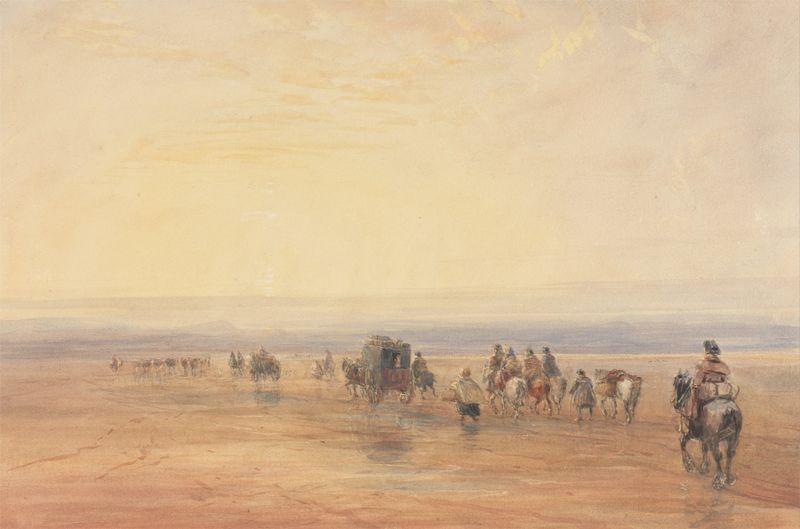
Crossing Lancaster Sands
David Cox
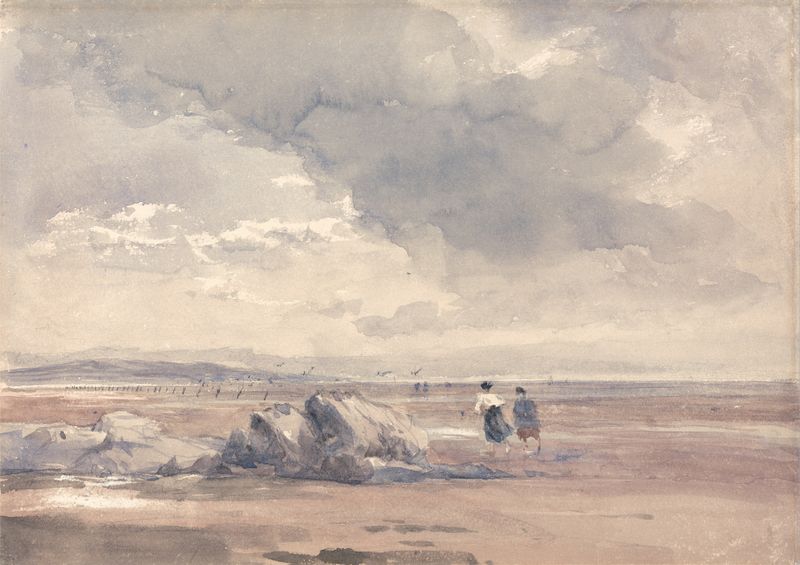
On Lancaster Sands, Low Tide
David Cox

Lincoln Cathedral from Brayford Pool
David Cox

View in Wales
David Cox
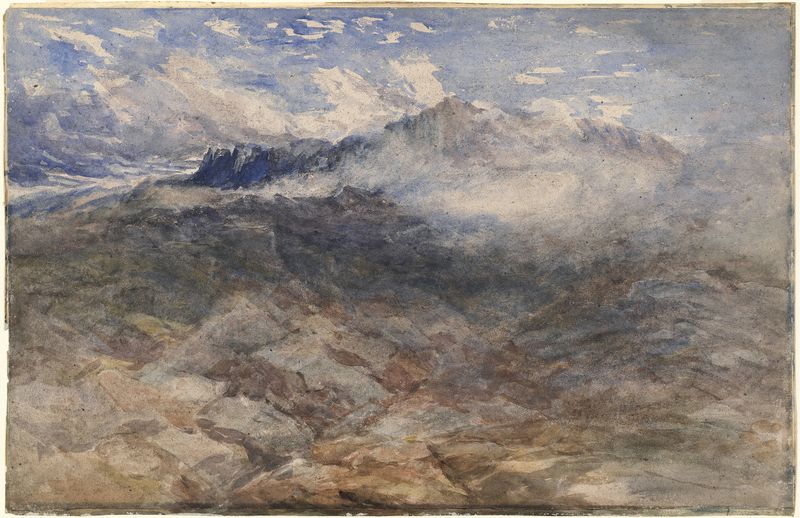
Mountain Heights, Cader Idris
David Cox

Bergen op Zoom
David Cox

Boating Before Lambeth Palace, London
David Cox
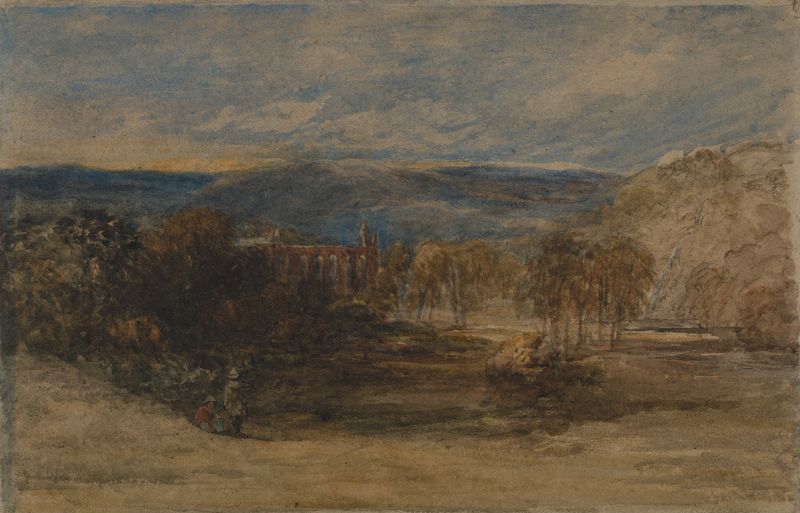
Bolton Abbey
David Cox

London Bridge
David Cox
Westminster from Lambeth
David Cox





