
On White II — History & Facts
Sharp black diagonals and bright shapes burst outward from the middle of a white ground. A thick black zigzag bar runs from the lower left to the upper right, crossing an olive-brown block, a target-like black ring with a red center, and a purple hook-shaped curve. Triangles of yellow, red and orange point in from the edges, and checkerboard squares, small pink dots, fine arcs and a stack of three black bars lie around them.
At the lower center, an ocher triangle carries pale curved marks with red dots. The Centre Pompidou says Wassily Kandinsky was turning increasingly toward geometrical composition after he began teaching at the Bauhaus. It describes the painting as returning faithfully to a watercolor he made in 1922 and as one of his most Suprematist works. In the museum's reading, forms with sharp contours and acute angles are shattered into pieces along diagonal lines by centrifugal forces, and only the violet form curving toward the center seems to resist the movement. The museum says the painting inaugurated a new period and that Kandinsky chose to hang it in the dining room of his Bauhaus apartment in Dessau.
His widow, Nina Kandinsky, gave it to the museum in 1976. It is in the Centre Pompidou in Paris.
More Artworks by Wassily Kandinsky

Improvisation 35
Wassily Kandinsky
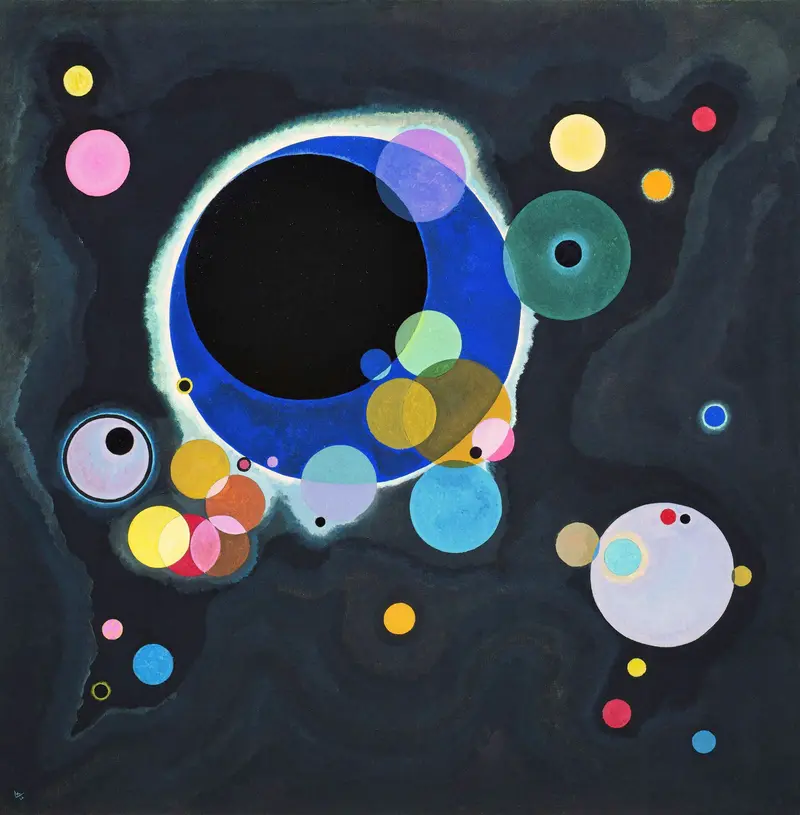
Several Circles
Wassily Kandinsky
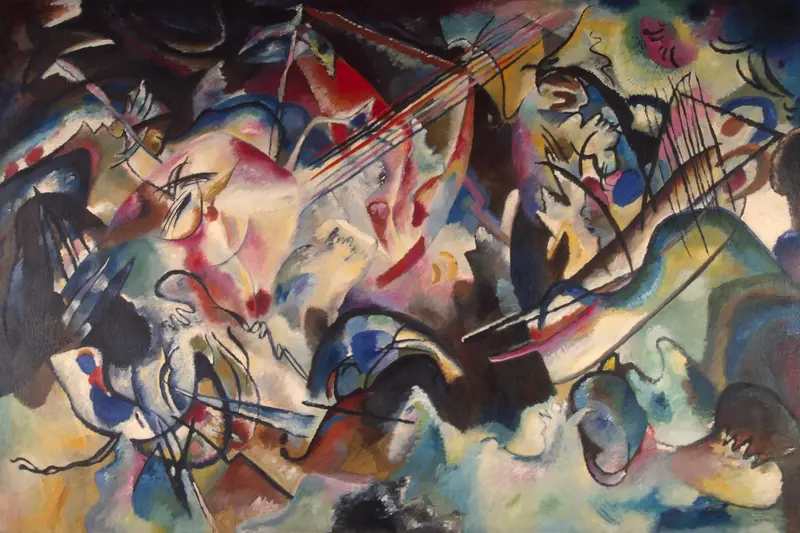
Composition VI
Wassily Kandinsky
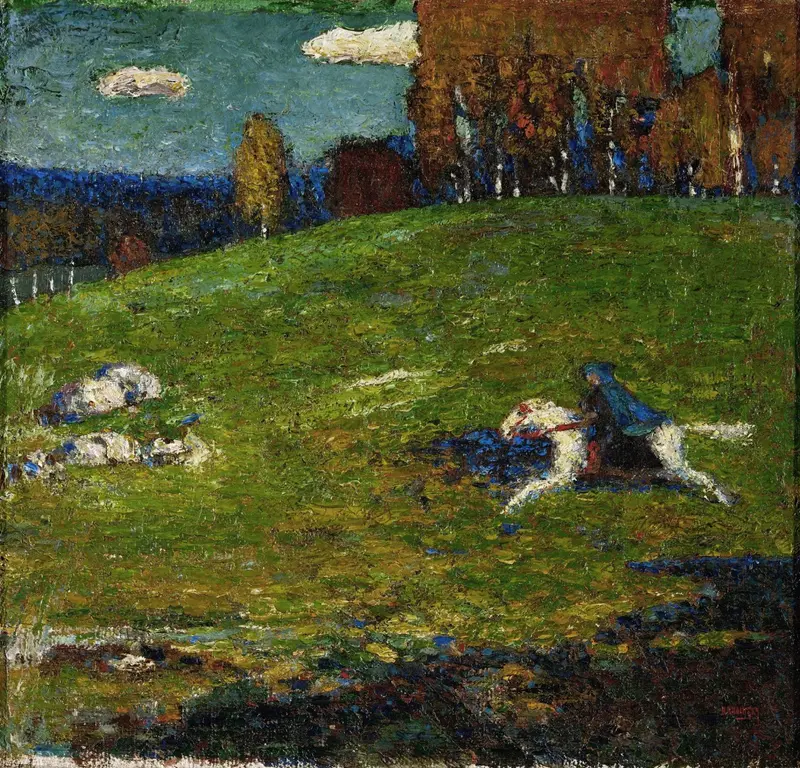
The Blue Rider
Wassily Kandinsky

Murnau
Wassily Kandinsky
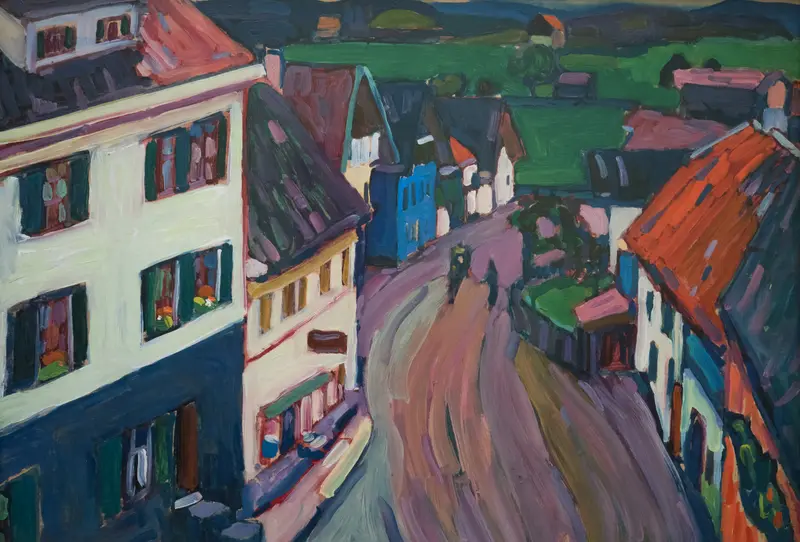
Murnau – View from the window of the Griesbräu
Wassily Kandinsky
Green Lane in Murnau
Wassily Kandinsky
Jocular Sounds
Wassily Kandinsky

Zubovsky Platz
Wassily Kandinsky

Landscape with a yellow field
Wassily Kandinsky




