
Orchards at Louveciennes — History & Facts
What if silence could speak through light? In Orchards at Louveciennes, the soft whispers of nature resonate with a profound stillness, inviting contemplation within the void it portrays. Look to the left at the vibrant hues of green, where the trees stand tall and firm, their branches embracing a gentle breeze. Notice how the light filters through the foliage, casting delicate shadows that dance across the ground. The palette, infused with soft pastels, evokes an atmosphere of tranquility, while the rhythmic brushstrokes create a harmonious composition that reflects the fleeting moments of rural life. Yet, beneath the serene beauty lies a deeper narrative—an exploration of existence within the natural world.
The trees, though robust, seem to symbolize a profound solitude, hinting at the artist’s introspections on isolation and connection. The seemingly empty space, a void filled with potential, invites the viewer to reflect on their own presence within the landscape. It is this contrast between vibrant life and the stillness of the scene that evokes emotional tension, compelling us to search for meaning in the simplicity of the moment. Pissarro painted this piece in 1872 while immersed in the Impressionist movement, seeking a departure from academic traditions.
Living in the countryside near Paris, he captured the beauty of rural life amidst the burgeoning industrialization of the time. This painting exemplifies his commitment to portraying the natural world, reflecting both personal and collective experiences in a period that straddled tradition and modernity.
More Artworks by Camille Pissarro
Browse all →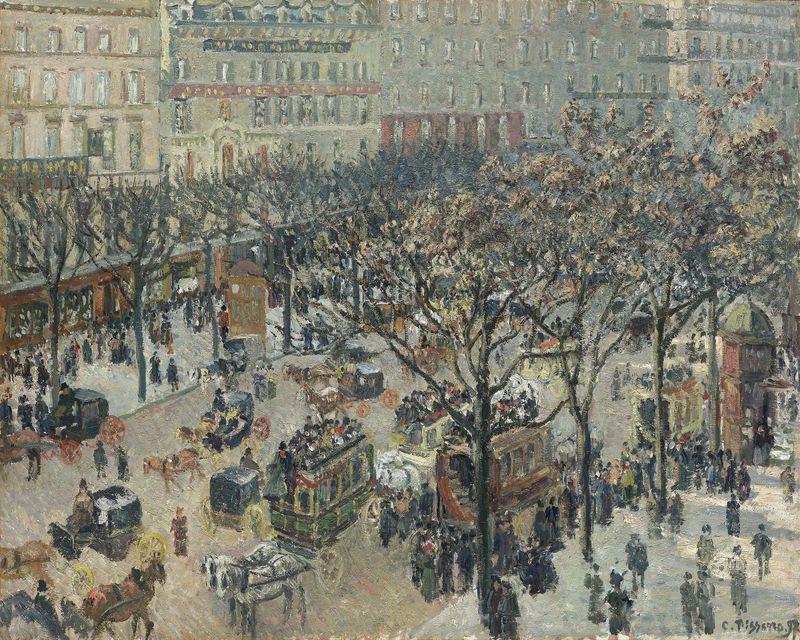
Boulevard des Italiens,Morning_Sunlight
Camille Pissarro
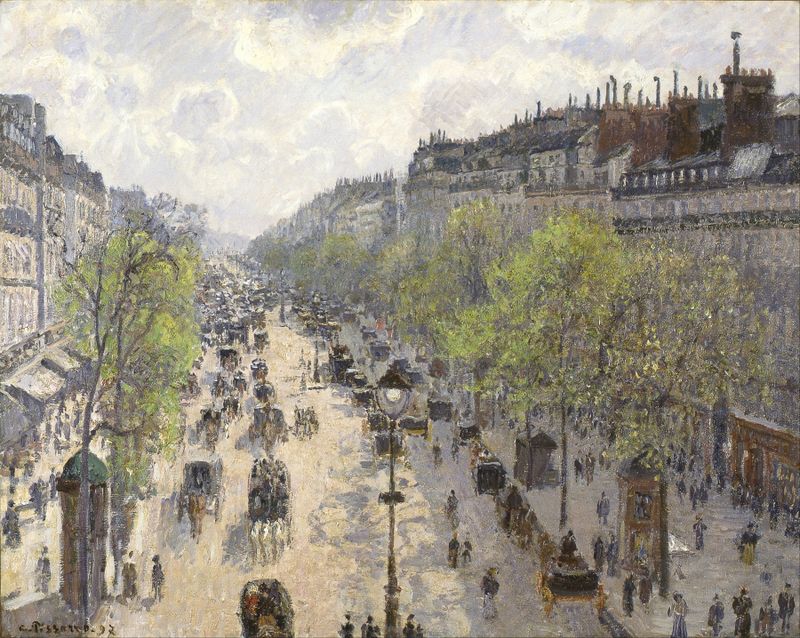
Boulevard Montmartre, Spring
Camille Pissarro
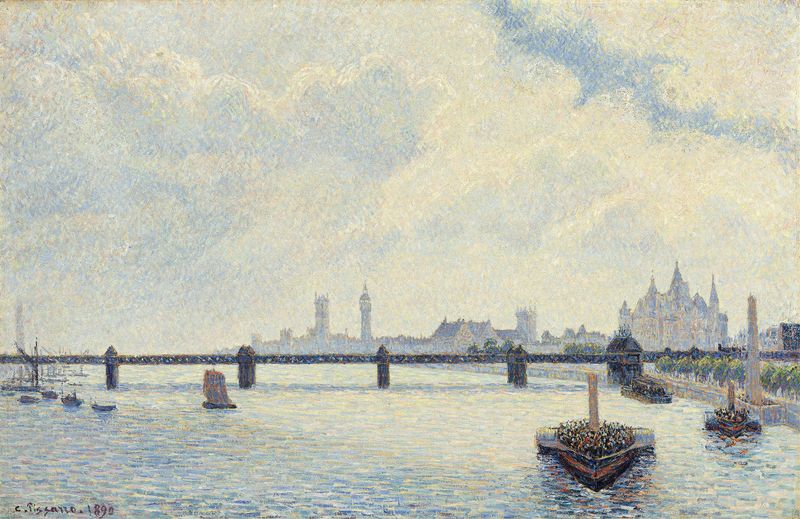
Charing Cross Bridge,London
Camille Pissarro
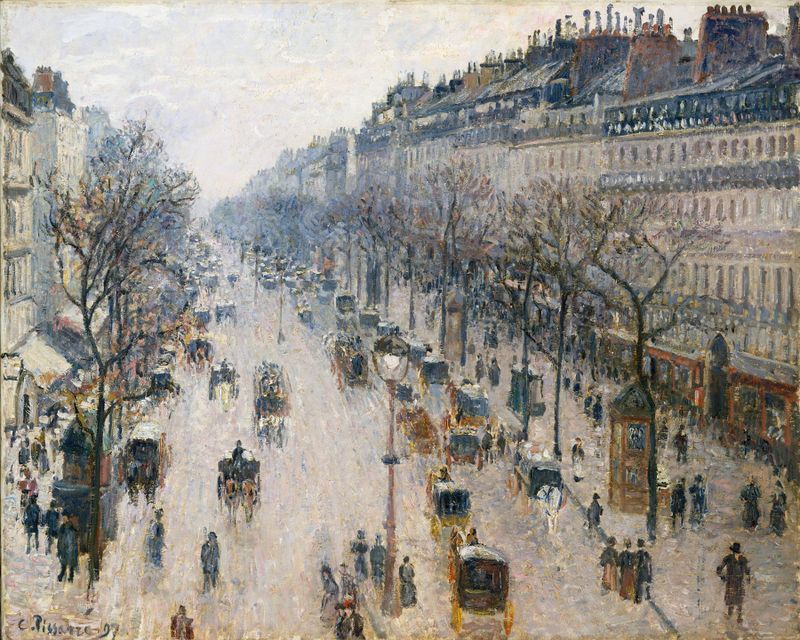
The Boulevard Montmartre on a Winter Morning
Camille Pissarro
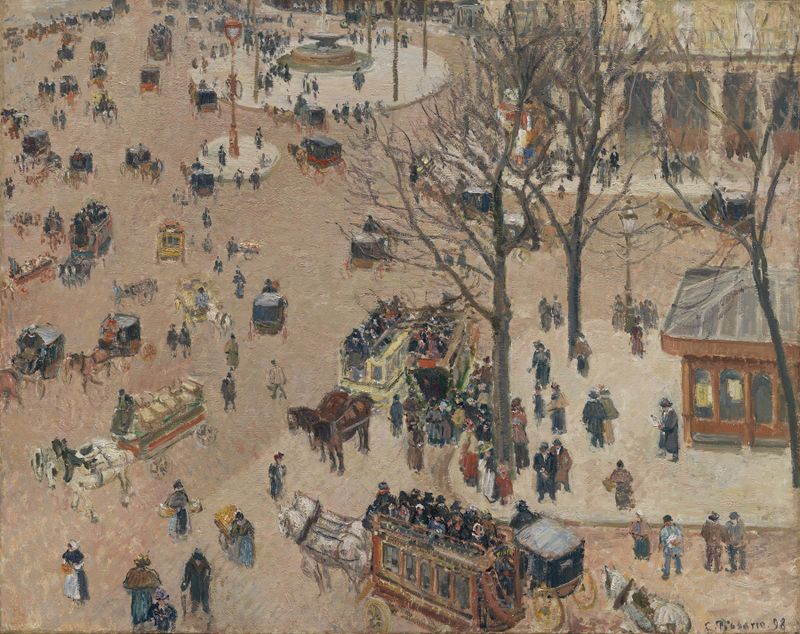
La Place du Théâtre Français
Camille Pissarro

Rue Saint-Lazare, Paris
Camille Pissarro
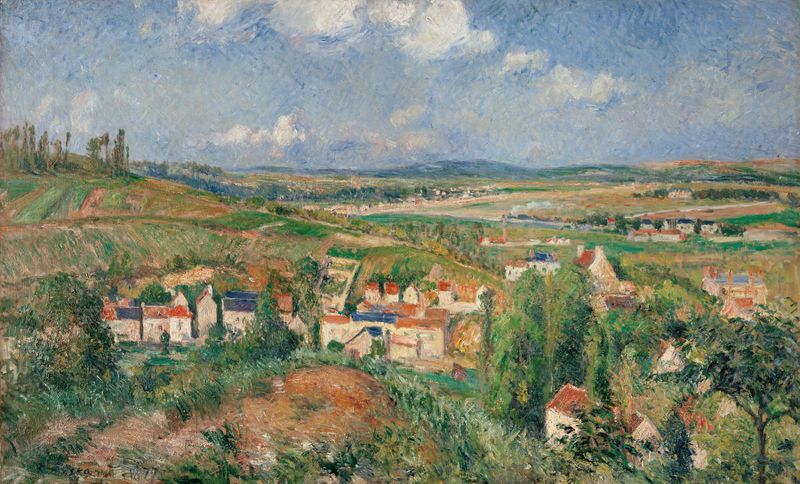
L’hermitage En Été, Pontoise
Camille Pissarro

Place du Theatre Francais,Fog Effect
Camille Pissarro
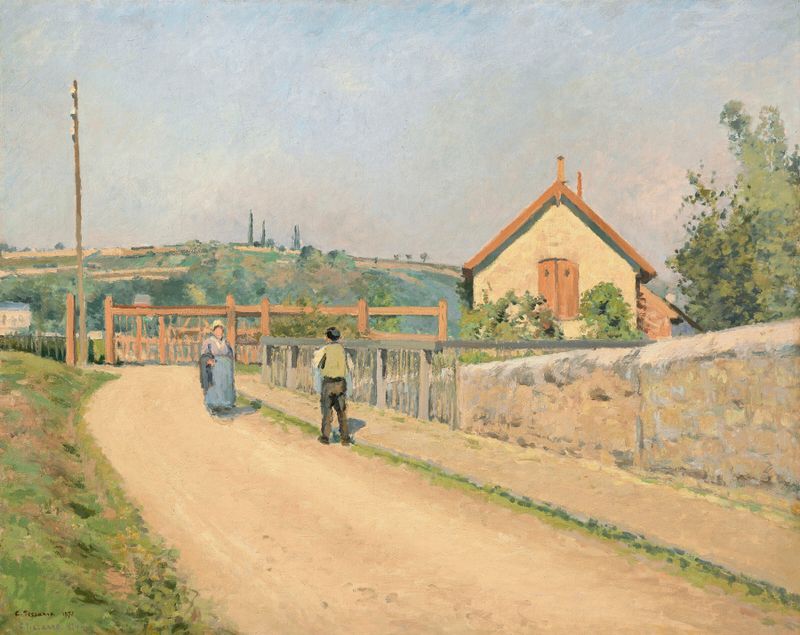
La barrière du chemin de fer, aux Pâtis près Pontoise
Camille Pissarro
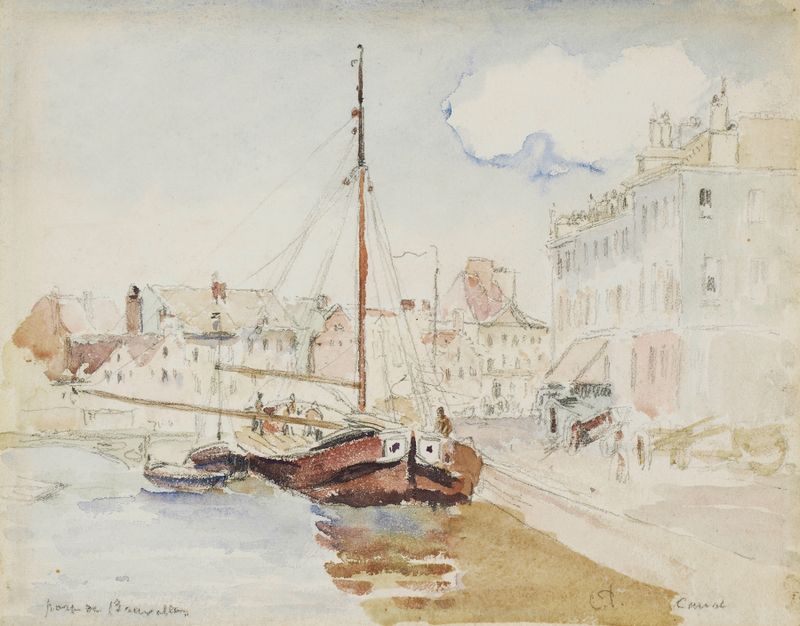
Port de Bruxelles
Camille Pissarro





