Orchards in blossom, view of Arles — History & Analysis
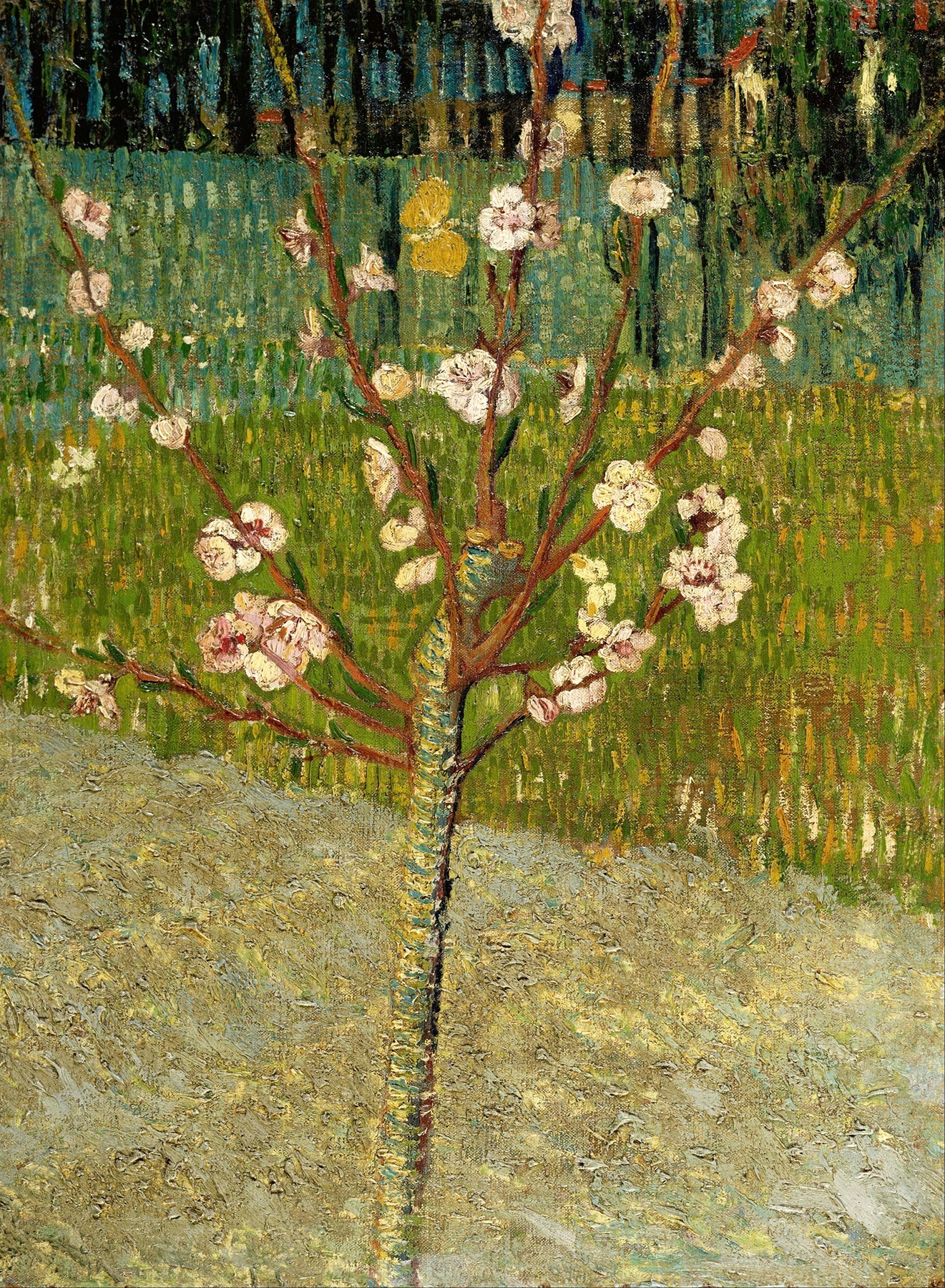
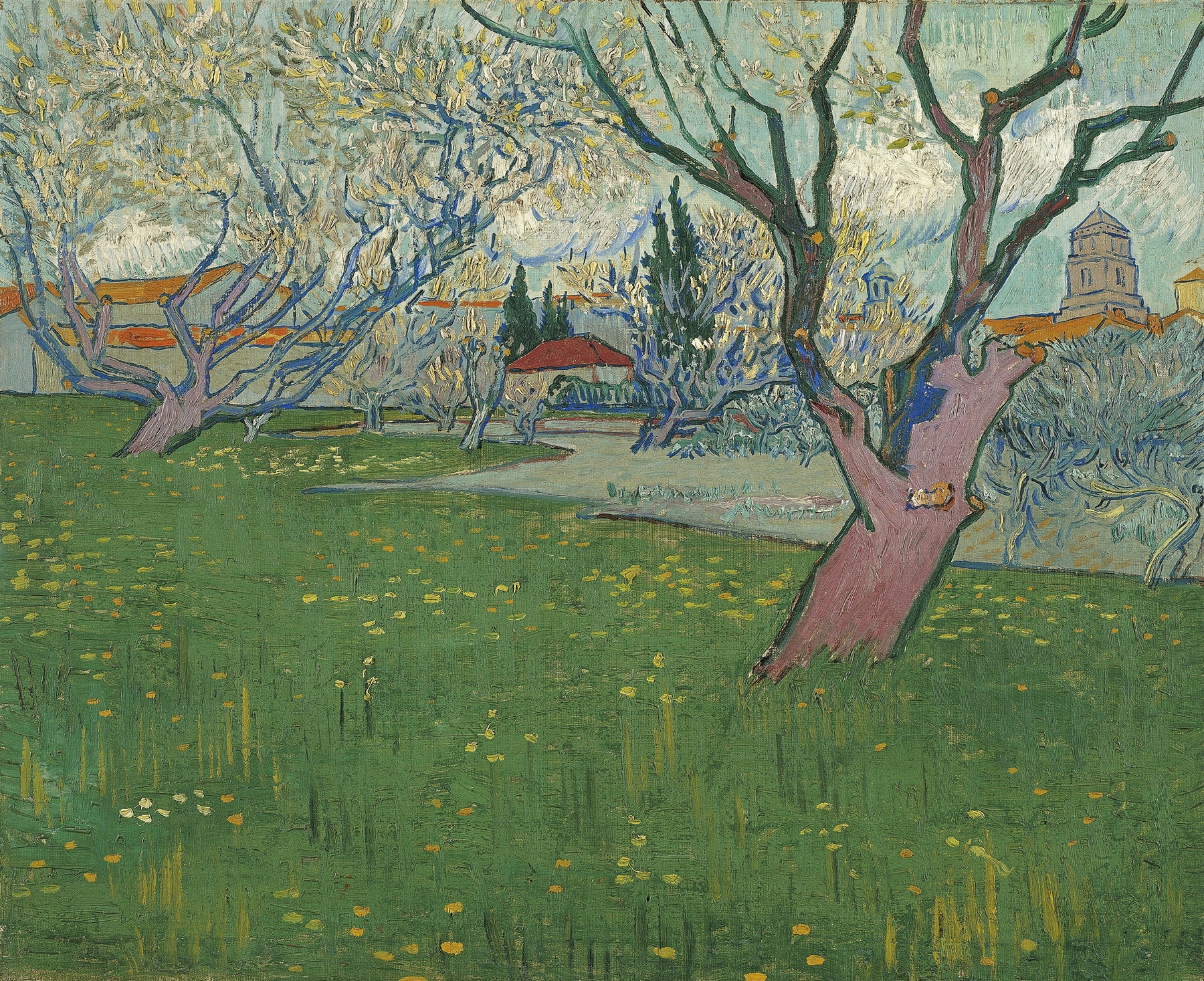
Can paint confess what words never could? In the vibrant hues and swirling forms of Orchards in Blossom, View of Arles, a world of wonder unfolds, whispering secrets about the beauty of fleeting moments. Focus first on the luminous blossoms that dance across the canvas, their soft whites and delicate pinks contrasting with the deep blues of the sky. Notice how the light pours down, illuminating the orchard with an ethereal glow that transforms each petal into a small celebration of life.
The brushstrokes pulse with energy, guiding your gaze toward the undulating hills in the background, where shapes blend and blur, evoking a sense of movement and wonder. Yet, beneath this idyllic scene lies a deeper emotional tapestry. The tension between the vibrancy of the blossoms and the dark earthy tones hints at the bittersweet nature of beauty, a reminder that all things are transient. The intertwining branches, laden with promise, seem to whisper of renewal while simultaneously hinting at the inevitable decay that follows.
It encapsulates a moment of awe, where the joy of spring is shadowed by the awareness of its ephemerality. Created in 1889 during a tumultuous period in his life, the artist painted this piece while staying at the asylum in Saint-Rémy-de-Provence. Immersed in a landscape that inspired him, he sought solace in nature as he grappled with his own internal struggles. The painting stands as a testament to his ability to capture profound emotion through the vibrancy of color and the intensity of his brushwork, reflecting both his artistic genius and personal challenges during this time.