Orchideae (Orchids) — History & Facts
Orchid blossoms crowd a soft gray-green ground above a bed of grassy leaves. A ruffled white cattleya with a yellow throat sits at the center, pink cattleyas with deep crimson lips flank it, pouched lady's slippers hang at the left, and spotted brown-and-yellow flowers, small yellow blooms and sprays of white orchids fill the edges. The signature "A.
Giltsch gem." appears at lower right. Ernst Haeckel designed this plate, number 74 of Kunstformen der Natur (Art Forms in Nature), headed Orchideae, or Venusblumen (Venus flowers); Adolf Giltsch made the color lithograph. Haeckel's text says all sixteen figures, among them Cattleya labiata and Cypripedium argus, are shown at natural size and in natural color, a small selection of the large, mostly tree-dwelling orchids of the tropics. Haeckel used the plate to argue for natural selection: he explained the orchids' two-sided flowers, and their striking likeness to bees, flies and butterflies, as adaptations to the insects that pollinate them. In his 1899 preface he predicted that modern art and the decorative arts would find new motifs in plates like this one.
Kunstformen der Natur was first published in installments of ten plates between 1899 and 1904.
More Artworks by Ernst Haeckel
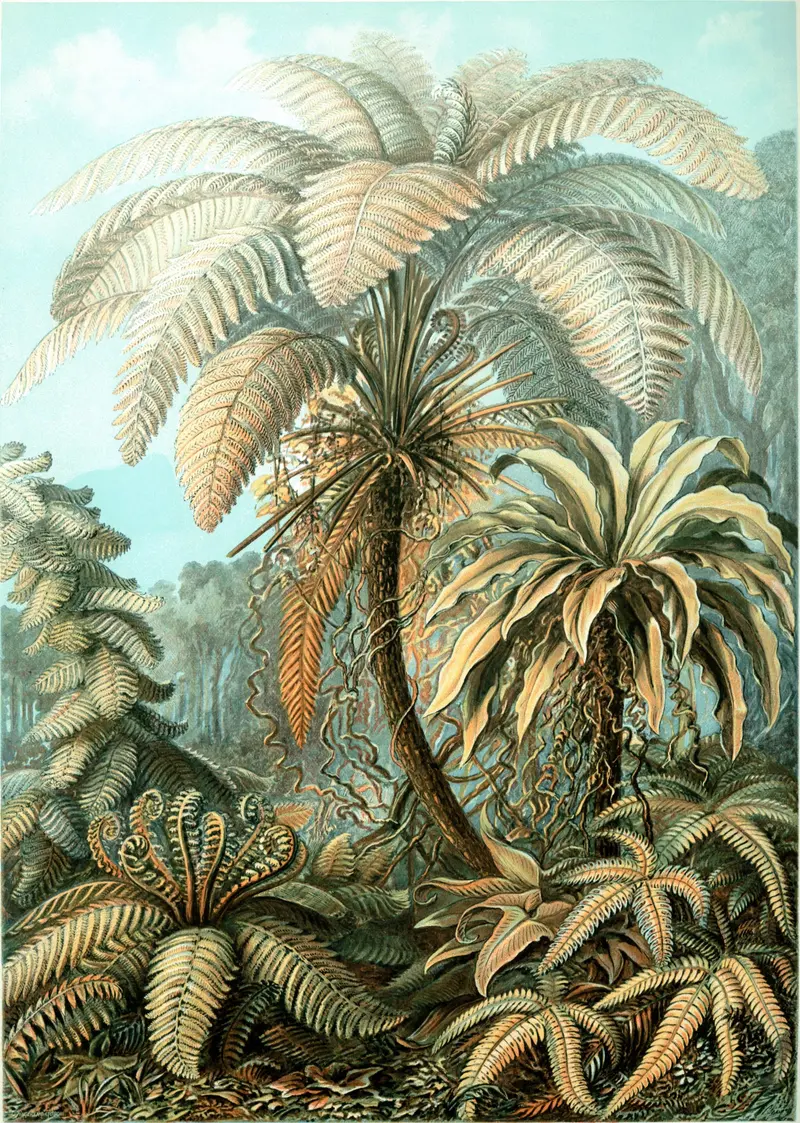
Filicinae (Ferns)
Ernst Haeckel
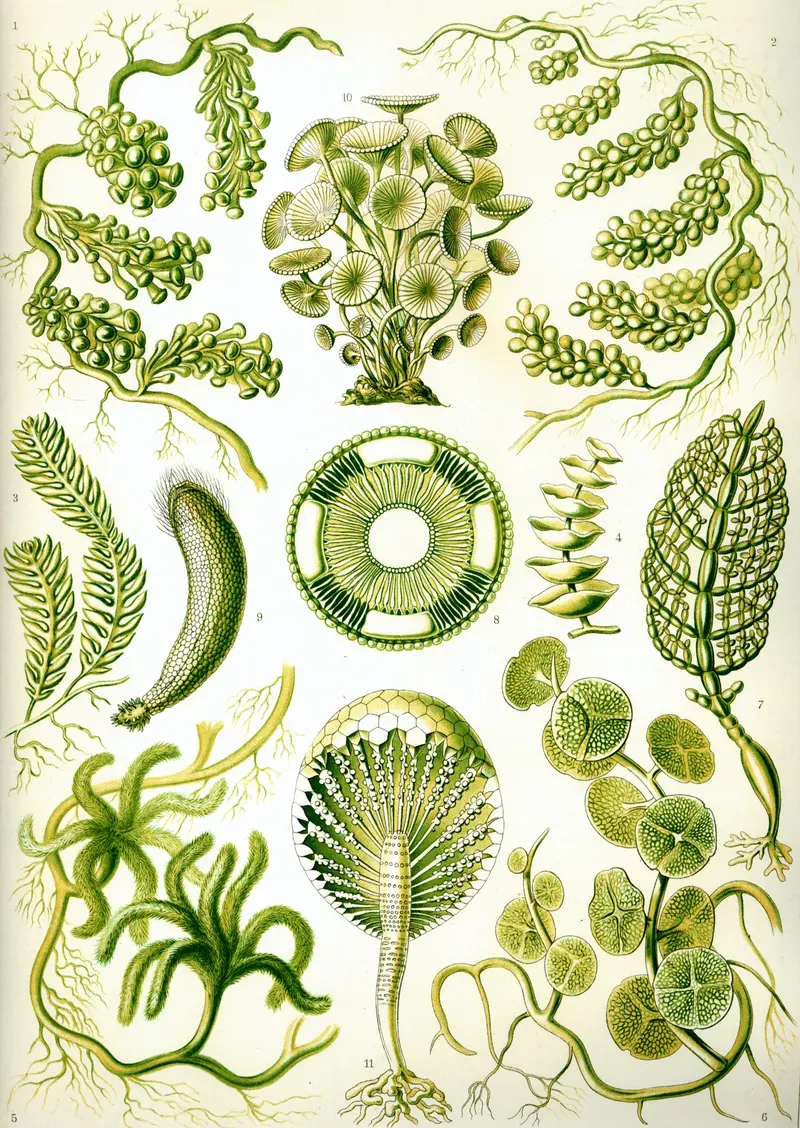
Siphoneae (Green Algae)
Ernst Haeckel

Cirripedia (Barnacles)
Ernst Haeckel

Actiniae (Sea Anemones)
Ernst Haeckel
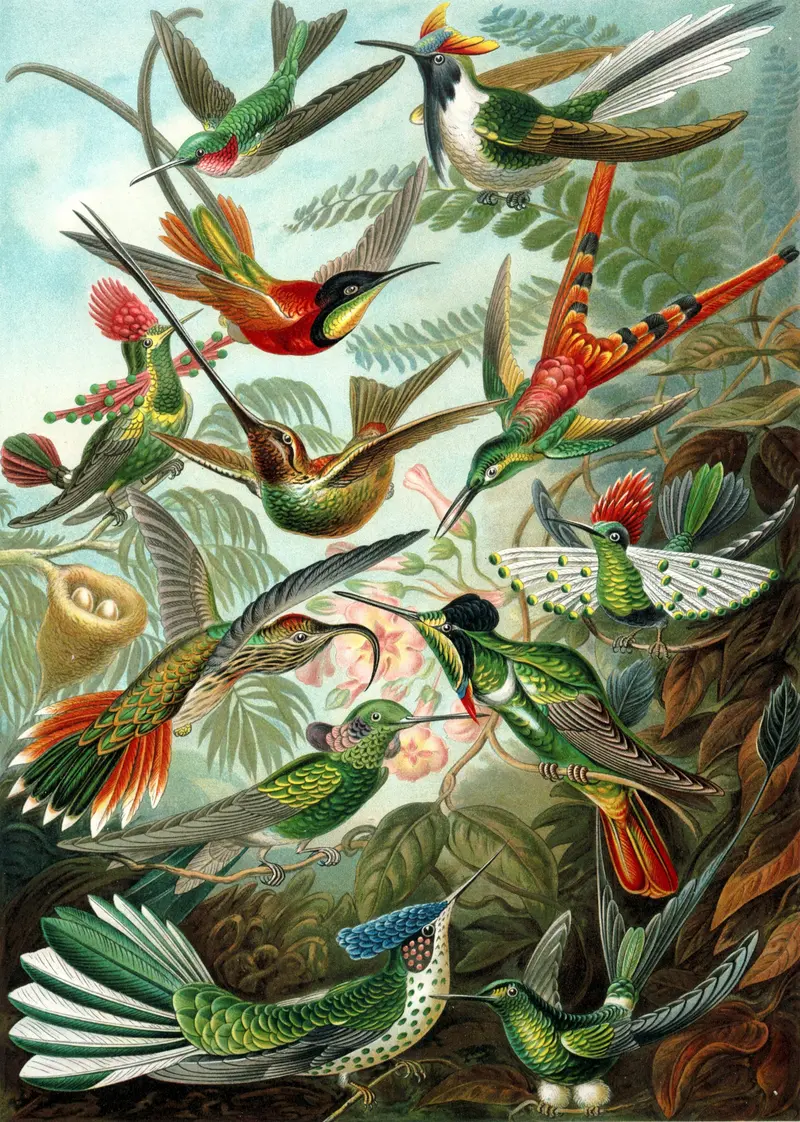
Trochilidae (Hummingbirds)
Ernst Haeckel
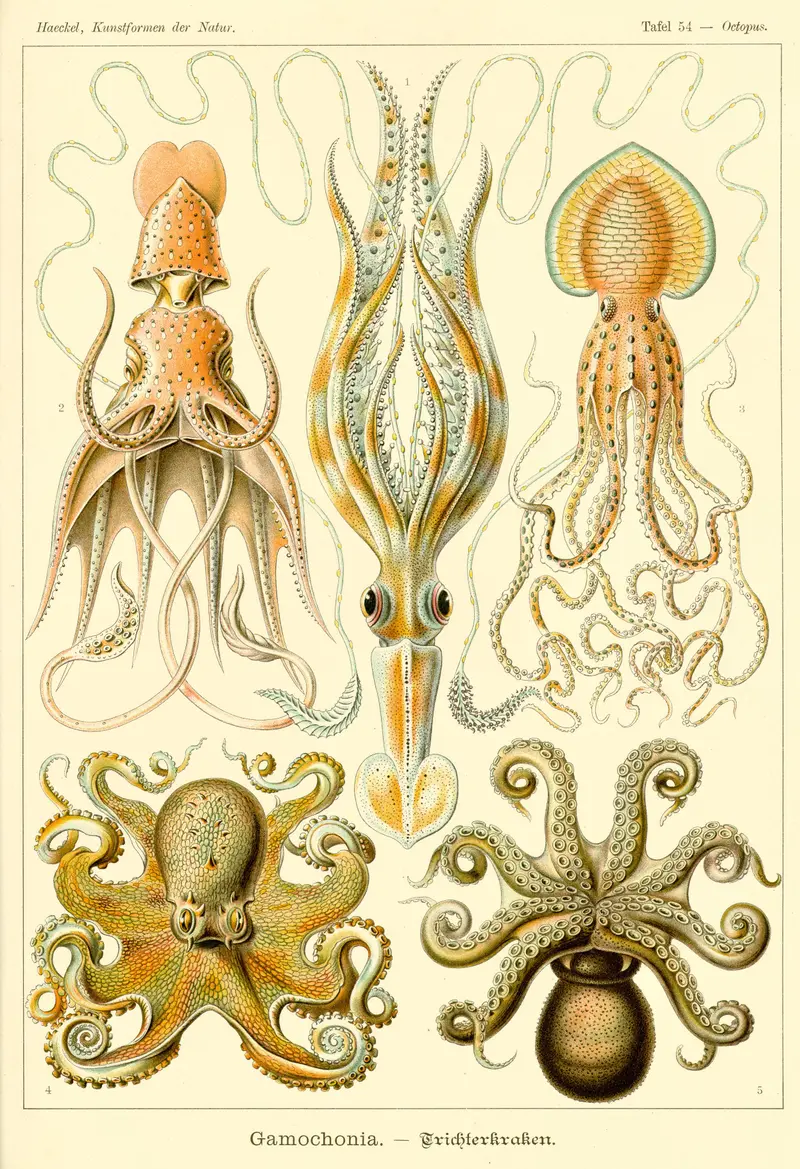
Gamochonia (Cephalopods)
Ernst Haeckel
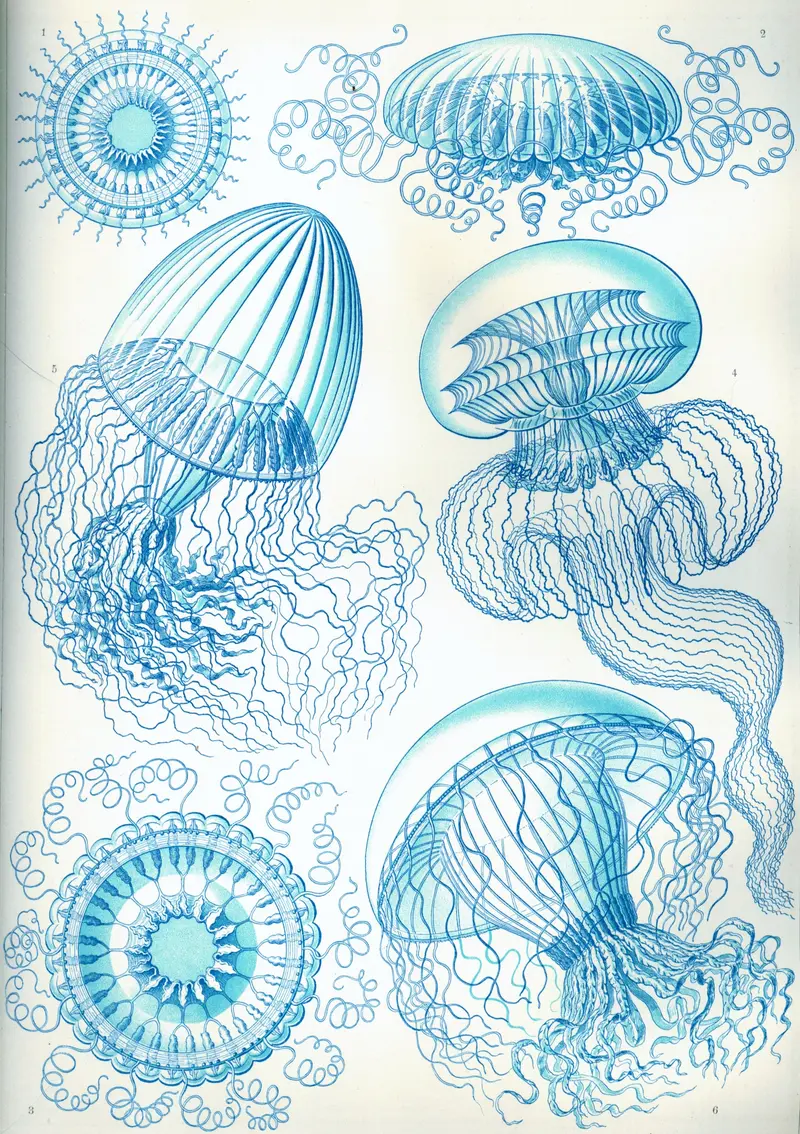
Leptomedusae (Jellyfish)
Ernst Haeckel
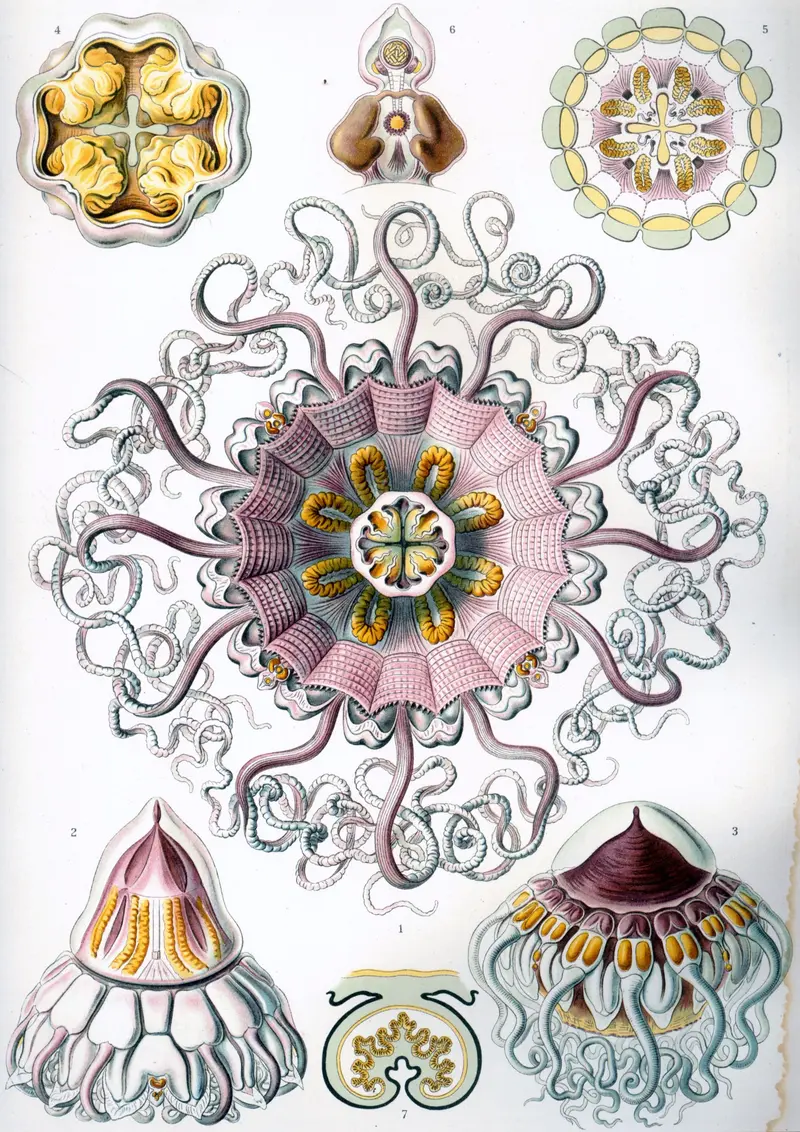
Peromedusae (Jellyfish)
Ernst Haeckel
Chaetopoda (Bristle Worms)
Ernst Haeckel
Copepoda (Copepods)
Ernst Haeckel