
Orpheus unter den Tieren — History & Facts
In Orpheus unter den Tieren, Oskar Laske presents a vibrant scene filled with lush greenery and various animals surrounding Orpheus. The colors are rich and vivid, with deep greens and warm earth tones dominating the palette. Orpheus, depicted with a lyre, stands at the center, engaging with the creatures around him.
The animals, ranging from deer to birds, seem drawn to his music, creating a harmonious atmosphere. The painting is executed in oil on canvas, a medium that allows for the depth and richness of color seen in the work. Laske's brushwork is fluid, giving life to the figures and the surrounding nature. The composition is balanced, with Orpheus positioned centrally, drawing the viewer's eye.
The use of light and shadow enhances the three-dimensionality of the scene. Oskar Laske was a part of the Symbolist movement, which often explored themes of mythology and nature. Orpheus unter den Tieren reflects this interest, showcasing the connection between humanity and the animal kingdom. An interesting fact about this work is that it captures the moment of Orpheus's enchanting music, which is a recurring theme in art.
Laske's ability to blend realism with symbolic elements makes this painting notable in his oeuvre.
More Artworks by Oskar Laske

Faschingsumzug am Stock im Eisen Platz
Oskar Laske
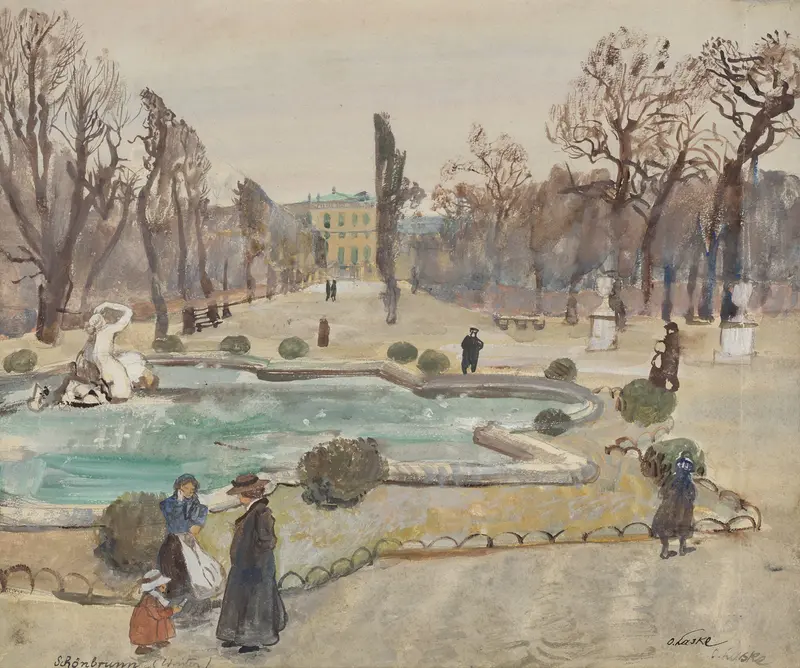
Schönbrunn (Winter)
Oskar Laske
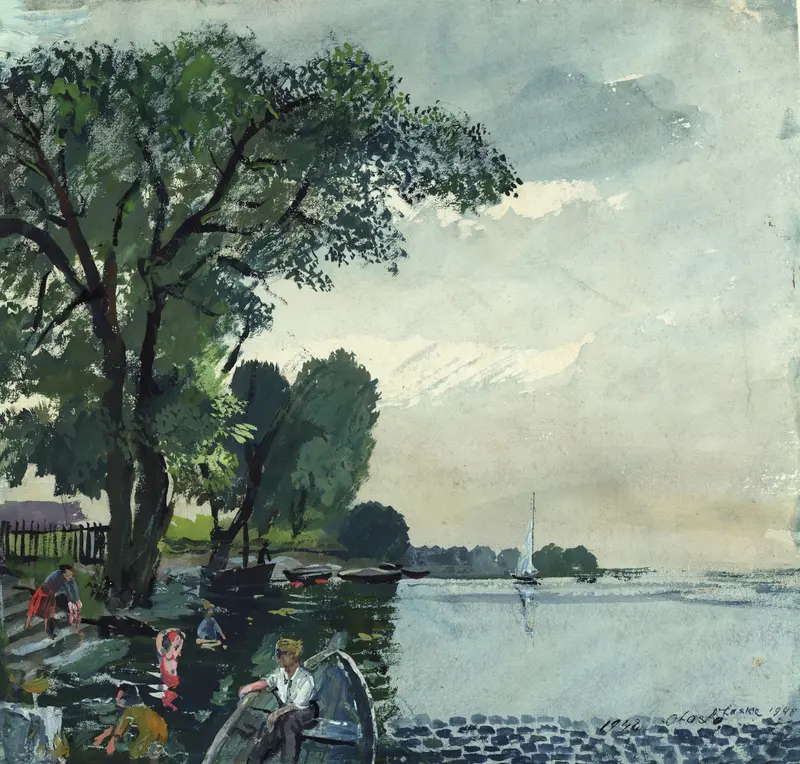
Pratermotiv an der alten Donau
Oskar Laske
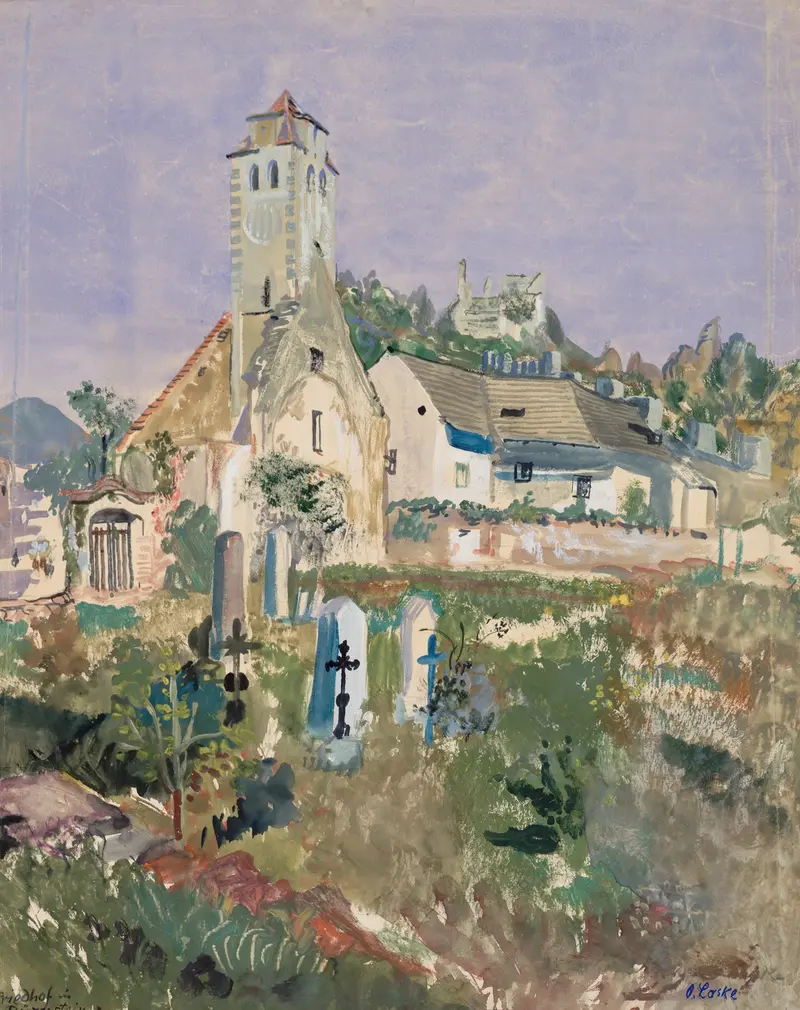
Friedhof in Dürnstein
Oskar Laske
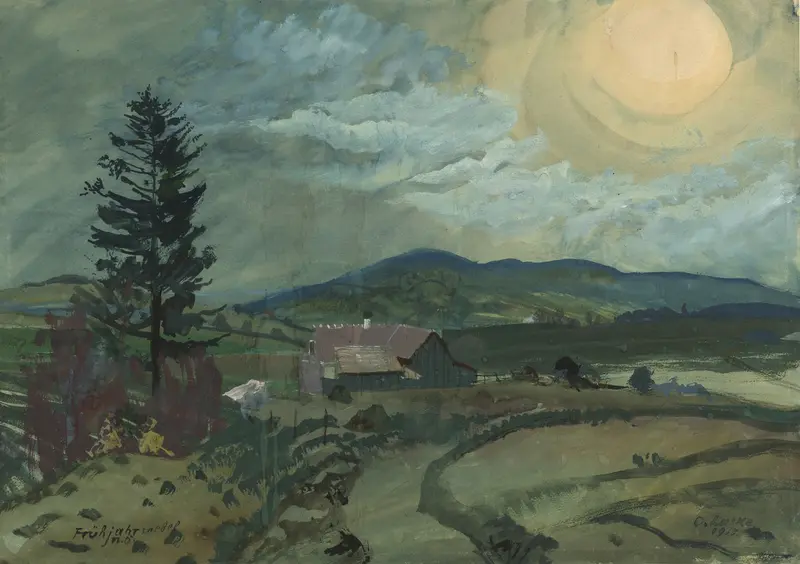
Frühjahrsnebel in Niederösterreich
Oskar Laske
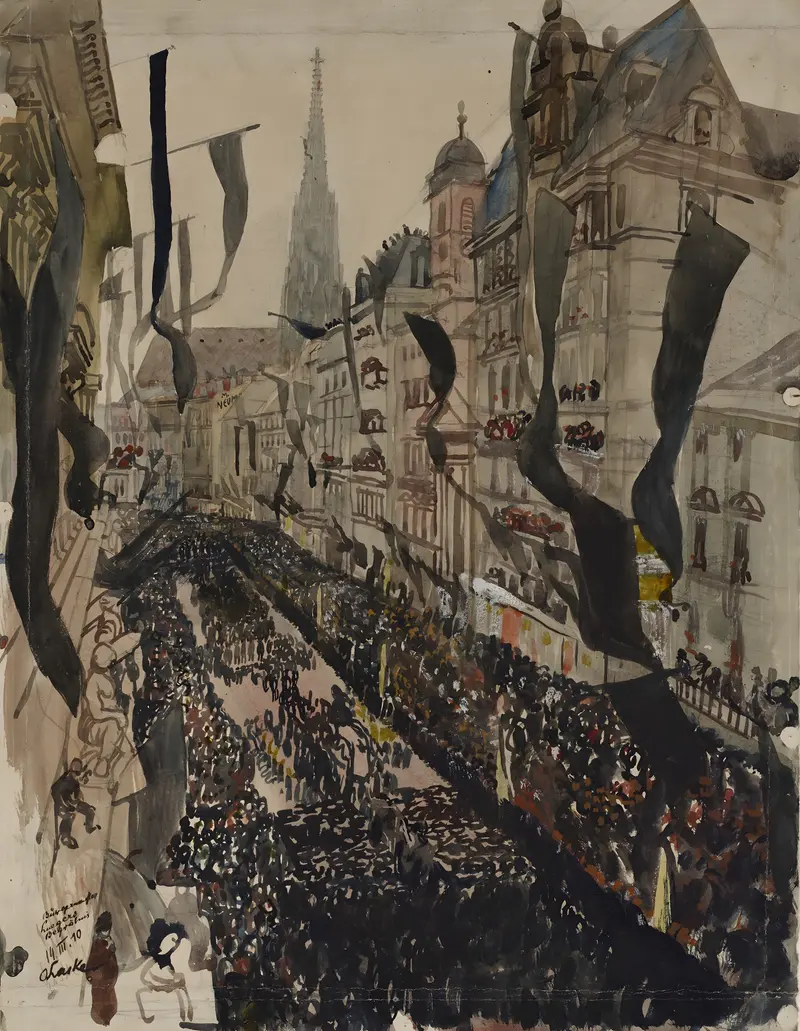
Begräbnis des Wiener Bürgermeisters Dr. Karl Lueger
Oskar Laske
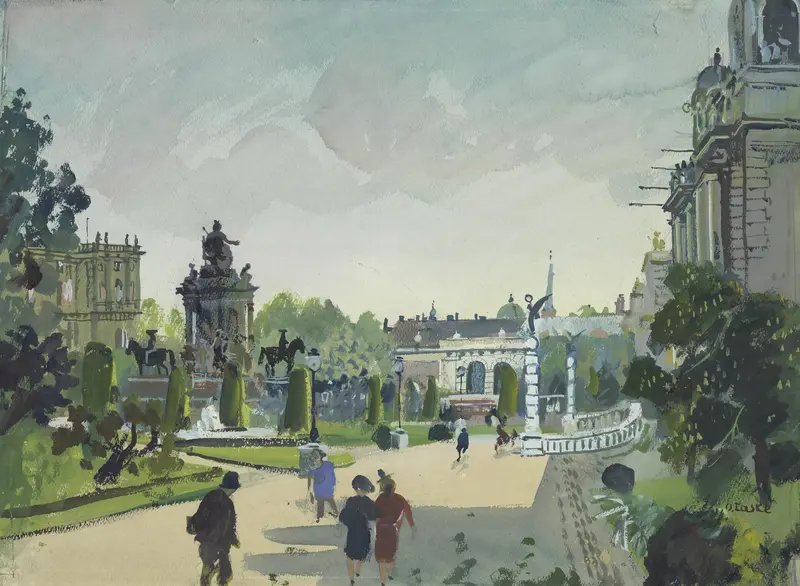
Maria Theresien-Denkmal mit Blick gegen das Burgtor
Oskar Laske
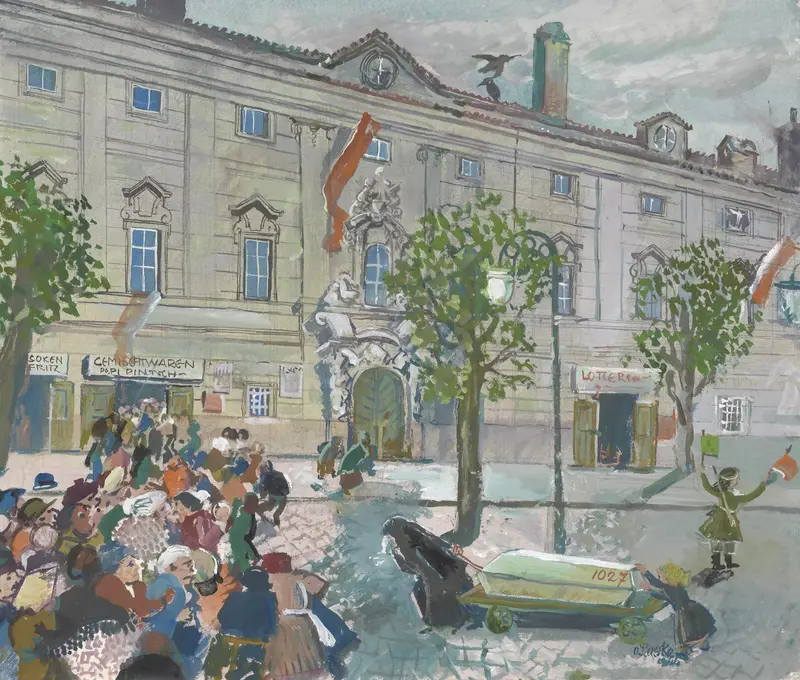
Wiener Straßenbild vom Mai 1945
Oskar Laske
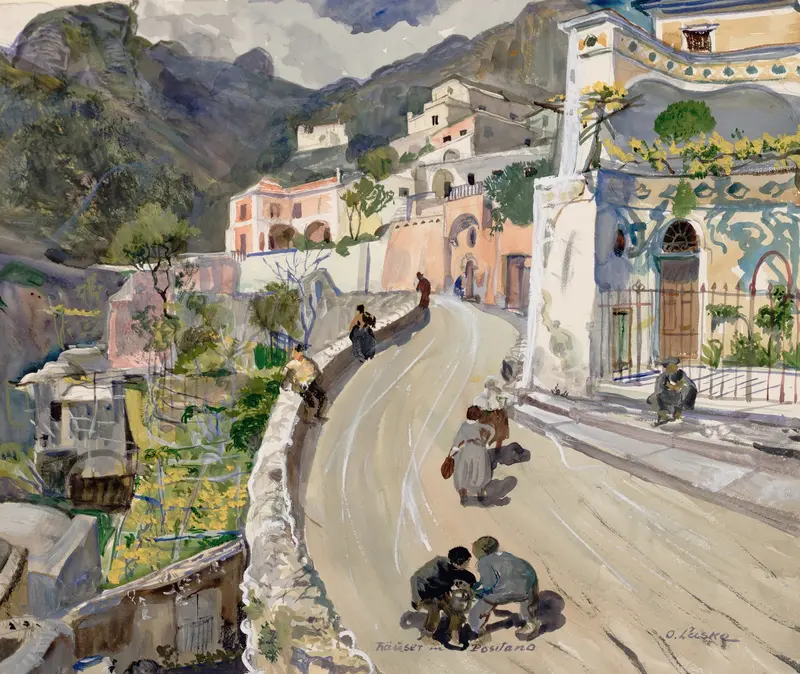
Ansicht von Positano
Oskar Laske
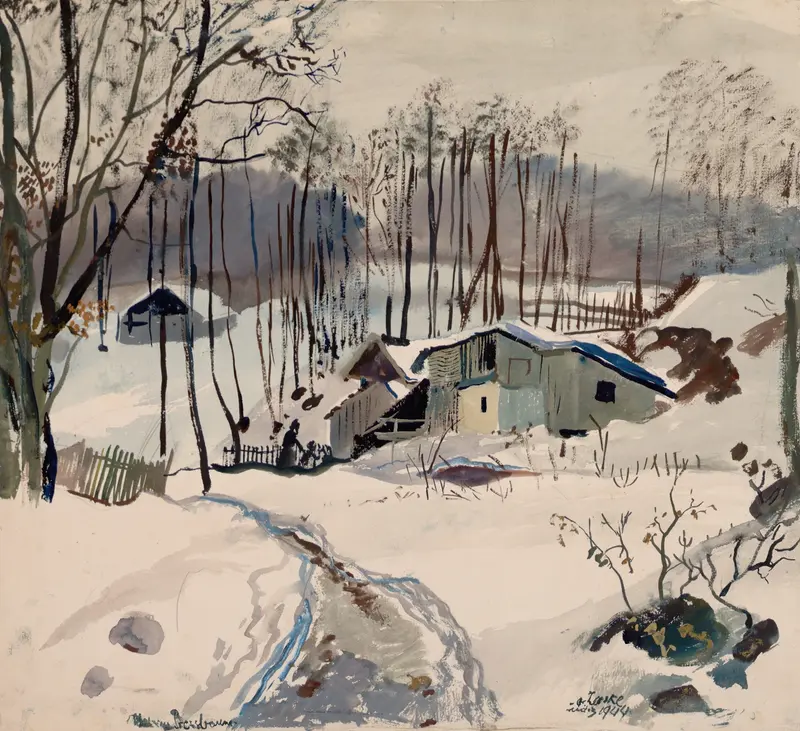
Winterlandschaft in Pressbaum
Oskar Laske





