
Oysters, Fruit and a Wineglass on a Stone Table — History & Facts
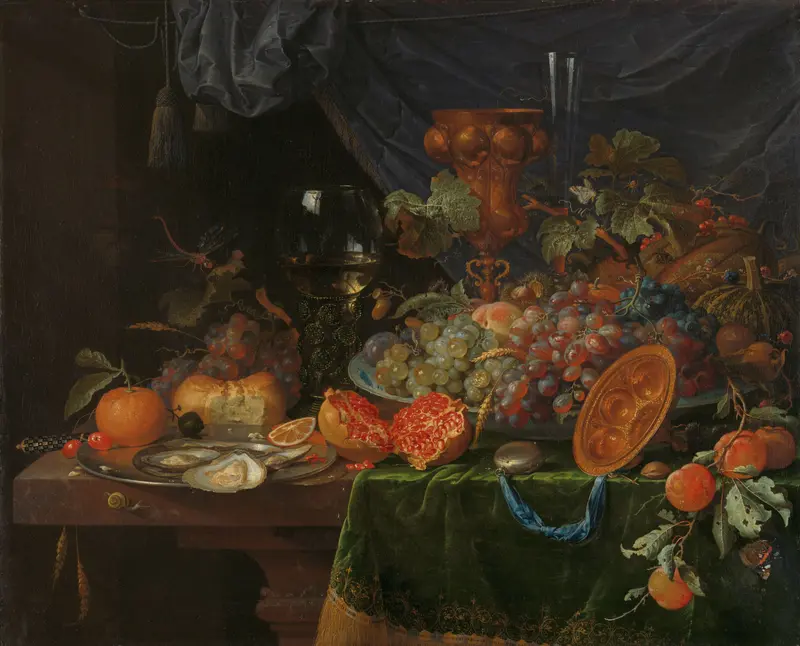
What first catches the eye is the glint of wetness—oyster liquor pooling in shells, droplets clinging to a peeled orange, the sheen of wine in a heavy glass. Oysters, Fruit and a Wineglass on a Stone Table by Abraham Mignon is a performance of texture and light, each object arranged to tempt both the senses and the mind. The oysters, freshly opened, seem to glisten with anticipation, while the pomegranate bursts with seeds like tiny rubies, promising both sweetness and mess.
The orange peel curls away in a spiral, its pith and zest rendered with such care that you can almost smell the citrus oil. Each element is a deliberate invitation: the pipe for leisure, the fruit for pleasure, the wine for indulgence, all set against a dark, velvety background that heightens the drama of every reflection and shadow. This painting belongs to the world of late seventeenth-century Dutch and German still life, when artists like Mignon competed to outdo one another in illusionistic skill and symbolic richness. Painted between 1671 and 1679, this work reflects a period when such compositions adorned the homes of prosperous merchants and collectors, who delighted in both their beauty and their coded warnings about excess and mortality.
The genre was a stage for technical bravura—note the transparent glass, the porcelain bowl, the crawling insects—yet it was also a meditation on fleeting pleasure, a theme as relevant now as it was then. Today, the painting resides in the collection of the Statens Museum for Kunst in Copenhagen, a vivid survivor of an age when art and appetite were intimately entwined. Let your gaze linger: every detail here is a small marvel, waiting to be discovered.
More Artworks by Abraham Mignon

Still Life with Flowers and a Watch
Abraham Mignon
Still Life with Fruit and Oysters
Abraham Mignon
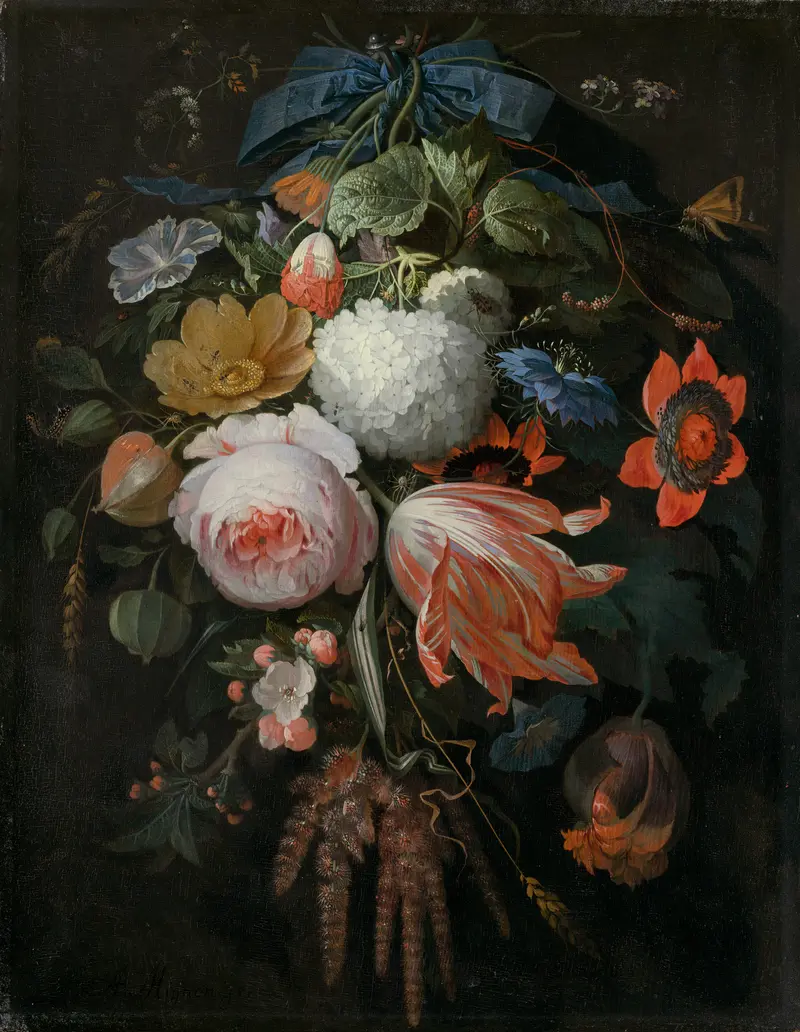
A Hanging Bouquet of Flowers
Abraham Mignon
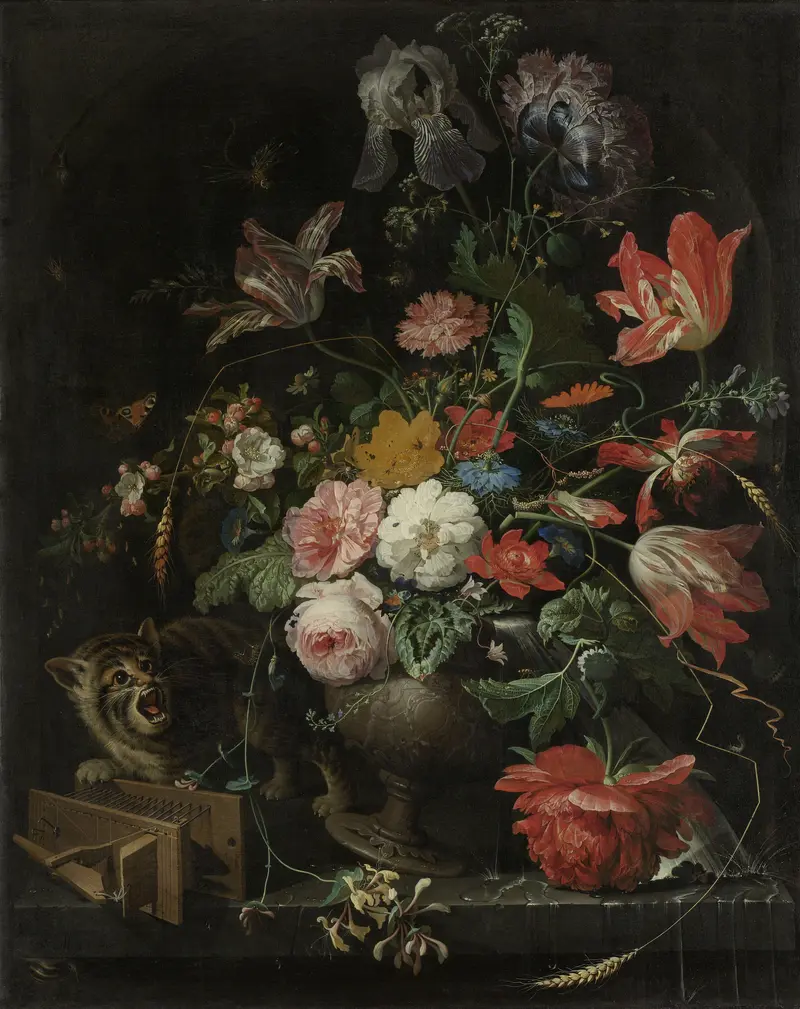
Bouquet with cat and mousetrap
Abraham Mignon
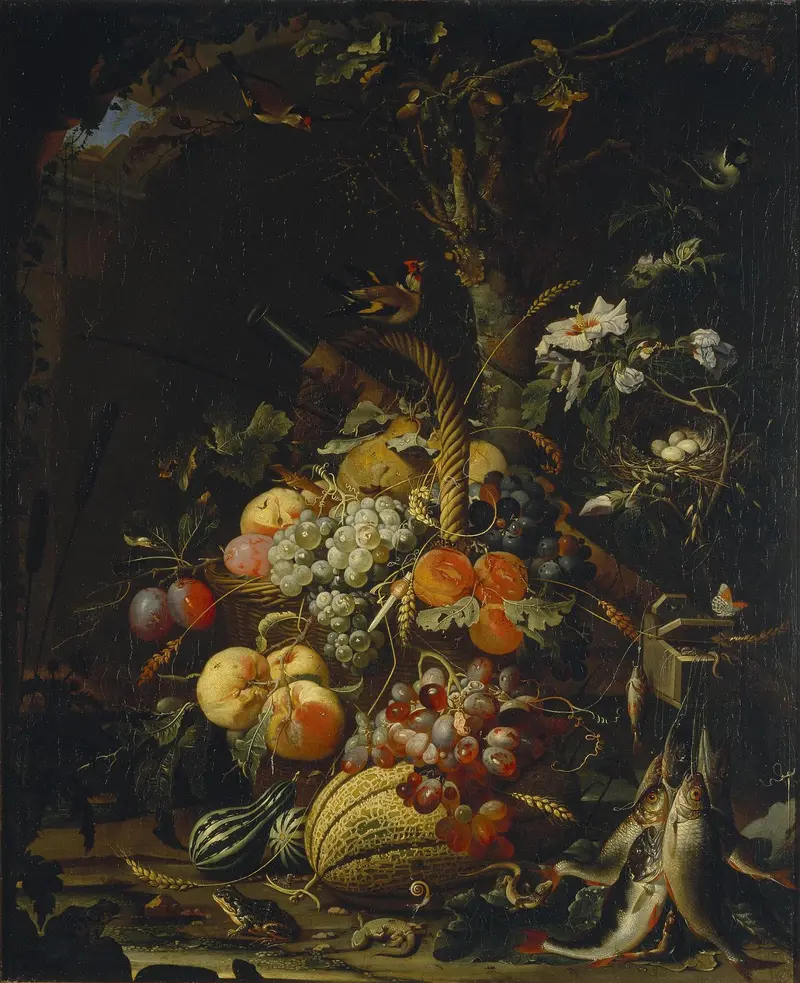
Forest floor still life with fruit, fish and a bird's nest
Abraham Mignon
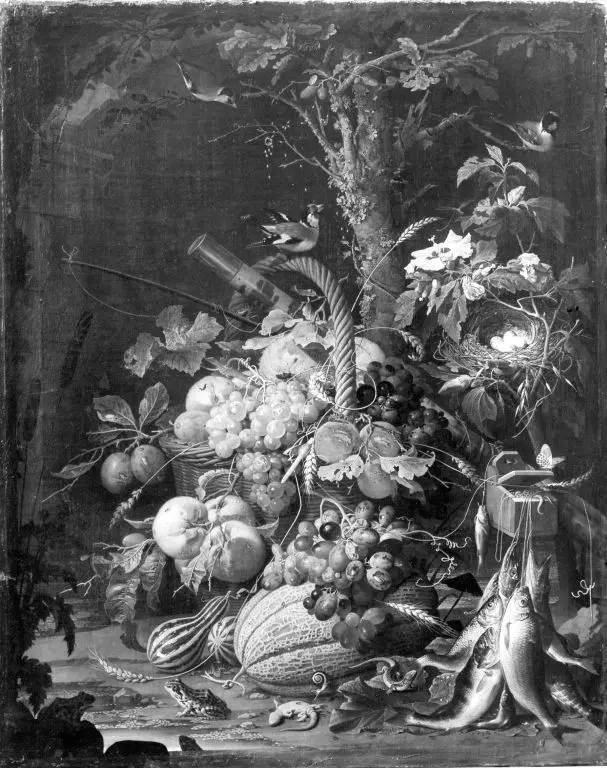
Still life with fruit, fish and a bird's nest
Abraham Mignon
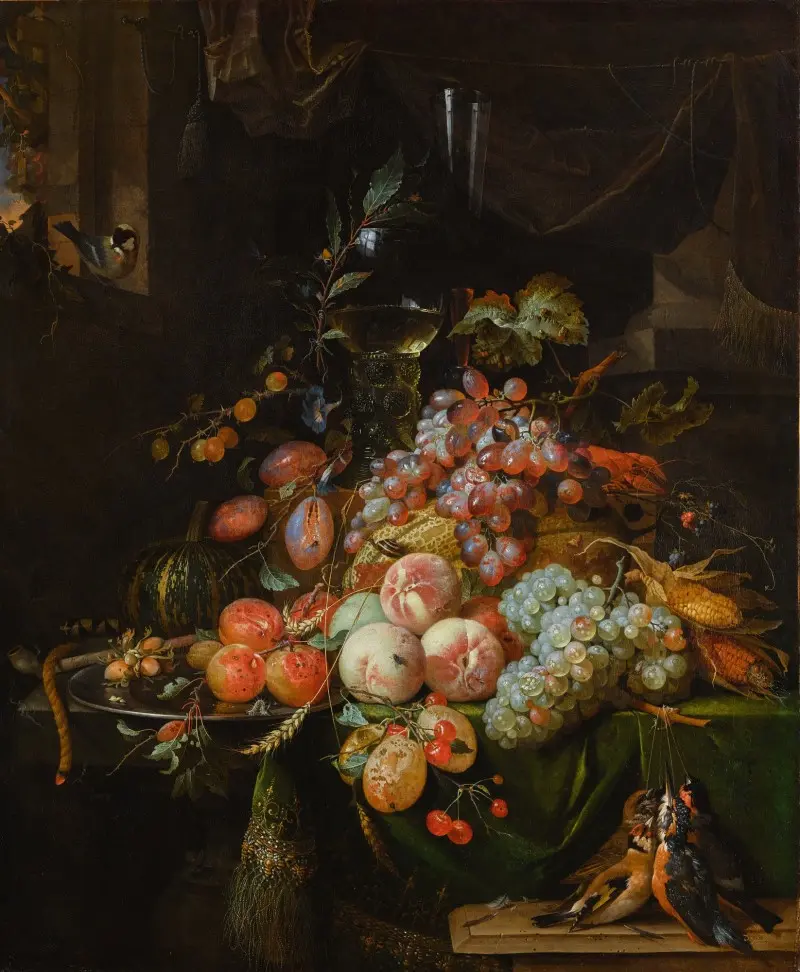
Still Life with Plums, Peaches, Apricots, Grapes and a Melon
Abraham Mignon
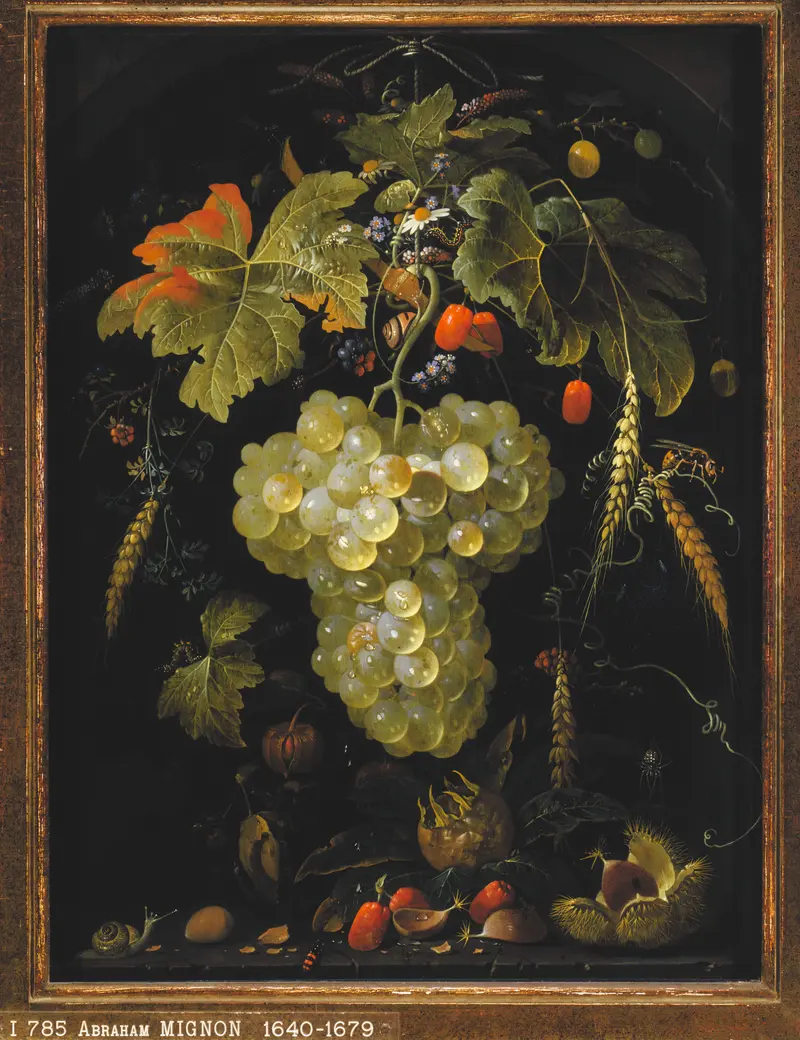
Festoon of fruit suspended from a rope, in a niche
Abraham Mignon
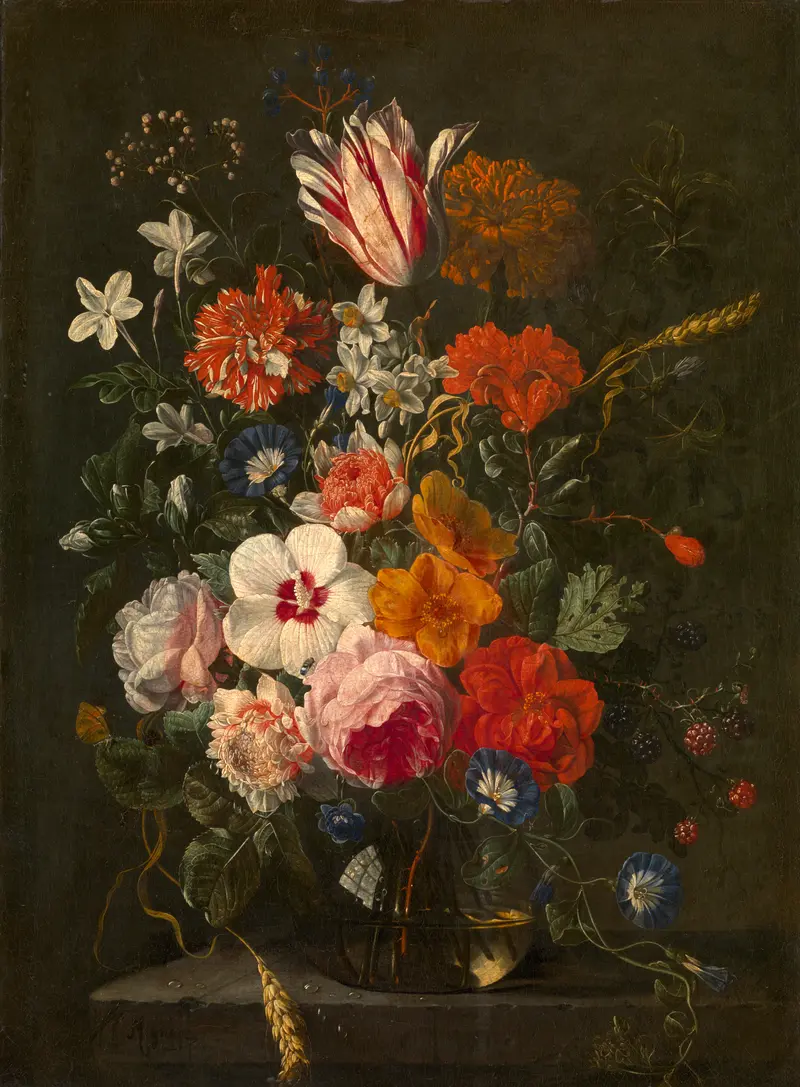
Flowers and a branch of berries in a glass vase on a stone ledge
Abraham Mignon
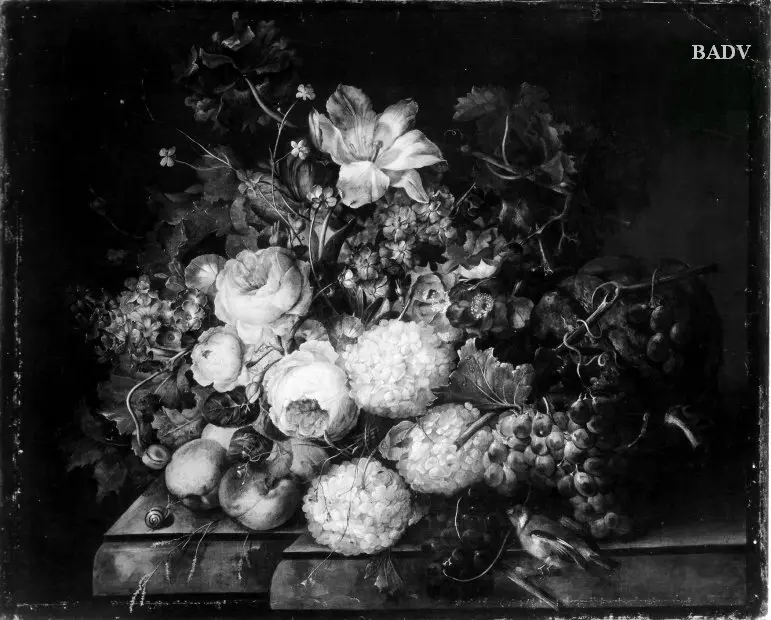
Flowers and fruit on a plinth
Abraham Mignon





