
Pardon of Ste-Anne-La-Palud — History & Facts
Who listens when art speaks of silence? In Pardon of Ste-Anne-La-Palud, the hues merge with the whispers of a coastal gathering, each brushstroke a reflection of profound emotion woven into the fabric of everyday life. Look to the left, where the vibrant blue of the sky spills into the rich greens of the fields, leading the eye towards a congregation of figures adorned in traditional dress. Notice how the artist captures the fleeting nature of light as it dances across their faces, illuminating a moment of collective reverence. The gentle application of color creates a sense of unity amid the diverse textures of the clothing and the landscape, drawing the viewer into this sacred space. Within the composition, an intricate tension unfolds between the vibrancy of the celebration and the serenity of the surroundings.
The juxtaposition of the joyous figures against the stillness of nature evokes a sense of introspection, inviting one to ponder the connection between humanity and the divine. Through the careful layering of colors, Boudin highlights the fleeting essence of time, contrasting the ephemeral joy of the gathered crowd with the timelessness of the landscape that cradles their devotion. In 1858, Eugène Boudin painted this work in the small coastal commune of Ste-Anne-La-Palud, where he was deeply influenced by the local culture and the natural beauty of Brittany. At this time, he was emerging as a notable figure in the art world, dedicated to capturing the effects of light and atmosphere.
His focus on plein air painting was becoming increasingly relevant, setting a foundation for the impressionist movement that would soon follow.
More Artworks by Eugène Boudin
Browse all →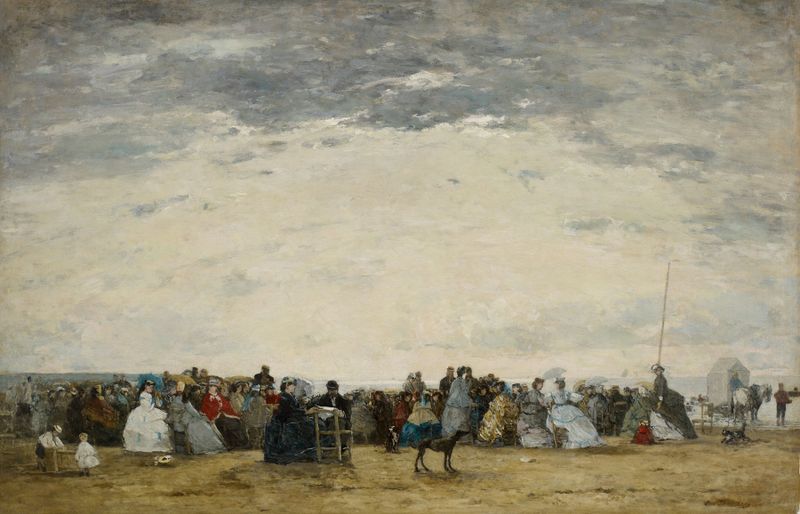
Vacationers on the Beach at Trouville
Eugène Boudin

Washerwoman near Trouville
Eugène Boudin
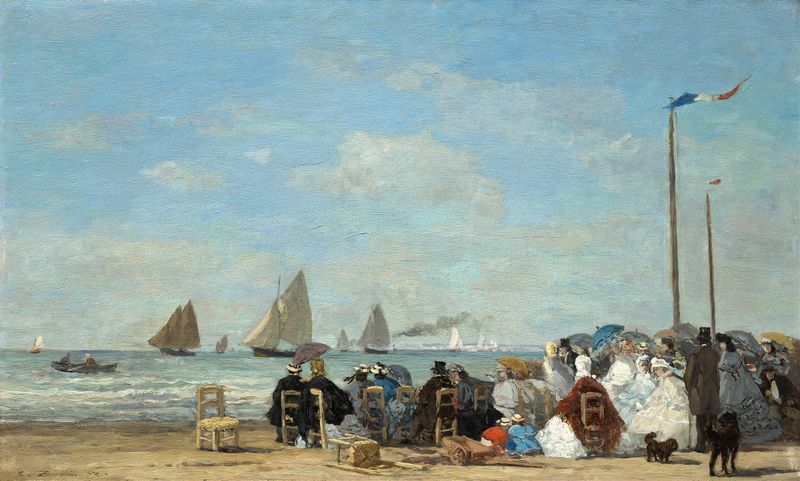
Beach Scene at Trouville
Eugène Boudin

Port aux environs d’Honfleur
Eugène Boudin

Le Faou, un coin du village
Eugène Boudin
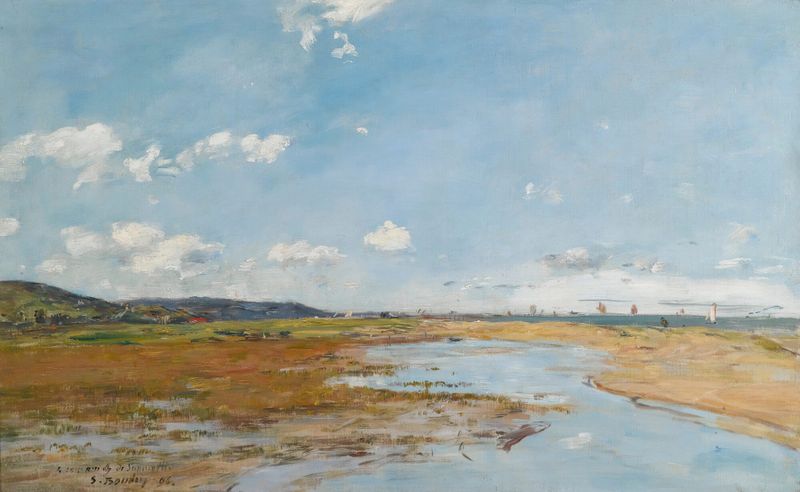
Deauville. Le Rivage
Eugène Boudin
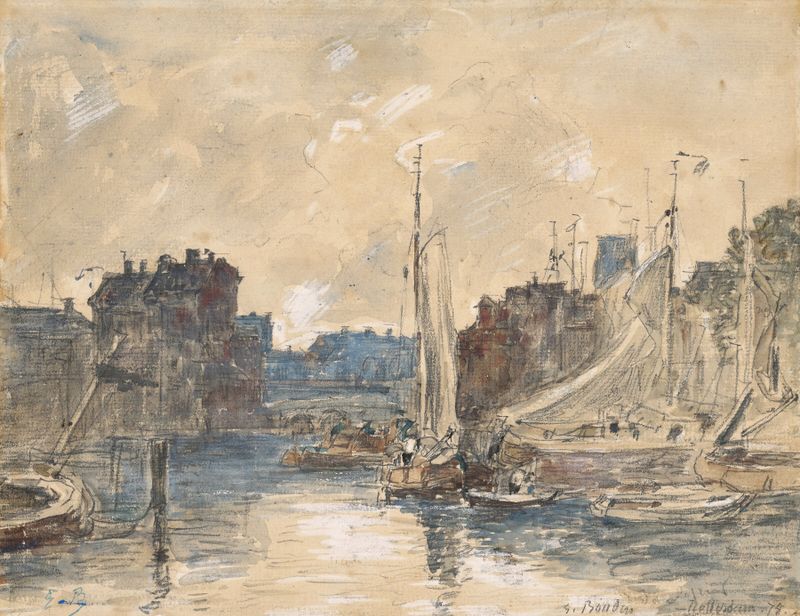
Port de Rotterdam
Eugène Boudin

View of Bordeaux, from the Quai des Chartrons
Eugène Boudin

Trouville, Scène De Plage
Eugène Boudin

Trouville, Le Port
Eugène Boudin





