
Peacock and peahen on a perch, turkeys, a pheasant and poultry by a well — History & Facts
The eye lands first on the peacock, its tail a tapestry of bronze and emerald, draping like a royal train over the rough wooden perch. Every feather is painted with a jeweler’s care, each “eye” a tiny marvel, but the scene is no mere display of beauty. Around the well, a drama of hierarchy and curiosity unfolds: the rooster crows from his stone stage, the turkeys posture, and a pheasant glances sidelong at the gathering.
Light filters through the leaves, catching the iridescence of plumage and the roughness of stone, guiding the gaze from the proudest bird to the humblest chick. The palette is earthy but alive, the shadows deep enough to hint at the coolness under the trees, the air thick with the bustle of a country yard. Painted in 1652 by Adriaen van Utrecht, this work belongs to a world where such scenes were both celebration and inventory. In seventeenth-century Flanders, paintings of barnyard abundance were prized by prosperous merchants and landowners, signaling both wealth and a certain harmony with nature.
The artist’s attention to each species—domestic and exotic—reflects the age’s fascination with collecting, cataloguing, and displaying the wonders of the natural world. Though history has kept few traces of this specific painting’s early journey, its presence in a modern collection speaks to the enduring appeal of such scenes: a moment of order and splendor, forever suspended at the well’s edge.
More Artworks by Adriaen van Utrecht
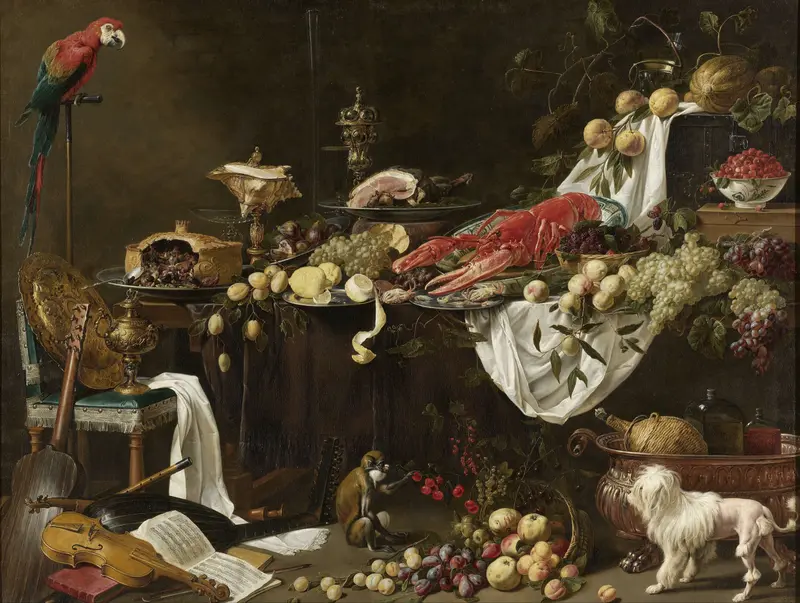
Banquet Still Life
Adriaen van Utrecht
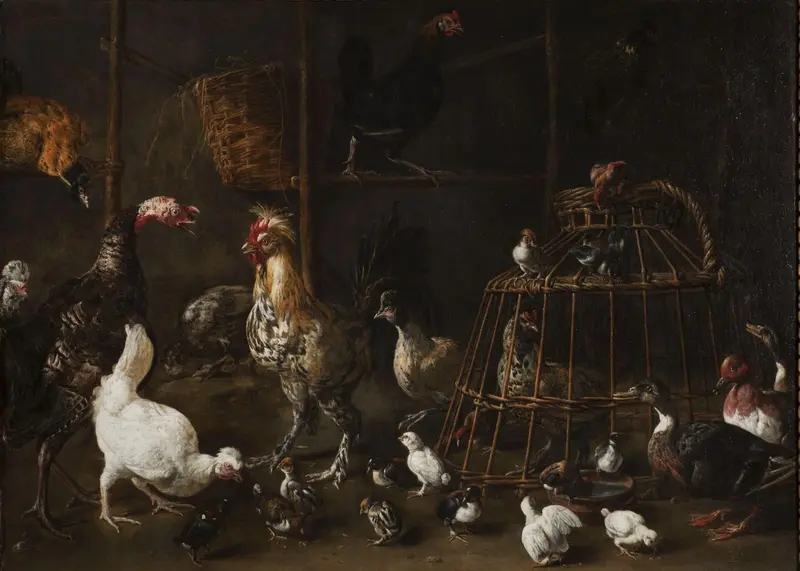
A barn interior with a turkey
Adriaen van Utrecht
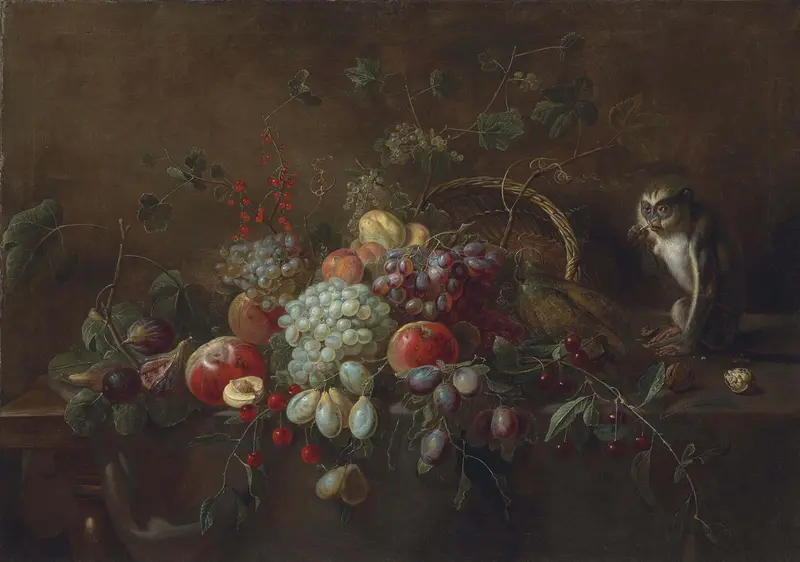
Grapes, apples, plums, figs and other fruit on a partly draped wooden table, a monkey eating walnuts by an upturned woven basket
Adriaen van Utrecht
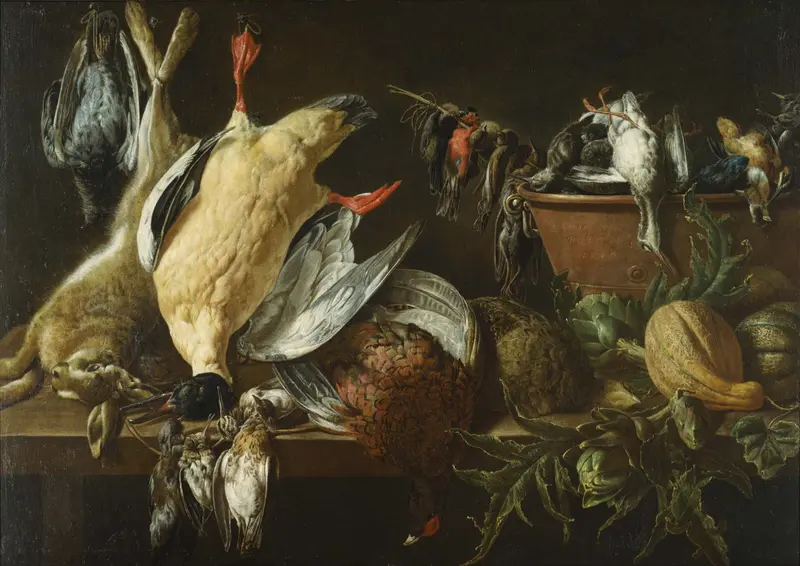
Still Life with Games and Vegetables
Adriaen van Utrecht
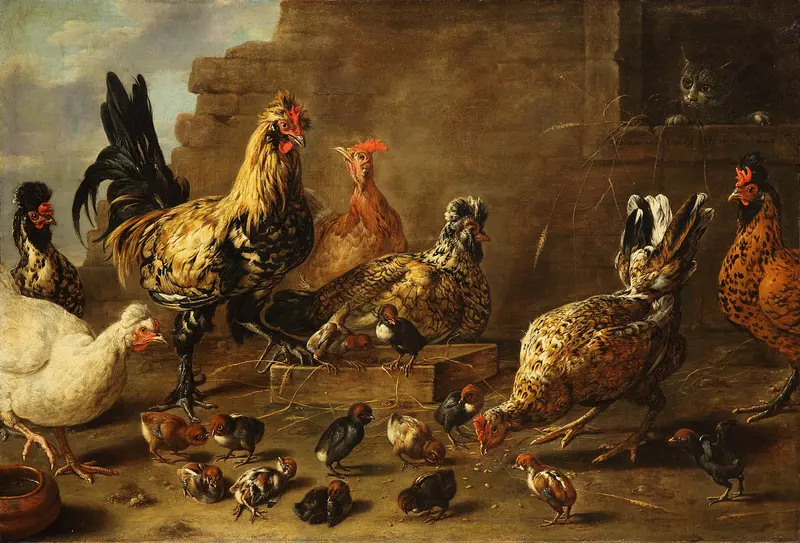
The chicken yard
Adriaen van Utrecht
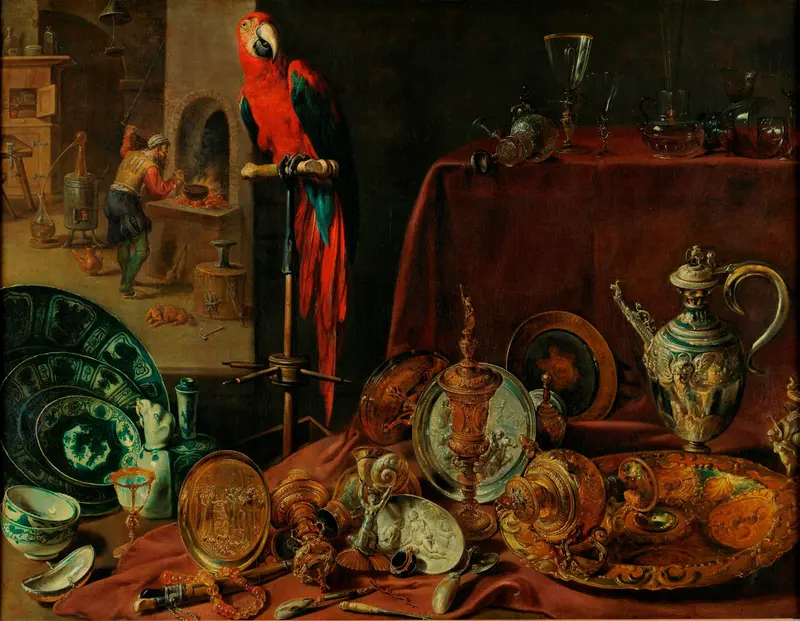
Still life with parrot, an allegory of fire
Adriaen van Utrecht
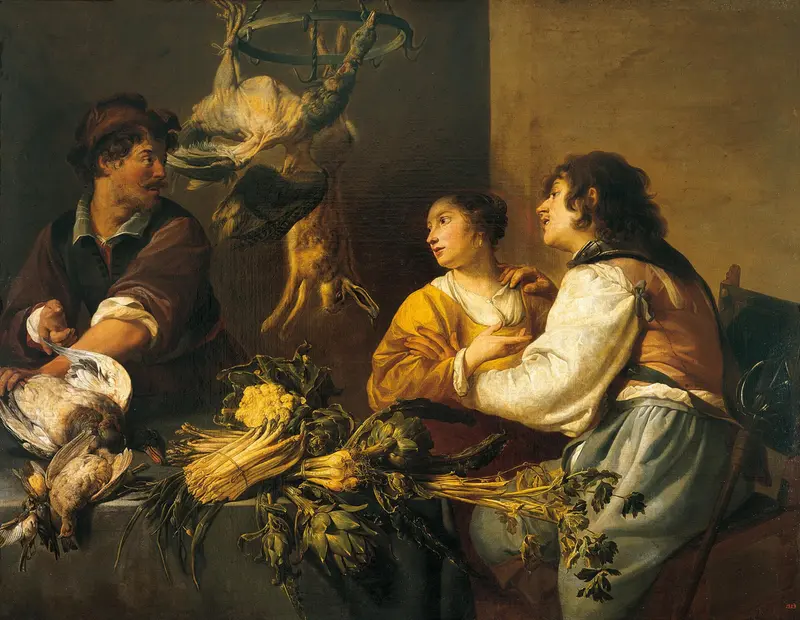
Kitchen
Adriaen van Utrecht
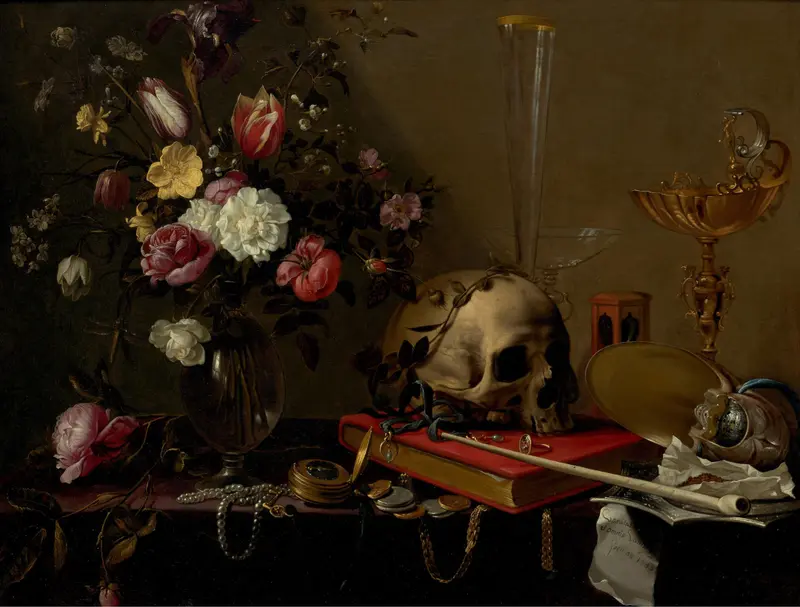
Vanitas - Still Life with Bouquet and Skull
Adriaen van Utrecht
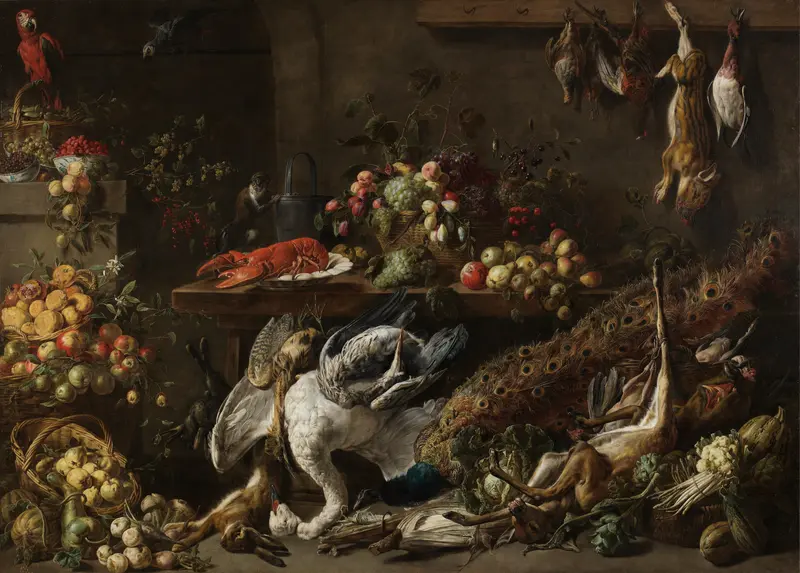
A Larder
Adriaen van Utrecht
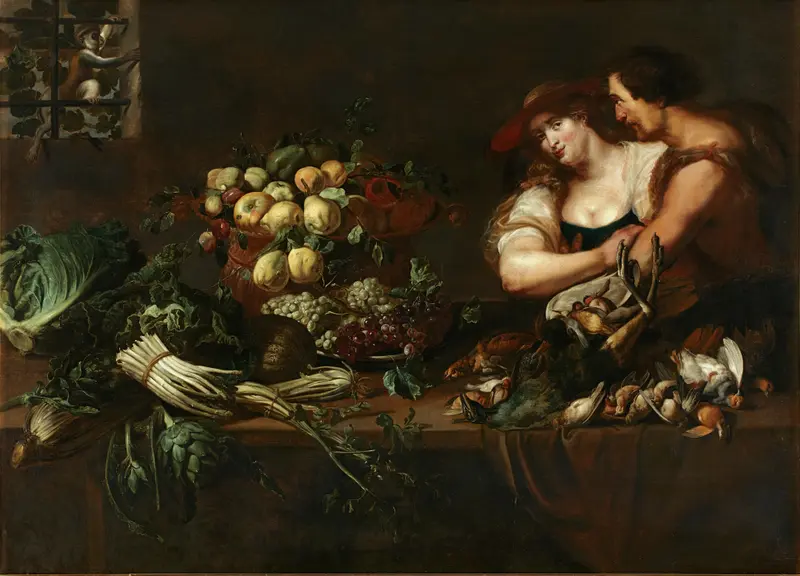
A Kitchen Still Life with Figures
Adriaen van Utrecht





