
Peasants and Horses — History & Facts
A wagon heavy with goods pauses at the edge of a muddy track, its wheels sunk deep in the ruts of daily labor. The scene draws the viewer first to the horses, their bodies rendered with a tactile sense of weight and fatigue, their heads lowered as if savoring a brief respite. The driver, rough-hewn and alert, stands between his team and the thatched roofs beyond, his gaze cast toward the quiet homestead.
Light glances off the pale horse’s back and the puddle in the foreground, guiding the eye from animal to man to the clustered buildings, where another horse waits in the shadow. Every detail—the sagging cart, the sodden ground, the simple fence—signals a world shaped by endurance and routine, yet the painter’s touch gives it a rugged dignity. Painted in 1860, Peasants and Horses by Adolf Schreyer belongs to a tradition of 19th-century European genre painting that found poetry in the ordinary lives of rural people. In an era when industrialization was transforming cities, artists like Schreyer turned their gaze to the countryside, capturing the resilience of those who worked the land.
Such works were often sought by urban collectors, eager for scenes that evoked a vanishing way of life. Schreyer, known for his dynamic equestrian scenes, here favors a quieter moment, yet the energy of the horses and the churned earth speaks to his fascination with movement and toil. Today, the painting resides in the collection of the Art Institute of Chicago, a reminder of a world where every journey began with the strength of a horse and the patience of its driver.
More Artworks by Adolf Schreyer
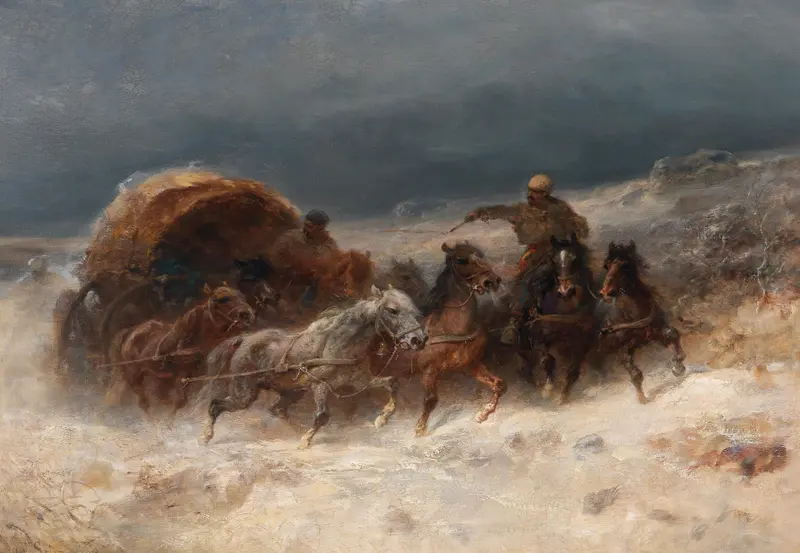
Geldings In A Winter Landscape
Adolf Schreyer
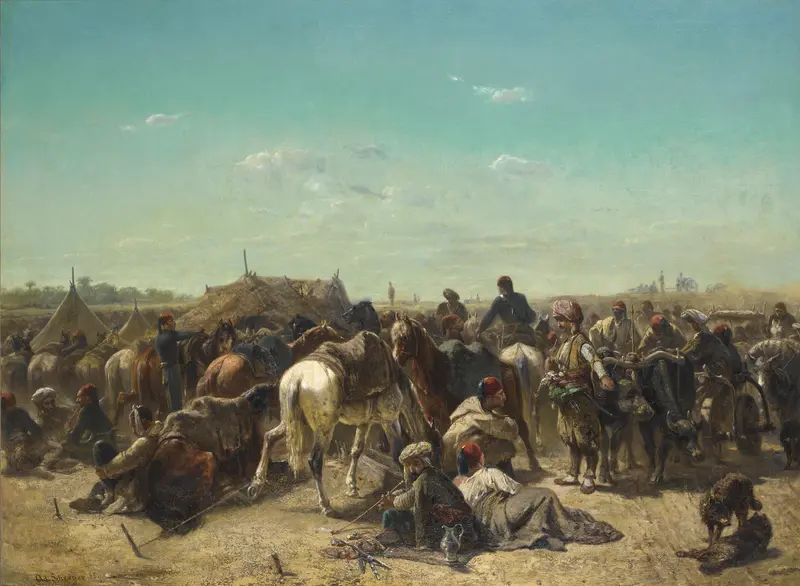
An Ottoman encampment
Adolf Schreyer
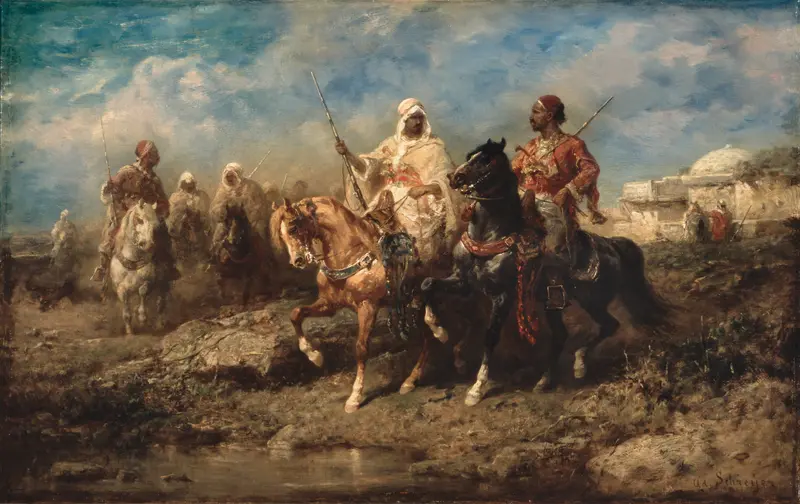
Arabs
Adolf Schreyer
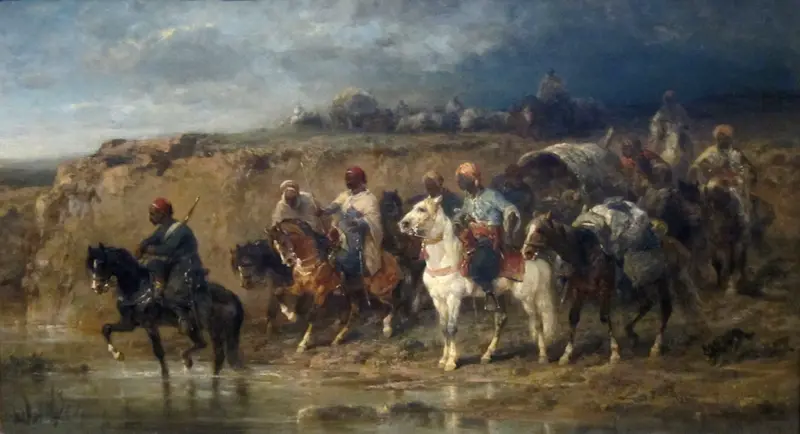
Arab Caravan
Adolf Schreyer
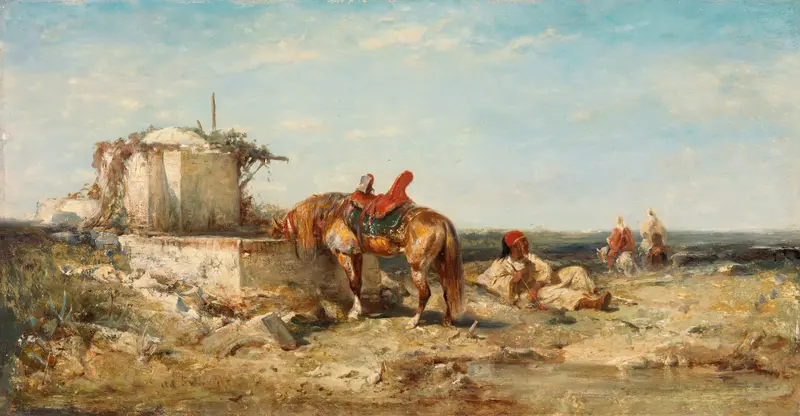
Eastern Soldiers with a Horse Drinking
Adolf Schreyer
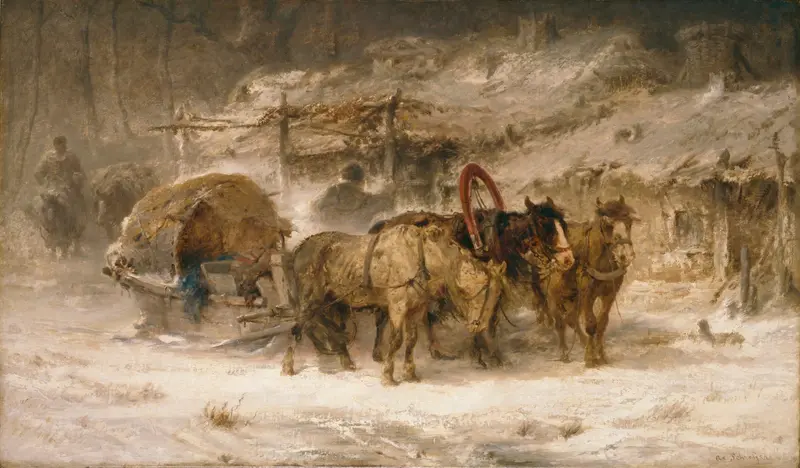
Halt at the Inn
Adolf Schreyer
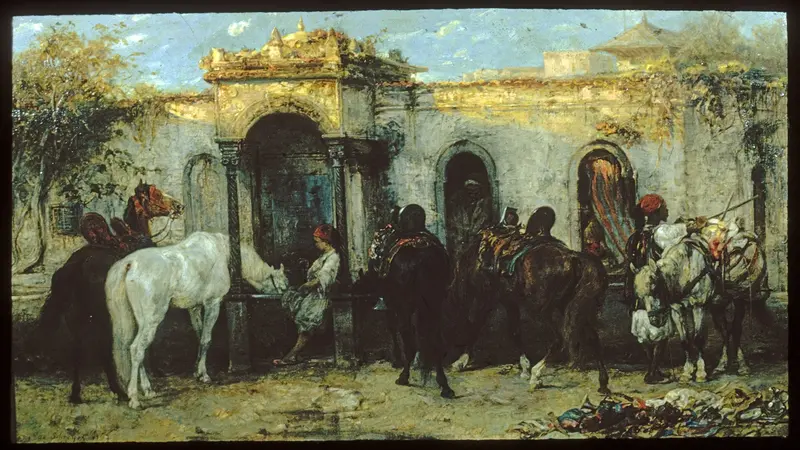
Arabs in Egypt, Sunrise
Adolf Schreyer
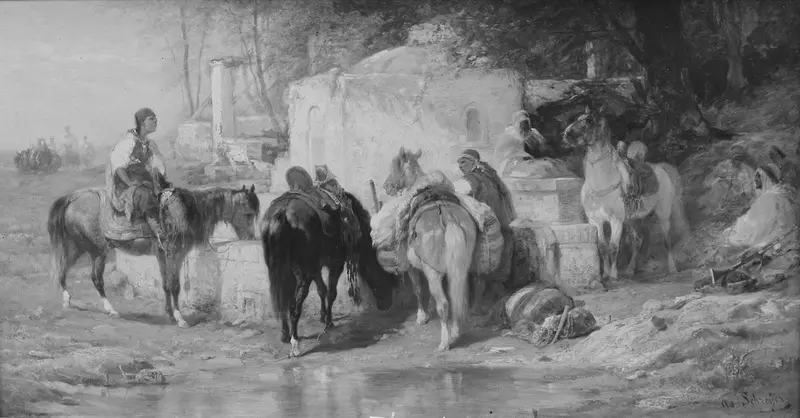
Arab Horsemen Resting at a Fountain
Adolf Schreyer
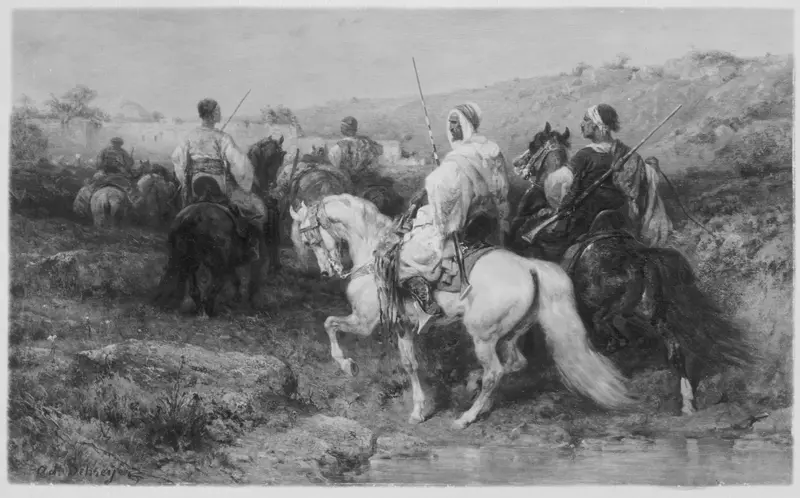
Arabs on the March
Adolf Schreyer
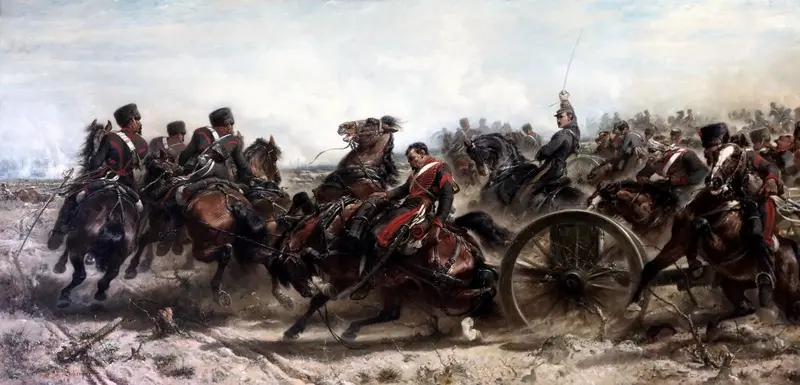
Charge de l'artillerie de la Garde Impériale à Traktir Orsay RF 440
Adolf Schreyer
More Genre Scene Art

Banquet of the Officers of the St George Civic Guard
Frans Hals

Rembrandt and Saskia in the Scene of the Prodigal Son
Rembrandt van Rijn

Bal du moulin de la Galette
Pierre-Auguste Renoir

Quadrille at the Moulin Rouge
Henri de Toulouse-Lautrec

A Burial at Ornans
Gustave Courbet

When Will You Marry?
Paul Gauguin