
Peasants with Cattle fording a Stream — History & Facts
The first thing that draws the eye in Peasants with Cattle fording a Stream is the quiet drama of the crossing itself: a man, sleeves rolled and trousers hitched, guides a patient cow through the cool water, while a woman in blue cradles a lamb, her gaze turned outward as if searching for reassurance or perhaps simply savoring the moment’s pause. The animals cluster around their keepers, their reflections caught in the dark, glassy stream, while the great tree above anchors the scene with its massive trunk and outstretched limbs. Light filters through the foliage to strike the figures and animals, picking out the white of a shirt, the russet of a hide, and the soft wool of the sheep, creating a gentle contrast with the shadowed woods behind.
This is not a scene of hardship or spectacle, but of everyday labor rendered with a sense of dignity and calm. The painter’s eye lingers on the small gestures—a hand steadying a horn, the careful step of a barefoot woman—inviting us to do the same. Painted in 1662, this work belongs to the world of the Dutch Golden Age, when artists like Adriaen van de Velde found poetry in the rhythms of rural life. Such paintings were not simply rustic decoration; they were prized by urban collectors who saw in them both a celebration of the countryside and a meditation on the relationship between people and nature.
In this era, the land was changing—drained, cultivated, and increasingly shaped by human hands—yet artists continued to return to the motif of the crossing, the ford, the pause at the water’s edge. Though little is recorded about the specific journey of this painting, now found in the gallerix.ru collection, its quiet observation of daily work speaks across centuries, inviting us to step into the shade, feel the cool water, and watch the crossing unfold.
More Artworks by Adriaen van de Velde

Staande stier
Adriaen van de Velde
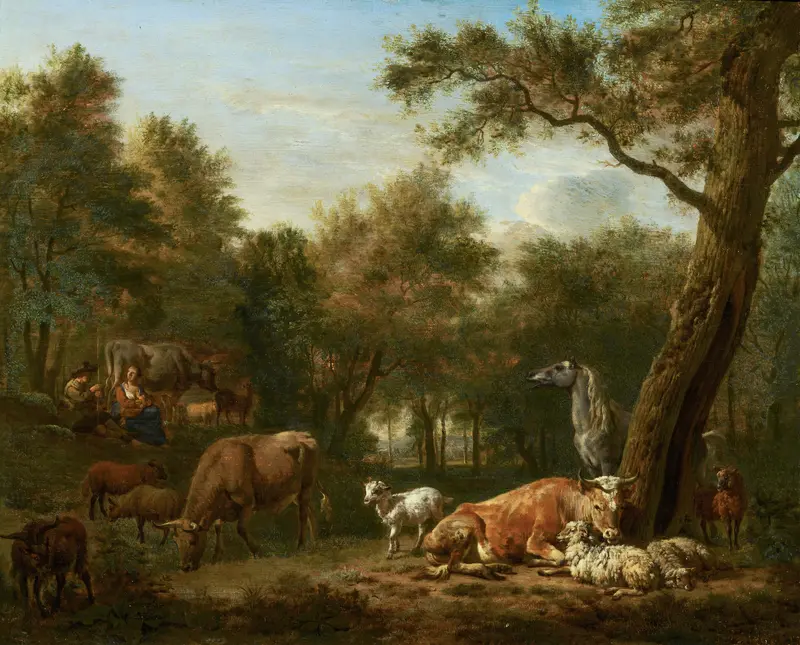
Wooded Landscape with Cattle
Adriaen van de Velde
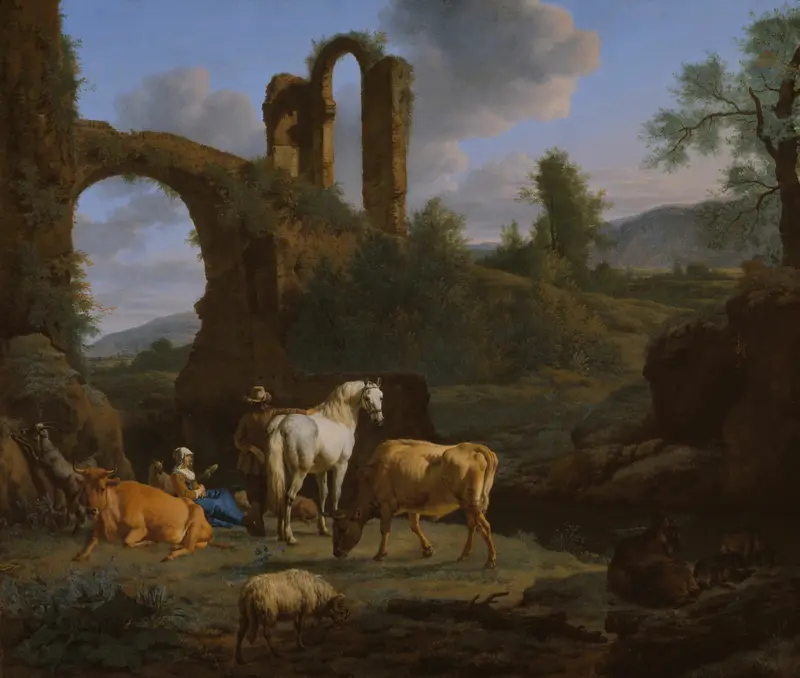
Pastoral Landscape with Ruins
Adriaen van de Velde
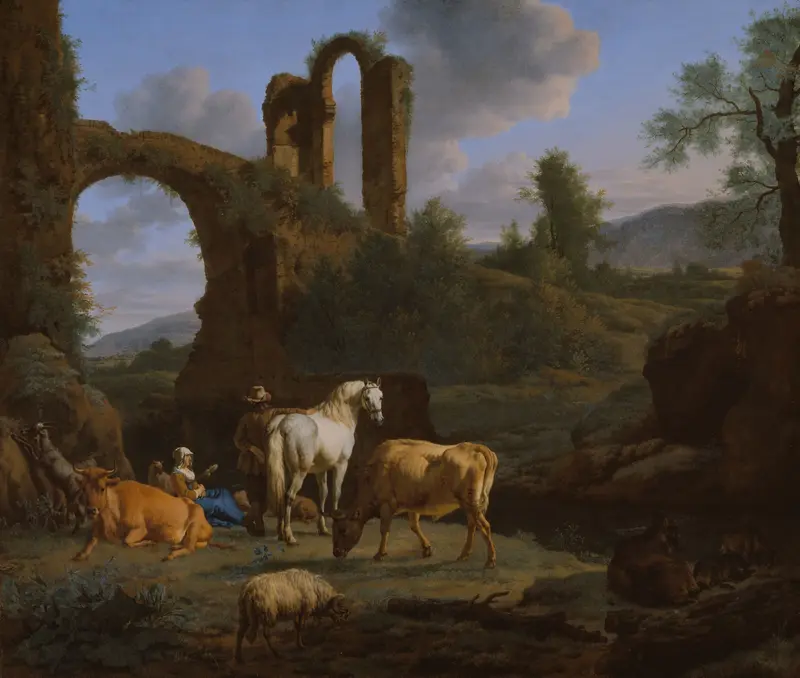
Pastoral Landscape with Ruins
Adriaen van de Velde
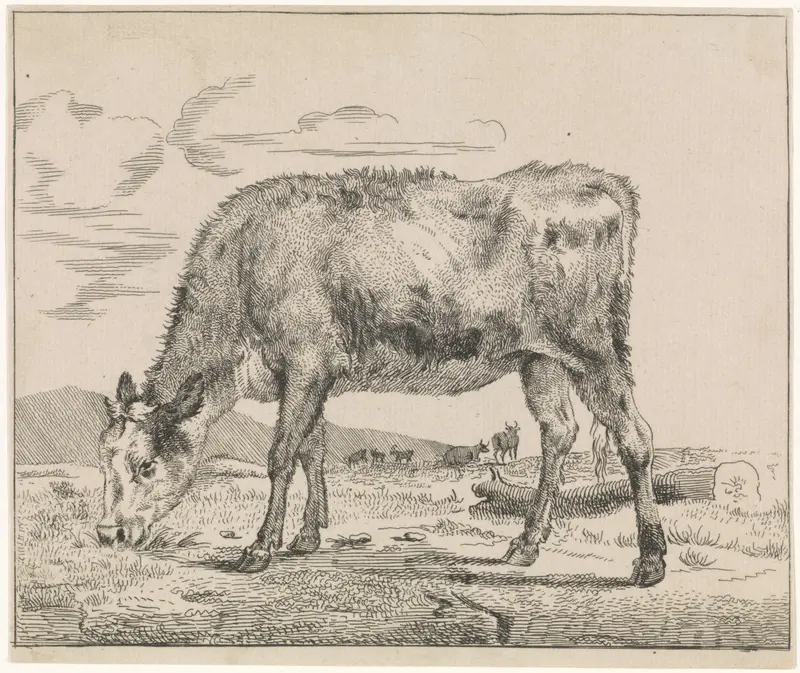
Grazend kalf
Adriaen van de Velde
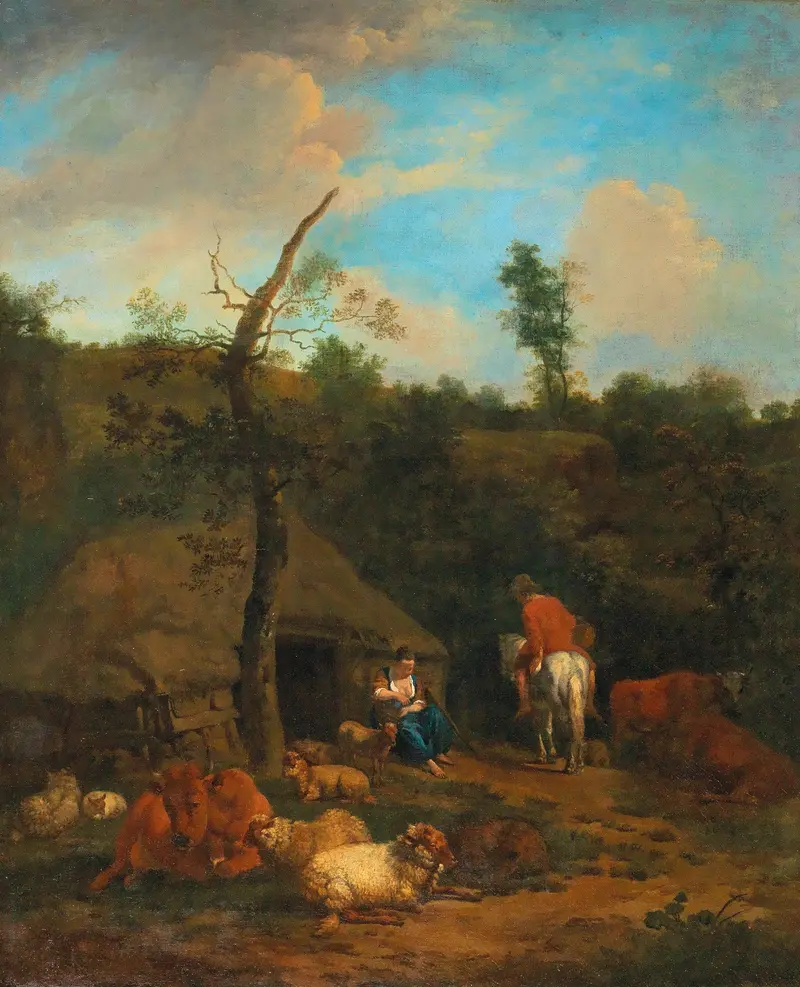
A herdsman and a shepherdess in front of a wooden farmhouse
Adriaen van de Velde
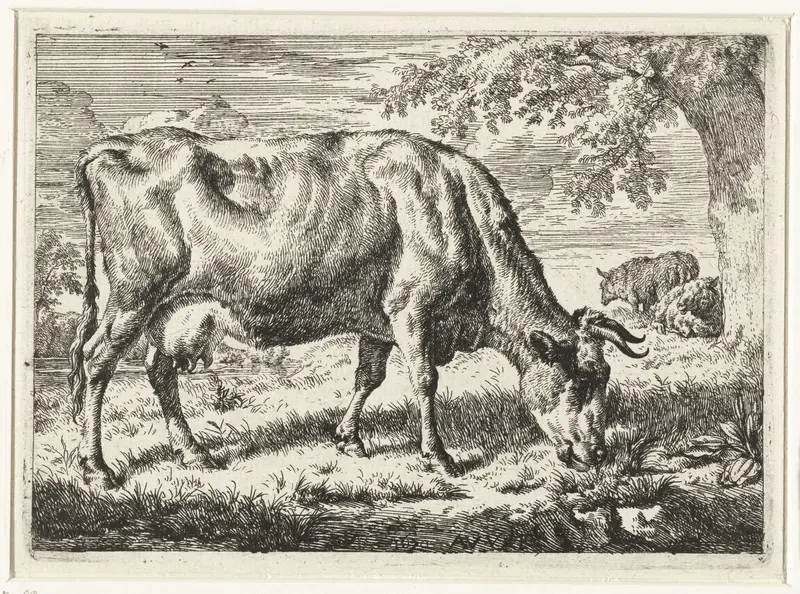
Grazende koe en twee schapen
Adriaen van de Velde
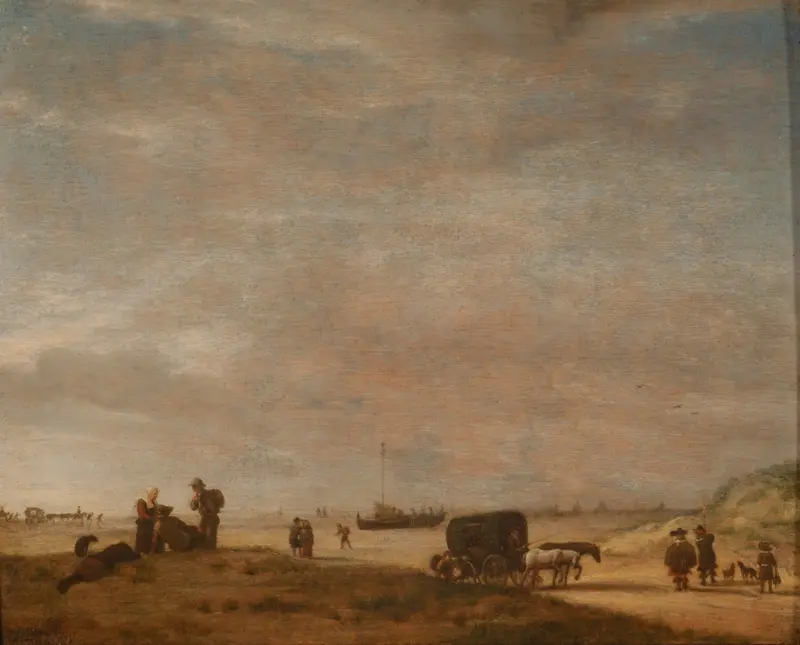
Scheveningen Beach
Adriaen van de Velde
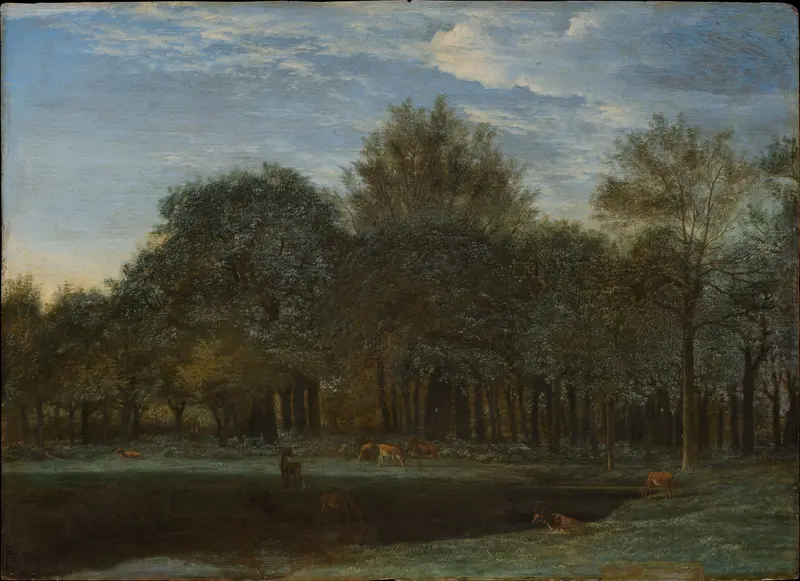
Forest Clearing with Grazing Deer
Adriaen van de Velde
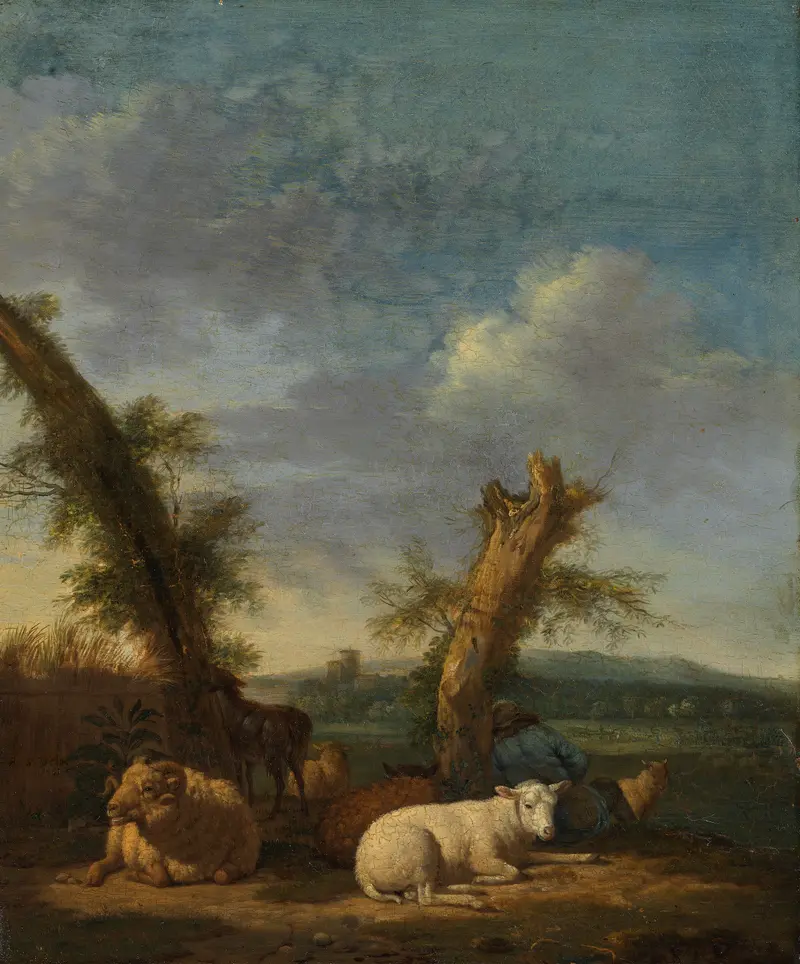
Landscape with Sheep and a Sleeping Shepherd
Adriaen van de Velde
More Genre Scene Art

Banquet of the Officers of the St George Civic Guard
Frans Hals

Rembrandt and Saskia in the Scene of the Prodigal Son
Rembrandt van Rijn

Bal du moulin de la Galette
Pierre-Auguste Renoir

Quadrille at the Moulin Rouge
Henri de Toulouse-Lautrec

A Burial at Ornans
Gustave Courbet

When Will You Marry?
Paul Gauguin