
Penitent Magdalene — History & Facts
When Bartolomé Estebán Murillo painted Penitent Magdalene in 1669, he was already renowned for his deeply human religious images, but this work stands out for its sheer popularity: Murillo painted at least half a dozen Magdalene subjects, and copies and variants soon spread across Spain and beyond. The Magdalene was a favored figure in Counter-Reformation Spain, embodying both sensuality and repentance, and Murillo’s interpretation became so influential that later artists and collectors sought to acquire their own versions. The painting’s gentle emotional tone and luminous palette made it a touchstone for devout contemplation—and for those eager to possess a Murillo. Here, Murillo captures Mary Magdalene at the height of her repentance, alone in a rocky wilderness.
Her eyes, glistening with tears, are lifted heavenward, while her hands clasp a simple wooden cross—a gesture of surrender and hope. The skull at her side is a classic memento mori, a reminder of mortality and the fleeting nature of earthly pleasures. The soft, golden light that bathes her figure is typical of Murillo’s late style, enveloping the saint in a tangible sense of grace.
Unlike Caravaggio’s harsher, more sensual Magdalene, Murillo’s version is gentle, inward, and suffused with forgiveness, inviting viewers to share in her moment of spiritual transformation. The precise early history of this particular Penitent Magdalene remains uncertain, as Murillo’s Magdalene paintings were often commissioned for private devotion and sometimes misattributed or confused with studio replicas. What is clear is that by the late 17th century, Murillo’s reputation had spread far beyond his native Seville, and his religious works were in high demand among both Spanish and foreign collectors. Today, this painting is recognized as a quintessential example of Baroque piety and Murillo’s gift for conveying emotion through light and gesture.
Its journey from the artist’s studio to the museum wall mirrors the enduring appeal of Murillo’s vision of repentance and redemption.
More Artworks by Bartolomé Estebán Murillo

Virgin and Child in Glory
Bartolomé Estebán Murillo

Vision of St Antony of Padua
Bartolomé Estebán Murillo

The Apparition of the Virgin to Saint Bernard
Bartolomé Estebán Murillo

The Martyrdom of St. Andrew
Bartolomé Estebán Murillo

Madonna and Child
Bartolomé Estebán Murillo

The Immaculate Conception
Bartolomé Estebán Murillo

The Virgin, from The Immaculate Conception
Bartolomé Estebán Murillo

The Mystical Marriage of Saint Catherine
Bartolomé Estebán Murillo

Murillo-inmaculada-catedral sevilla
Bartolomé Estebán Murillo
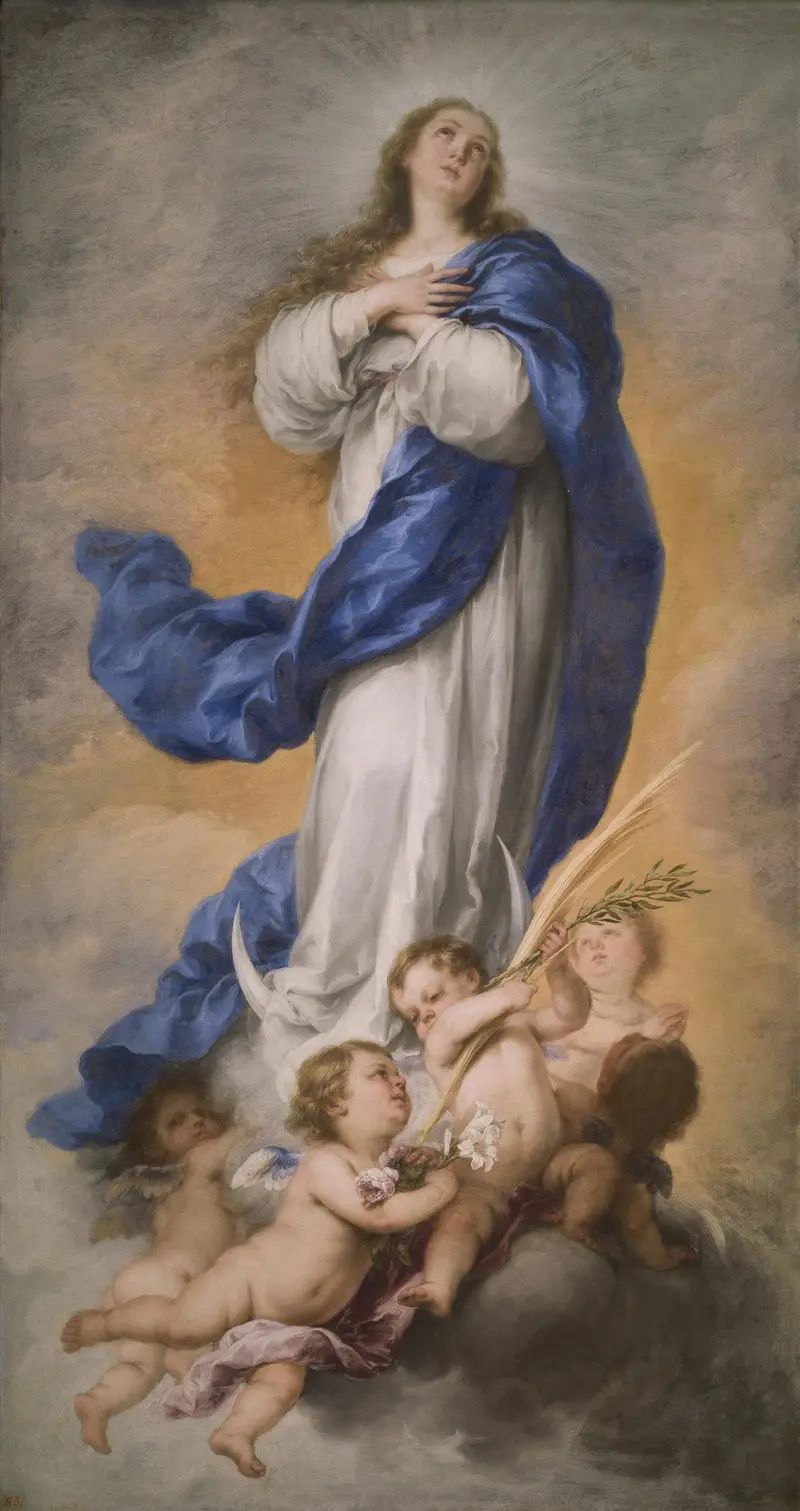
The Aranjuez Immaculate Conception
Bartolomé Estebán Murillo





