
Perseus Freeing Andromeda — History & Facts
A winged Perseus, dressed in a vivid orange tunic and golden cloak, swoops down from the left with his sword raised high, poised to strike. Below him, a monstrous sea creature with a gaping mouth and sharp teeth emerges from the dark, churning waters, its head turned upward in anticipation. On the right, Andromeda is chained to a rocky outcrop, her right arm stretched upward and secured by a heavy iron shackle, her body draped in a brilliant red cloth that leaves her torso exposed.
Her blond hair falls over her shoulder, and she turns her head toward Perseus, her left hand raised in a gesture that suggests both fear and hope. The play of light falls sharply on Perseus’s muscular form and Andromeda’s pale skin, heightening the tension between the figures and the surrounding darkness of the sea and rocks. The brushstrokes are fluid and confident, especially in the swirling water and the folds of fabric, where the paint creates a sense of movement and texture.
Small details, such as the glint of metal on the shackles and the orange highlights on the monster’s scales, add to the painting’s sense of immediacy and danger. Perseus Freeing Andromeda was created by Paolo Veronese in the 16th century. The Musée des Beaux-Arts de Rennes is listed as the holder of this work. The figures of Perseus, Andromeda, and the sea monster Ceto are all identified as part of the scene, with Andromeda shown as a damsel in distress, chained and topless, while Perseus is depicted standing in flight above the monster.
Sources: Wikidata Q17315193 · Image source (Wikimedia Commons)
More Artworks by Paolo Veronese

Triumph of Venice
Paolo Veronese

The Marriage at Cana
Paolo Veronese

The Wedding at Cana
Paolo Veronese

The Crucifixion
Paolo Veronese

Jupiter Hurling Thunderbolts at the Vices
Paolo Veronese

Assumption of the Virgin
Paolo Veronese

Rape of Europa
Paolo Veronese

Holy Family
Paolo Veronese

Holy Family with Young Saint John
Paolo Veronese
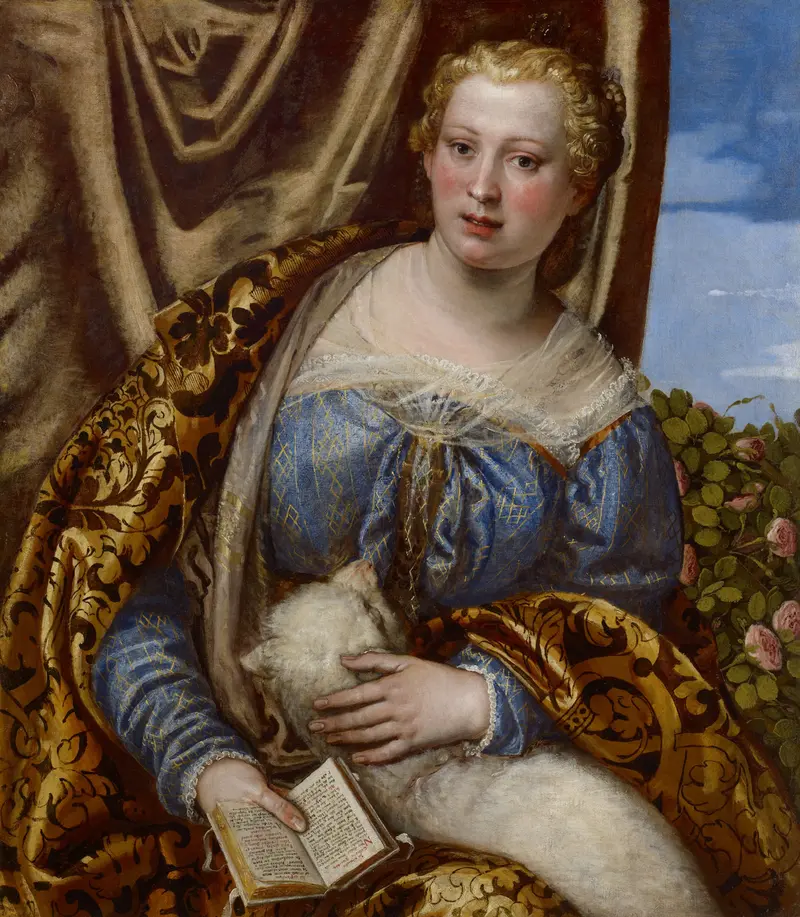
Portrait Of A Lady As Saint Agnes
Paolo Veronese





