
Assumption of the Virgin — History & Facts
A radiant burst of golden light surrounds the Virgin Mary as she rises at the center of the composition, her arms outstretched and her gaze lifted upward. She is enveloped in a flowing rose-colored robe and a blue mantle, her figure illuminated against a backdrop of swirling clouds and a host of angels. Directly below her, a group of angels and cherubs gather, some playing musical instruments such as a pipe organ and a cello, while others support her ascent or look upward in adoration.
The lower register is filled with figures of apostles, their faces turned toward the Virgin, some gesturing in awe or reading from open books, their robes rendered in deep greens, ochres, and reds. Above the Virgin, a cluster of cherubs and angels form a bridge of clouds, carrying garlands and a crown, their bodies rendered with soft, rounded modeling and delicate highlights. The entire scene is suffused with warm, luminous colors, from the golden light behind Mary to the pinks, blues, and greens of the figures’ robes, creating a sense of movement and celestial harmony.
The brushwork is fluid and expressive, especially in the billowing draperies and the soft modeling of flesh, while the clouds are built up with sweeping, textured strokes. Small details, such as the delicate garlands of flowers, the intricate pipes of the organ, and the expressive faces of each figure, reveal the artist’s attention to both narrative and ornament. The composition is arranged vertically, leading the viewer’s eye from the apostles at the bottom, through the ascending Virgin, to the divine presence above, emphasizing the theme of spiritual elevation. Assumption of the Virgin is created by Paolo Veronese in the 1580s.
The date of this image is recorded as 4 November 2016.
Sources: Wikidata Q124252053 · Image source (Wikimedia Commons)
More Artworks by Paolo Veronese

Triumph of Venice
Paolo Veronese

The Marriage at Cana
Paolo Veronese

The Wedding at Cana
Paolo Veronese

The Crucifixion
Paolo Veronese

Jupiter Hurling Thunderbolts at the Vices
Paolo Veronese

Perseus Freeing Andromeda
Paolo Veronese

Rape of Europa
Paolo Veronese

Holy Family
Paolo Veronese

Holy Family with Young Saint John
Paolo Veronese
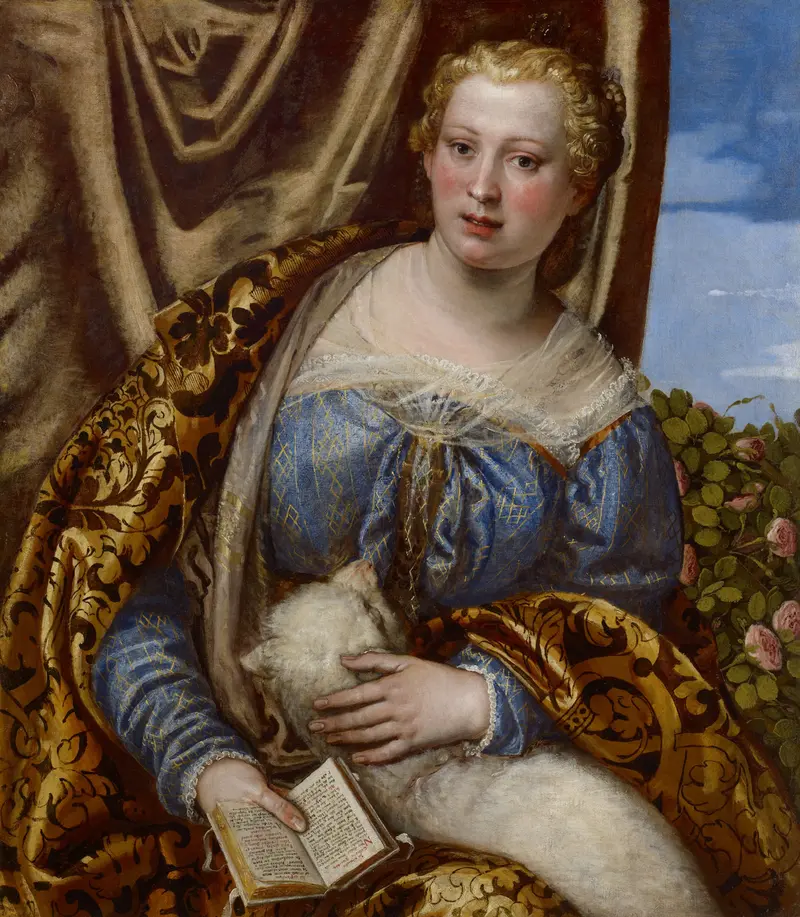
Portrait Of A Lady As Saint Agnes
Paolo Veronese





