
Petrarch at the Spring of Vaucluse — History & Facts
A figure in deep red, half-shadowed and solitary, draws the viewer’s gaze first not by action, but by stillness. The young man, robed and crowned with a matching cap, leans against a boulder at the edge of a wild ravine, his expression distant, his hand trailing over a sheet of paper. The light creeps in from the upper left, illuminating a distant villa and the gentle slope of the land, but the foreground remains dense and mysterious, a tangle of roots and stone.
The composition pulls the eye from the bright, cultivated world above to the shadowy, introspective world below, as if inviting us to cross a threshold between civilization and the private realm of thought. Every detail—the careful drape of the garment, the curling leaves, the trickle of water—signals a pause, a moment of poetic contemplation. Painted in 1867, Petrarch at the Spring of Vaucluse by Arnold Böcklin belongs to a world fascinated by the power of landscape to shape the inner life. In the later nineteenth century, artists across Europe turned to historical and literary subjects, often using them as vehicles for exploring the self in nature.
Böcklin, known for his symbolist leanings, here chooses not the drama of action but the drama of reflection, placing the poet alone at the threshold of inspiration. The painting’s brooding palette and careful orchestration of light and dark reflect the Romantic legacy still alive in Böcklin’s era, even as the world around him was rapidly industrializing. Now part of the Kunstmuseum Basel’s collection, this work invites us to linger in its quiet, searching mood—just as its subject lingers at the edge of the spring.
More Artworks by Arnold Böcklin

Die Toteninsel III
Arnold Böcklin
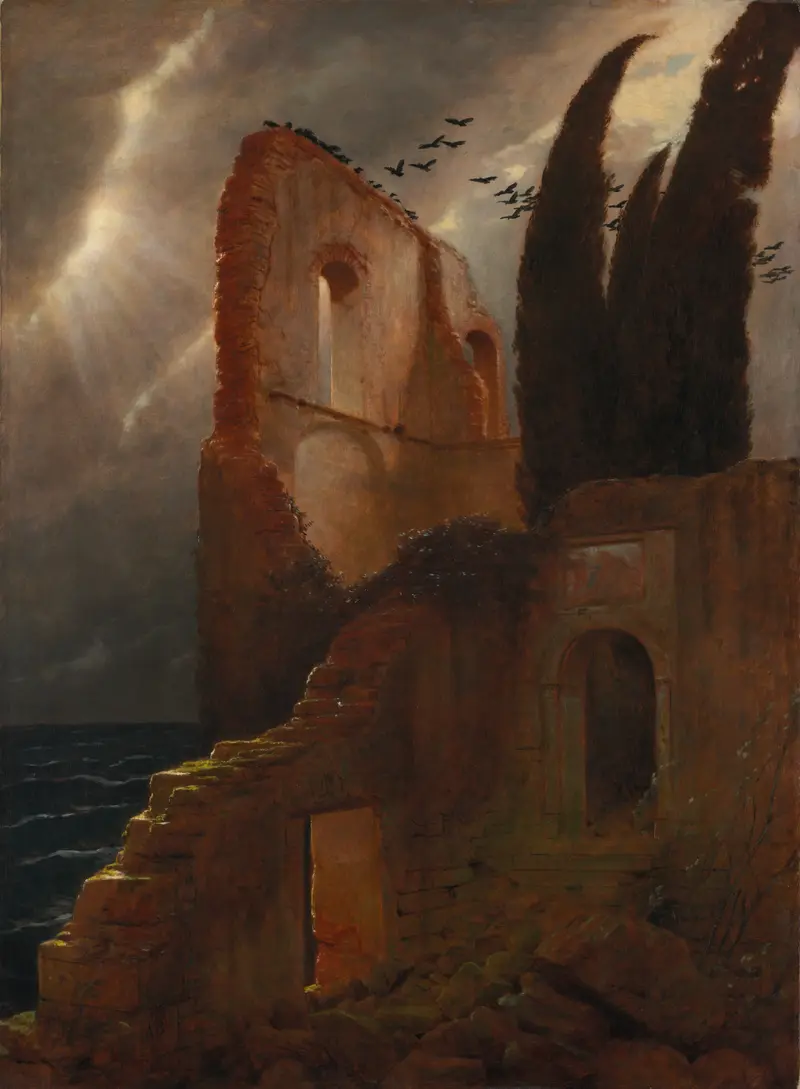
Ruin by the Sea
Arnold Böcklin
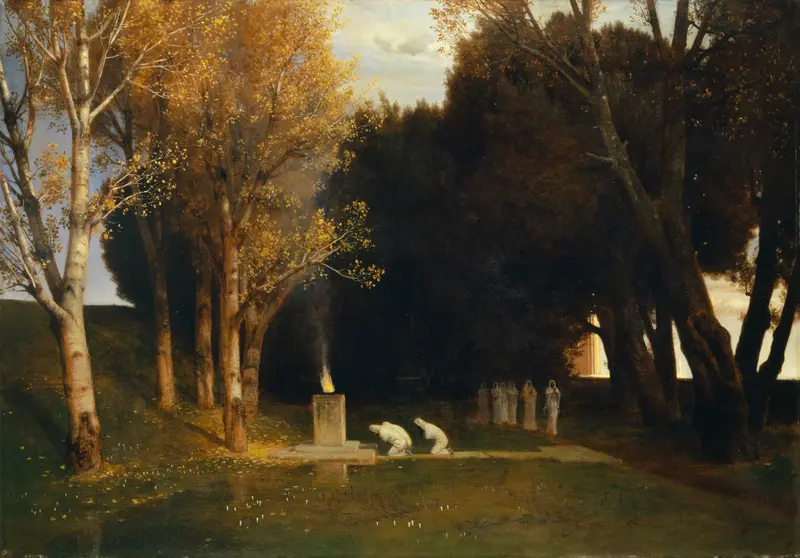
The Sacred Grove
Arnold Böcklin
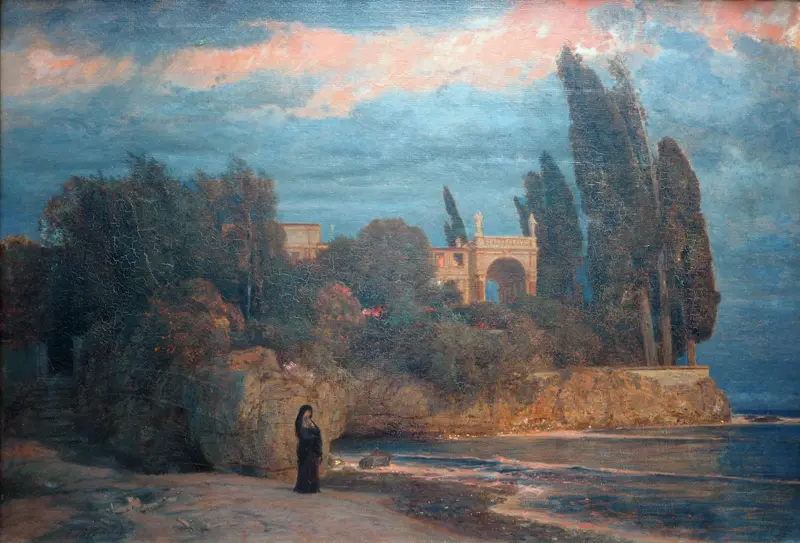
Villa by the Sea
Arnold Böcklin
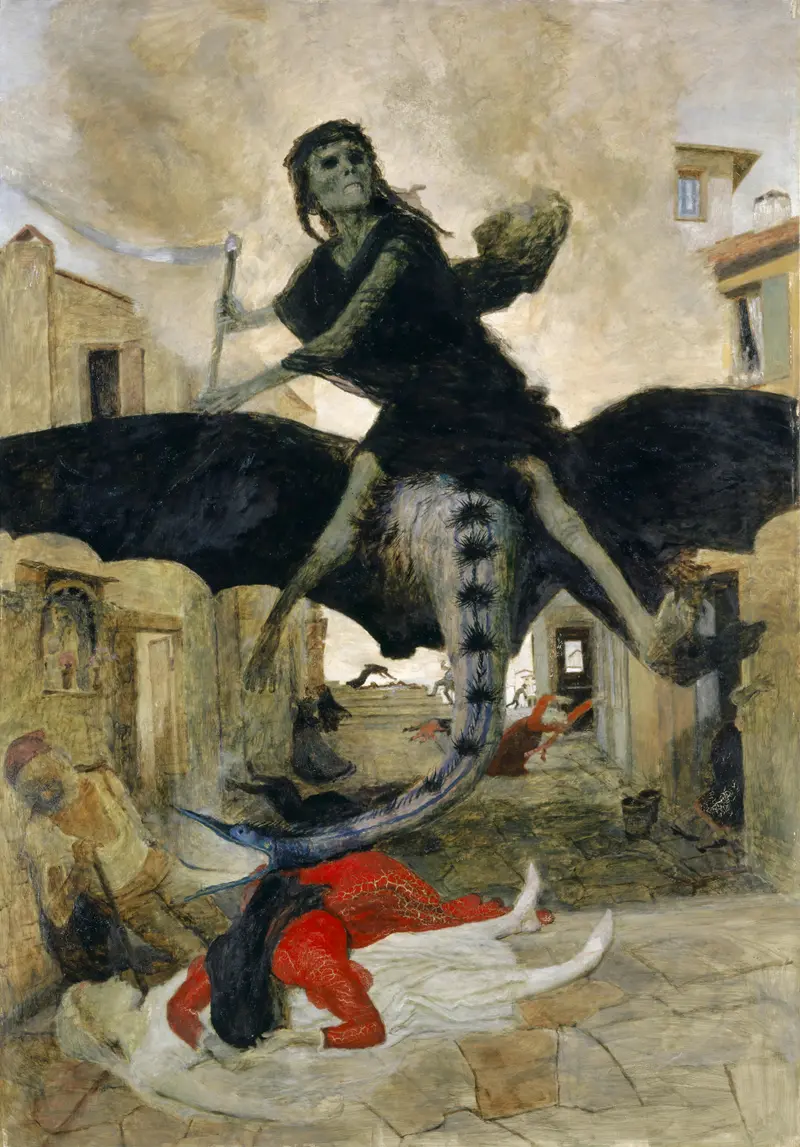
The Plague
Arnold Böcklin
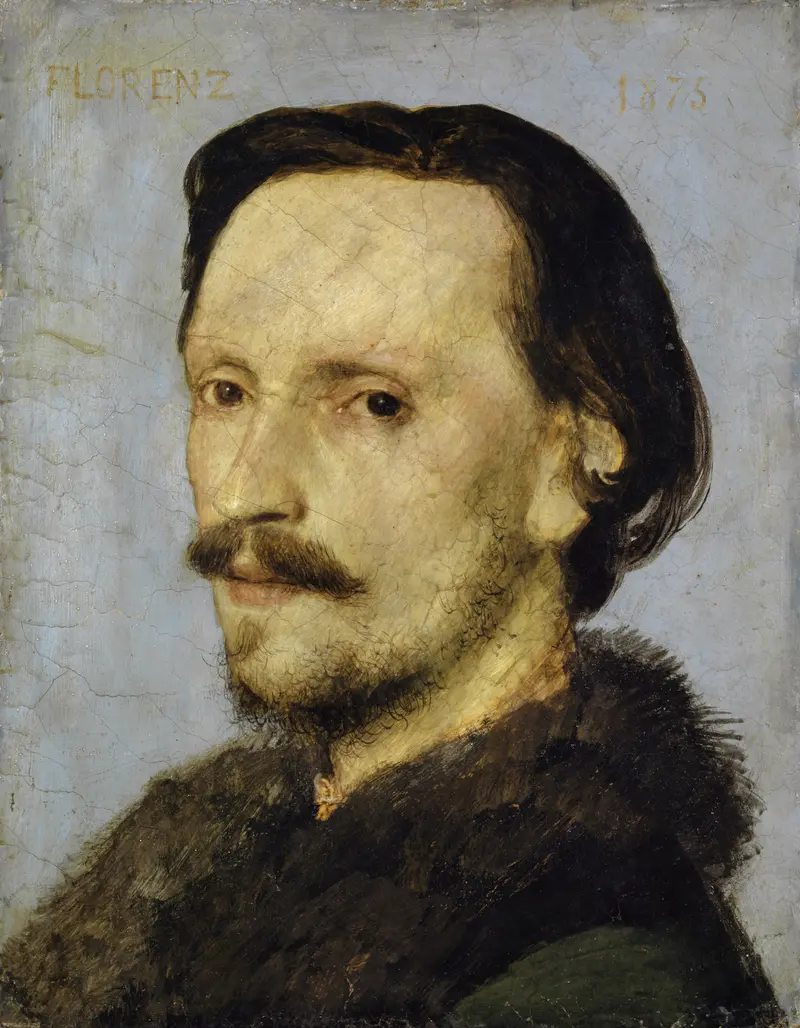
Böcklin Bildnis des Kunsthistorikers Adolph Bayersdorfer, 1875
Arnold Böcklin
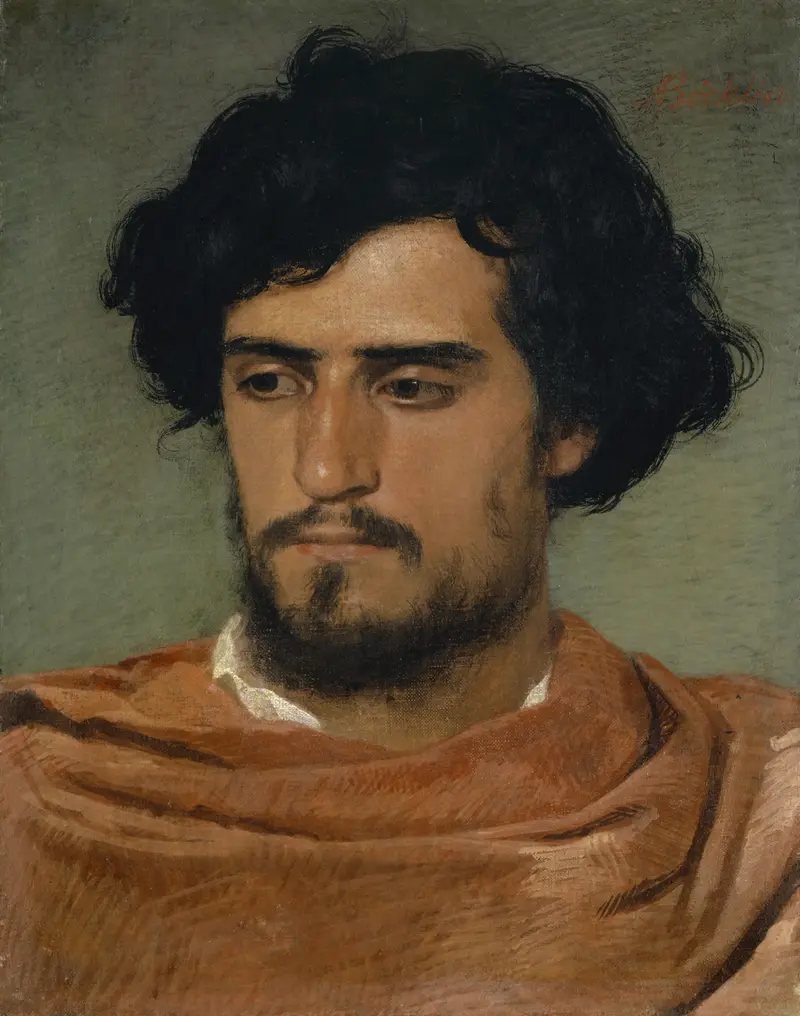
Head of a Roman
Arnold Böcklin
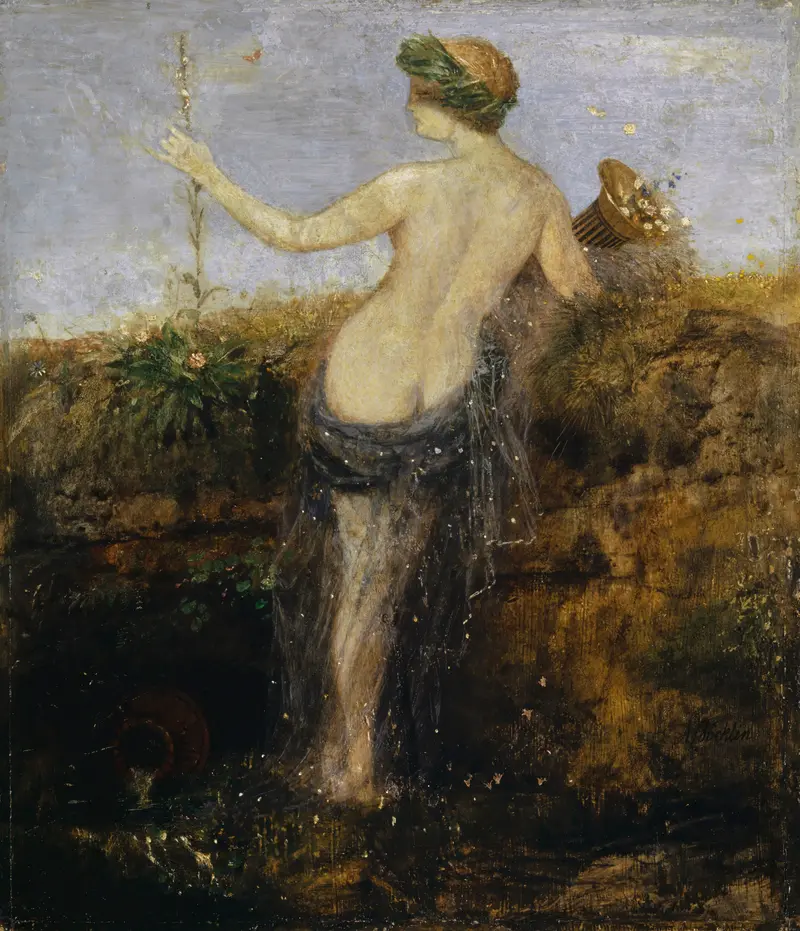
Nymphe with Horn of Plenty
Arnold Böcklin
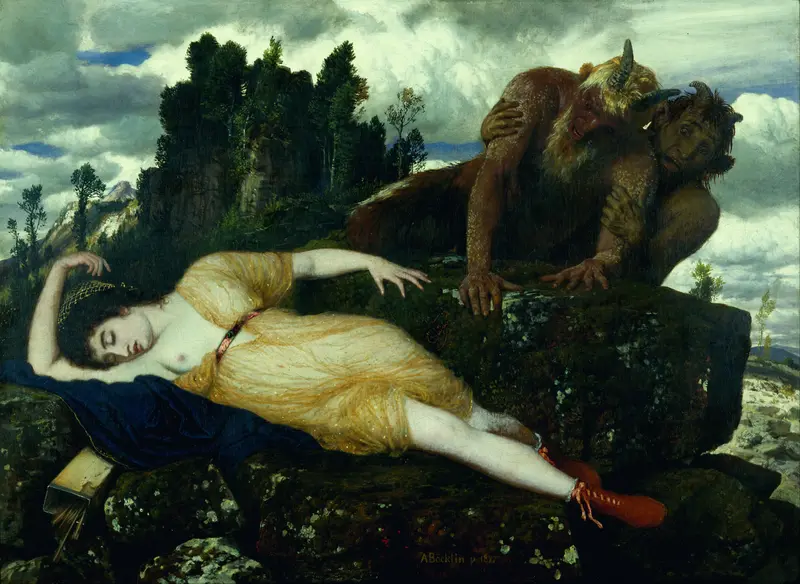
Sleeping Diana Watched by Two Fauns
Arnold Böcklin
Spring (Songs of Spring)
Arnold Böcklin
More Landscape Art

The Starry Night
Vincent van Gogh

View of Delft
Johannes Vermeer

Water Lilies
Claude Monet

The Grand Canal, Venice, looking north-west from the Ca' Corner to the Ca' Contarini degli Scrigni, with the campanile of Santa Maria della Carità
Canaletto

Windsor Castle
Canaletto

The Grand Canal looking North-East from the Palazzo Dolfin-Manin to the Rialto Bridge
Canaletto