
Pheasants. — History & Facts
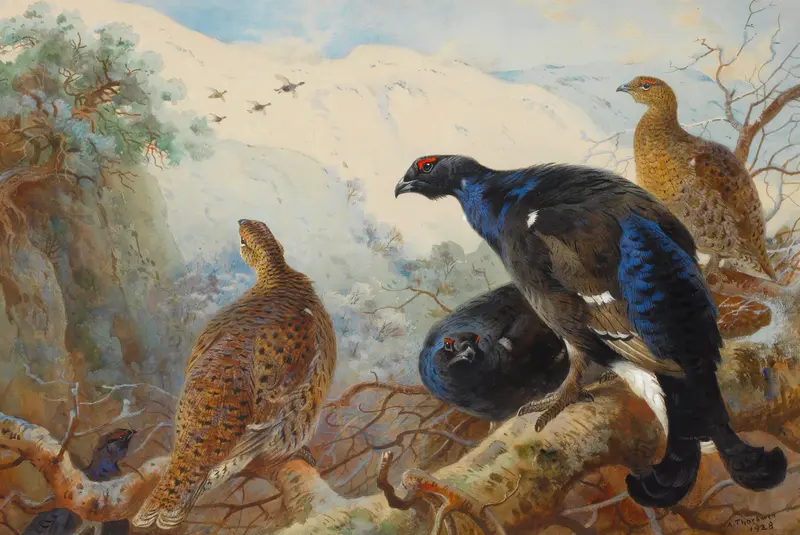
What first catches the eye in Pheasants by Archibald Thorburn is the electric contrast between the cock pheasant’s jewel-toned plumage and the earthbound subtlety of his companion. The male’s iridescent greens, purples, and fiery coppers seem to pulse with life against the soft, sandy ground and the tangled undergrowth. Thorburn’s brush guides us to the tilt of the pheasant’s head—alert, inquisitive, perhaps protective—while the hen, camouflaged in her dappled browns, nestles low, half-hidden in the grass.
The play of light—cool and blue in the background, warm and golden in the foreground—pulls the viewer into the hush of the scene, suggesting both intimacy and vigilance. Painted in 1918, this work belongs to a world where the British countryside was both a source of solace and a stage for tradition. Wildlife studies such as this, often commissioned by naturalists, landowners, or sporting enthusiasts, were prized for their accuracy and beauty, serving as both scientific record and celebration of rural life. Thorburn was renowned for his keen observation and ability to capture the character of birds in their natural settings, a skill much in demand as the landscape of Britain changed in the early twentieth century.
Now in the Bonhams collection, this painting is a reminder of a moment when close attention to nature was both an art and a way of seeing—a reason to linger over every feather and shadow.
More Artworks by Archibald Thorburn

The Watchful Hinds
Archibald Thorburn
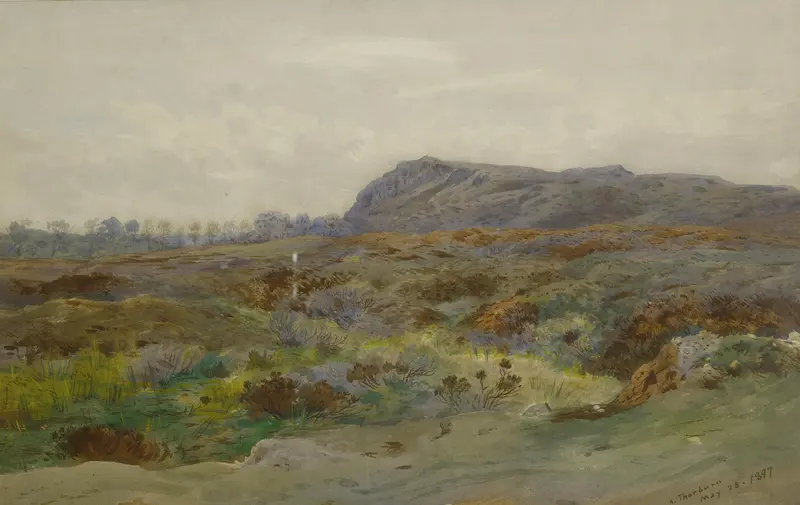
Moorland Landscape
Archibald Thorburn
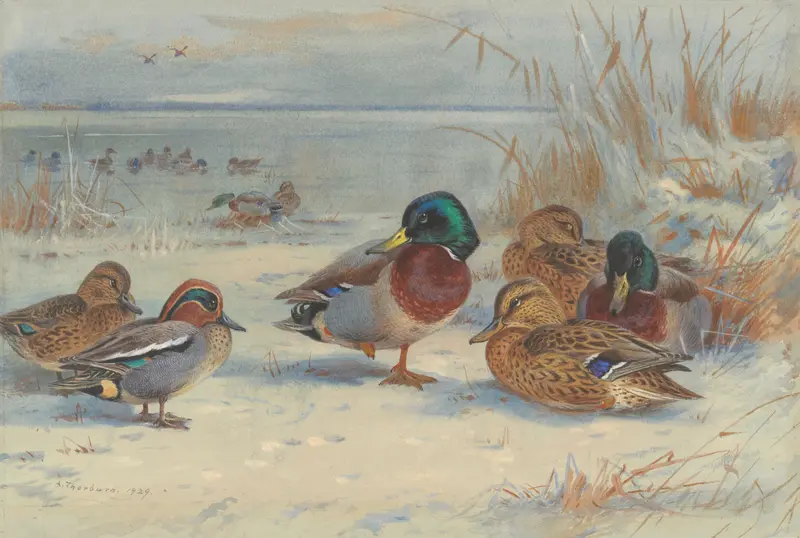
Mallard and teal in the snow
Archibald Thorburn
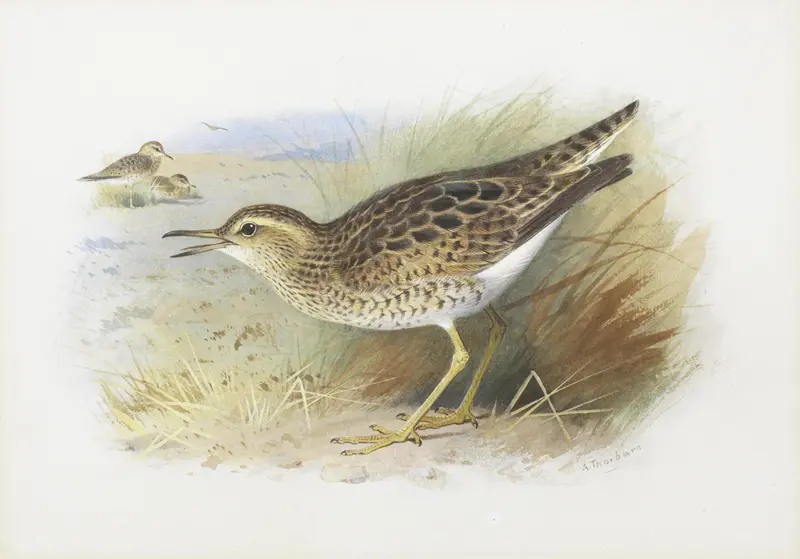
Bartram's Plover
Archibald Thorburn
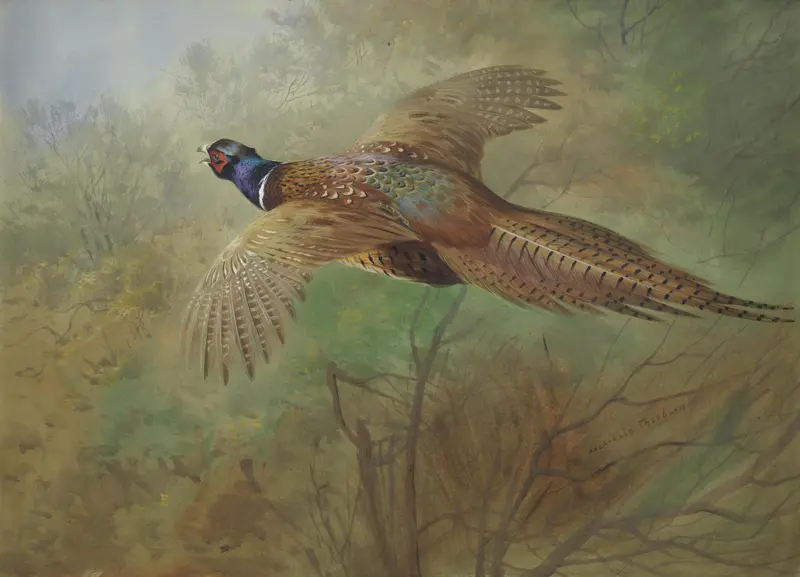
Pheasant in flight
Archibald Thorburn
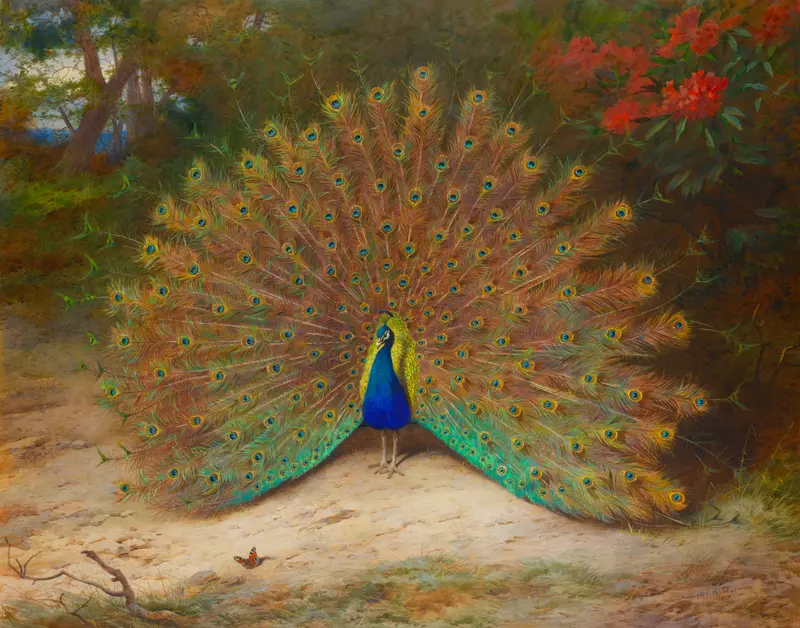
Peacock and Peacock Butterfly
Archibald Thorburn
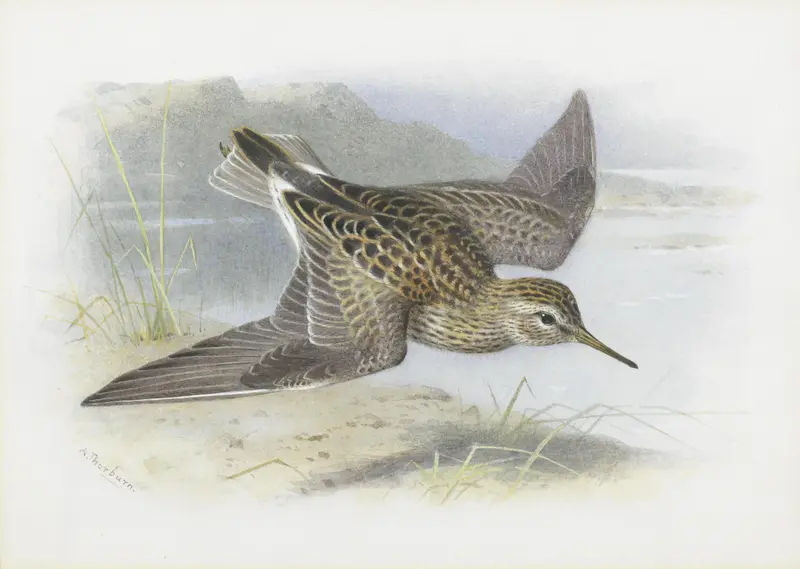
Pectoral Sandpiper
Archibald Thorburn
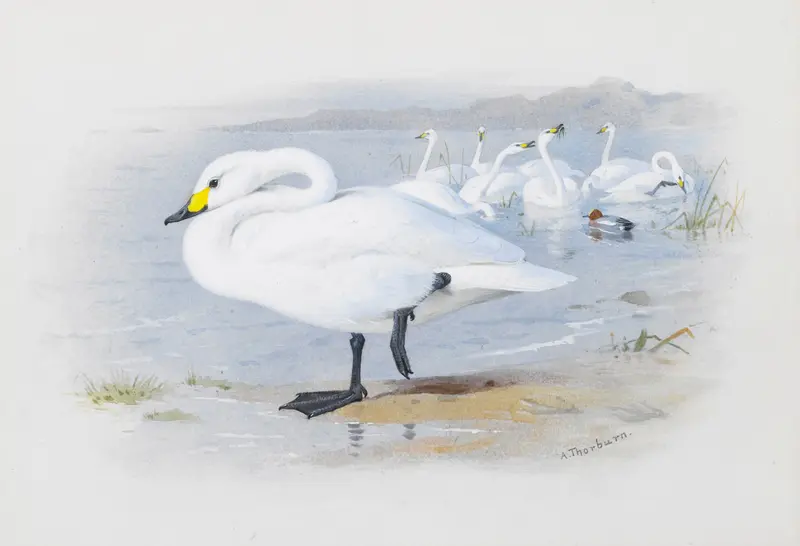
Bewick's swan.
Archibald Thorburn
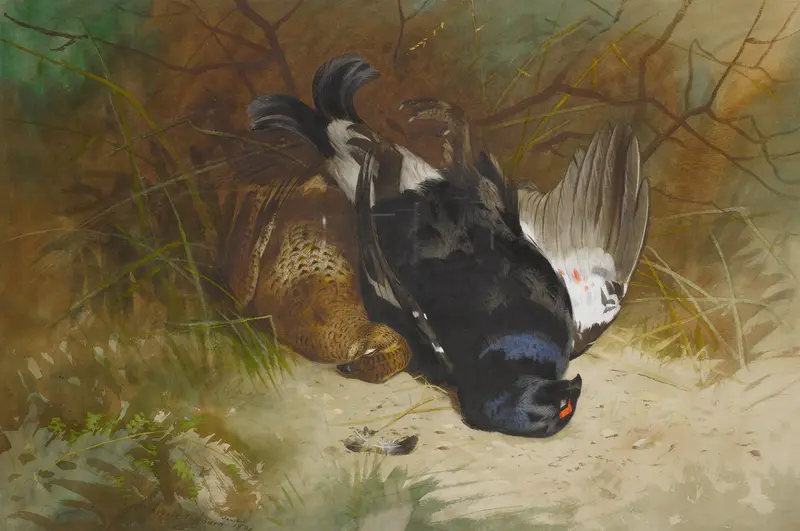
Still life of a pair of Blackgame.
Archibald Thorburn
Blackgame
Archibald Thorburn





