
Pity — History & Facts
No other work by William Blake has puzzled viewers quite like Pity, partly because its origins lie in a single, enigmatic line from Shakespeare: “And pity, like a naked new-born babe, / Striding the blast, or heaven’s cherubim, hors’d / Upon the sightless couriers of the air.” Painted in 1795, Pity stands alone as Blake’s only direct response to Macbeth, and he returned to its imagery in several versions, each with subtle changes. Scholars still debate the exact medium—Blake’s unique technique blends watercolor, ink, and relief etching, defying easy categorization. The work’s haunting composition and ambiguous symbolism have sparked centuries of interpretation, with no definitive answer. Blake fixes the moment when Shakespeare’s personified Pity descends from the heavens, carrying a child in her arms while a winged horse gallops below.
The figure’s flowing robes and the ethereal horse are rendered with delicate lines and washes, their forms suspended in a dreamlike space. The downward gaze of the angelic figure, the infant’s limp posture, and the horse’s wild leap create a sense of both care and peril, echoing the ambiguity of pity itself—both a blessing and a burden. Unlike Fuseli’s dramatic, shadowy scenes from Shakespeare, Blake’s vision is lighter, more visionary, and less tied to theatrical realism.
The moonlit palette and swirling clouds further dissolve the boundaries between earth and sky, reality and imagination. The physical history of Pity is as elusive as its meaning. It was created during Blake’s most experimental period, when he was producing his celebrated “Large Colour Prints,” likely for a small circle of private patrons or friends rather than a public exhibition. Today, the most famous version resides in the Tate Britain, but others are held in private collections and institutions, each varying slightly in color and detail.
As with much of Blake’s work, Pity was largely overlooked in his lifetime, only gaining recognition in the late nineteenth century as interest in his visionary art grew. Now, it stands as a testament to Blake’s singular approach, merging poetry, painting, and printmaking into a form that still resists easy classification.
More Artworks by William Blake
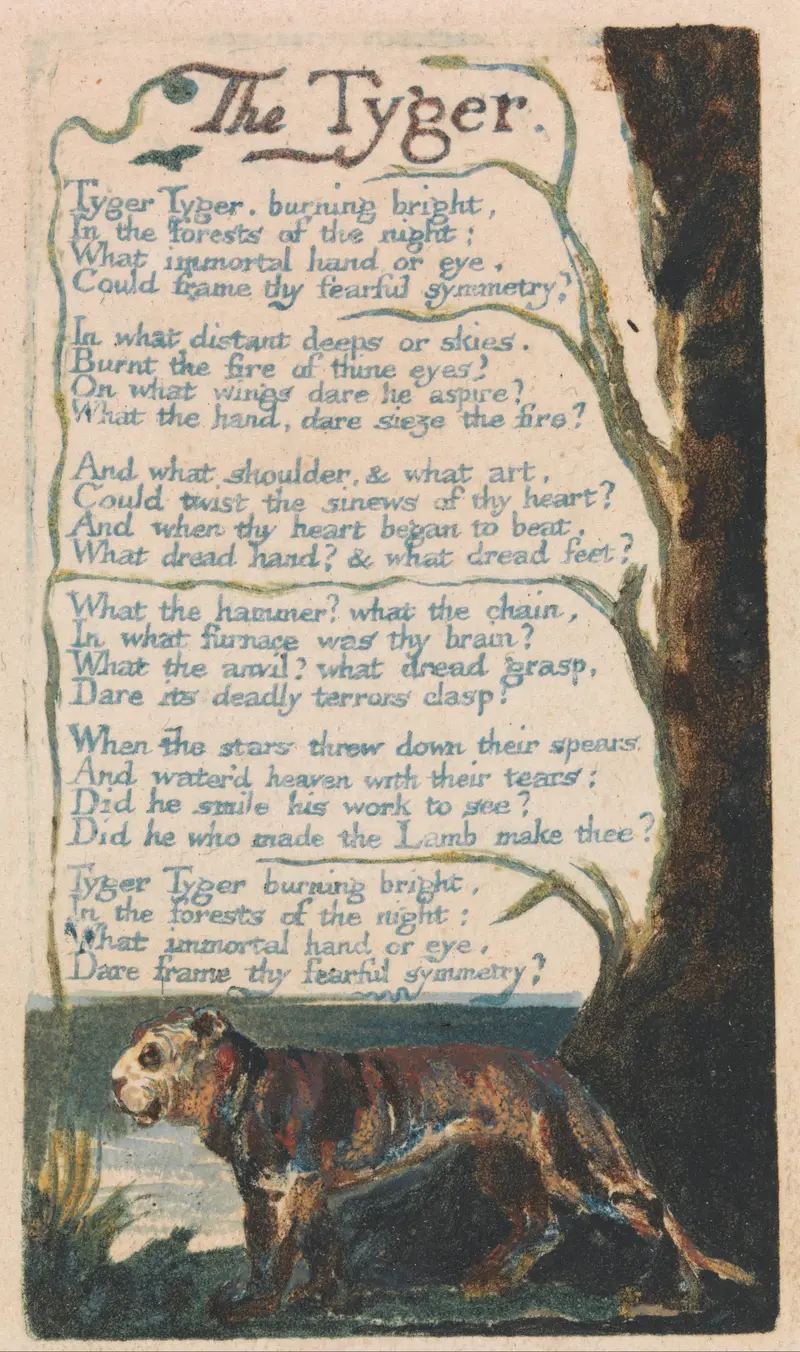
The Tyger
William Blake

Christ Blessing
William Blake
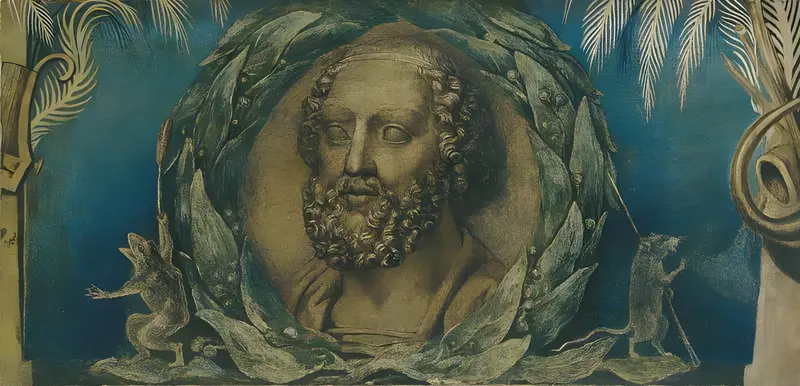
Homer
William Blake
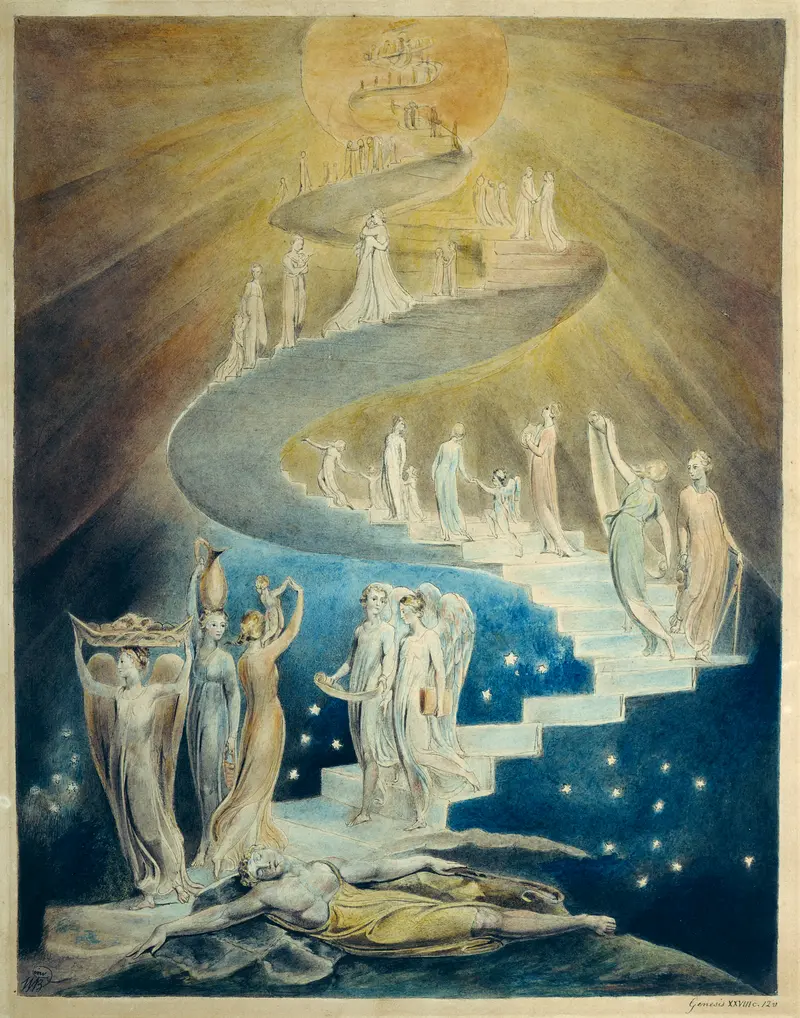
Jacob's Ladder
William Blake
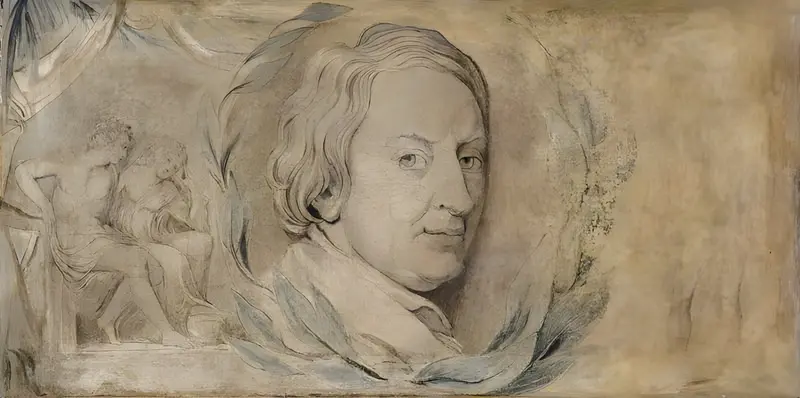
John Dryden (1631–1700)
William Blake
Landscape near Felpham
William Blake
Sacrifice of Job
William Blake
Christ's Entry into Jerusalem
William Blake
The Ancient of Days
William Blake
Adam Naming the Beasts
William Blake





