
Portrait of a Prelate and a Young Man — History & Facts
What first catches the eye in Portrait of a Prelate and a Young Man is the charged moment of encounter between youth and authority, staged with theatrical flair. The prelate, seated in a high-backed chair and clad in somber clerical black, commands the right half of the canvas, his gaze steady and appraising. Opposite him, a young man approaches, clutching a large document—perhaps a petition or letter of introduction—his posture a mixture of deference and anticipation.
Light falls across the young man’s face and hands, drawing us into his nervous energy, while the prelate remains enveloped in shadow, his power underscored by the monumental drapery behind him. The cherub at left, bearing a shield with a coat of arms, and the putto at right with a bishop’s crozier and a shield, transform the scene from mere portrait to allegory, hinting at lineage, office, and the rituals of patronage. Painted in 1632, this work by Abraham Jansz. van Diepenbeeck belongs to the world of early Baroque Antwerp, where portraiture and allegory often mingled to serve the ambitions of church and elite alike.
Such paintings were not only records of likeness but also instruments of social negotiation, commissioned to commemorate appointments, alliances, or the conferral of favors. The presence of putti and heraldic symbols roots the picture in the language of status and ecclesiastical authority, while the careful rendering of costume and gesture speaks to the artist’s training in the grand tradition of Flemish narrative painting. Though history has kept few traces of this particular commission, its date and style place it squarely in a moment when art was a stage for both personal aspiration and institutional power.
Look again at the faces: one world-weary, one eager—each a player in a drama as old as ambition itself.
More Artworks by Abraham Jansz. van Diepenbeeck
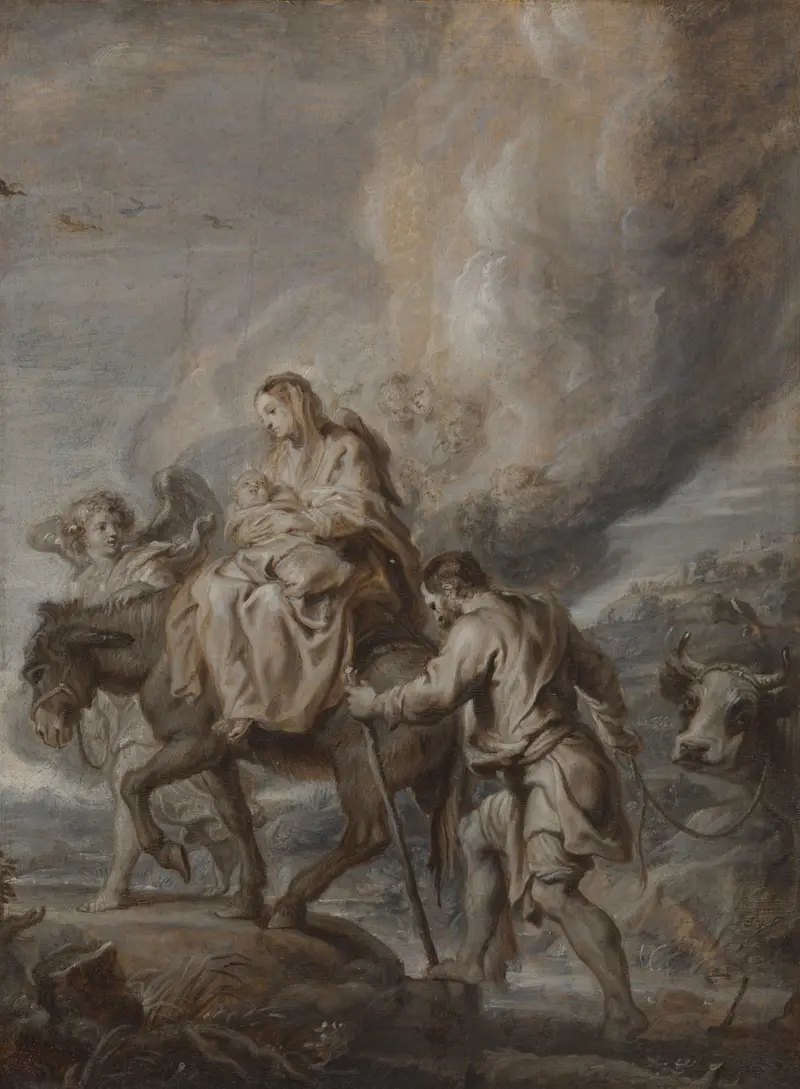
The Flight into Egypt
Abraham Jansz. van Diepenbeeck
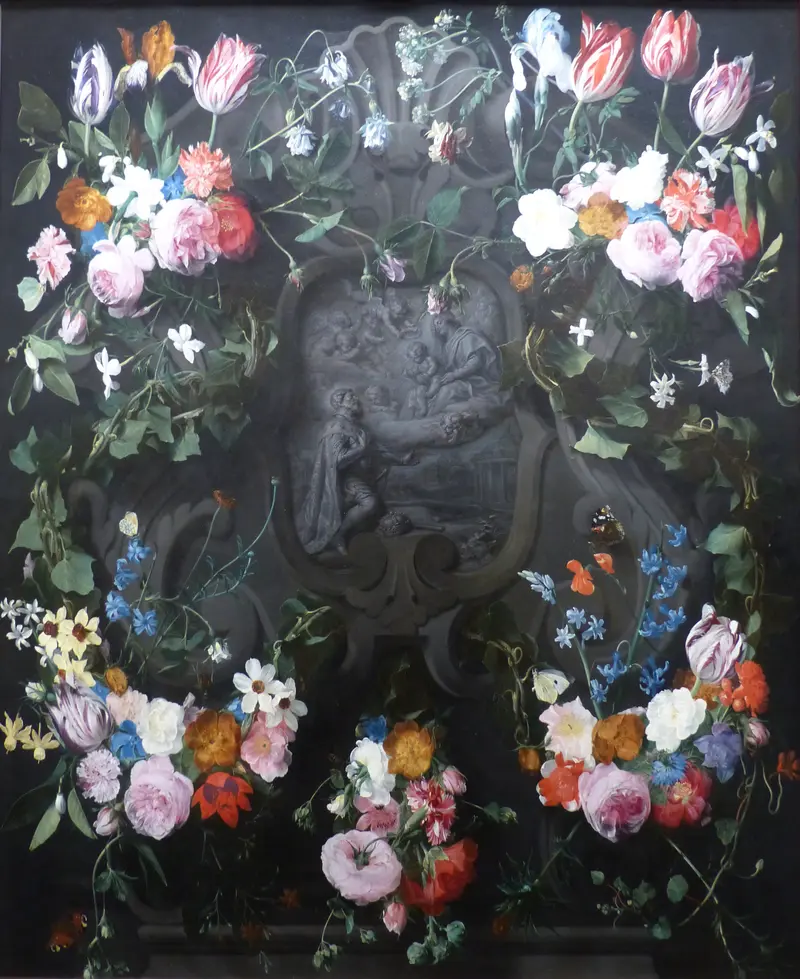
Guirlande de fleurs avec l'apparition de la Vierge-à-l'Enfant à St Léopold
Abraham Jansz. van Diepenbeeck
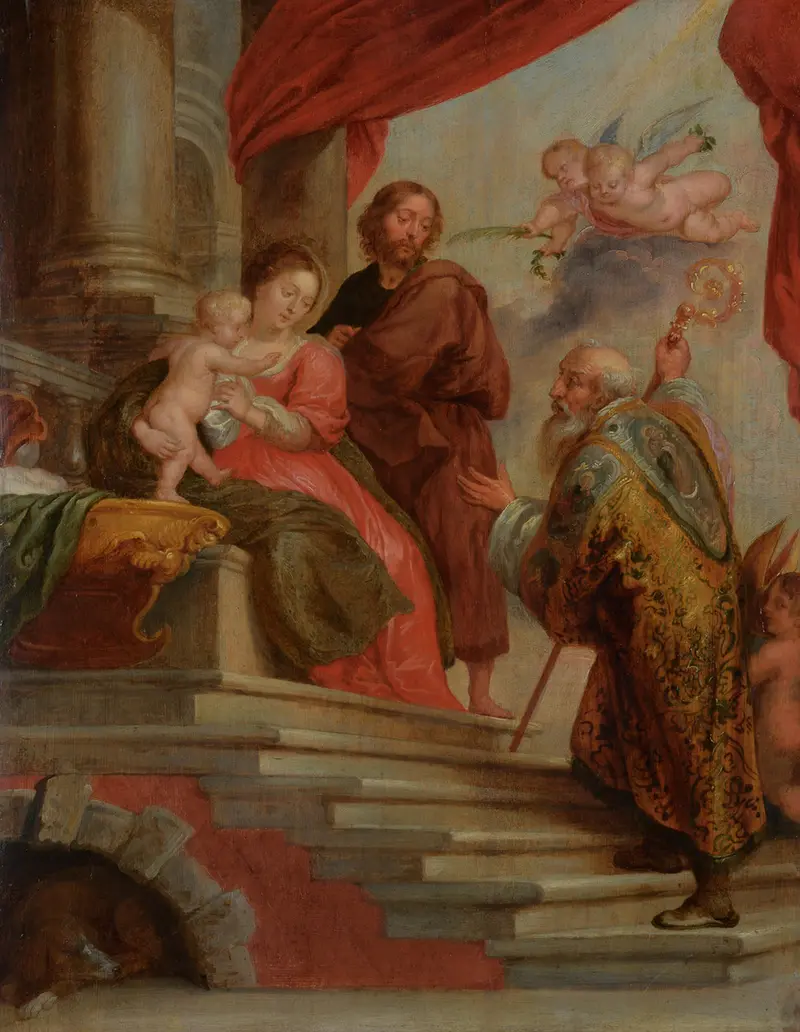
Holy family and Saint Willibrord
Abraham Jansz. van Diepenbeeck
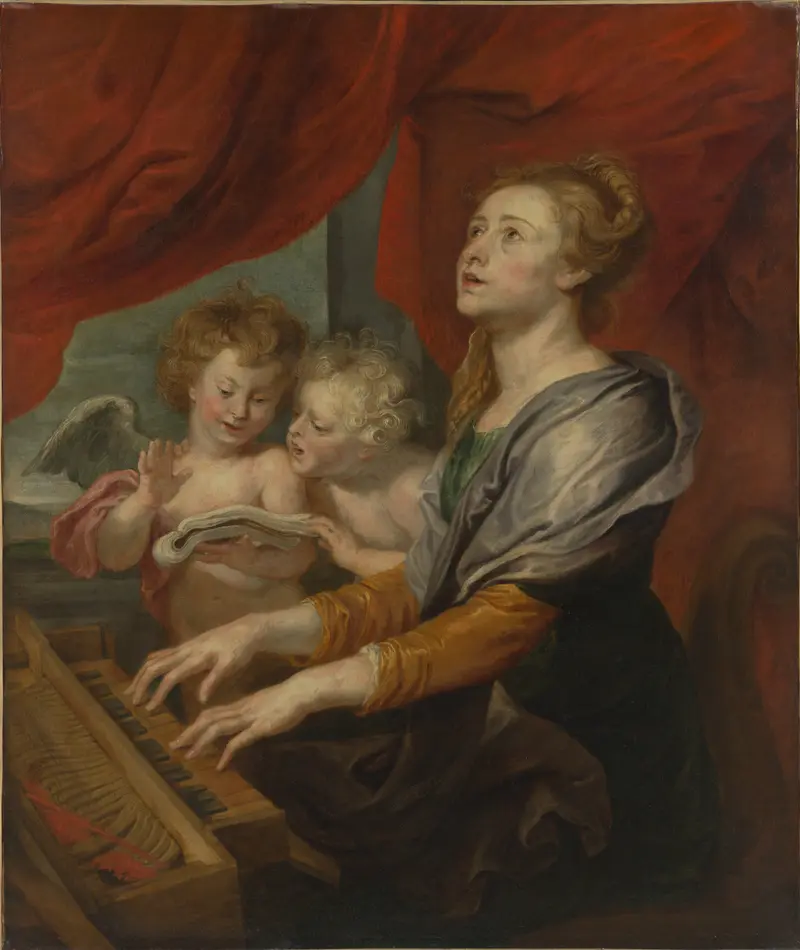
Saint Cecilia
Abraham Jansz. van Diepenbeeck
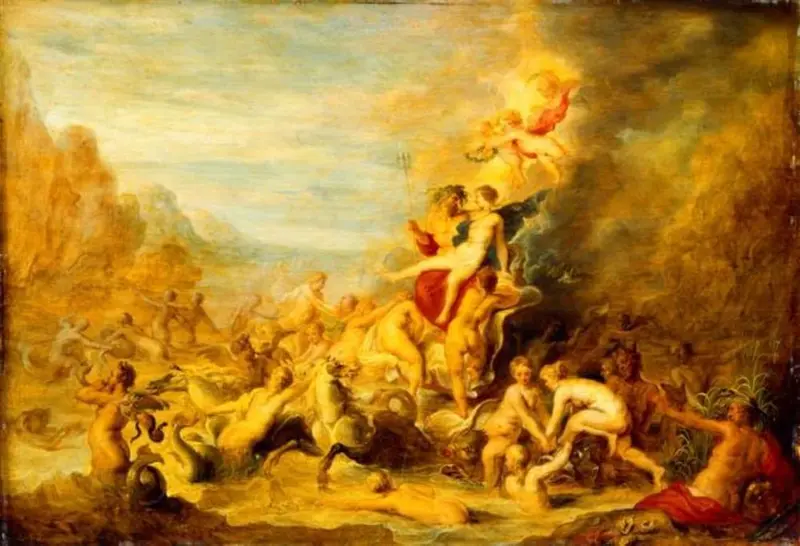
Triumph of Neptune and Amphitrite
Abraham Jansz. van Diepenbeeck
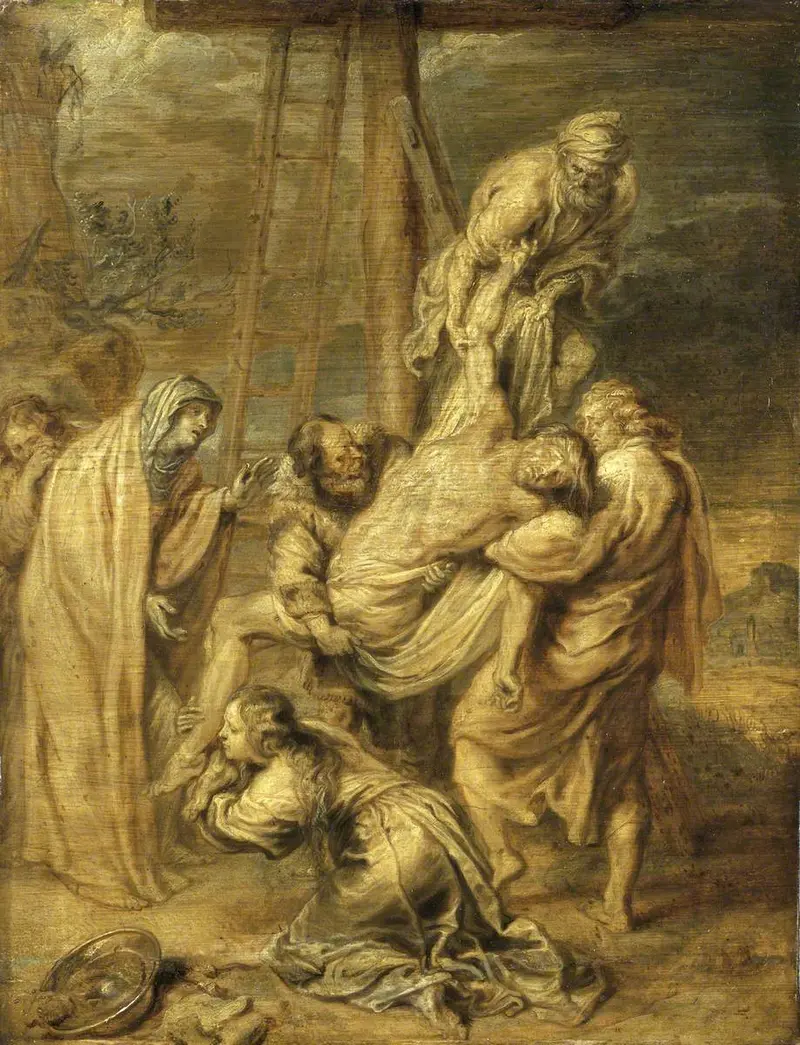
The Deposition
Abraham Jansz. van Diepenbeeck
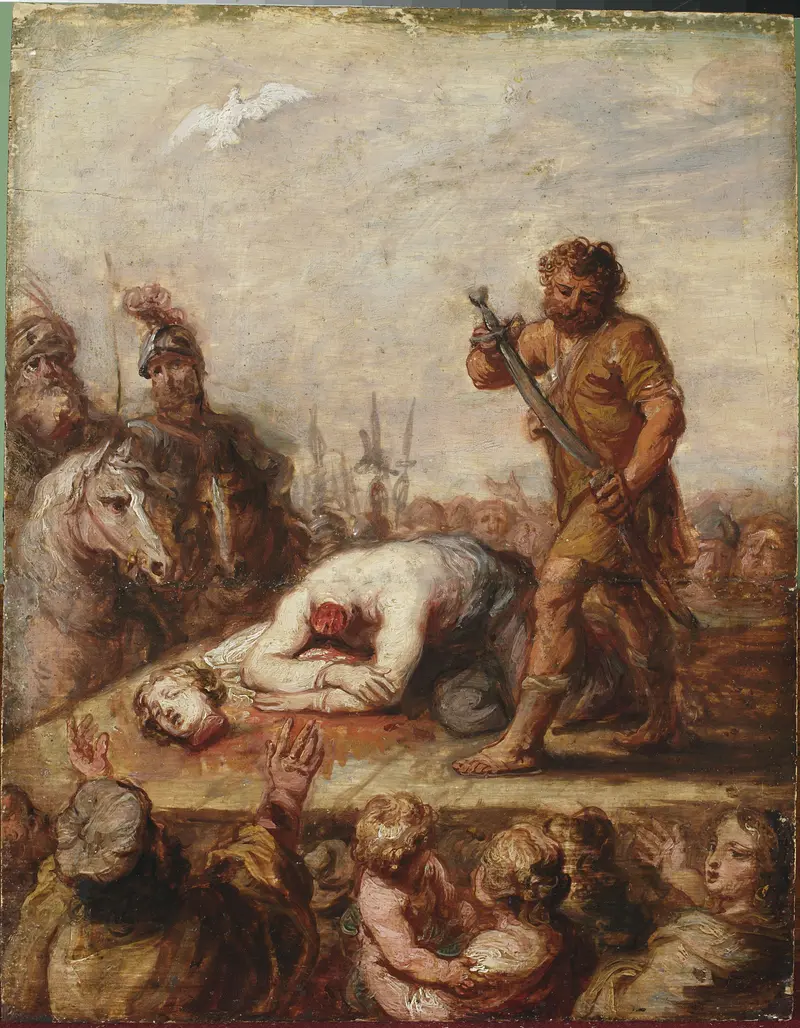
Sketch for a Decapitation of a Saint Woman (St. Catherine?)
Abraham Jansz. van Diepenbeeck
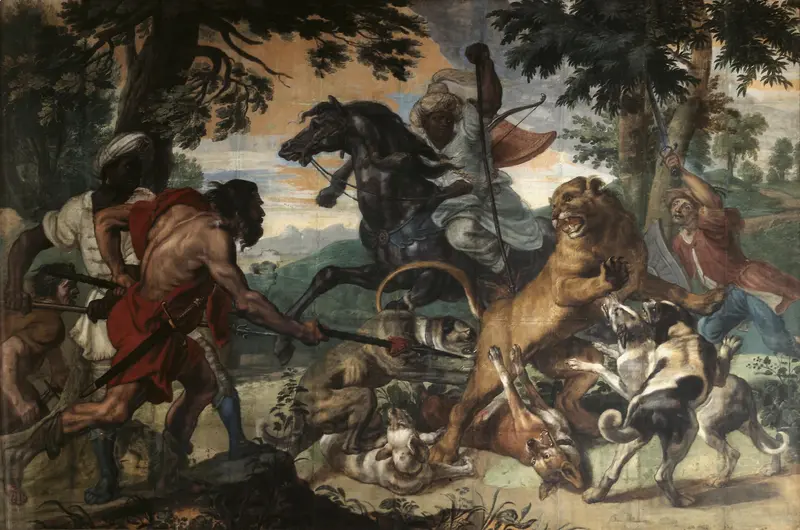
Lion Hunting
Abraham Jansz. van Diepenbeeck
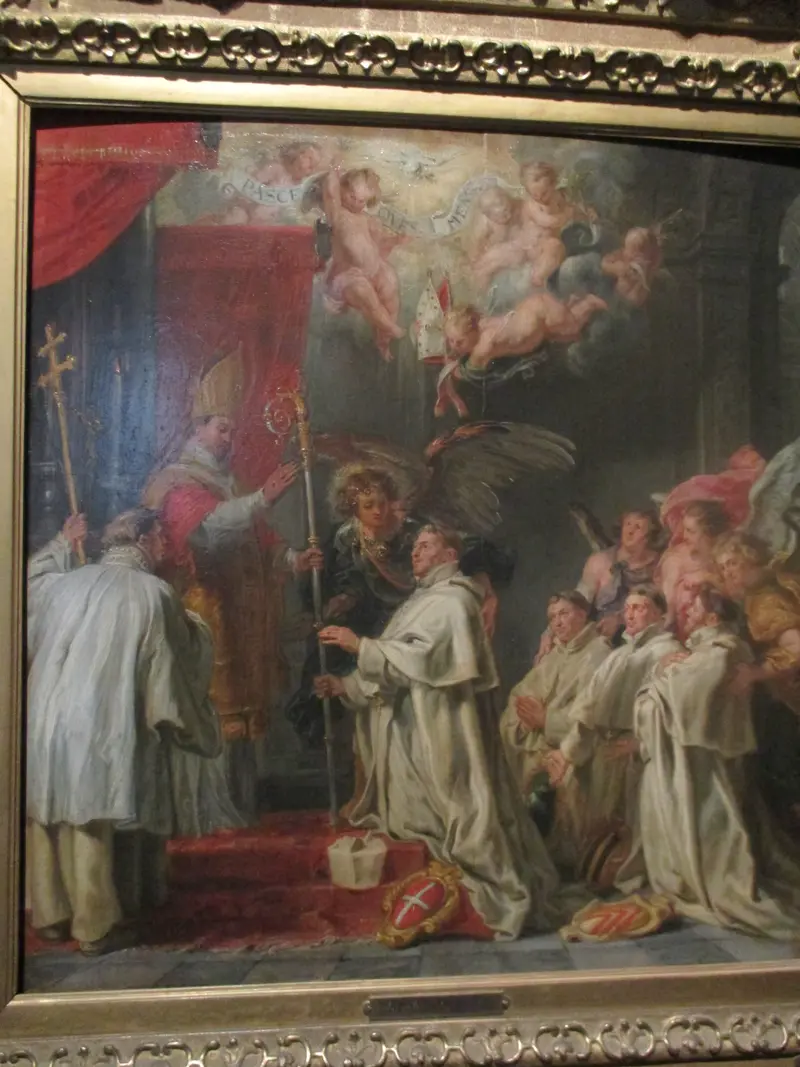
The archangel Michael supports the blessed Waltmann, who is being consecrated abbot by Saint Norbert
Abraham Jansz. van Diepenbeeck
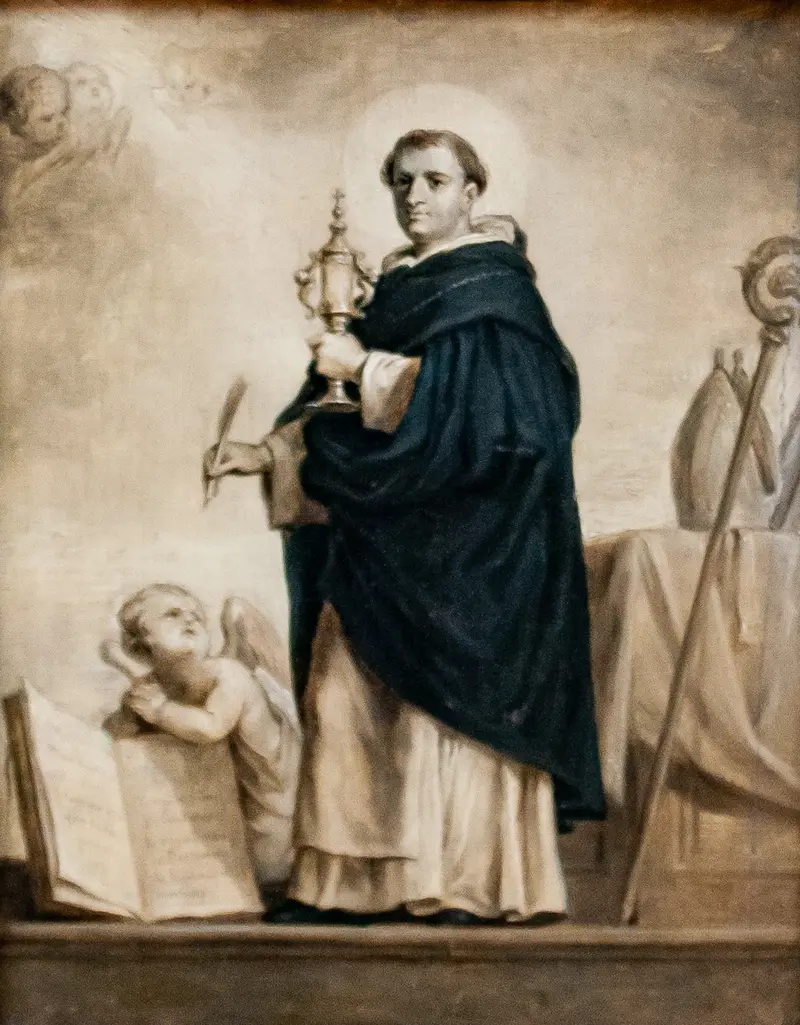
Diepenbeek Saint Thomas d'Aquin
Abraham Jansz. van Diepenbeeck





