
The archangel Michael supports the blessed Waltmann, who is being consecrated abbot by Saint Norbert — History & Facts
What first draws the eye in this scene is the swirl of the miraculous and the ceremonial, as the archangel Michael—his wings unfurled, his armor gleaming—stands among white-robed monks and bishops, lending a supernatural weight to the moment of consecration. The artist, Abraham Jansz. van Diepenbeeck, chooses a composition packed with upward movement: the gaze is pulled from the kneeling figure at the center, supported by Michael’s steady hand, up to the bishop’s blessing and then higher still, where cherubs unfurl a Latin banner in a burst of golden light.
Each gesture is charged with meaning—the bishop’s raised arm signals the conferral of spiritual authority, while the archangel’s presence marks this as a scene of divine endorsement. The palette, rich in reds and golds, sets a tone of solemnity and celebration, while the play of light across the white habits and the bishop’s cope draws attention to the hierarchy and unity of the figures. Painted between 1645 and 1650, this work belongs to a world where religious painting was both a tool of devotion and a declaration of institutional power. In the Catholic Europe of the Counter-Reformation, scenes like this—whether displayed in monastic refectories or private chapels—reminded viewers of the sacred legitimacy of their leaders and the ever-present hand of the divine.
Van Diepenbeeck was active in the Baroque era, a time when artists were called upon to make the invisible visible, to give flesh and color to stories of saints, angels, and miracles. The presence of the archangel and the host of cherubs reflects the period’s taste for drama and spectacle, while the careful attention to ecclesiastical detail roots the scene in the everyday rituals of faith. History has kept few traces of this particular painting’s journey, but its energy and complexity invite viewers to linger, searching for the line where heaven and earth meet.
More Artworks by Abraham Jansz. van Diepenbeeck
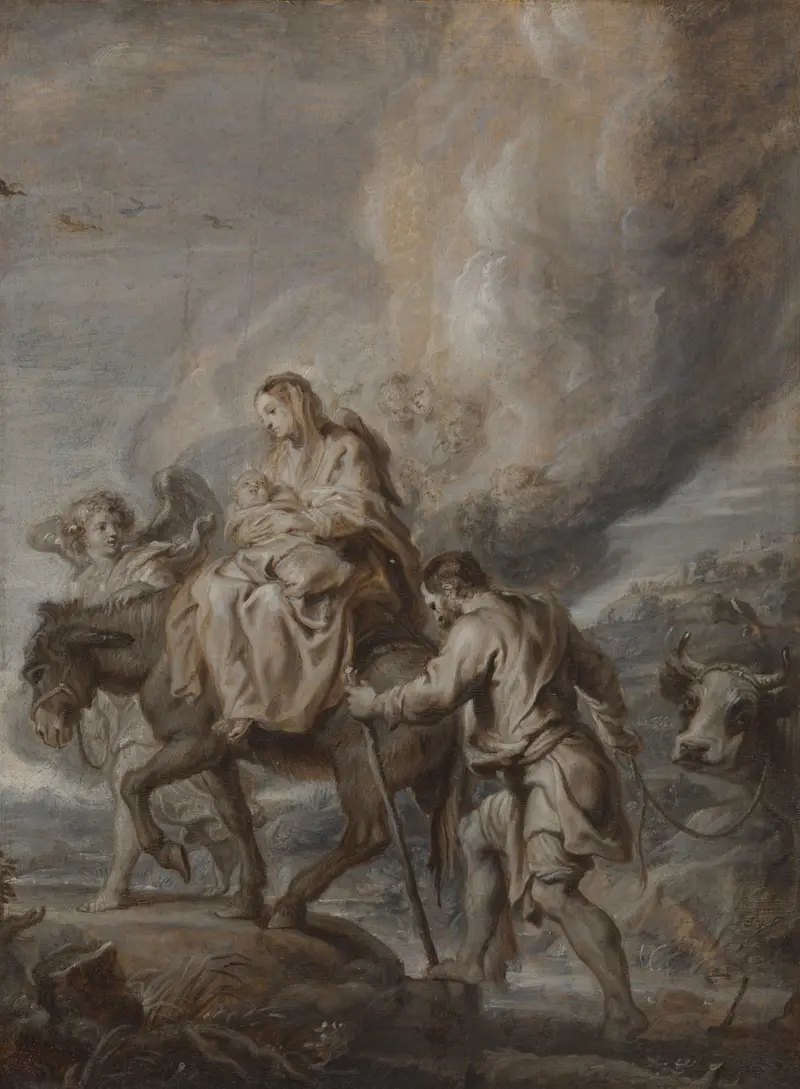
The Flight into Egypt
Abraham Jansz. van Diepenbeeck
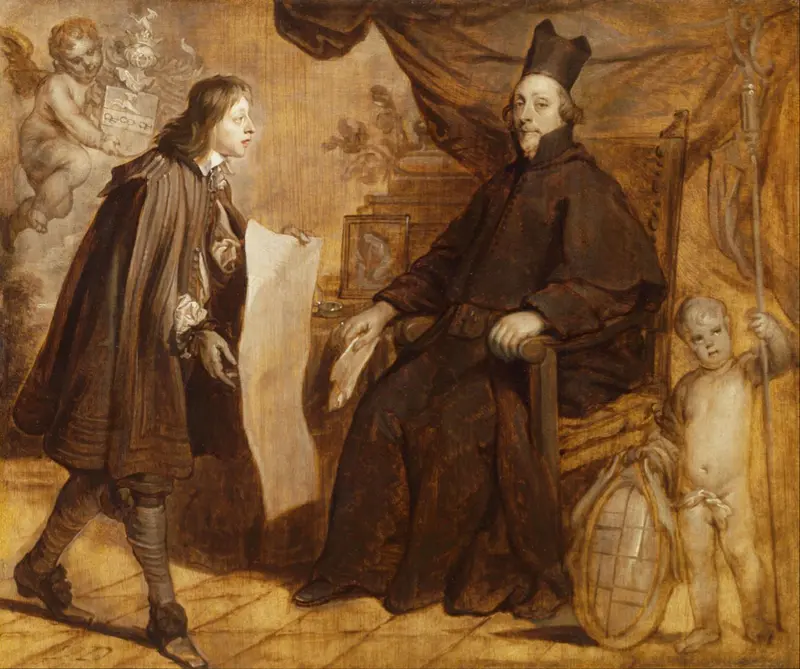
Portrait of a Prelate and a Young Man
Abraham Jansz. van Diepenbeeck
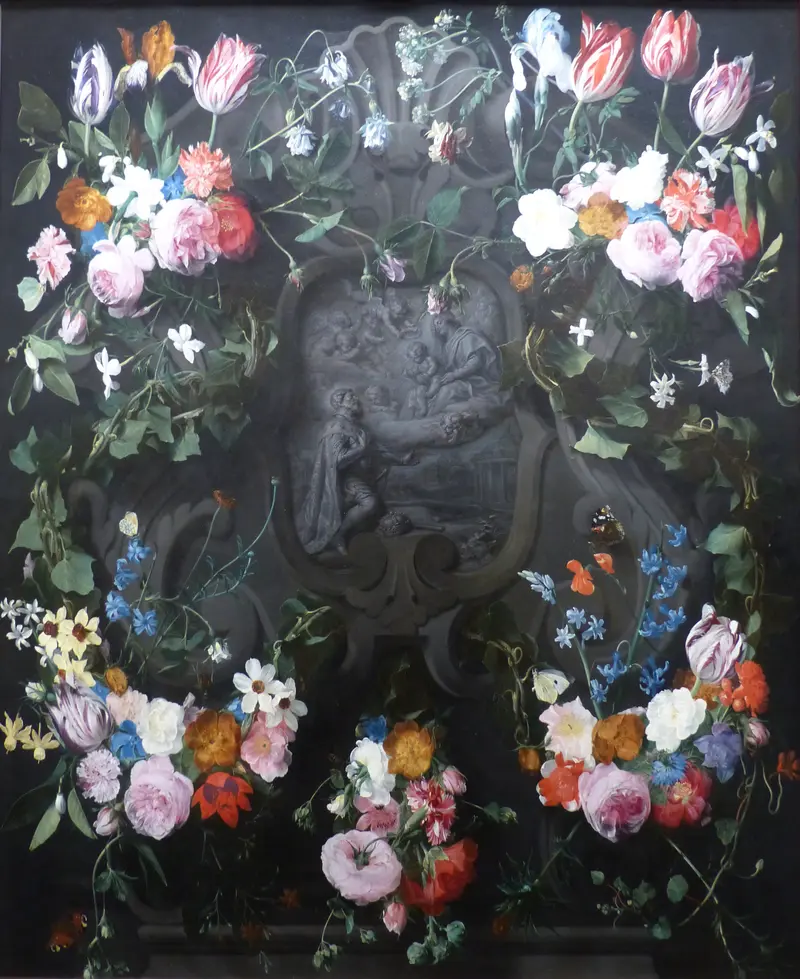
Guirlande de fleurs avec l'apparition de la Vierge-à-l'Enfant à St Léopold
Abraham Jansz. van Diepenbeeck
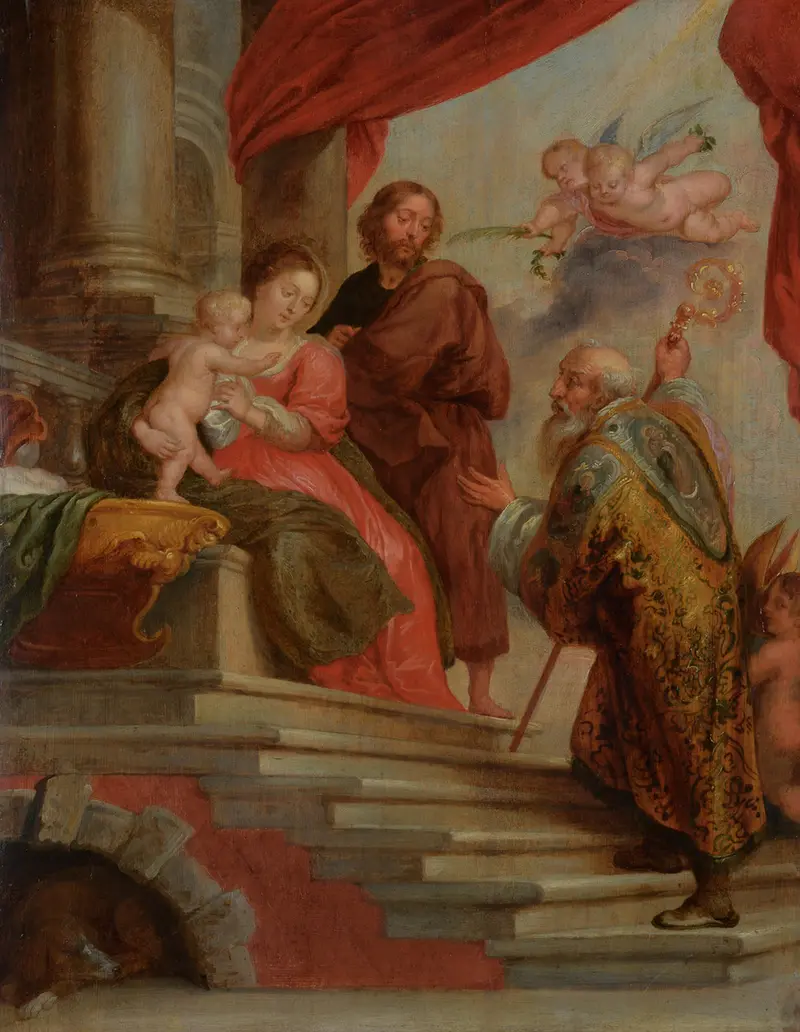
Holy family and Saint Willibrord
Abraham Jansz. van Diepenbeeck
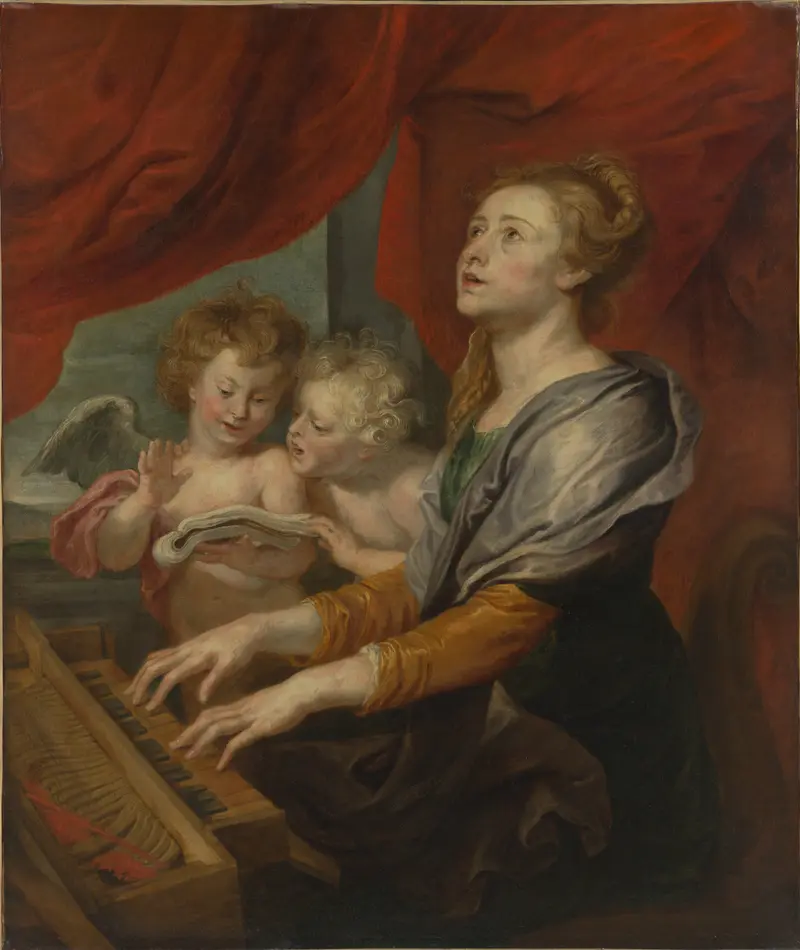
Saint Cecilia
Abraham Jansz. van Diepenbeeck
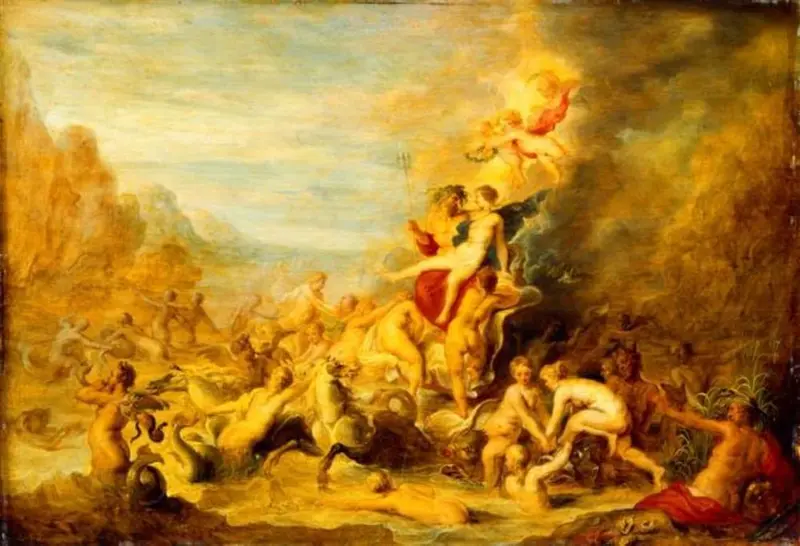
Triumph of Neptune and Amphitrite
Abraham Jansz. van Diepenbeeck
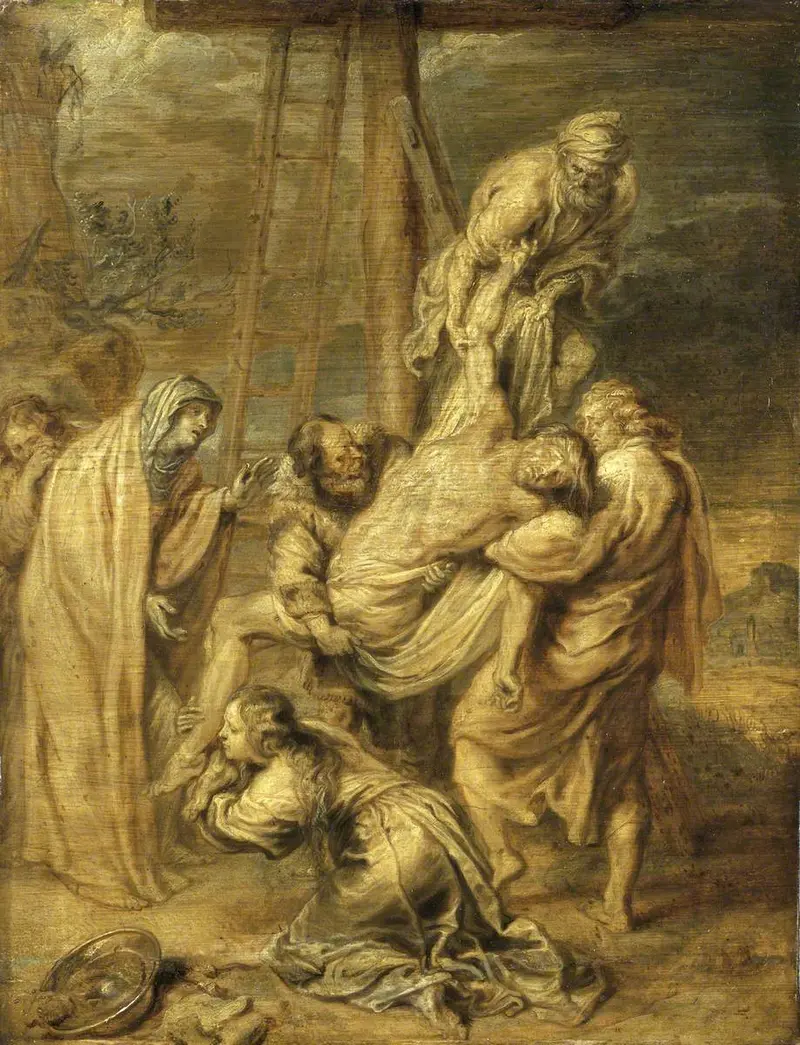
The Deposition
Abraham Jansz. van Diepenbeeck
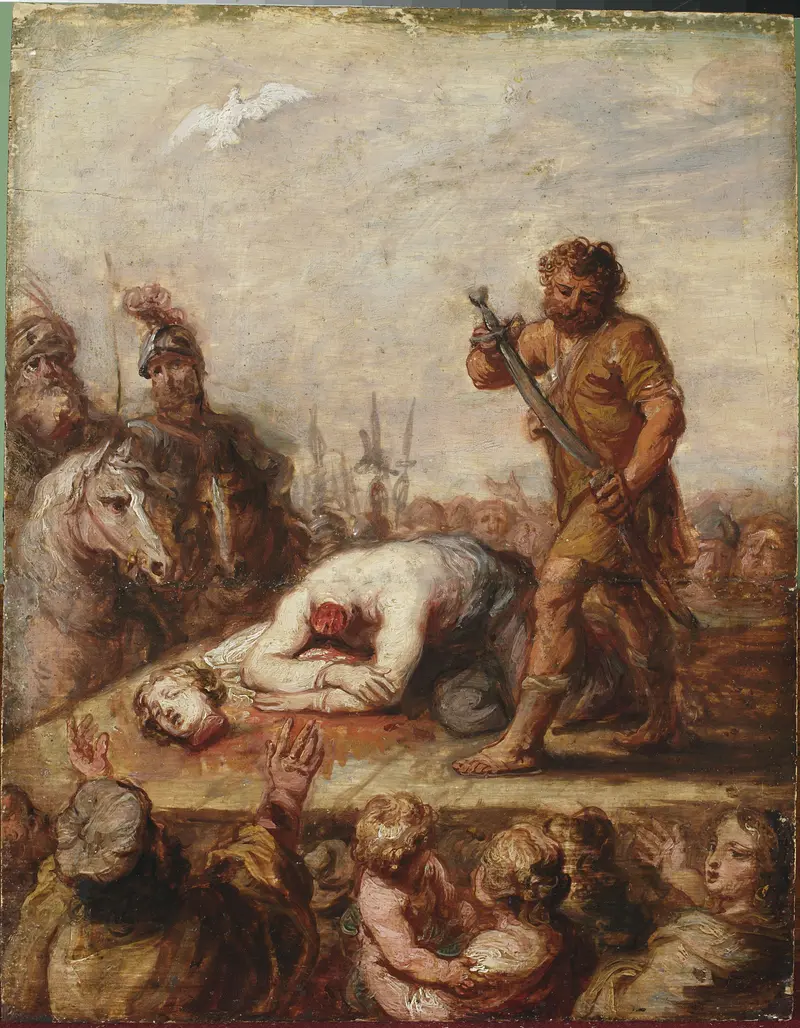
Sketch for a Decapitation of a Saint Woman (St. Catherine?)
Abraham Jansz. van Diepenbeeck
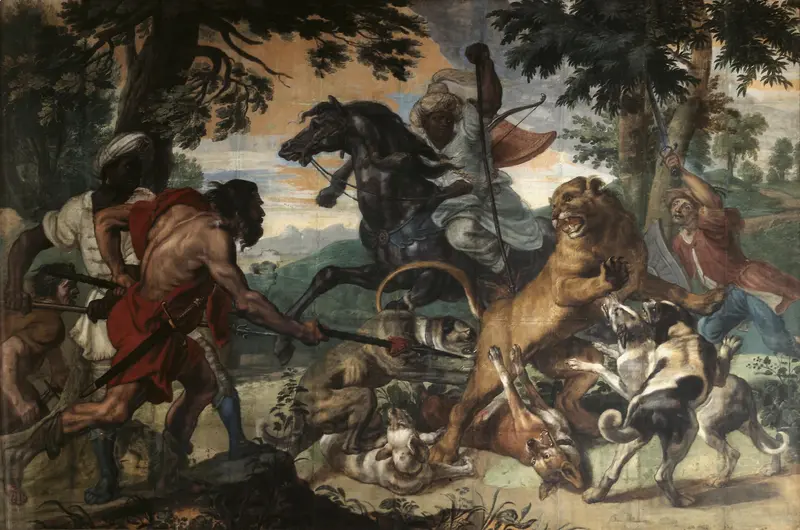
Lion Hunting
Abraham Jansz. van Diepenbeeck
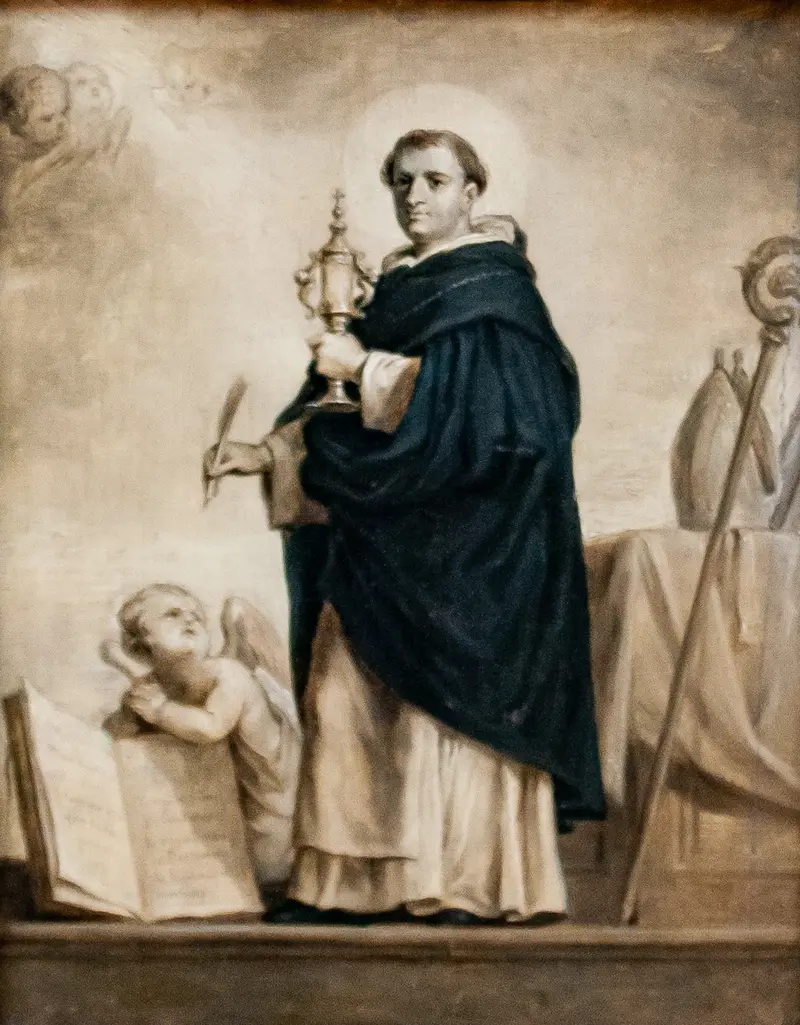
Diepenbeek Saint Thomas d'Aquin
Abraham Jansz. van Diepenbeeck





