
Saint Cecilia — History & Facts
What first catches the eye in Saint Cecilia is the rapturous upward gaze of the saint herself, her face lit from within as if the music she plays draws light down from above. The sweep of her hands across the keys, the gentle turn of her wrist, and the presence of two cherubic angels—one holding a musical score, the other peering in—create a sense of movement and shared purpose. The deep red drapery frames the scene like a stage curtain, heightening the drama and focusing attention on Cecilia’s luminous skin and golden hair.
The instrument’s broken strings and exposed mechanics hint at the fragility of earthly music, while the angels’ eager engagement suggests something eternal in the act of creation. Painted in the 17th century, this work by Abraham Jansz. van Diepenbeeck belongs to a world where religious art was both a declaration of faith and a feast for the senses. Images of saints—especially Cecilia, patroness of musicians—were favored by Catholic patrons seeking to inspire devotion and celebrate the arts.
Theatrical lighting, rich fabrics, and the interplay of human and divine were hallmarks of the Baroque, a style that flourished in the wake of the Counter-Reformation. Though little is recorded about the journey of this particular painting, its presence in the Metropolitan Museum of Art’s collection today places it in dialogue with centuries of viewers who, like the angels, lean in to catch the music.
More Artworks by Abraham Jansz. van Diepenbeeck
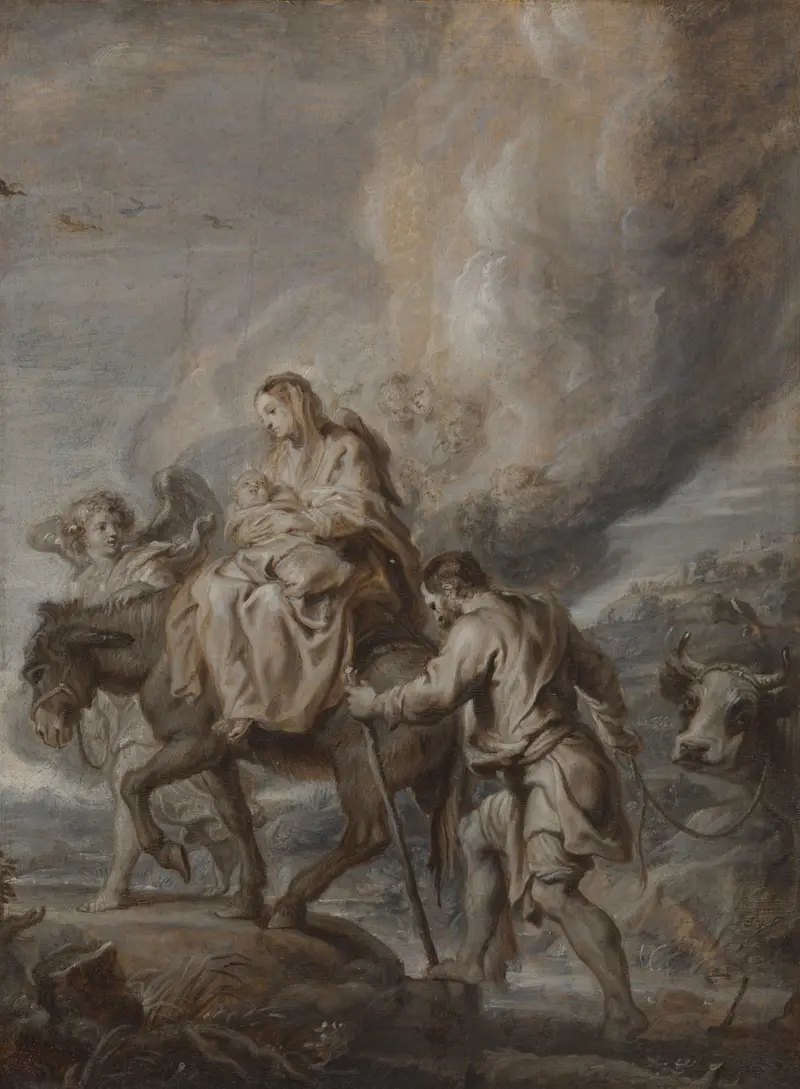
The Flight into Egypt
Abraham Jansz. van Diepenbeeck
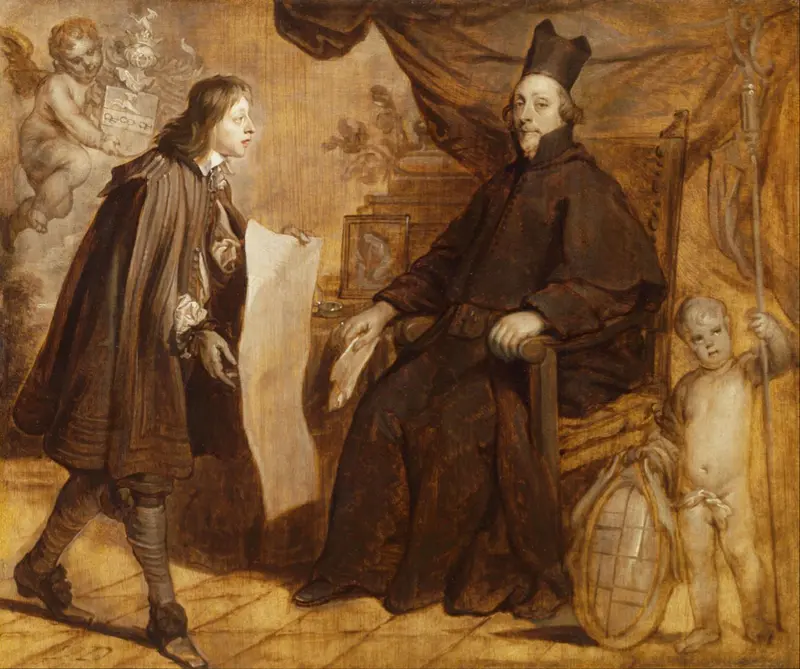
Portrait of a Prelate and a Young Man
Abraham Jansz. van Diepenbeeck
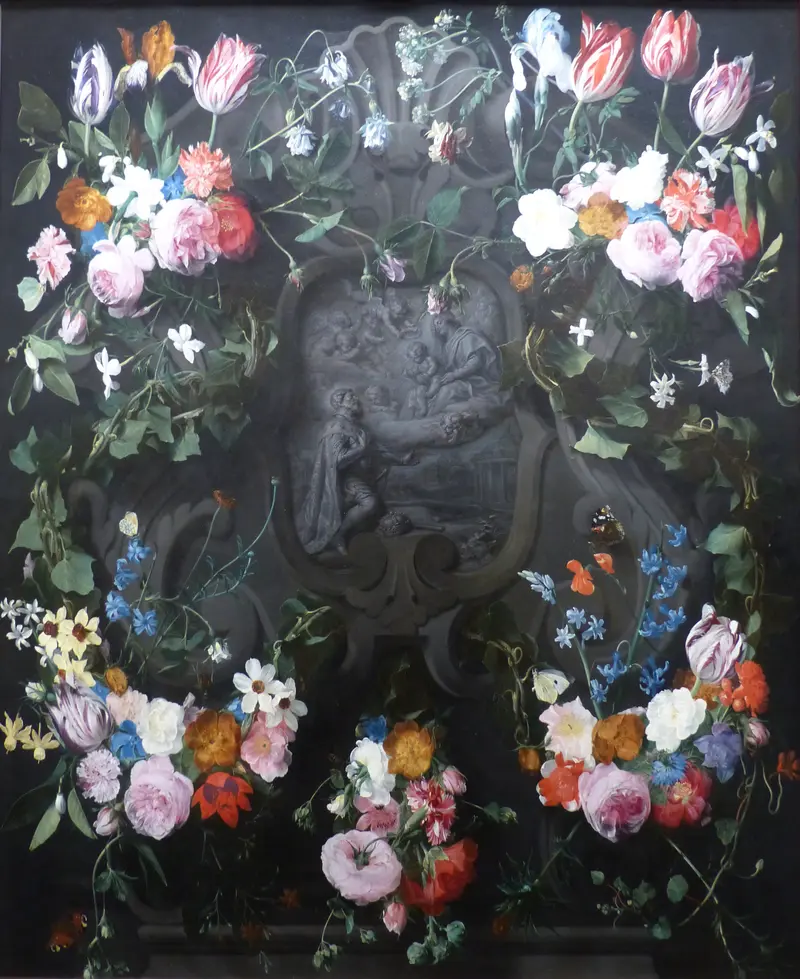
Guirlande de fleurs avec l'apparition de la Vierge-à-l'Enfant à St Léopold
Abraham Jansz. van Diepenbeeck
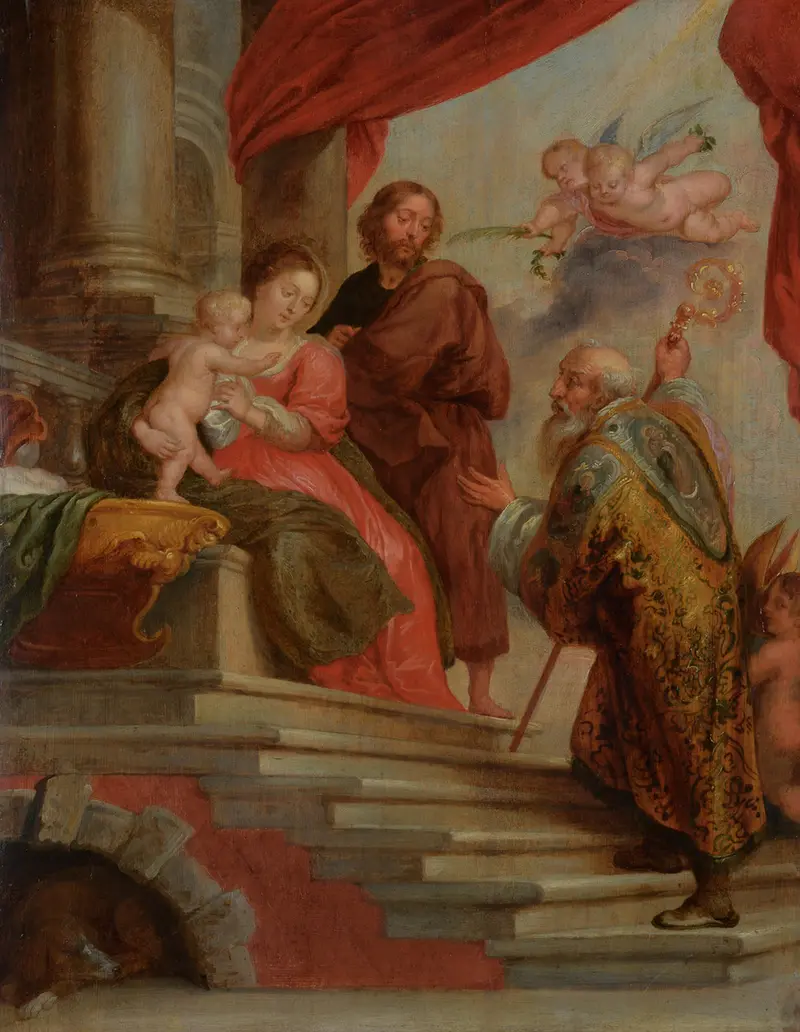
Holy family and Saint Willibrord
Abraham Jansz. van Diepenbeeck
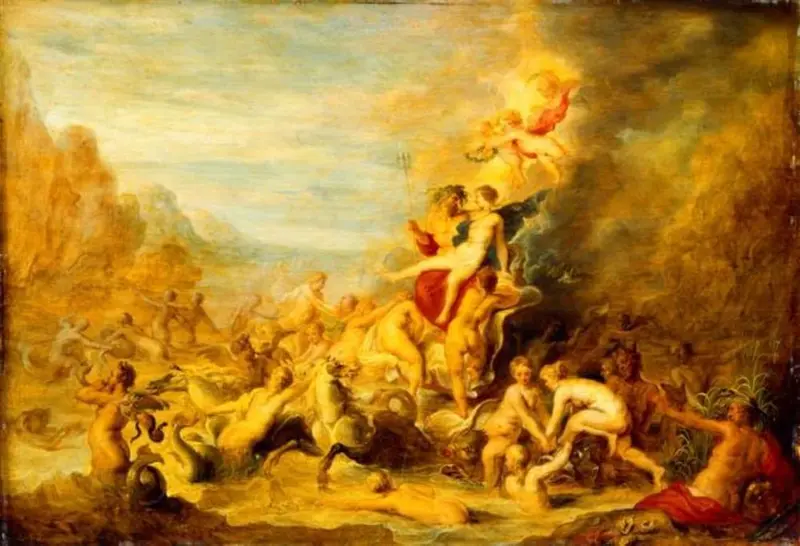
Triumph of Neptune and Amphitrite
Abraham Jansz. van Diepenbeeck
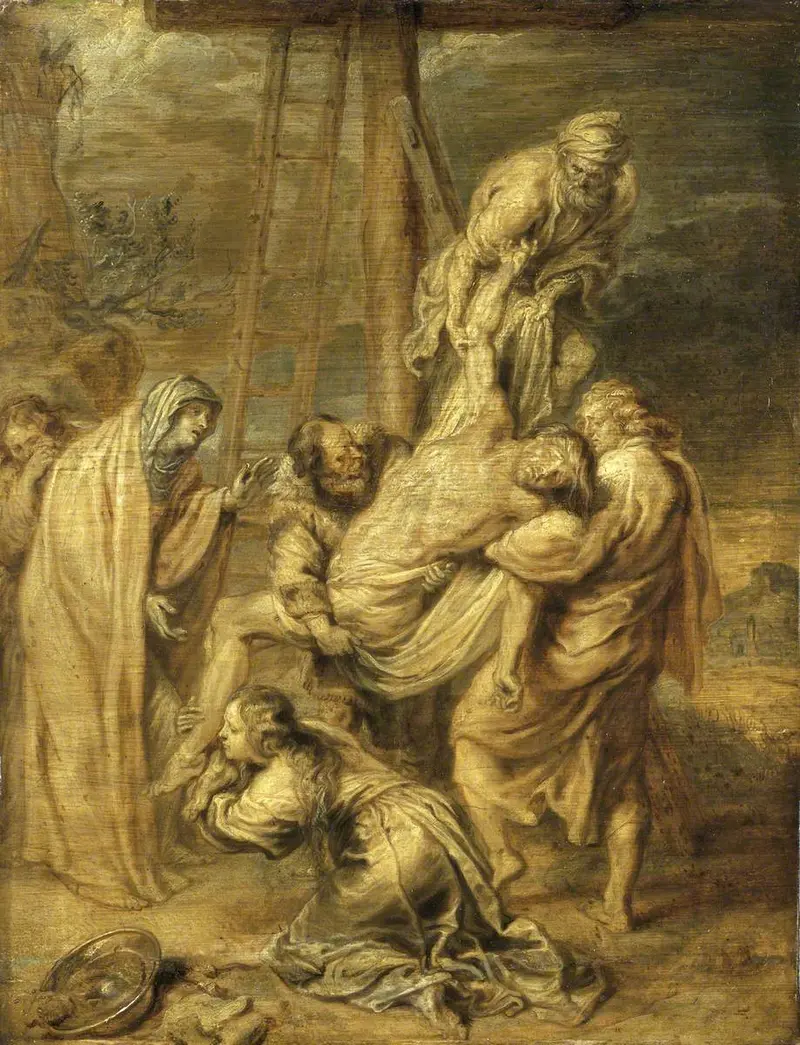
The Deposition
Abraham Jansz. van Diepenbeeck
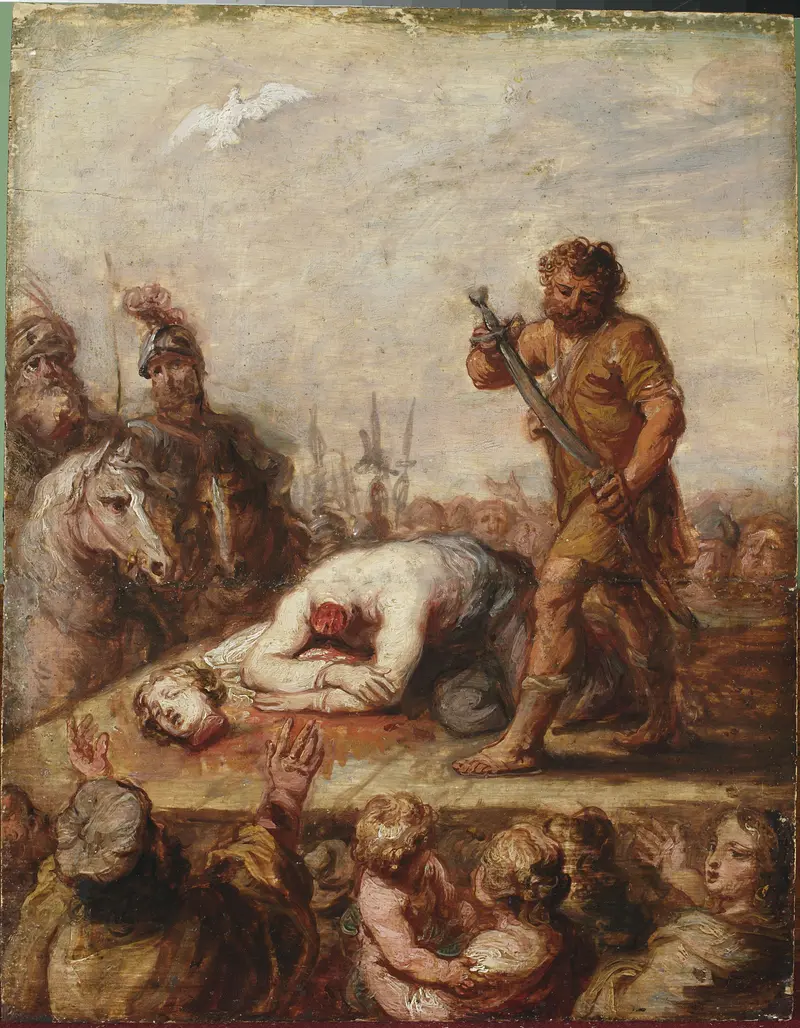
Sketch for a Decapitation of a Saint Woman (St. Catherine?)
Abraham Jansz. van Diepenbeeck
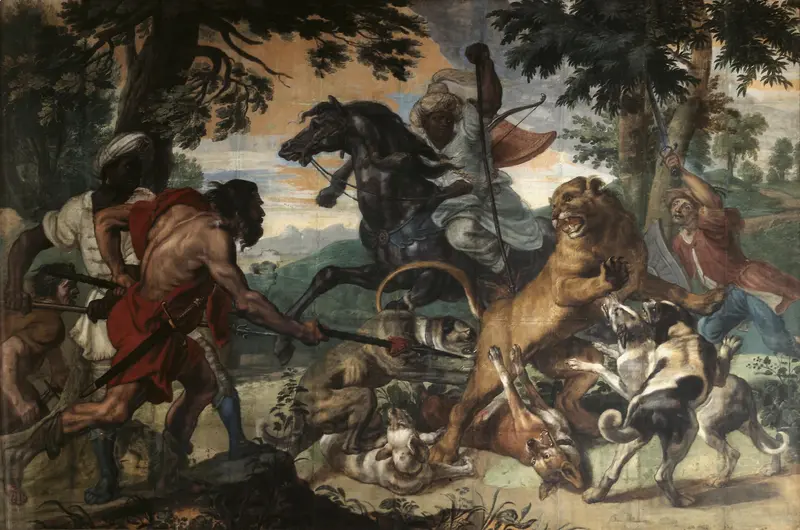
Lion Hunting
Abraham Jansz. van Diepenbeeck
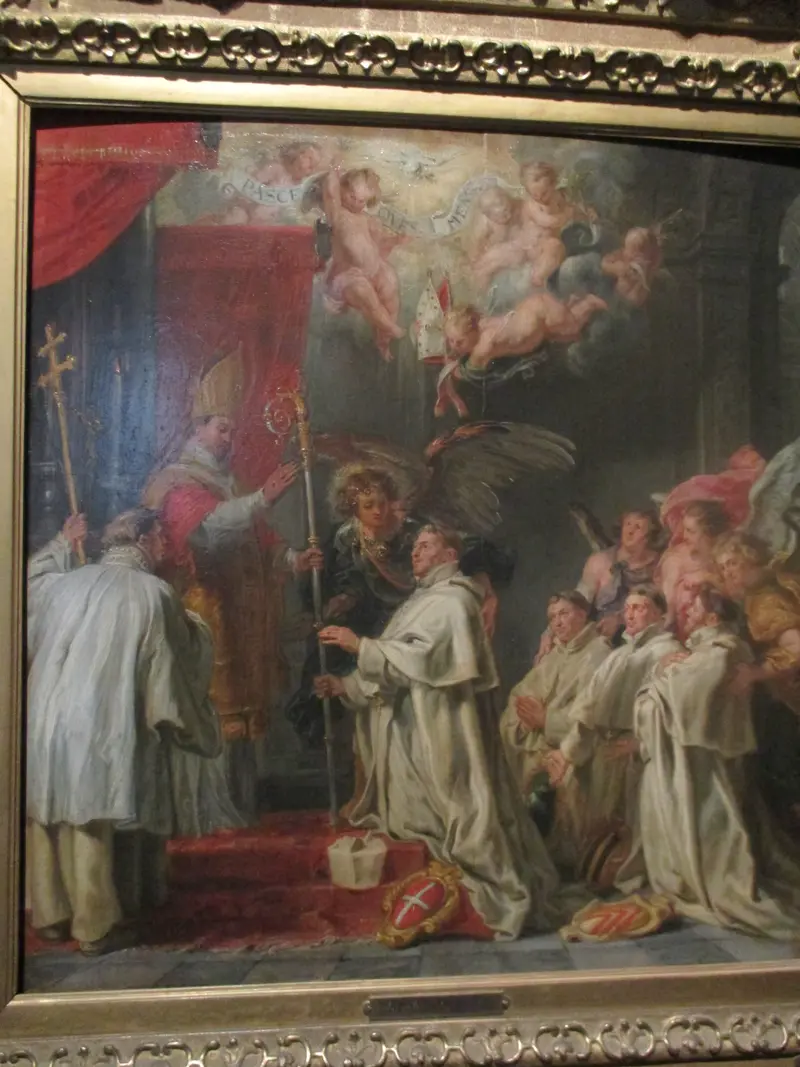
The archangel Michael supports the blessed Waltmann, who is being consecrated abbot by Saint Norbert
Abraham Jansz. van Diepenbeeck
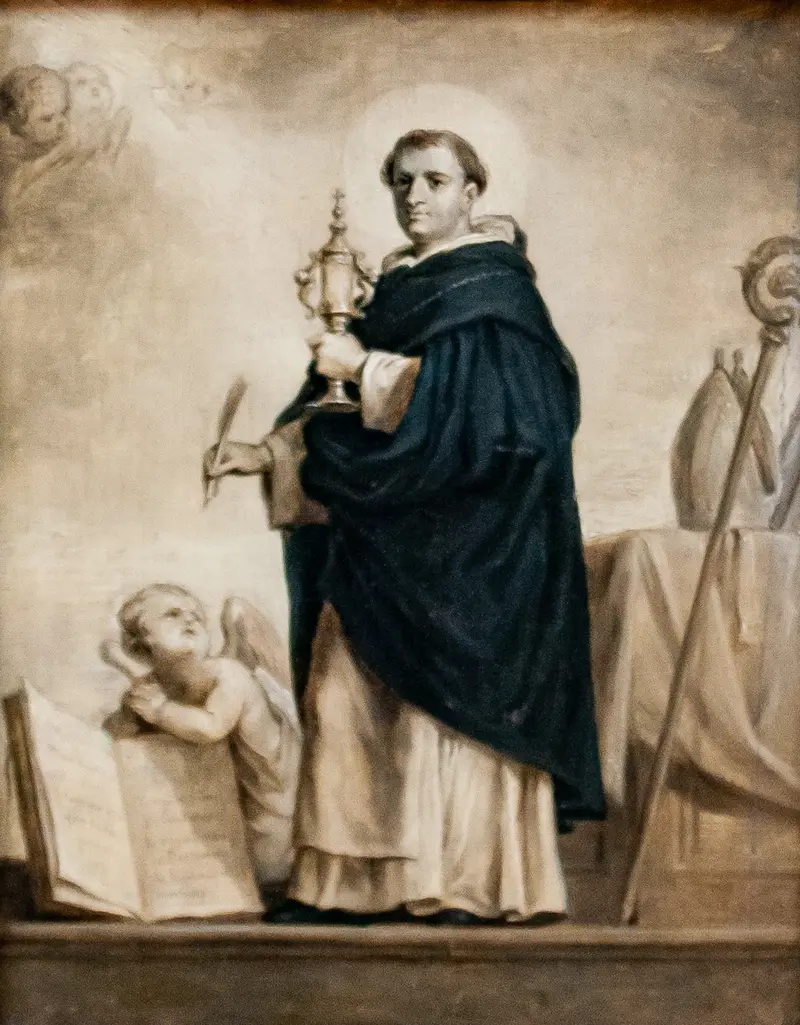
Diepenbeek Saint Thomas d'Aquin
Abraham Jansz. van Diepenbeeck





