
Portrait of Francisco Lezcano — History & Facts
When Diego Velázquez painted Portrait of Francisco Lezcano in 1634, he was not simply recording a likeness, but elevating a court jester to the level of royalty. Francisco Lezcano, known as “El Niño de Vallecas,” was one of several jesters and dwarfs who served in the Spanish court of Philip IV, and Velázquez’s portrait was part of a series commissioned for the Buen Retiro Palace. What sets this painting apart is the dignity and quiet introspection Velázquez grants Lezcano, a stark departure from the mocking or caricatured depictions common in earlier court portraits.
The painting’s psychological depth has led scholars to debate whether Velázquez intended to critique the social hierarchies of his day. Lezcano sits alone in a wild landscape, his gaze unfocused and hands clutching playing cards, a symbol of both entertainment and fate. The painter captures a fleeting moment of stillness, as if Lezcano has been caught between games, his mind wandering far from the court. The rough terrain behind him contrasts with his ornate clothing, highlighting the tension between his role as a figure of amusement and his humanity.
Velázquez’s loose brushwork, especially in the treatment of Lezcano’s hair and the earth beneath him, anticipates the freedom seen in later works by Francisco de Goya, who also painted court jesters with empathy. The light falls softly on Lezcano’s face, drawing the viewer’s attention to his expression—a mixture of fatigue, resignation, and perhaps a quiet defiance. The painting has remained in Spain since its creation, moving from the Buen Retiro Palace to the royal collections and eventually to the Museo del Prado, where it hangs today. Its survival is a testament to the enduring power of Velázquez’s vision and the changing attitudes toward those once marginalized in society.
Scholars continue to study the series of court dwarf portraits for their insight into both Velázquez’s technique and the complex social world of 17th-century Spain. Portrait of Francisco Lezcano stands as a pivotal work in Velázquez’s career, marking his deepening interest in psychological realism and his unmatched ability to find nobility in the overlooked.
More Artworks by Diego Velázquez

Las Meninas
Diego Velázquez

The Triumph of Bacchus
Diego Velázquez

Rokeby Venus
Diego Velázquez

Equestrian Portrait of Prince Balthasar Charles
Diego Velázquez

Bacchus
Diego Velázquez

Don Gaspar de Guzmán (1587–1645), Count-Duke of Olivares
Diego Velázquez
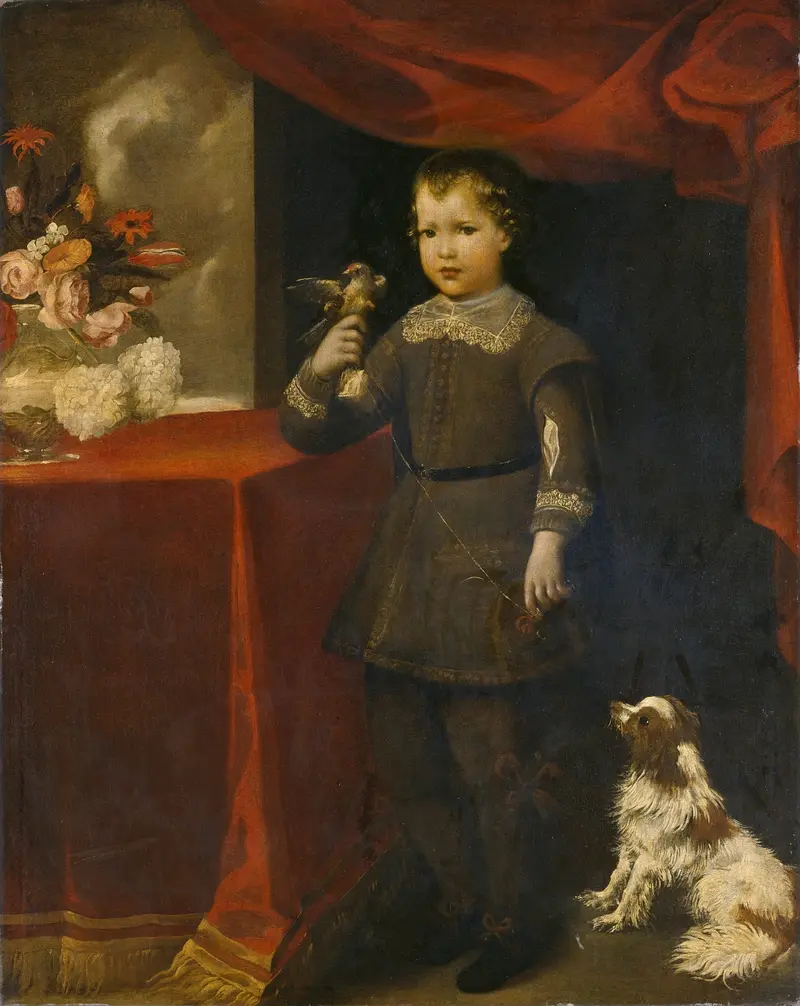
El príncipe Baltasar Carlos de Austria
Diego Velázquez

Equestrian Portrait of Philip III
Diego Velázquez

Equestrian Portrait of Margarita of Austria
Diego Velázquez
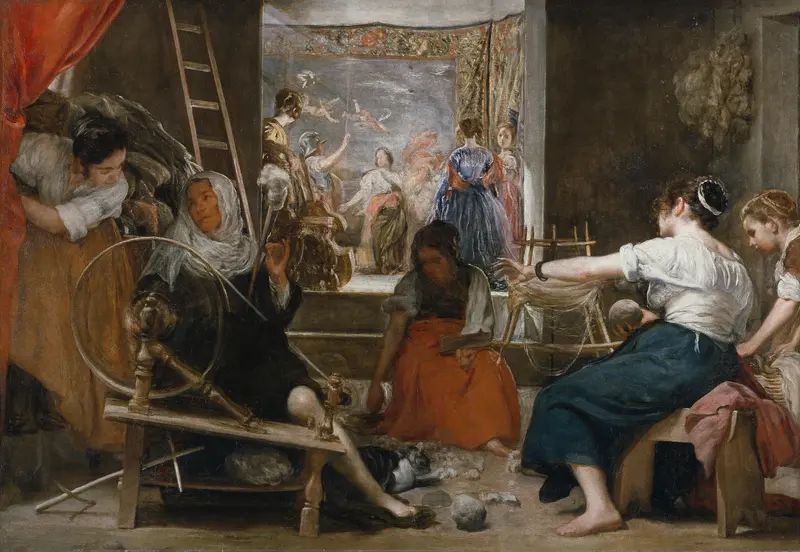
Las Hilanderas
Diego Velázquez




