
Portrait of Monsieur Pool — History & Facts
The crisp, almost crystalline light on Monsieur Pool’s silver hair draws the viewer immediately to his steady gaze, set against a tapestry-like backdrop that hums with color. Every inch of Portrait of Monsieur Pool is constructed from a mosaic of tiny, deliberate dots—a hallmark of the Pointillist technique that Albert Dubois-Pillet helped pioneer in the 1880s. The sitter’s uniform bristles with gold braid and medals, but it is the interplay between the regimented order of his attire and the vibrating, almost musical surface of the painting that holds the eye.
The patterned background, with its intricate geometry, seems to envelop the figure, suggesting both the weight of tradition and the charged air of innovation. Painted in 1887, this portrait stands at the crossroads of military formality and artistic experimentation. The artist’s method, building form and shadow from countless dabs of unmixed color, lends a paradoxical softness to the crisp lines of epaulettes and decorations. The effect is both stately and intimate: the sitter’s mustache and epaulets are rendered with the same devotion as the shifting tapestry behind him, blurring the line between man and setting.
In the world of late nineteenth-century France, such portraits often commemorated rank and achievement, but here the very technique seems to question what is fixed and what is fluid. The painting, now in the collection of the Indianapolis Museum of Art, invites us to linger, to let our eyes assemble the image anew, dot by dot.
More Artworks by Albert Dubois-Pillet

Paysage de forêt
Albert Dubois-Pillet
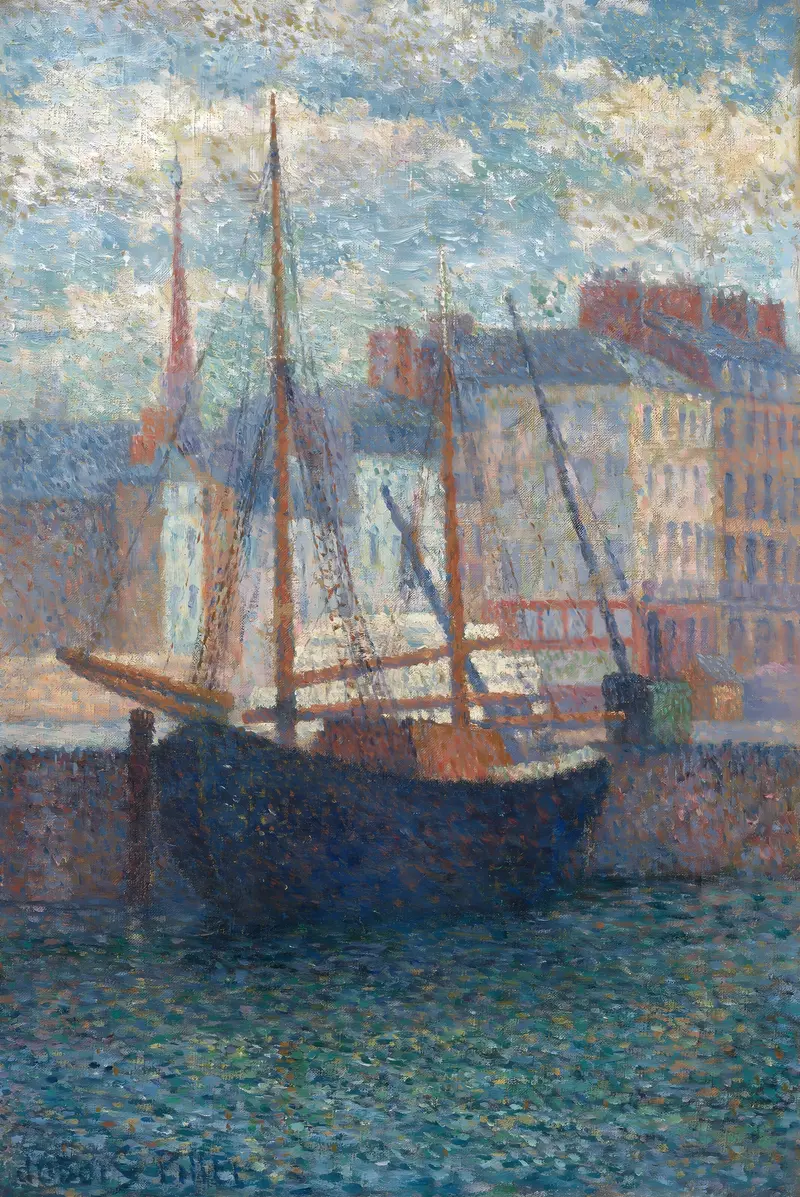
Voilier à quai
Albert Dubois-Pillet

Maison de M.B. à Seur
Albert Dubois-Pillet

The Banks of the Marne at Dawn
Albert Dubois-Pillet
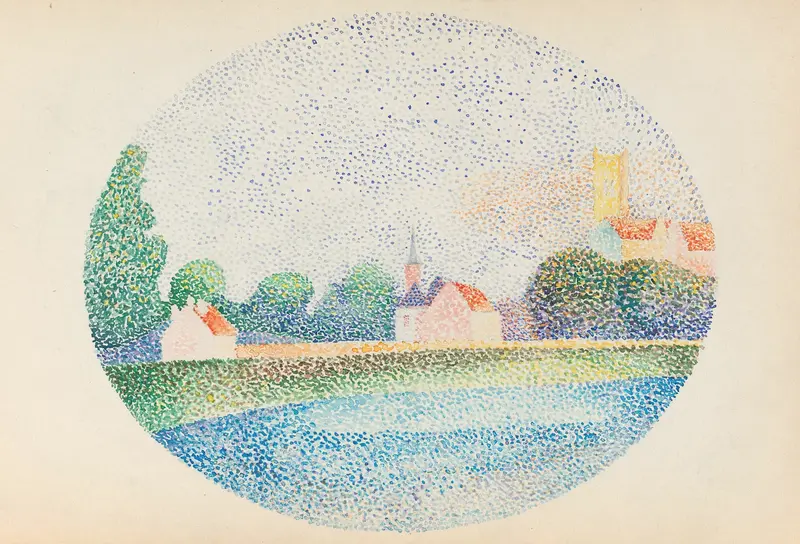
Morning on the Marne at Meaux
Albert Dubois-Pillet
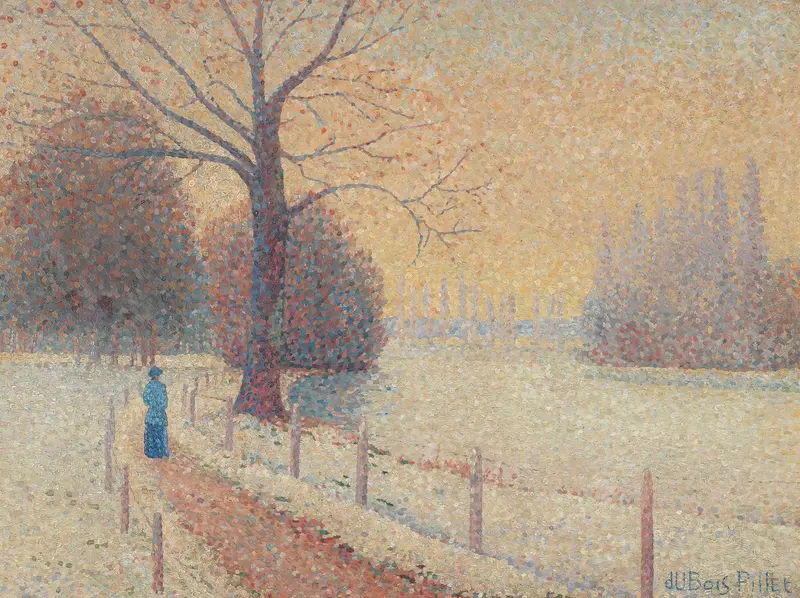
Le Puy En Hiver
Albert Dubois-Pillet
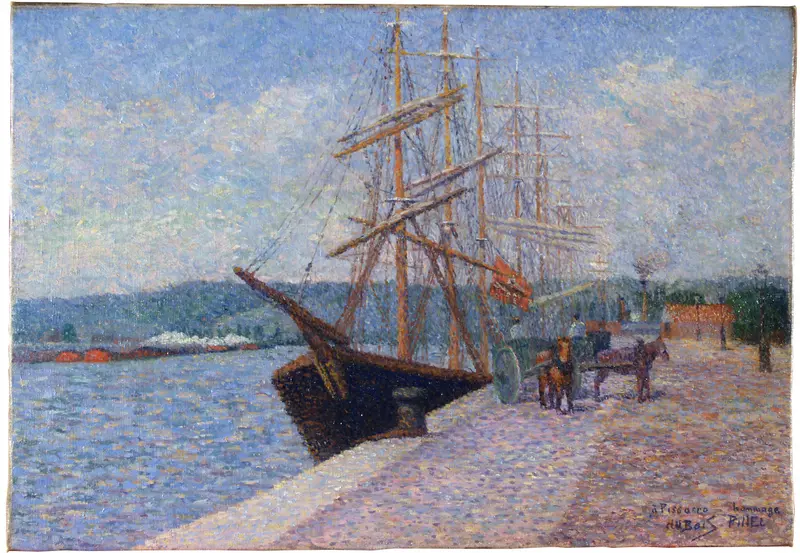
Quai de Lesseps
Albert Dubois-Pillet
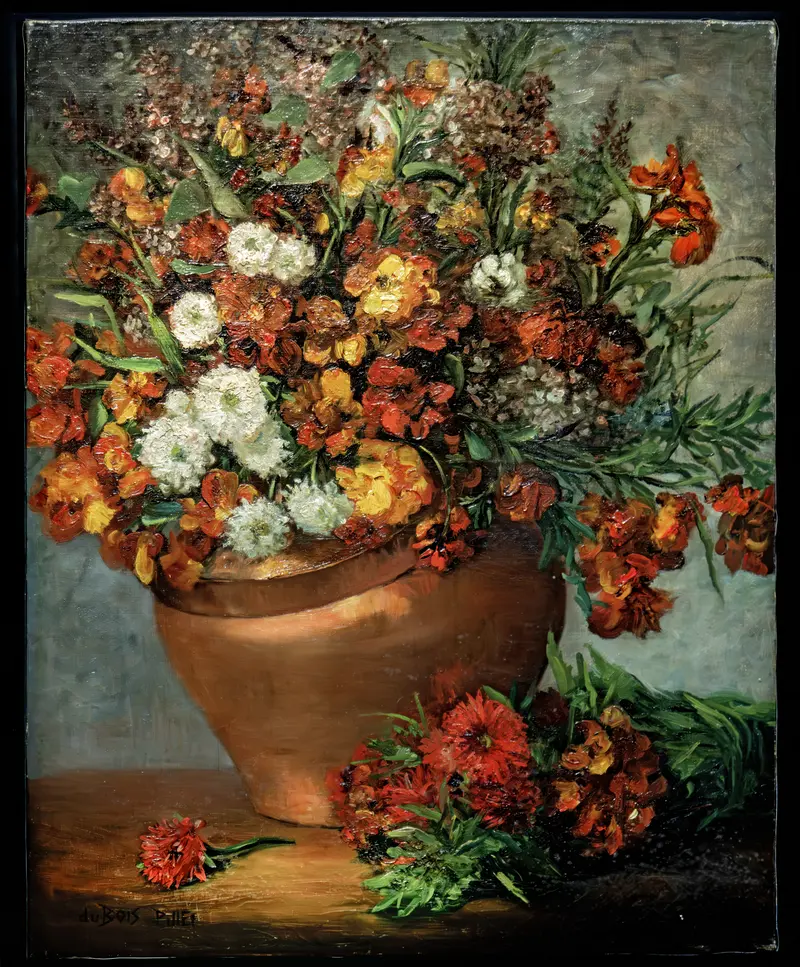
Flower in a copper vase
Albert Dubois-Pillet
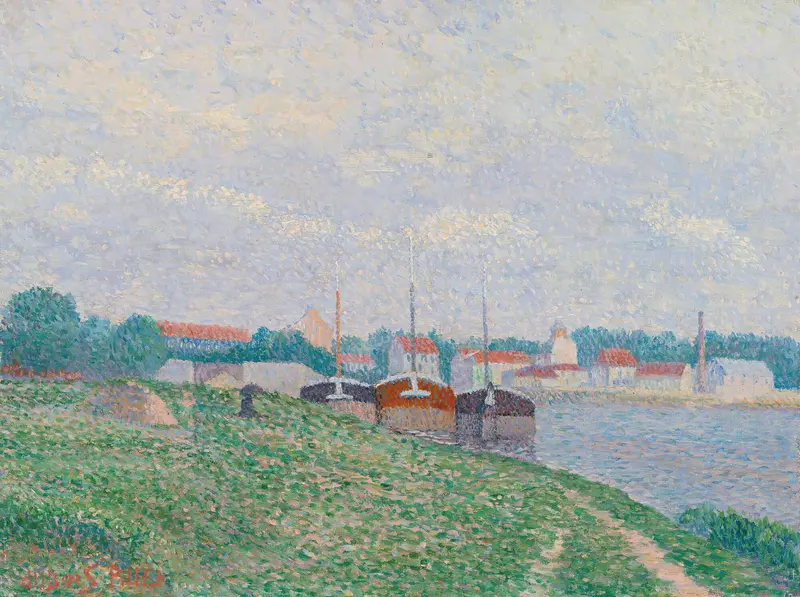
Trois Péniches Amarées Aux Abords D’une Ville Industrielle
Albert Dubois-Pillet
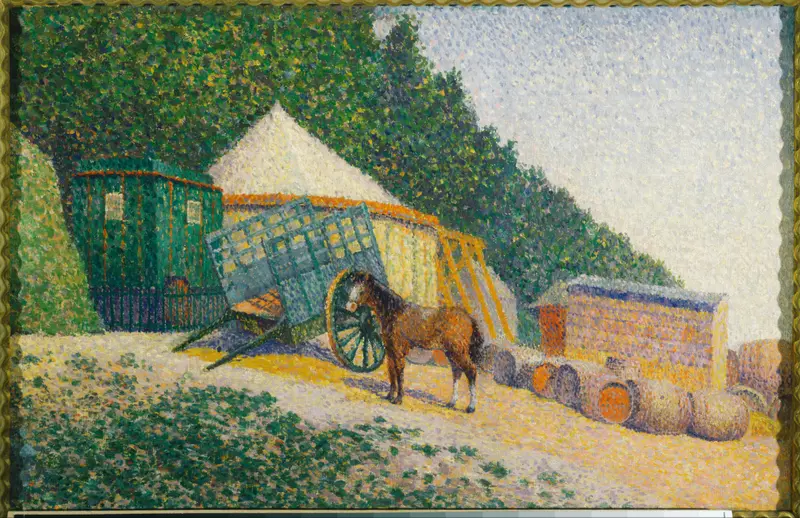
Little Circus Camp
Albert Dubois-Pillet





