
Portrait of Queen Wilhelmina in coronation robes — History & Facts
What first draws the eye in Portrait of Queen Wilhelmina in coronation robes is not the weight of the ermine-trimmed mantle or the shimmer of the jewels, but the poised, almost unguarded expression of the young queen herself. She stands at the edge of a golden settee, her right hand resting lightly on the fur, her left arm relaxed at her side, as if caught in a moment between ceremony and solitude. The painter, Thérèse Schwartze, uses the creamy whites of the dress and robe to set Wilhelmina apart from the deep, shadowed background, letting the light fall directly on her face and upper body.
The effect is to draw us into her presence, to make us wonder what thoughts pass behind that steady gaze—duty, anticipation, or perhaps the gravity of a crown newly placed. Works like this, painted in 1898, belong to a tradition of royal portraiture that balances grandeur with intimacy. In the late nineteenth century, such portraits were both state symbols and personal records, often commissioned to mark coronations or dynastic milestones. The artist’s signature in the lower left signals both authorship and the growing recognition of women painters in European art circles at the time.
While history has kept few traces of this particular painting’s journey, its style and setting speak to a world where monarchy and modernity briefly touched. Look again at the subtle tension in Wilhelmina’s posture—the portrait invites us to see not just a queen, but a young woman on the threshold of history.
More Artworks by Thérèse Schwartze

Self-portrait
Thérèse Schwartze
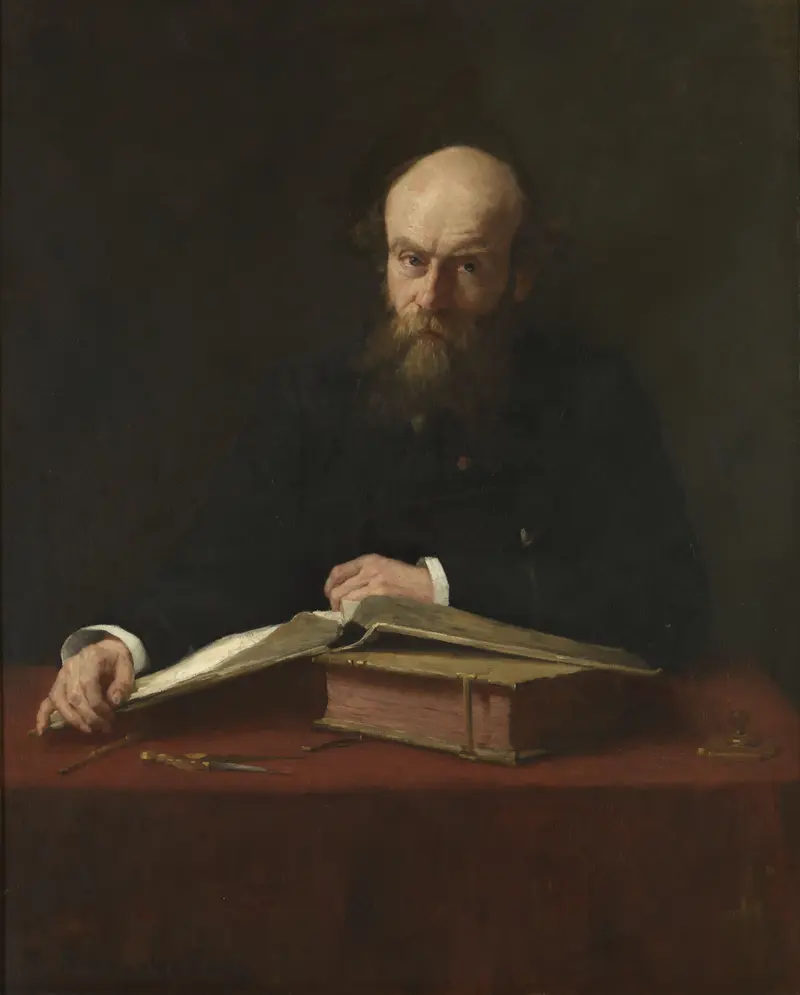
Portrait of Dr. P.J.H. Cuypers (1827-1921)
Thérèse Schwartze
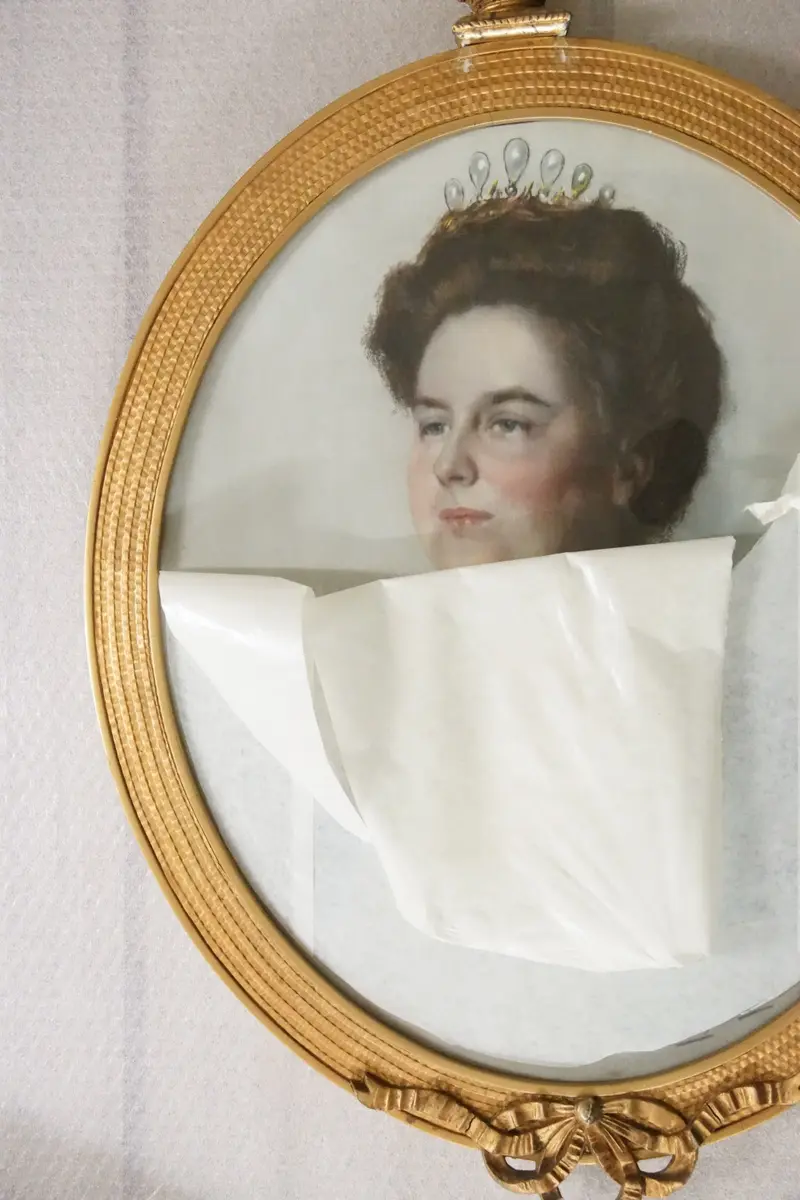
Portret Wilhelmina 020904 Stedelijk Museum Alkmaar
Thérèse Schwartze
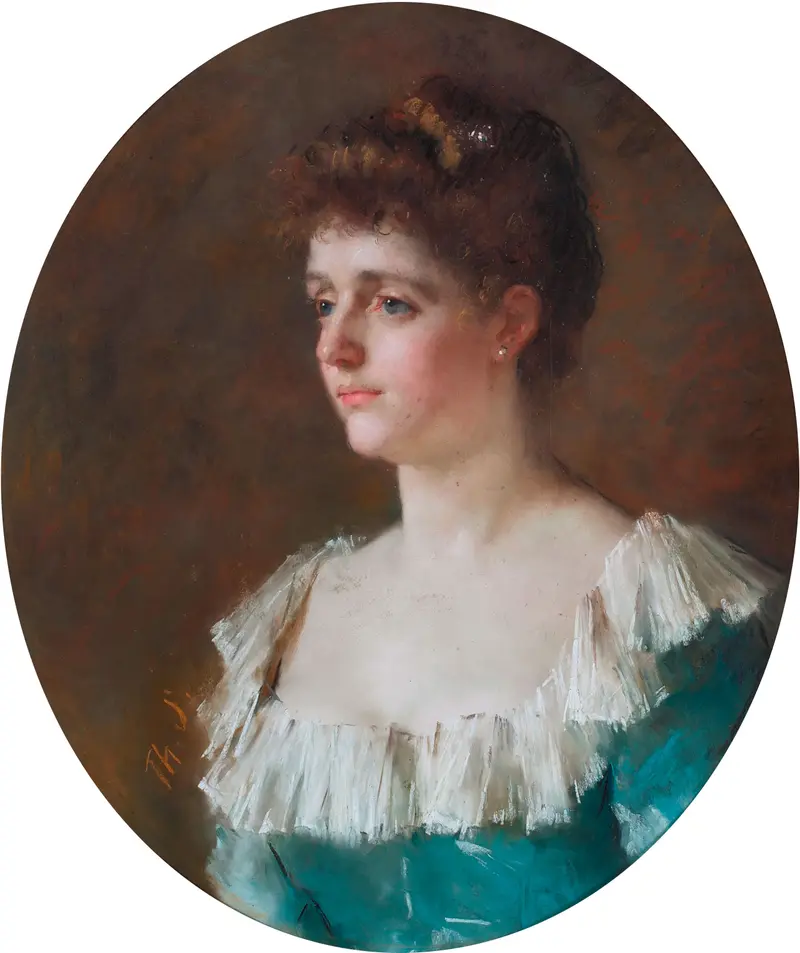
Portrait of Maria Cornelia Schimmelpenninck van der Oye (1857-1891)
Thérèse Schwartze
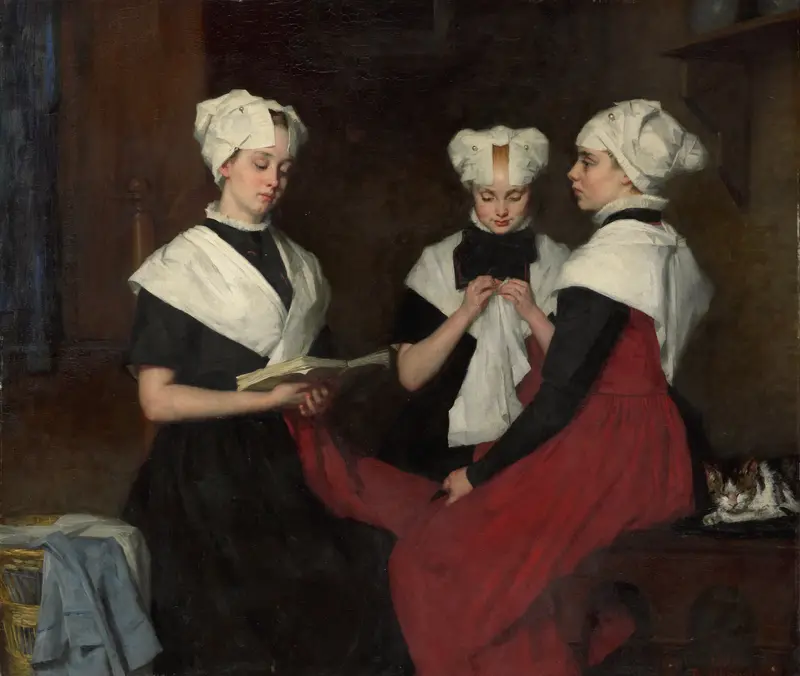
Three girls from the Amsterdam Orphanage
Thérèse Schwartze
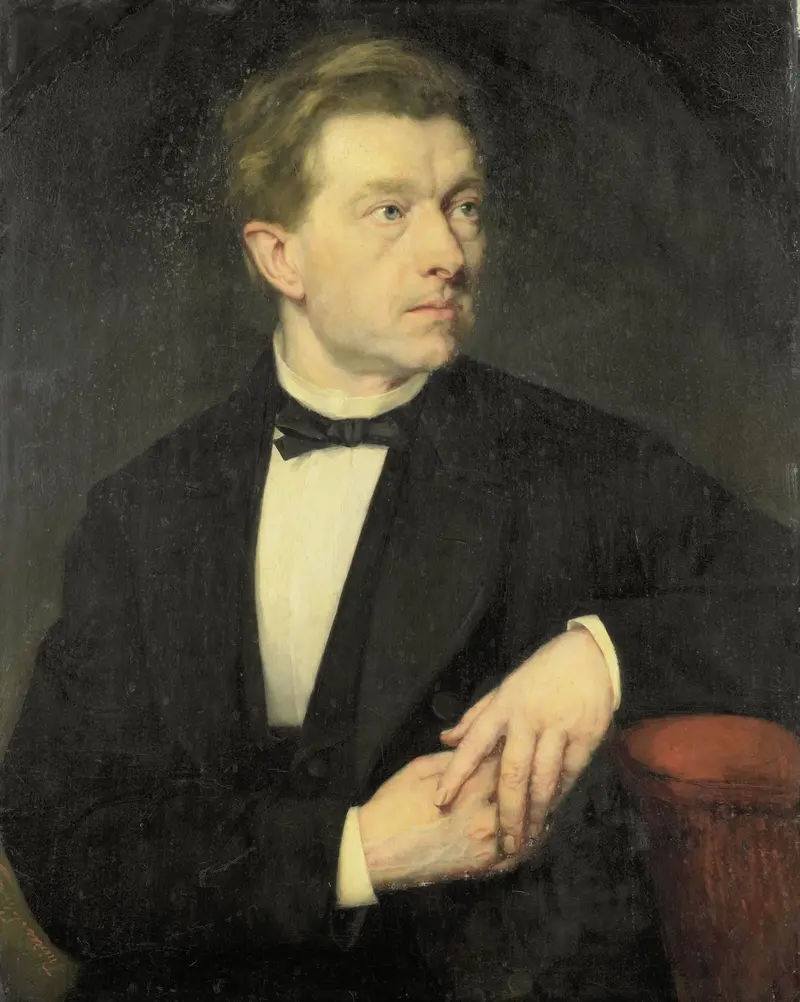
Portrait of Dr. J. L. Dusseau
Thérèse Schwartze
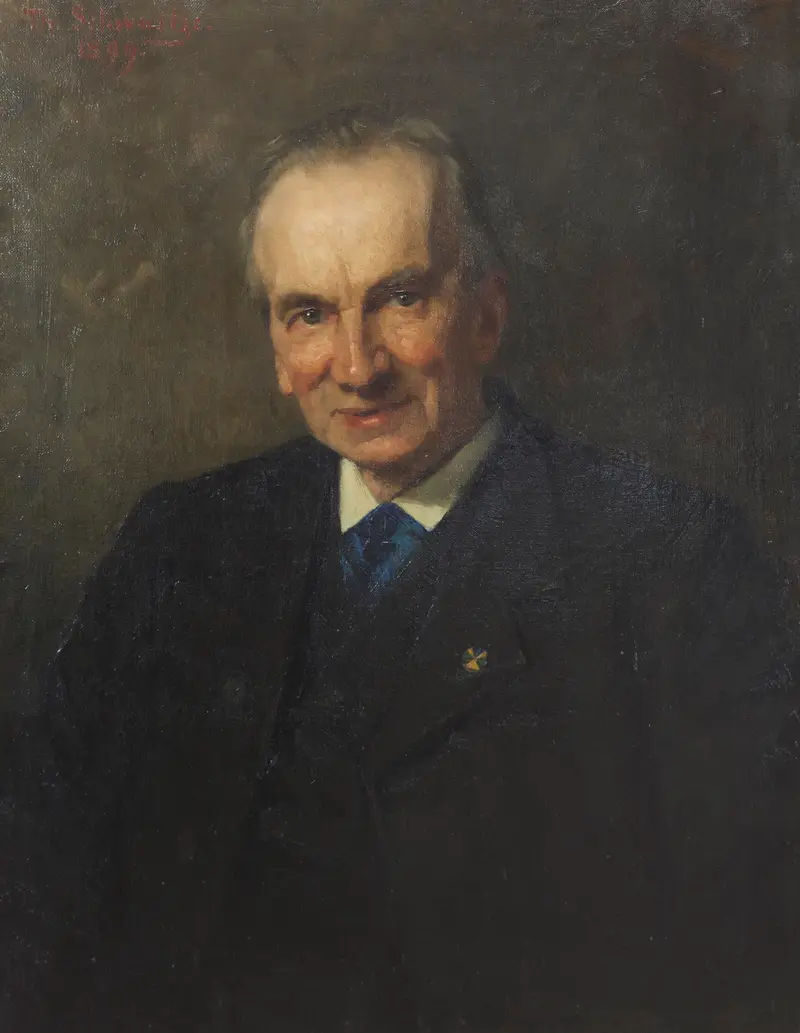
Portrait of Frederik Willem van Eeden
Thérèse Schwartze
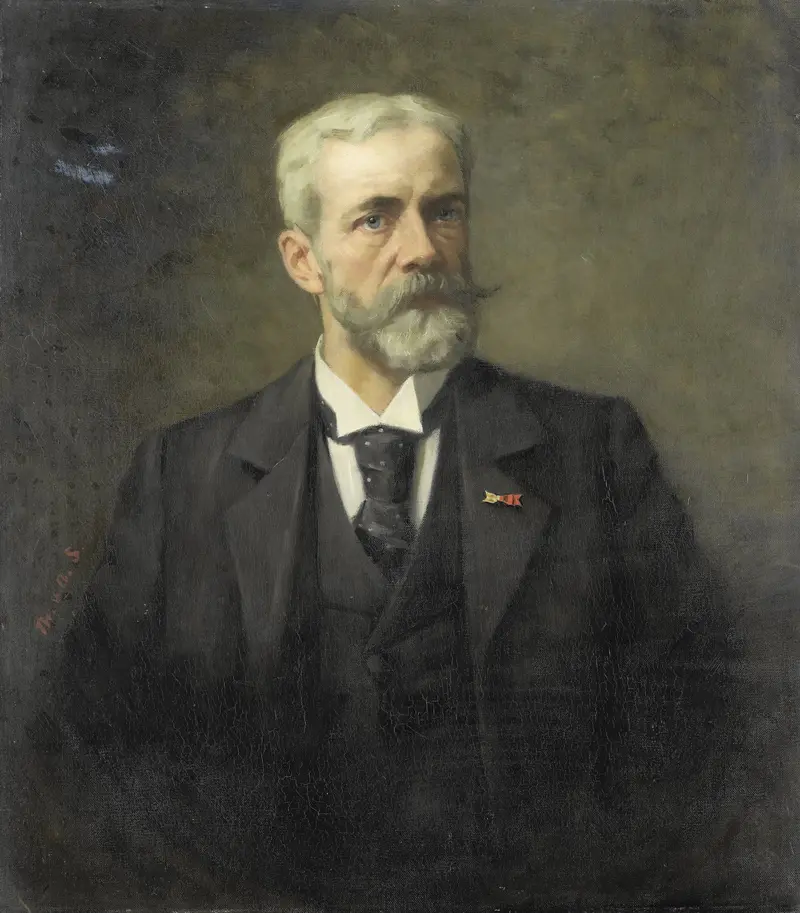
Portrait of Frederik Daniël Otto Obreen (1840-96), director Rijksmuseum
Thérèse Schwartze
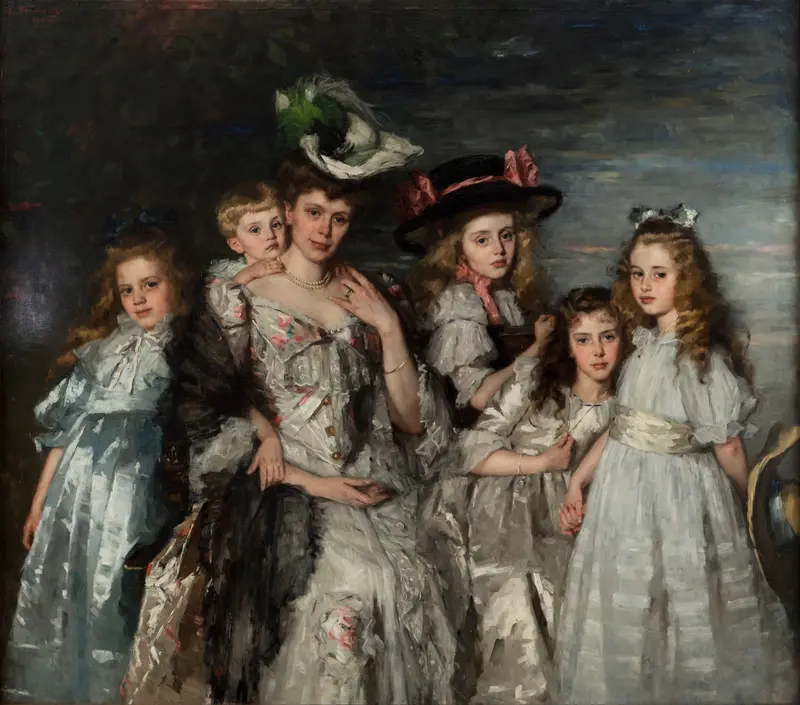
Portrait of Mrs. A.G.M. van Ogtrop-Hanlo (1871-1944) and her five children
Thérèse Schwartze
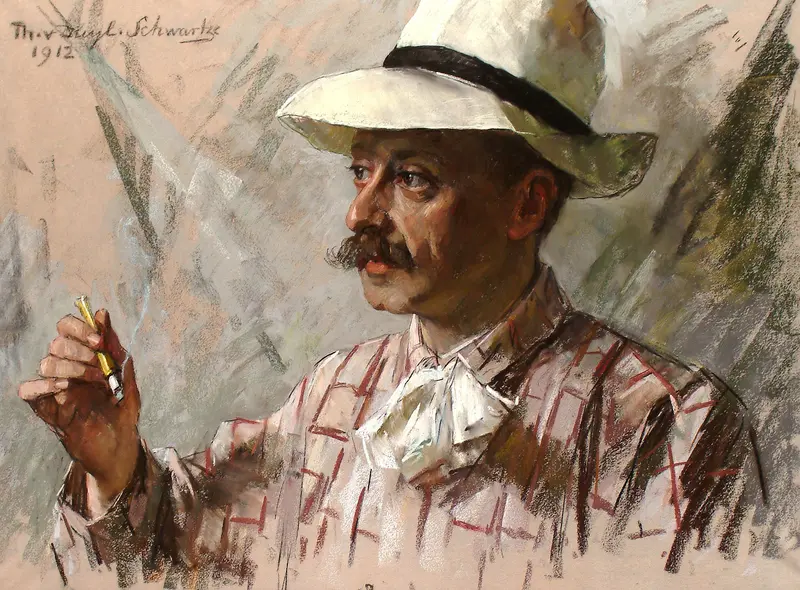
Portrait of Dr. Salomon Benjamin Druif
Thérèse Schwartze





