
Promenade dans un parc — History & Facts
A lady in a brilliant red gown commands the scene, her gaze meeting ours with a quiet assurance as she promenades beneath the dappled canopy of a grand estate. The play of light draws the eye to her face and the sweep of her dress, while her delicate parasol, held just so, signals both status and a moment of leisure. Nearby, dogs gather around a figure in rustic garb, their alert postures suggesting the anticipation of a hunt or the simple joy of companionship.
At the right, a parrot perches above a vase of flowers, injecting a flash of exotic color, while a statue of a winged figure—perhaps Cupid—presides over the garden’s edge, hinting at themes of love and playfulness. Every detail, from the distant fountain to the child watching the scene unfold, is orchestrated to evoke a world of cultivated pleasure and subtle drama. Painted between 1635 and 1640, Promenade dans un parc by Antonio Maria Vassallo belongs to a period when scenes of aristocratic leisure were both a reflection of social aspiration and a showcase for the painter’s skill. In seventeenth-century Italy, such works were often commissioned by wealthy patrons eager to display their refinement, their taste for the new and exotic, and their connection to the rhythms of country life.
The presence of animals, costly fabrics, and garden statuary would have signaled not only wealth but also a cultivated engagement with the natural world—a theme that resonated across Europe as the boundaries between town and country, artifice and nature, were being redrawn. History has kept few traces of this particular canvas beyond its date and present collection, yet its world of poised figures and careful pleasures invites us to linger, searching for the stories behind each gesture and glance.
More Artworks by Antonio Maria Vassallo

Medea using her Magic, a scene from Ovid’s Metamorphoses
Antonio Maria Vassallo
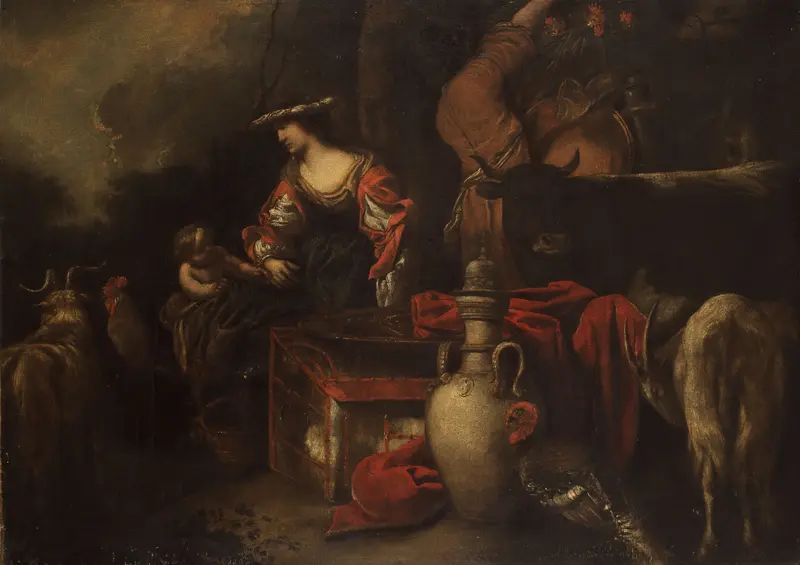
Rebekah at the Well
Antonio Maria Vassallo
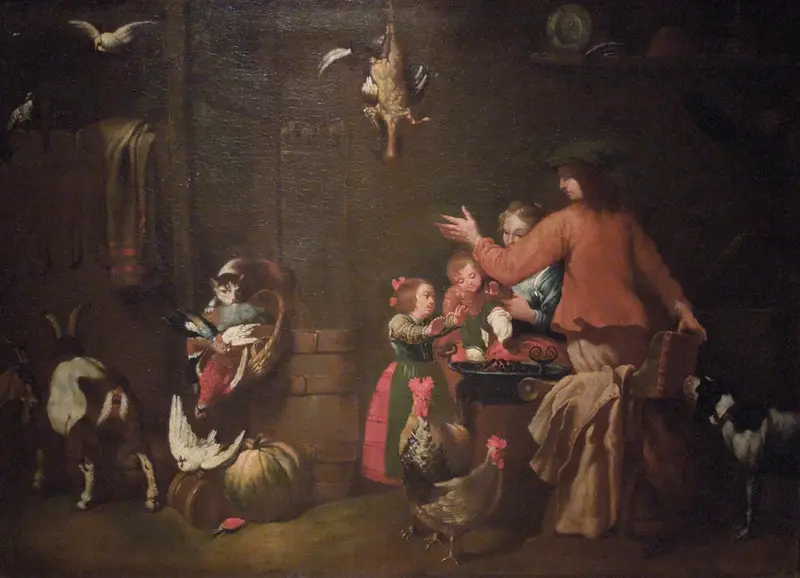
Kitchen Interior
Antonio Maria Vassallo
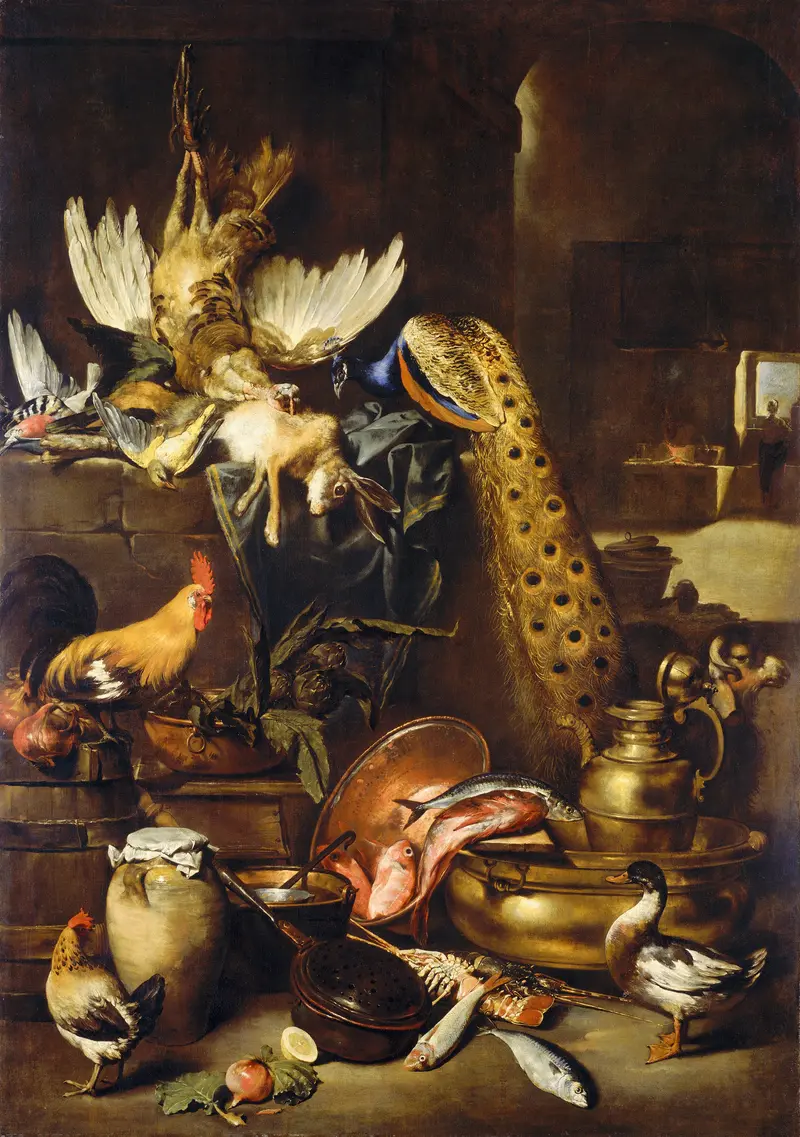
The Larder
Antonio Maria Vassallo
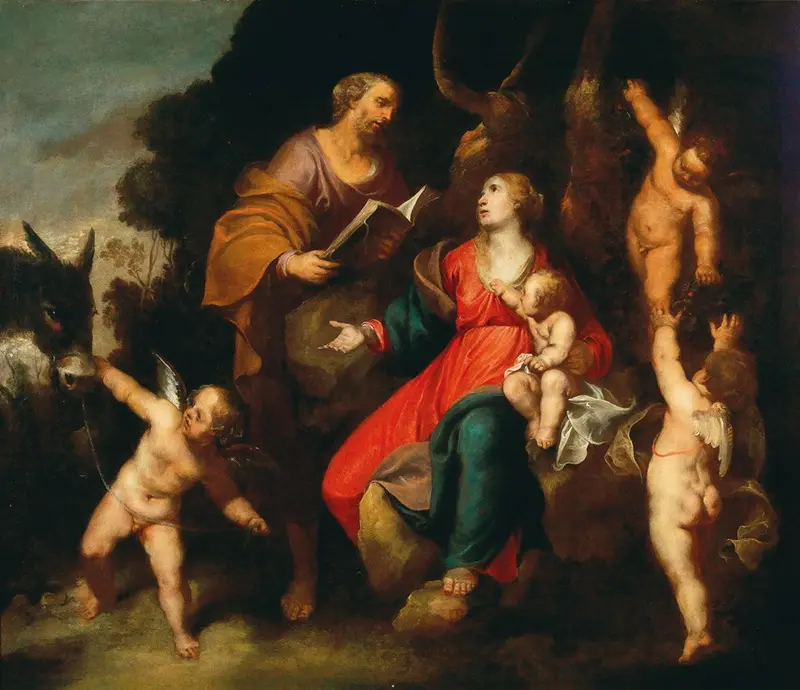
The Rest on the Flight into Egypt
Antonio Maria Vassallo
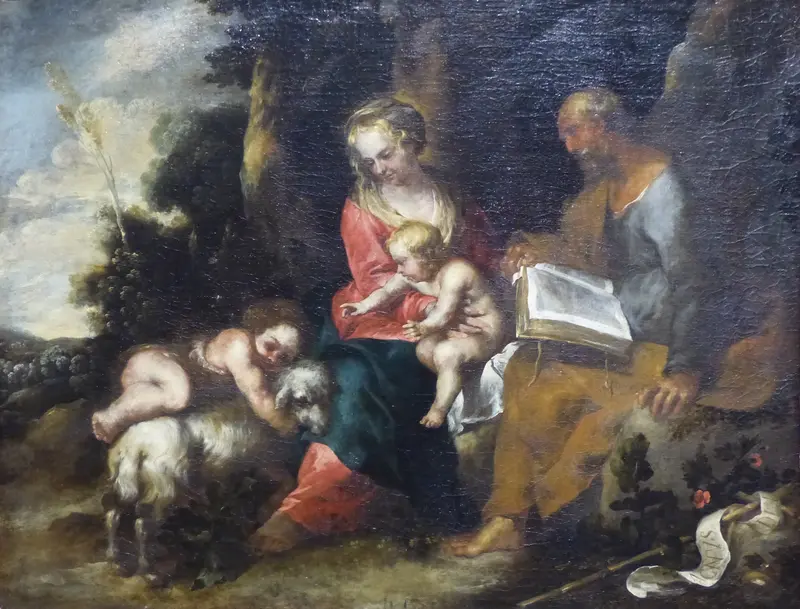
la Sainte-Famille avec St Jean-Baptiste
Antonio Maria Vassallo
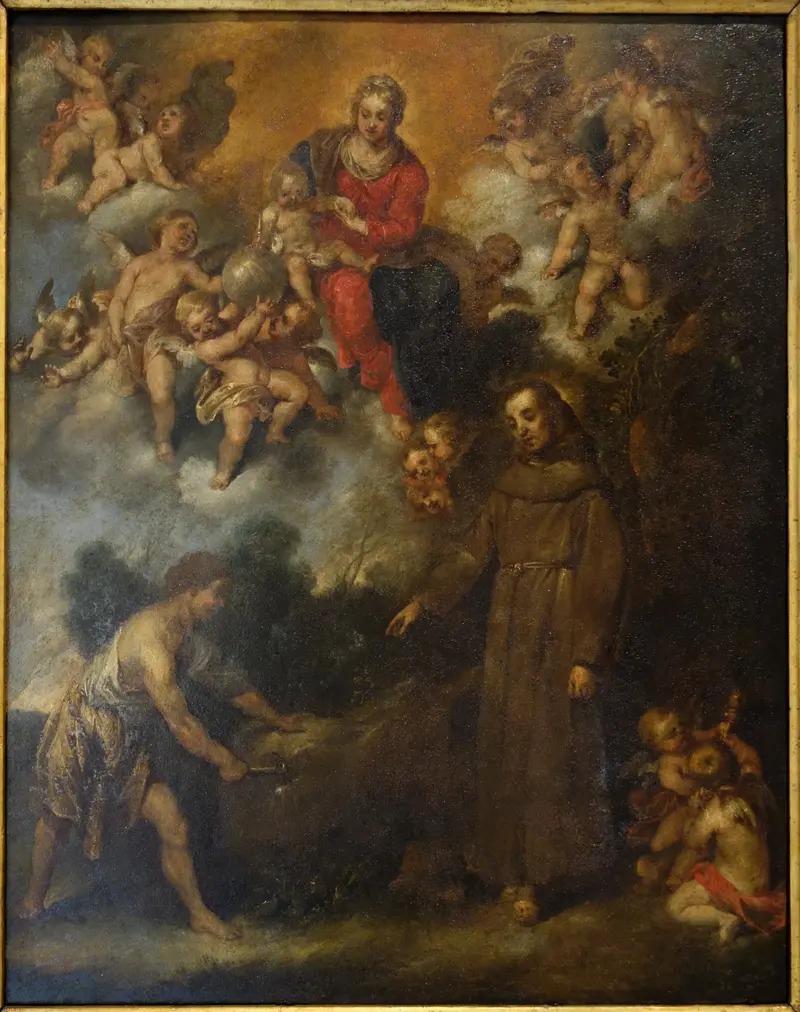
Blessed Andrea da Spello brings Water from a Rock
Antonio Maria Vassallo
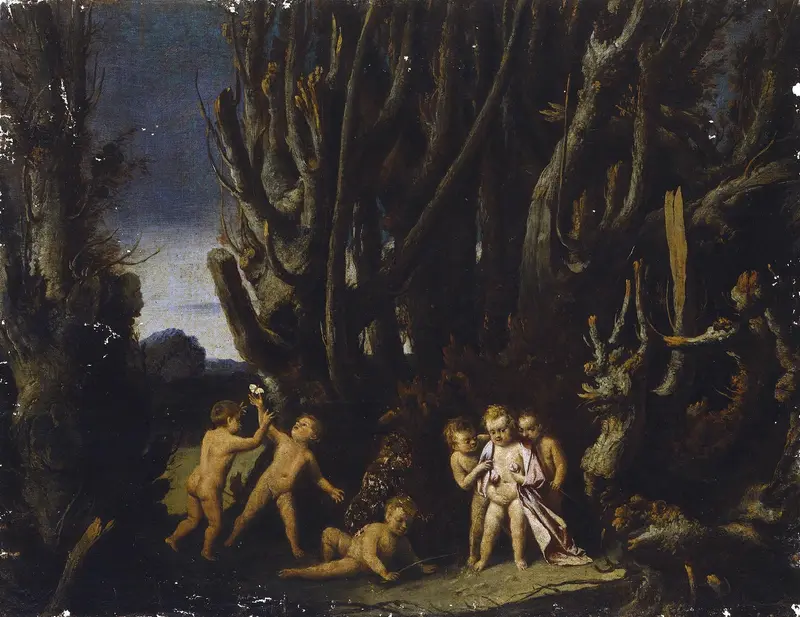
Putti in a Landscape
Antonio Maria Vassallo
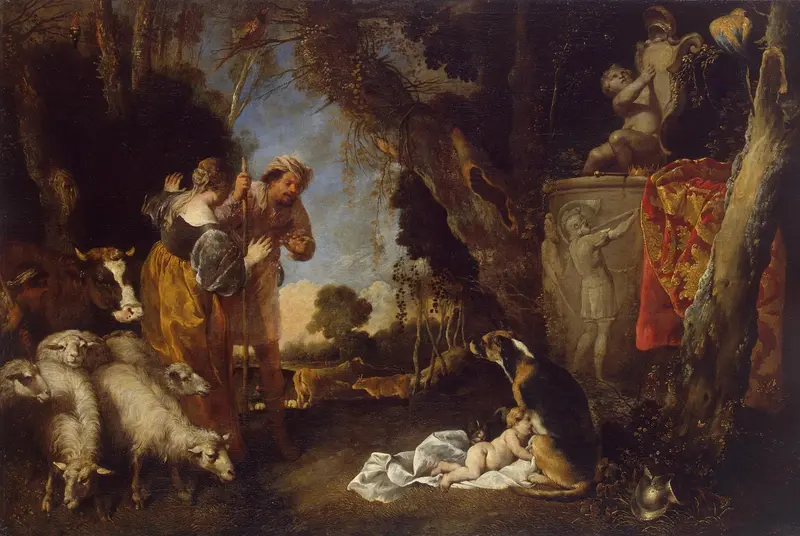
Childhood of King Cyrus
Antonio Maria Vassallo
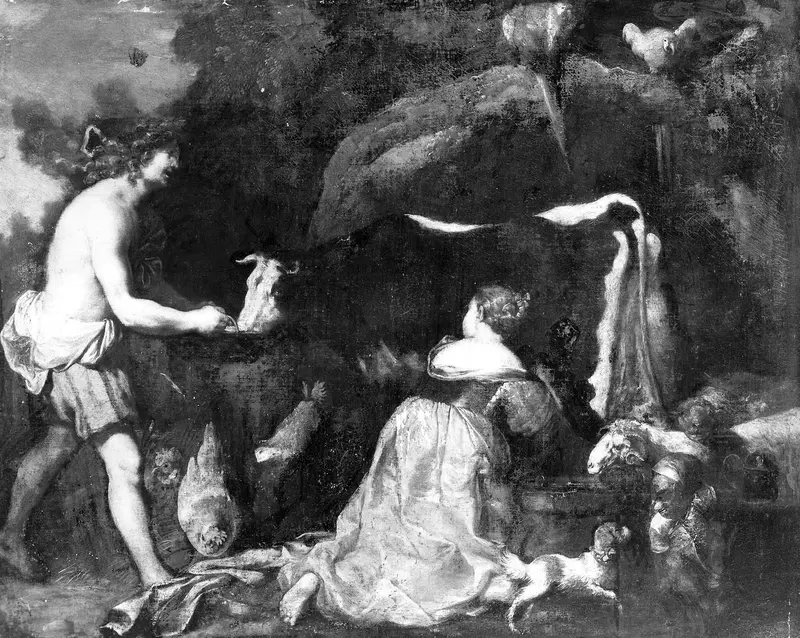
Apollo as a Shepherd
Antonio Maria Vassallo
More Genre Scene Art

Banquet of the Officers of the St George Civic Guard
Frans Hals

Rembrandt and Saskia in the Scene of the Prodigal Son
Rembrandt van Rijn

Bal du moulin de la Galette
Pierre-Auguste Renoir

Quadrille at the Moulin Rouge
Henri de Toulouse-Lautrec

A Burial at Ornans
Gustave Courbet

When Will You Marry?
Paul Gauguin