Prometheus — History & Facts
A mountain looms under a sky thick with storm, its jagged slopes and shadowed crags dwarfing the sunlit outcrop below. At first, the viewer’s eye is drawn to the bright, almost theatrical spotlight of golden trees and pale cliffs, a sudden oasis of life pressed against the darkness. But as the gaze rises, a colossal figure emerges from the rock itself—arms outstretched, body fused with the mountain, a silent giant bound to the landscape.
The tension between the illuminated foreground and the brooding, almost oppressive mass above hints at a mythic struggle, as if nature itself is holding its breath. Painted in 1882 by Arnold Böcklin, this work belongs to a late nineteenth-century world fascinated by myth and the supernatural, where artists often turned to ancient stories to probe the boundaries of human suffering and defiance. Böcklin’s vision, now in the Collezione Barilla di Arte Moderna, stands apart from the grand academic canvases of his French contemporaries: here, the myth of Prometheus is not a stage for gods and heroes, but a drama played out in stone and storm, the punishment of the titan etched into the very bones of the earth. In an era when artists and collectors alike sought images that could unsettle and inspire, Böcklin’s landscapes offered both—a challenge to the viewer to find the story within the shadows.
Let your eyes linger on the mountain’s contours, and see if you can trace the cost of defiance carved into its form.
More Artworks by Arnold Böcklin

Die Toteninsel III
Arnold Böcklin
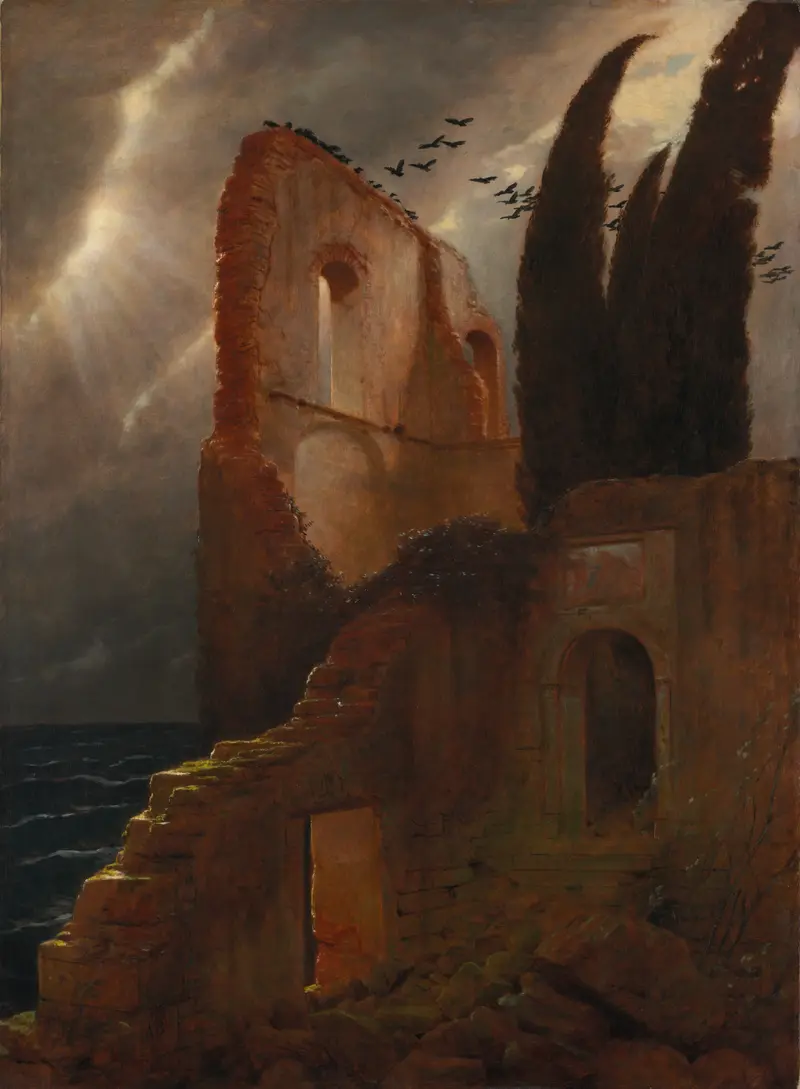
Ruin by the Sea
Arnold Böcklin
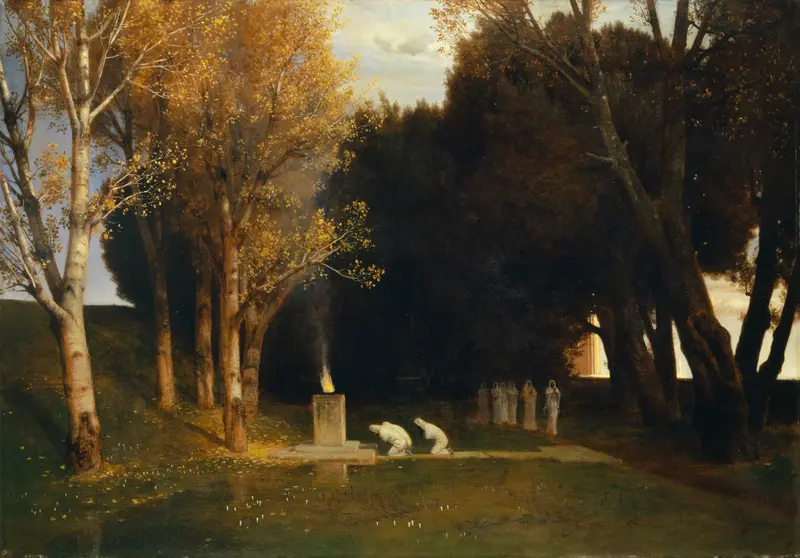
The Sacred Grove
Arnold Böcklin
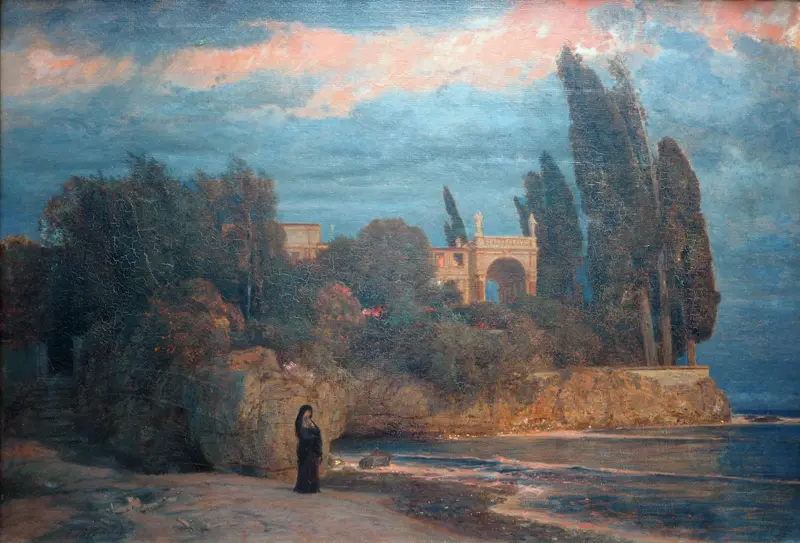
Villa by the Sea
Arnold Böcklin
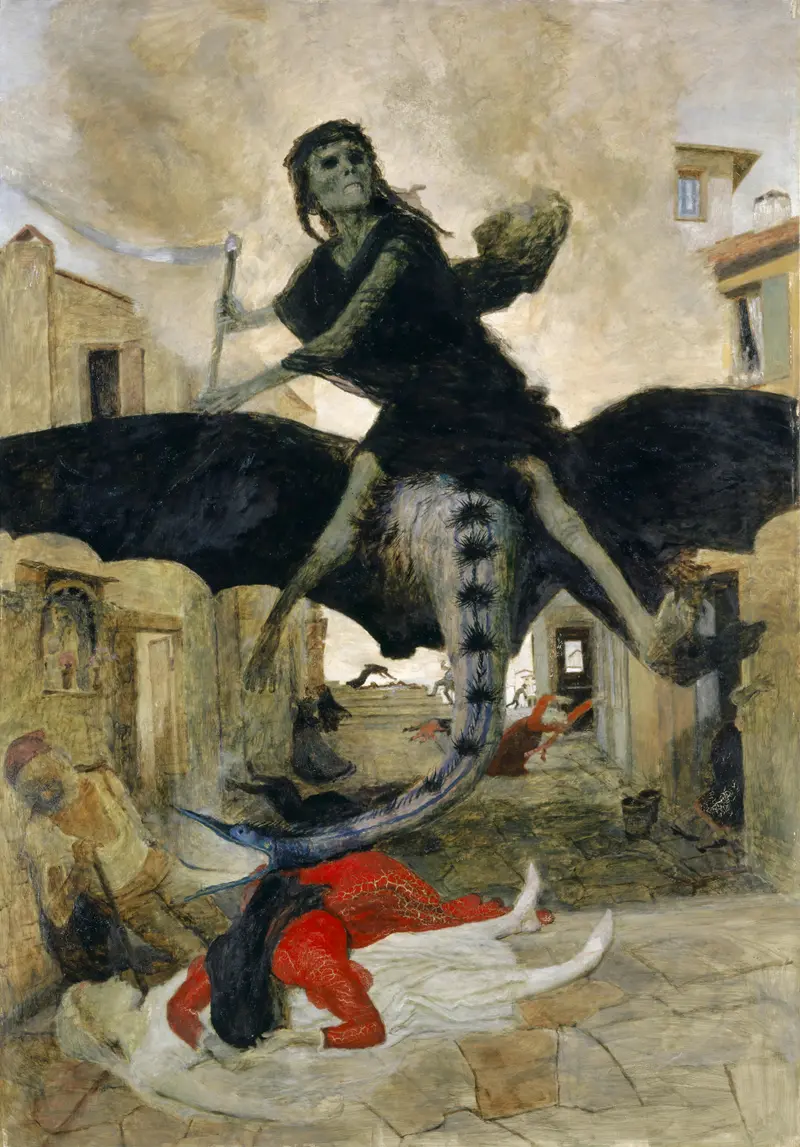
The Plague
Arnold Böcklin
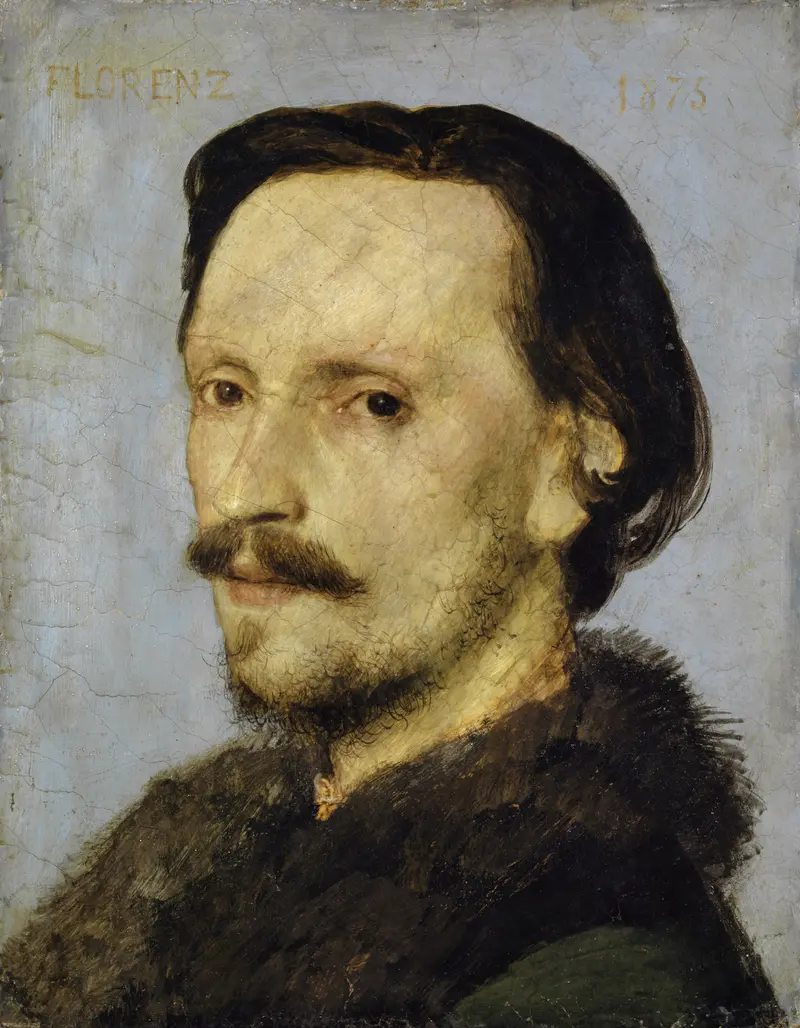
Böcklin Bildnis des Kunsthistorikers Adolph Bayersdorfer, 1875
Arnold Böcklin
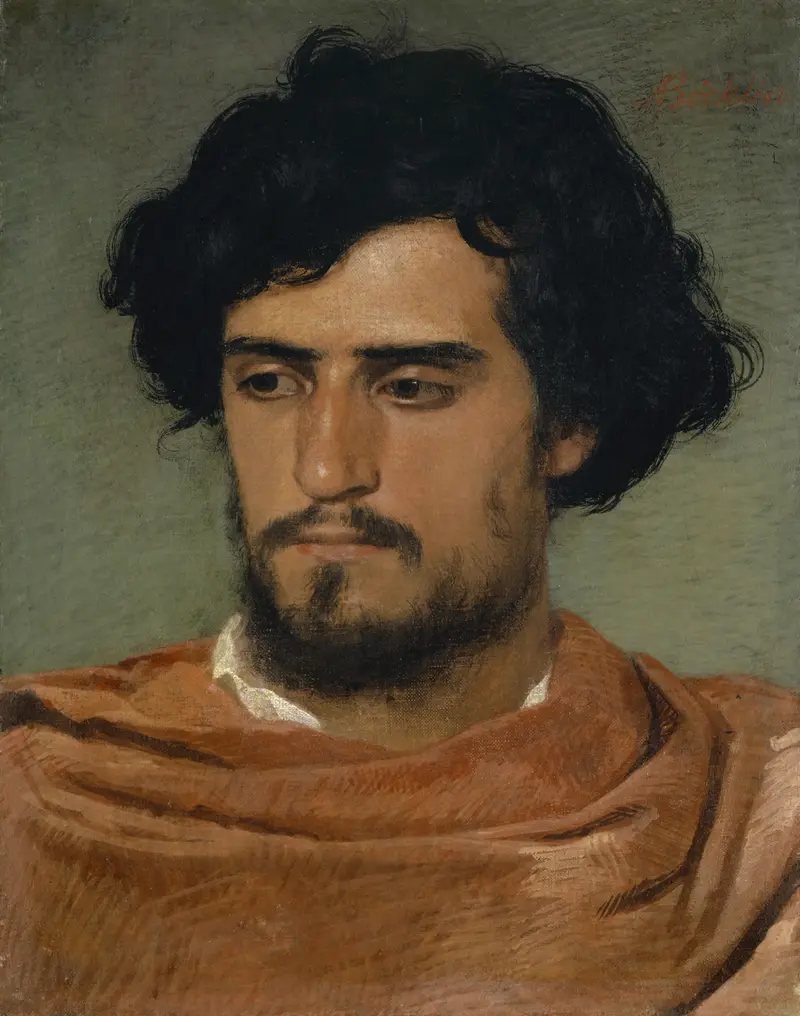
Head of a Roman
Arnold Böcklin
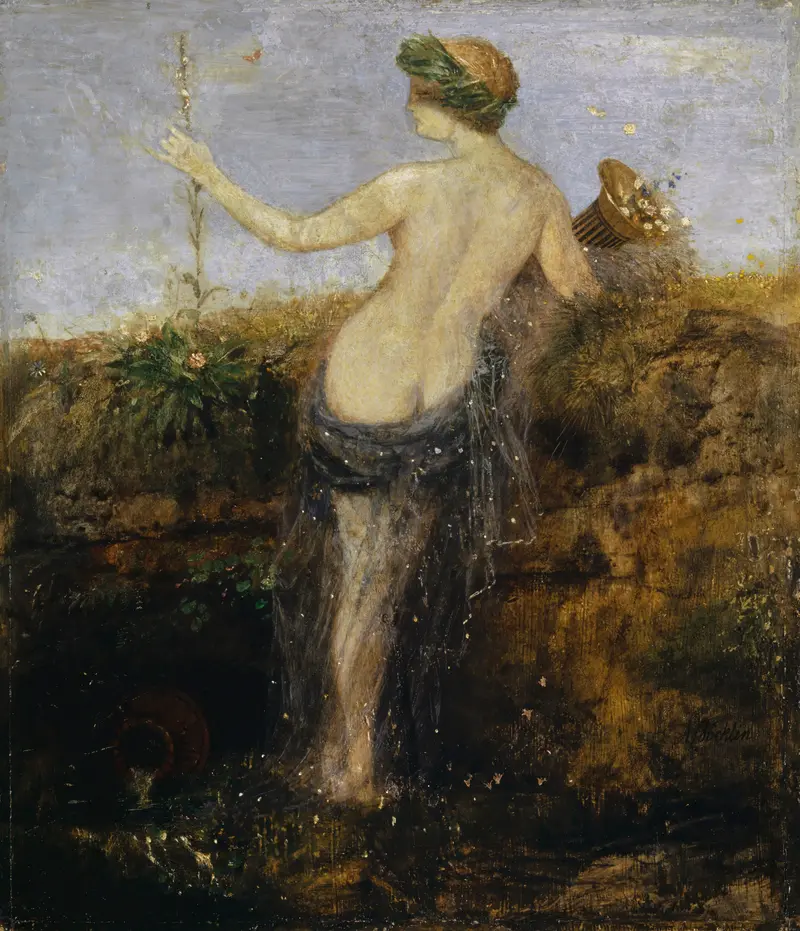
Nymphe with Horn of Plenty
Arnold Böcklin
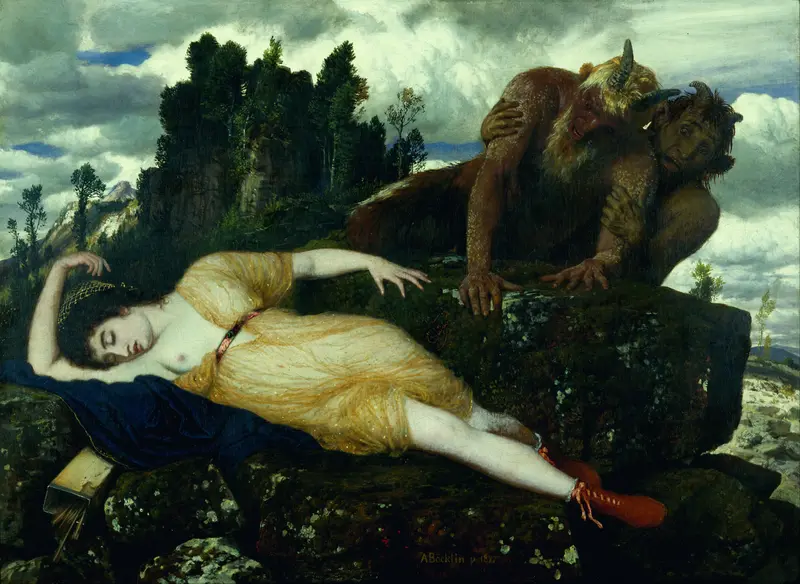
Sleeping Diana Watched by Two Fauns
Arnold Böcklin
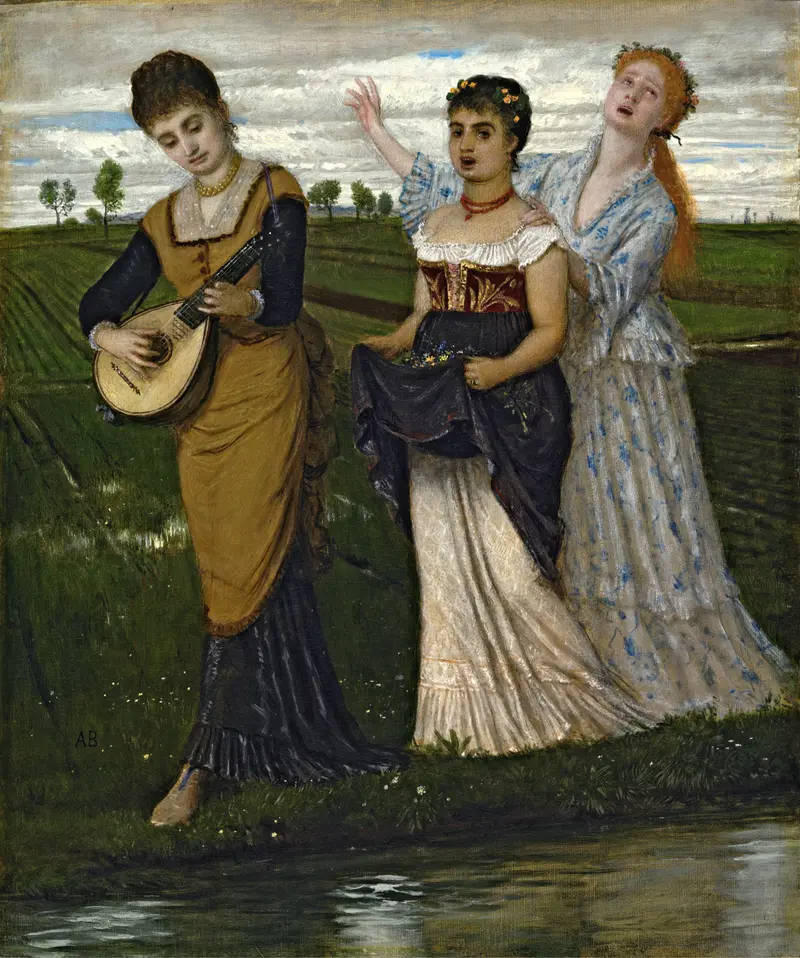
Spring (Songs of Spring)
Arnold Böcklin