
Racing Schooners — History & Facts
A line of schooners surges forward, their sails swollen with wind, each vessel angled in a determined sprint across the churning sea. The eye is drawn instantly to the dramatic tilt of the ships, their bows slicing through the water, the rigging taut with the tension of competition. Antonio Jacobsen’s hand lingers on the details that matter: the crisp geometry of the sails, the subtle play of sunlight along the masts, the dark, rolling waves that threaten to swallow the hulls.
Above, a sky of pale blue and gathering clouds hints at changing weather, but the real drama is in the race itself—each schooner marked by its own flag, each crew locked in a silent contest of speed and skill. Painted in 1879, Racing Schooners belongs to a world where maritime prowess was both spectacle and national pride. This was the golden age of yachting, when wealthy patrons commissioned portraits of their prized vessels and artists like Jacobsen made a name capturing the thrill of the regatta. The painting’s precision speaks to the era’s hunger for technical achievement: every line and shadow is a record of a real craft, a real rivalry.
While history has kept few traces of this specific canvas beyond its 2011 appearance at Christie’s in New York, it stands as a testament to the ambitions of its time. Let your eye linger on the leading schooner’s prow, and you can almost hear the shouts of the crew above the rush of the wind.
More Artworks by Antonio Jacobsen

Het stoomschip met hulpzeilvermogen ‘Kroonland’
Antonio Jacobsen

The Barque Vigilant
Antonio Jacobsen
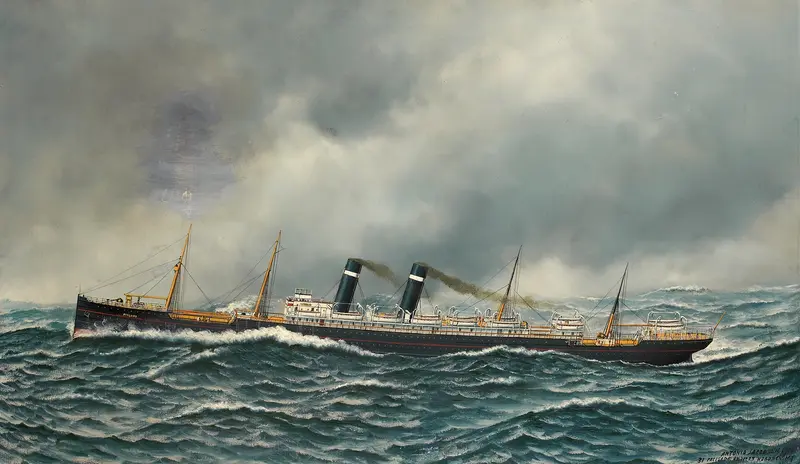
Het stoomschip ‘Finland’ te New York
Antonio Jacobsen
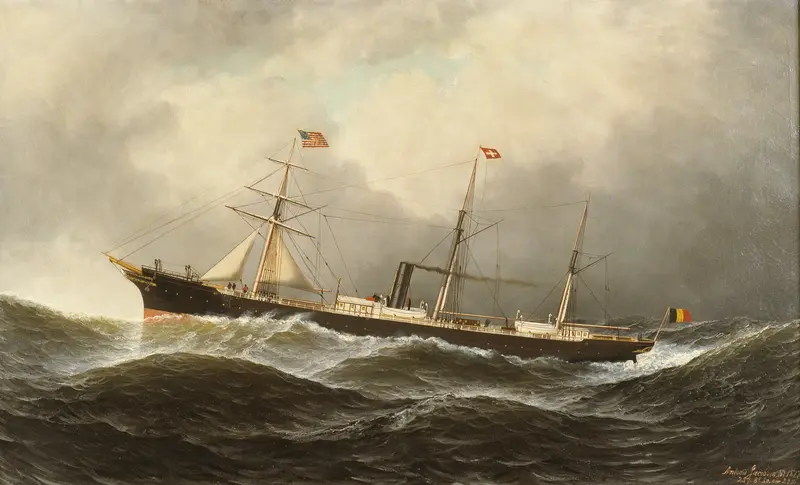
Het Belgische stoomschip met hulpzeilvermogen ‘Ludwig’ op zee
Antonio Jacobsen
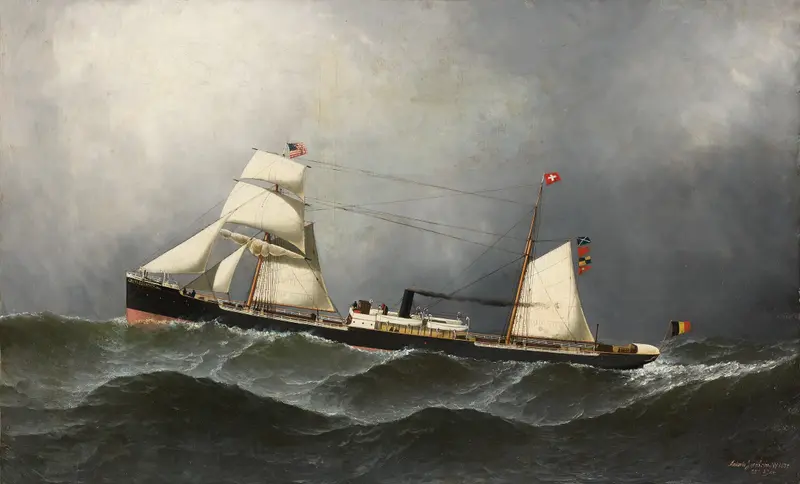
Het stoomschip met hulpzeilvermogen ‘Daniel Steinmann’ van de White Cross Line
Antonio Jacobsen
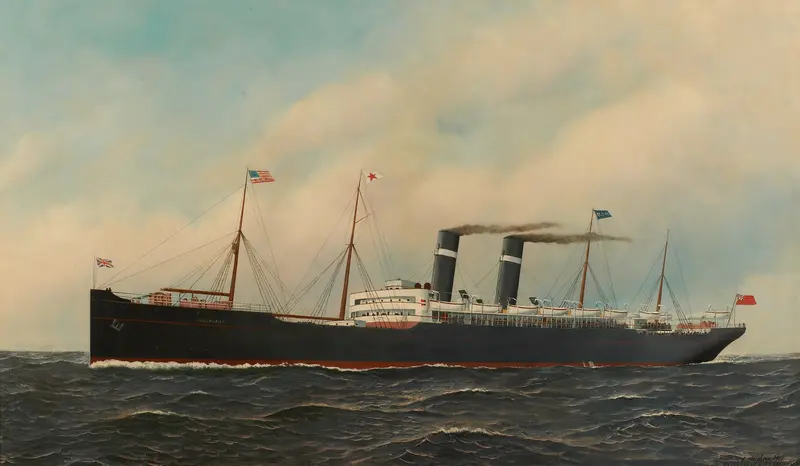
Het passagiersstoomschip Vaderland
Antonio Jacobsen
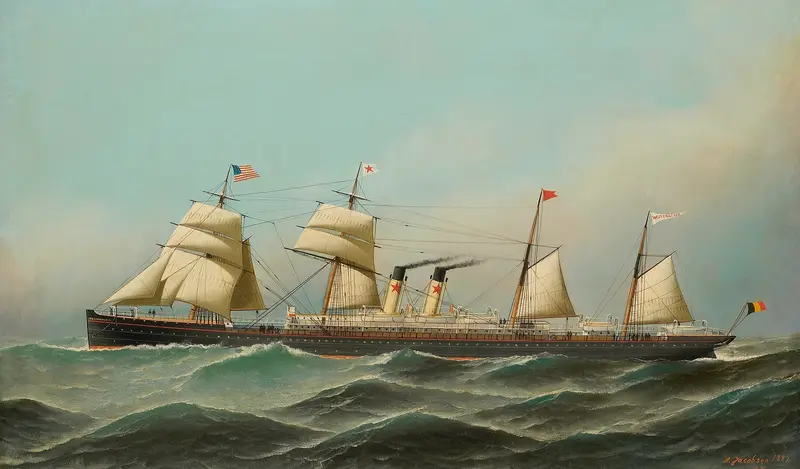
Het stoomschip met hulpzeilvermogen ‘Westernland’
Antonio Jacobsen
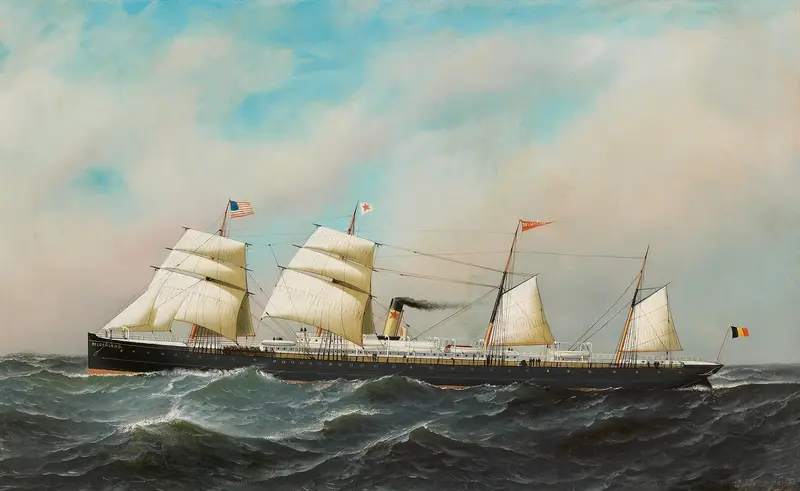
Het stoomschip met hulpzeilvermogen Belgenland
Antonio Jacobsen
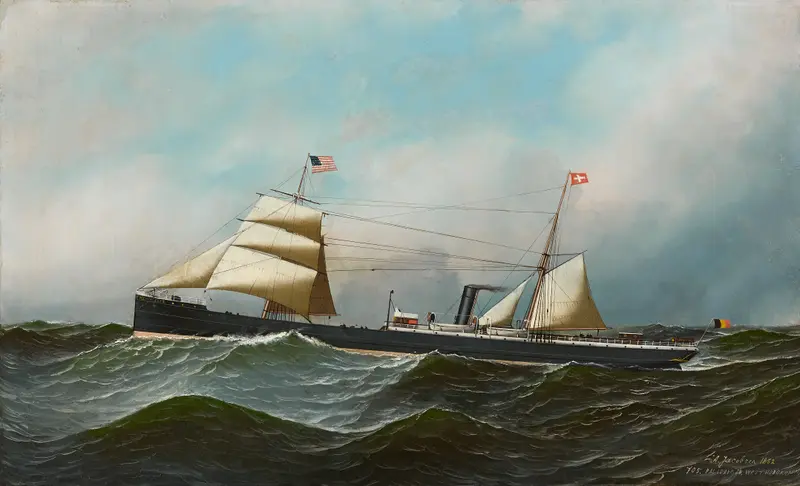
Het stoomschip met hulpzeilvermogen ‘Henry Edye’ van de White Cross Line
Antonio Jacobsen
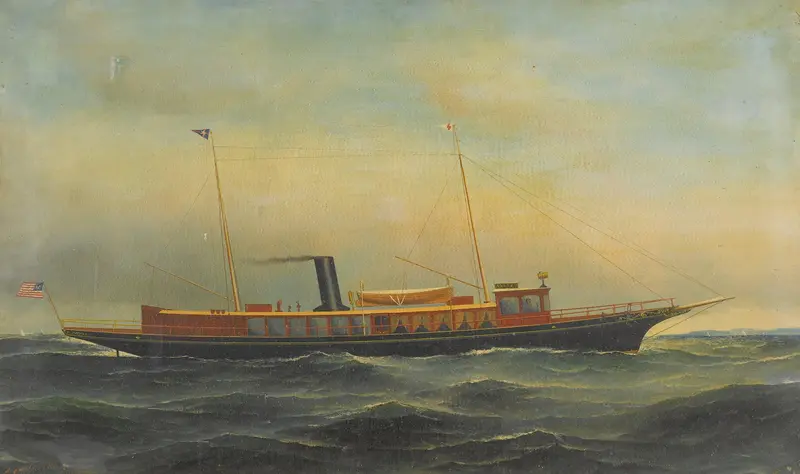
The Yacht ‘aztec’
Antonio Jacobsen





