
Reekie, Glasgow — History & Facts
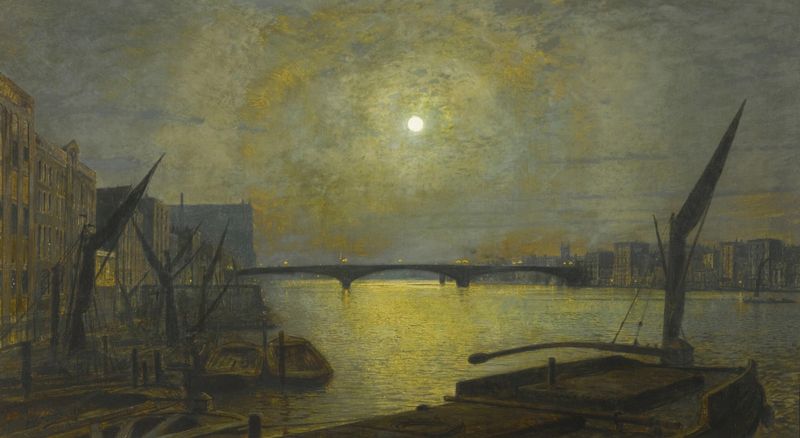
In the flicker of twilight, the ordinary transforms into the extraordinary, where every stroke whispers tales of change. Look to the left at the intricate details of the cobblestone street, where the fading light bathes the scene in a blend of amber and indigo. Notice how the soft hues of the sky meld seamlessly with the reflections in the water below, a delicate dance of color suggesting an ephemeral moment. The lamplight flickers in the distance, creating an inviting warmth that contrasts sharply with the cool shadows enveloping the figures moving purposefully along the path.
Each element is meticulously crafted, guiding the viewer's gaze through a world that feels both familiar and surreal. Beneath the tranquil surface lies a tension between the bustling life and the stillness of the approaching night. The figures, cloaked in shadow, suggest a deeper story of transition and movement, evoking the bittersweet nature of urban life. Grimshaw's composition embodies the duality of chaos and beauty, showcasing how the city, often a source of strife, can also be a sanctuary of grace.
The glowing lamplight serves as a beacon, illuminating the possibility of transformation amidst the darkness. In the late 19th century, the artist created this piece while embracing the artistic currents of the time, amidst the emergence of the Aesthetic Movement. Living in Leeds, Grimshaw was deeply influenced by the industrial revolution's impact on city life. His work reflects a shift towards capturing atmospheric effects, as he sought to celebrate the beauty found in everyday moments, illustrating the interplay of light and shadow in urban landscapes.
More Artworks by John Atkinson Grimshaw
Browse all →
Under the Silvery Moonbeams
John Atkinson Grimshaw
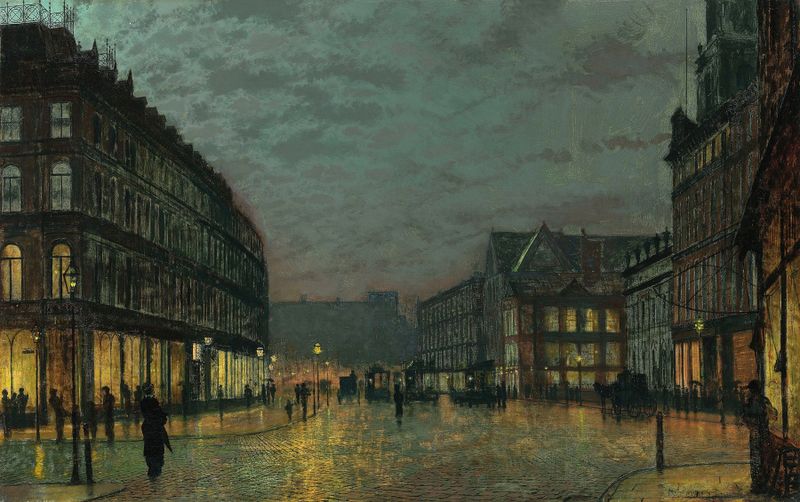
Boar Lane, Leeds by lamplight
John Atkinson Grimshaw
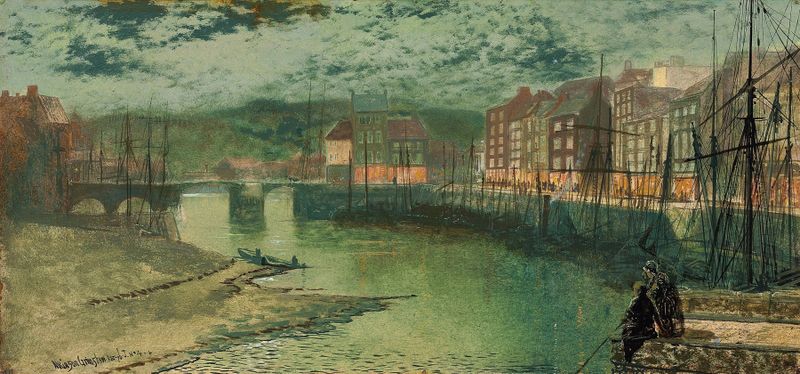
Whitby docks
John Atkinson Grimshaw

Old Chelsea
John Atkinson Grimshaw

Late October
John Atkinson Grimshaw
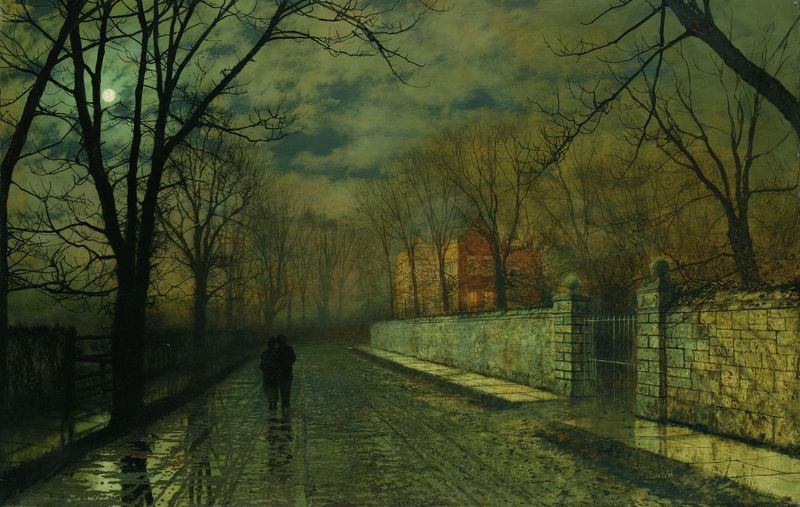
Figures In A Moonlit Lane After Rain
John Atkinson Grimshaw

Liverpool Lights
John Atkinson Grimshaw
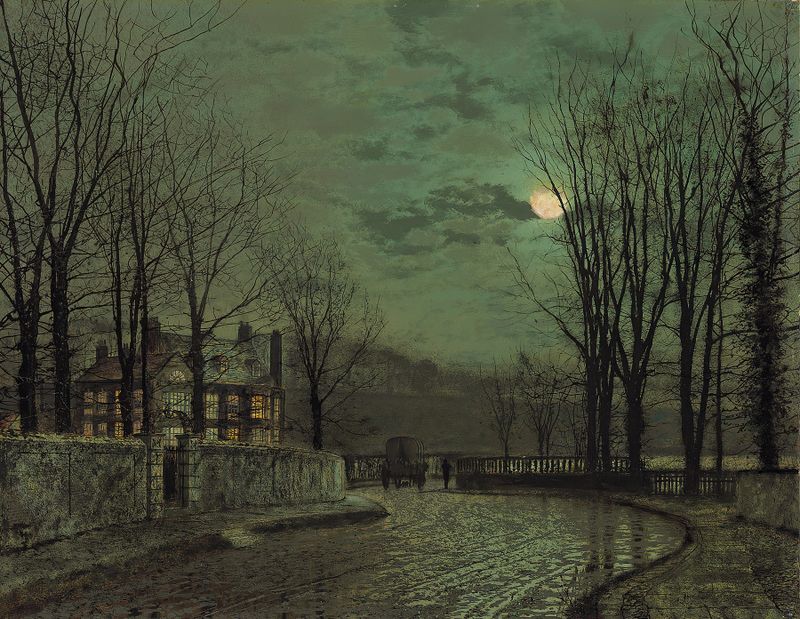
November Moonlight
John Atkinson Grimshaw
Southwark Bridge from Blackfriars by Moonlight
John Atkinson Grimshaw

Whitby From Scotch Head, Moonlight On The Esk
John Atkinson Grimshaw





