
Riders at Rest by Burg Ubbergen — History & Facts
What first catches the eye in Riders at Rest by Burg Ubbergen is the quiet choreography of pause: three mounted figures and a child, caught in a moment of stillness beneath a restless sky. The scene unfolds on a rise before a weathered castle, its golden stones catching the late light, while the riders—one in a striking red coat, another in dark garb, and a third at a distance—form a loose triangle that pulls the viewer into the landscape. The horses, too, are not just animals but characters: one white, one dappled, their heads turned in gentle conversation, their bodies relaxed but alert.
The child stands between them, a bridge between worlds, while a distant windmill and the sweep of open country promise movement beyond this pause. Every gesture, from the tilt of a hat to the angle of a lance, is a clue to the social order and quiet hierarchy at play. Painted in the 1660s, this work belongs to a Dutch tradition that prized scenes of riders and landscapes, a genre that flourished as the Republic grew wealthy and proud of its land and people. Such paintings were often commissioned by prosperous burghers or officers, eager to display their status and taste for the calm authority of the countryside.
The world that produced Riders at Rest by Burg Ubbergen was one of shifting power and growing self-confidence, where even the ruins of old castles and the presence of windmills spoke of a land both ancient and industrious. Though little is recorded of this particular painting’s journey, its survival in a modern collection invites us to linger in its golden hour, to imagine the stories behind each figure, and to follow the light as it leads us from castle wall to distant horizon.
More Artworks by Abraham Van Calraet
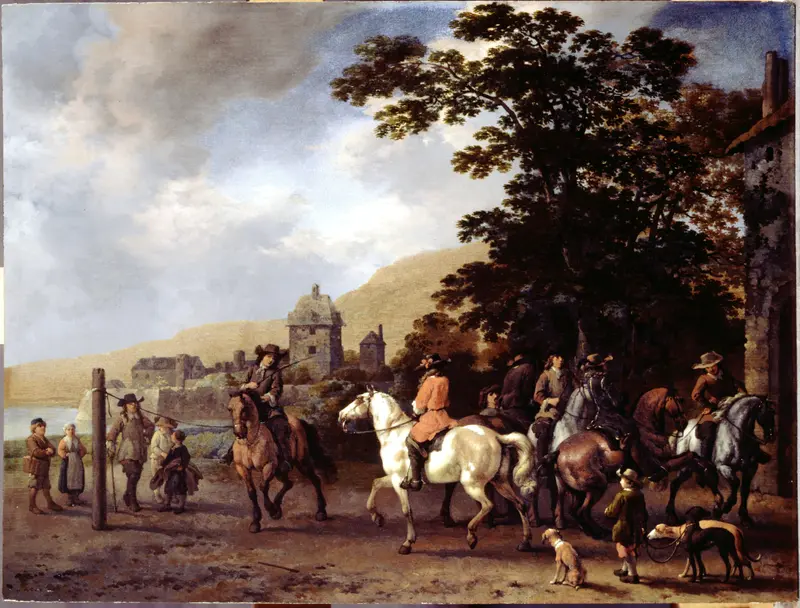
A Riding School in the Open Air
Abraham Van Calraet
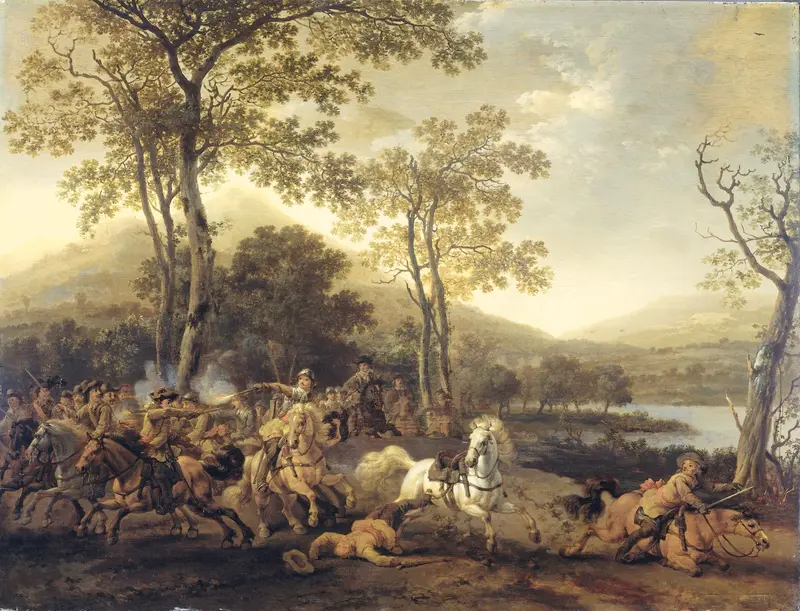
Cavalry Skirmish
Abraham Van Calraet
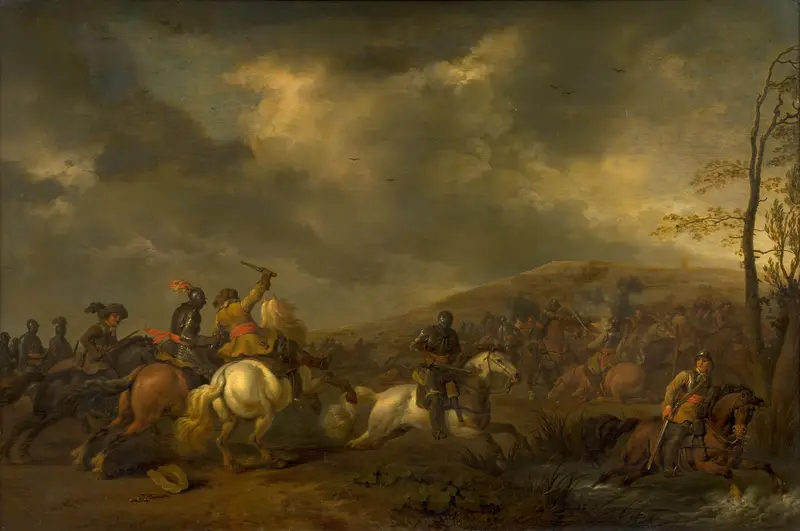
Choc de cavalerie
Abraham Van Calraet
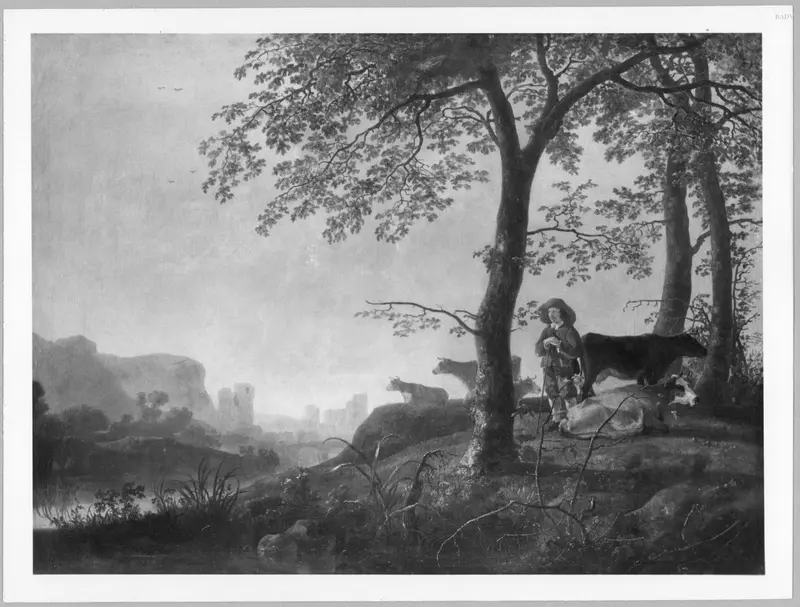
Herder and Cattle under Trees
Abraham Van Calraet
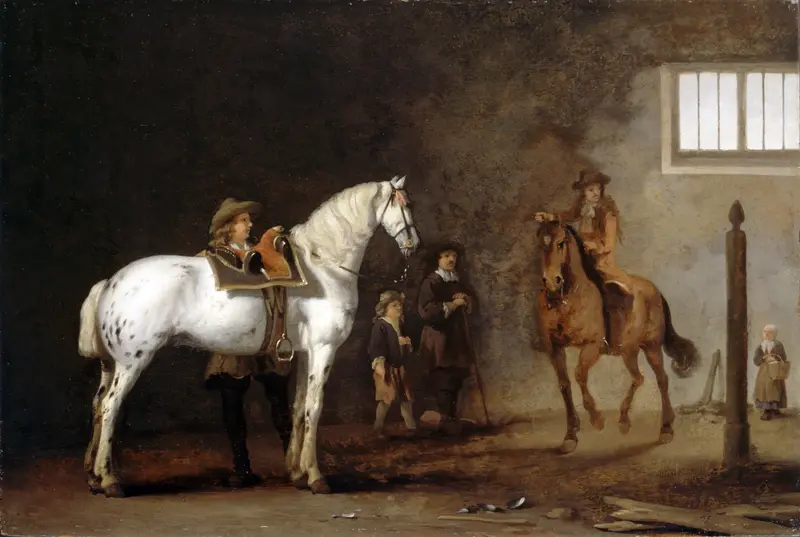
White Horse in a Riding School
Abraham Van Calraet
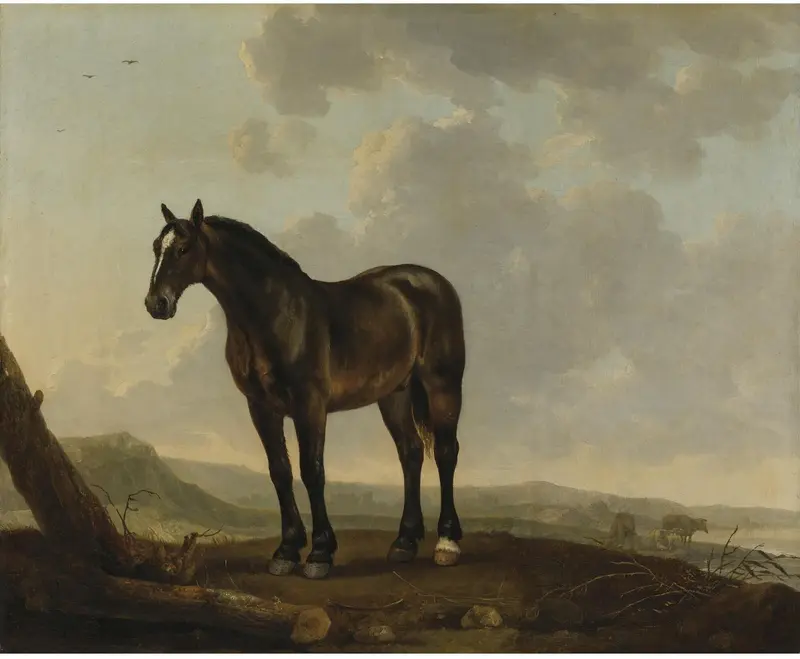
Landscape with a brown horse
Abraham Van Calraet
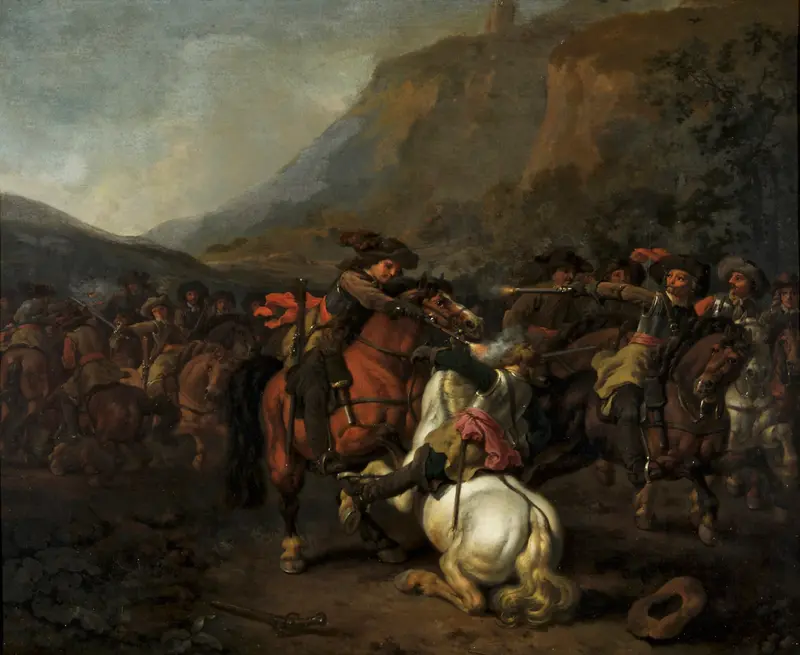
Ruitergevecht DM 016 1163 Dordrechts Museum
Abraham Van Calraet
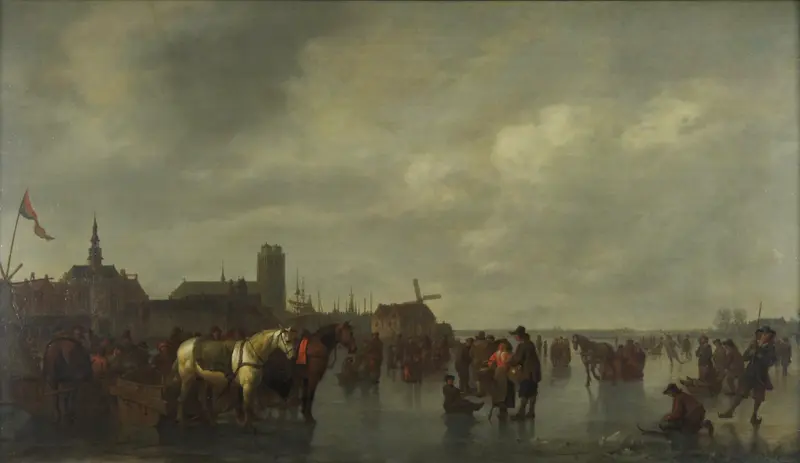
Scene on the Ice outside Dordrecht
Abraham Van Calraet
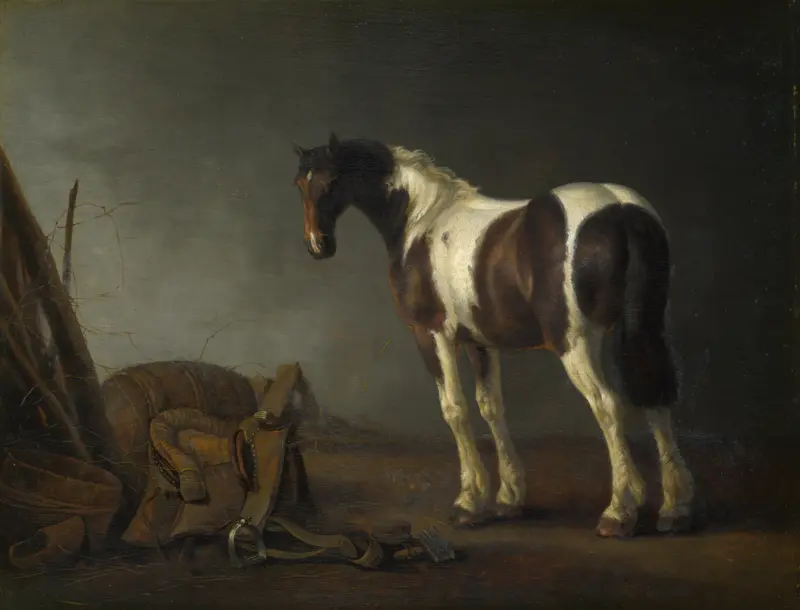
A Horse with a Saddle Beside it
Abraham Van Calraet
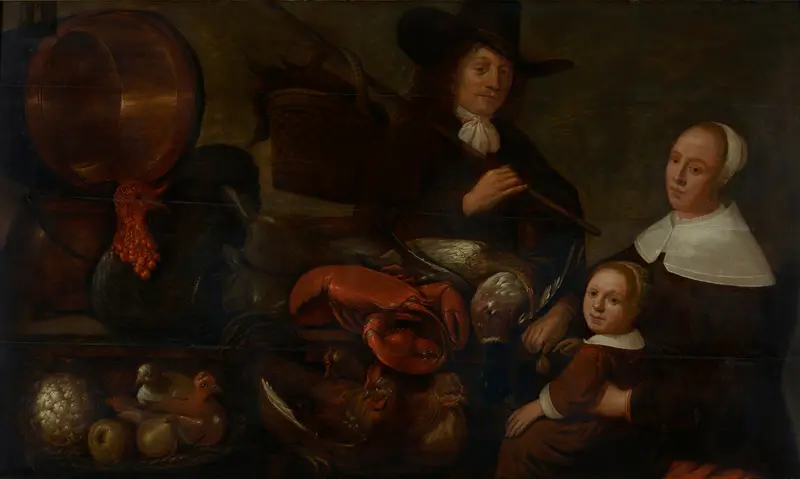
Portrait of a family
Abraham Van Calraet
More Landscape Art

The Starry Night
Vincent van Gogh

View of Delft
Johannes Vermeer

Water Lilies
Claude Monet

The Grand Canal, Venice, looking north-west from the Ca' Corner to the Ca' Contarini degli Scrigni, with the campanile of Santa Maria della Carità
Canaletto

Windsor Castle
Canaletto

The Grand Canal looking North-East from the Palazzo Dolfin-Manin to the Rialto Bridge
Canaletto