
River Landscape (At Eisack, In the Eisack Valley) — History & Facts
A riverbank becomes a stage for geometry in River Landscape (At Eisack, In the Eisack Valley), where the familiar forms of trees and mountains are fractured into facets of green and blue. The eye is drawn first to the crystalline foliage, each tree rendered as if chiseled from stone, their edges sharp against the soft, swirling sky. At the water’s edge stands a lone, white structure—part boundary marker, part silent witness—its rectilinear clarity both anchoring and interrupting the organic rhythm of the landscape.
Light here is not a gentle caress but a force that carves, defining each plane and shadow with a sculptor’s intent. The palette—cool, saturated, almost mineral—sets a mood of quiet intensity, as if the valley is holding its breath. Painted in 1911, this work stands at the crossroads of early twentieth-century experimentation, when artists across Europe were breaking apart the visible world to rebuild it anew. Alexander Kanoldt was among those who absorbed the lessons of Cubism and the radical color of Der Blaue Reiter, seeking a new visual language for nature.
Little is recorded about the journey of this particular painting, but its inclusion in the 1999 Prestel collection marks it as part of the restless search for order and expression that defined its era. The faceted trees and mountains invite the viewer to reconstruct the landscape with their own eyes—an invitation to linger, to look again, and to find structure in the wild.
More Artworks by Alexander Kanoldt

Kreuzgang I
Alexander Kanoldt
Bayerische Dorfhäuser unter Bäumen
Alexander Kanoldt
Gebirgsansicht
Alexander Kanoldt
Straßenbild I
Alexander Kanoldt
Blick auf die Alpspitze
Alexander Kanoldt

Wiesenlandschaft mit Gehöft
Alexander Kanoldt
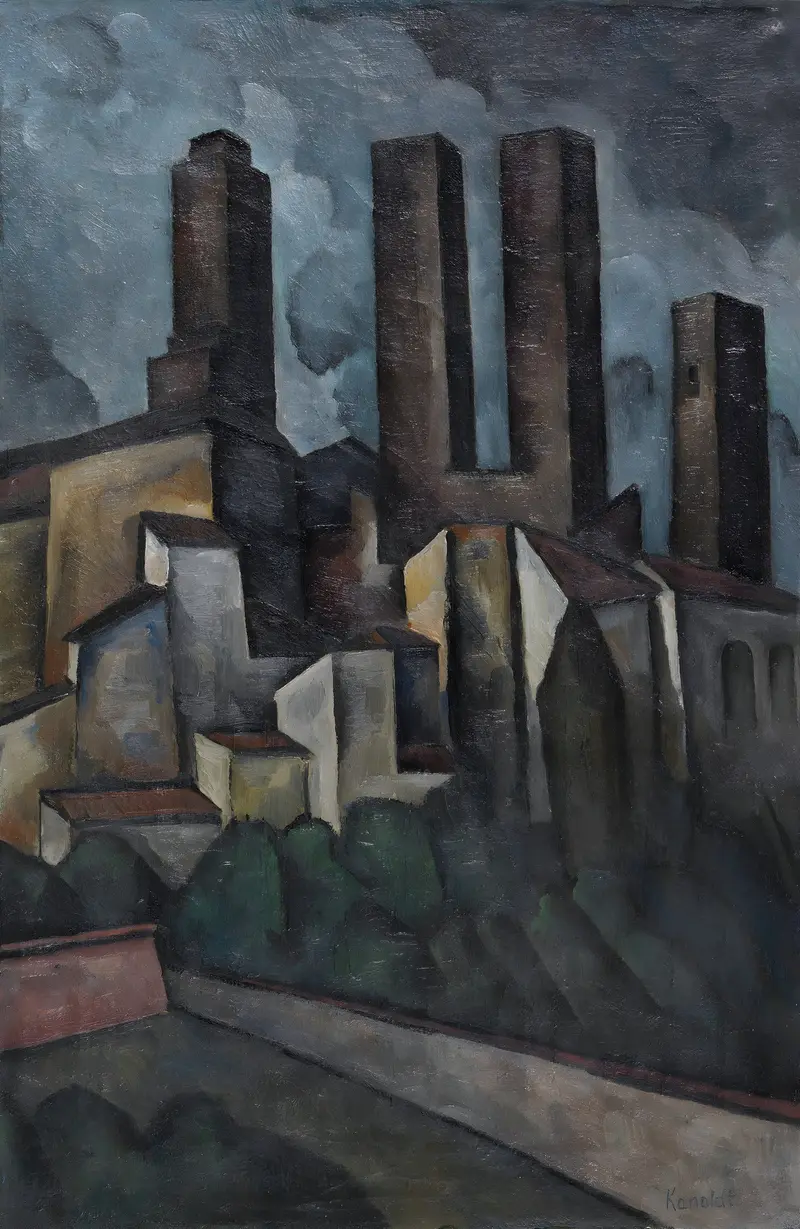
San Gimignano
Alexander Kanoldt
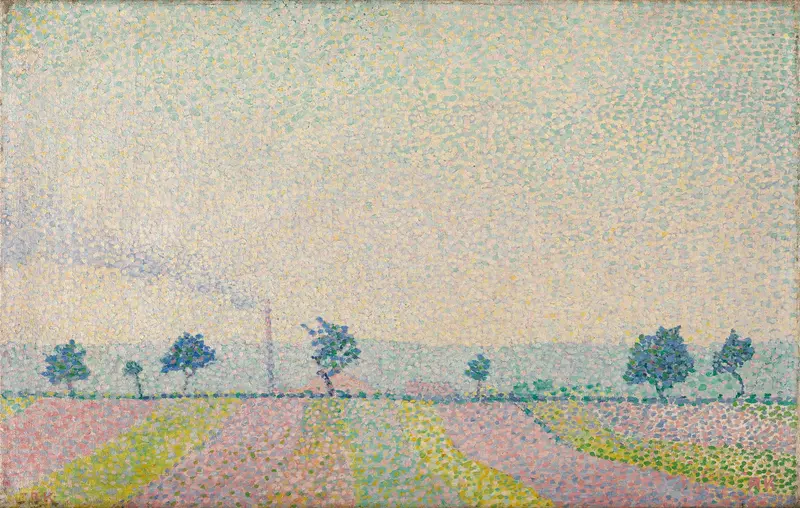
Morgensonne
Alexander Kanoldt
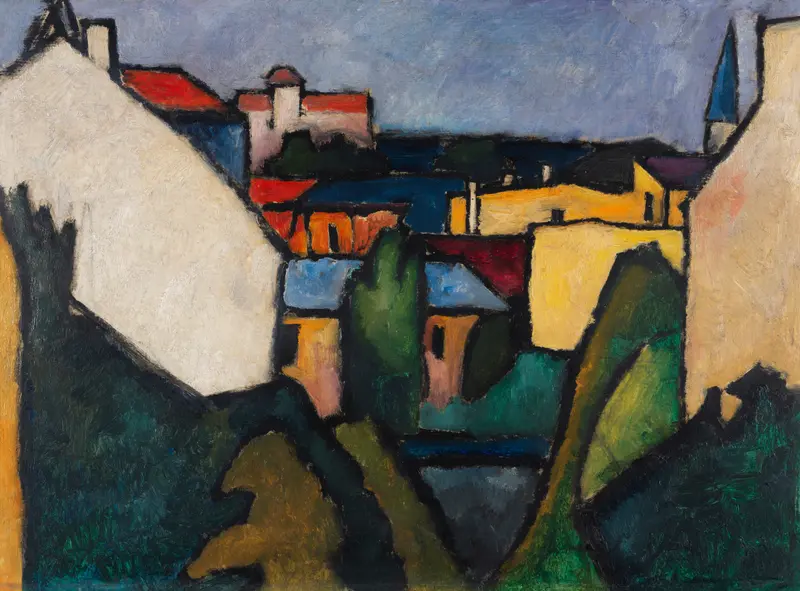
Häuser
Alexander Kanoldt
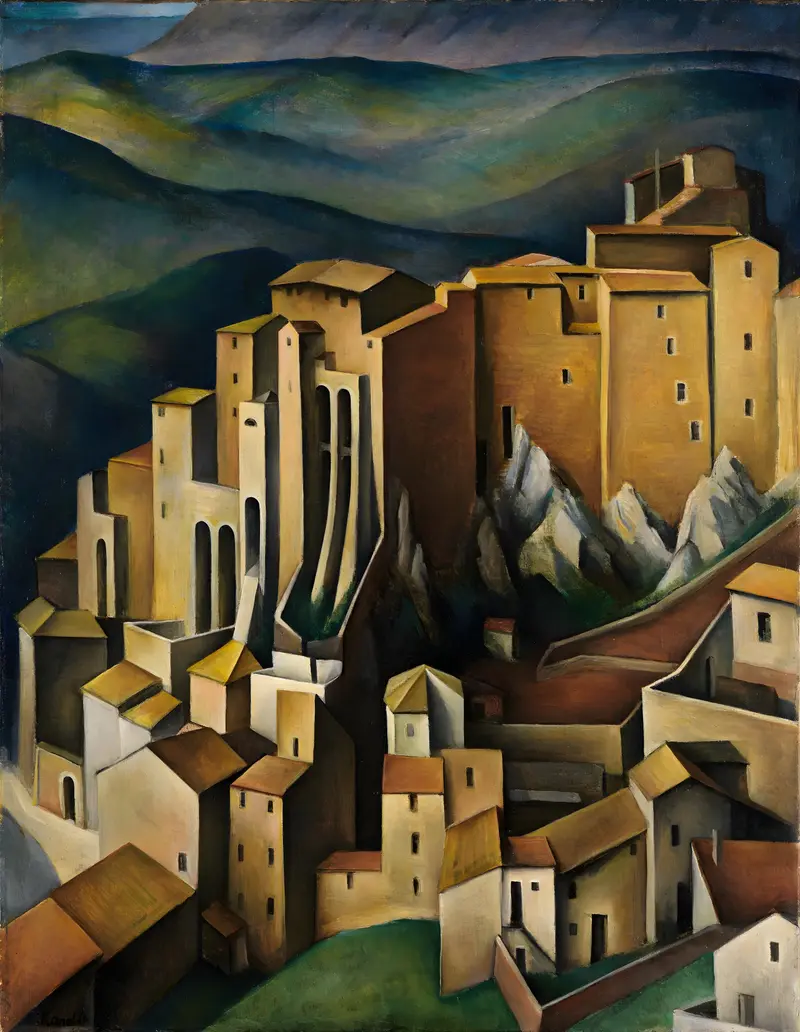
Olevano
Alexander Kanoldt
More Landscape Art

The Starry Night
Vincent van Gogh

View of Delft
Johannes Vermeer

Water Lilies
Claude Monet

The Grand Canal, Venice, looking north-west from the Ca' Corner to the Ca' Contarini degli Scrigni, with the campanile of Santa Maria della Carità
Canaletto

Windsor Castle
Canaletto

The Grand Canal looking North-East from the Palazzo Dolfin-Manin to the Rialto Bridge
Canaletto