
Road through the dunes — History & Facts
A winding road cuts through a sandy, uneven landscape, drawing the viewer’s gaze into the heart of Road through the dunes. The eye is led first to the two travelers—a rider and a figure on foot—who seem to move at a gentle pace, their journey dwarfed by the vastness of the sky above. The low horizon gives the sky an almost theatrical presence, its broad expanse pressing down on the quiet world below.
Trees cluster on the right, their foliage rendered with a softness that suggests the gentle movement of wind, while a shepherd and his flock settle into the middle ground, anchoring the scene in everyday rural life. Even the cattle drinking at a shaded pool seem to pause, caught in a moment of calm observation. Painted in 1641, this work by Aelbert Cuyp belongs to a period when Dutch artists were redefining landscape painting, transforming familiar countryside into scenes of quiet grandeur. In the Dutch Republic, such landscapes were not merely records of place—they reflected a new sense of national pride and the rhythms of ordinary life.
Collectors sought these images for their homes, drawn to the balance of serenity and subtle drama. Now part of the Staatliche Museen zu Berlin, Road through the dunes stands as a gentle reminder of a world shaped by patience, weather, and the steady passage of time—inviting the viewer to linger in its stillness.
More Artworks by Aelbert Cuyp

The Maas at Dordrecht
Aelbert Cuyp
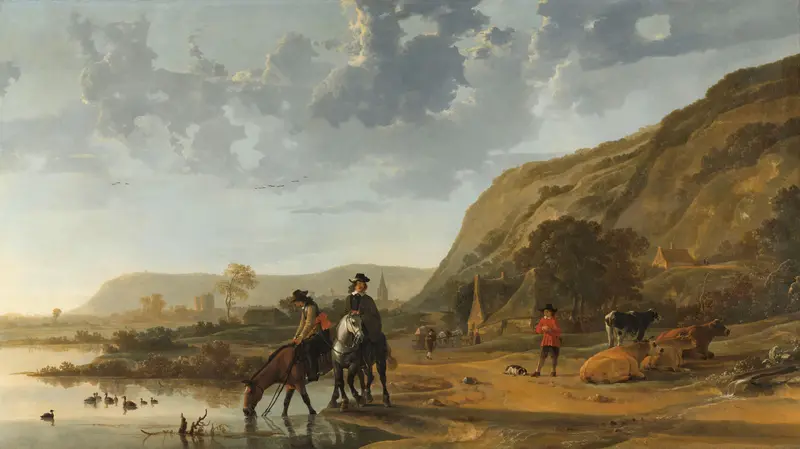
River Landscape with Riders
Aelbert Cuyp

The Maas at Dordrecht
Aelbert Cuyp
Gezicht op Dordrecht
Aelbert Cuyp
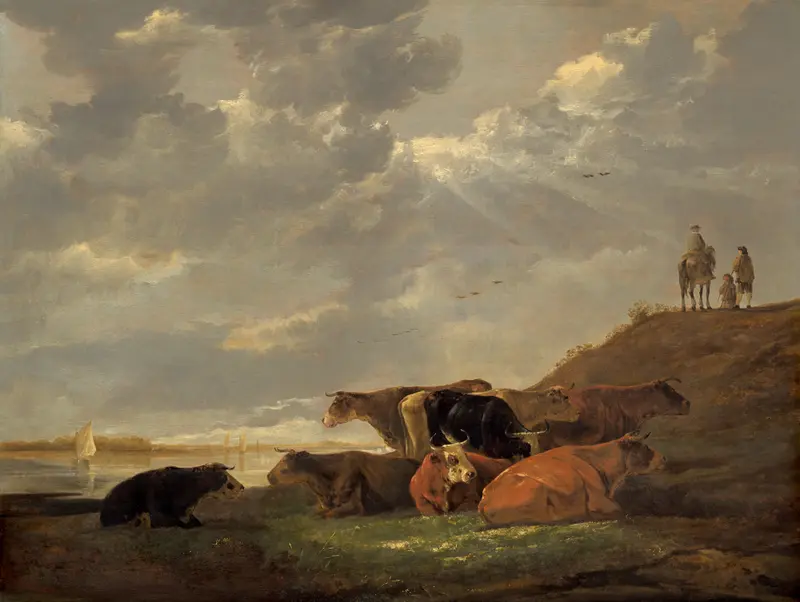
River Landscape with Cows
Aelbert Cuyp
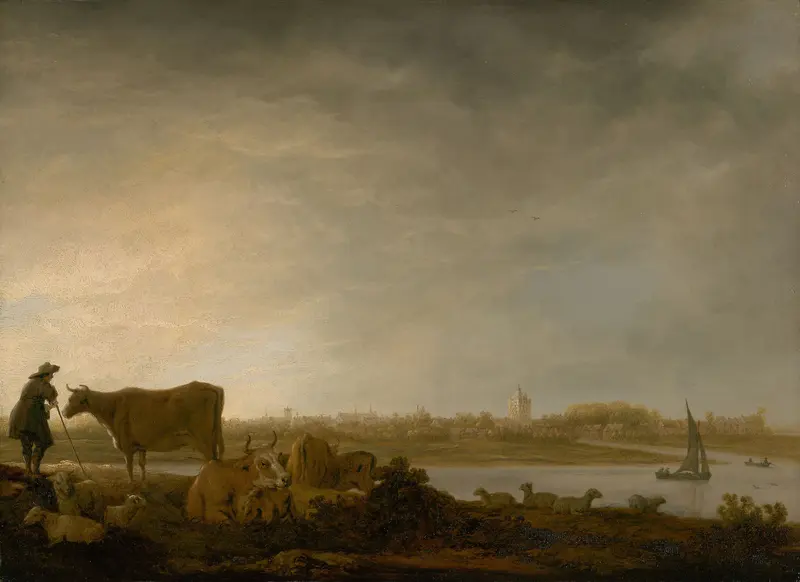
A View of Vianen with a Herdsman and Cattle by a River
Aelbert Cuyp
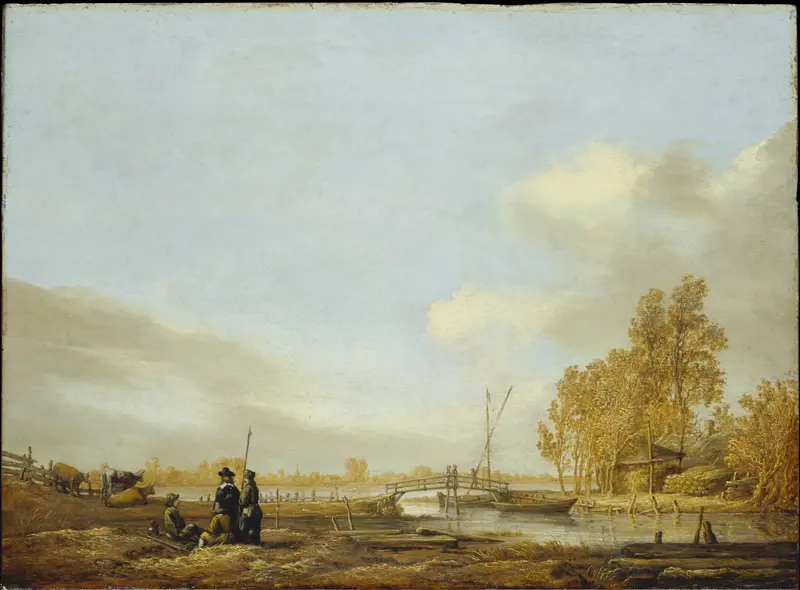
River Landscape with Footbridge
Aelbert Cuyp
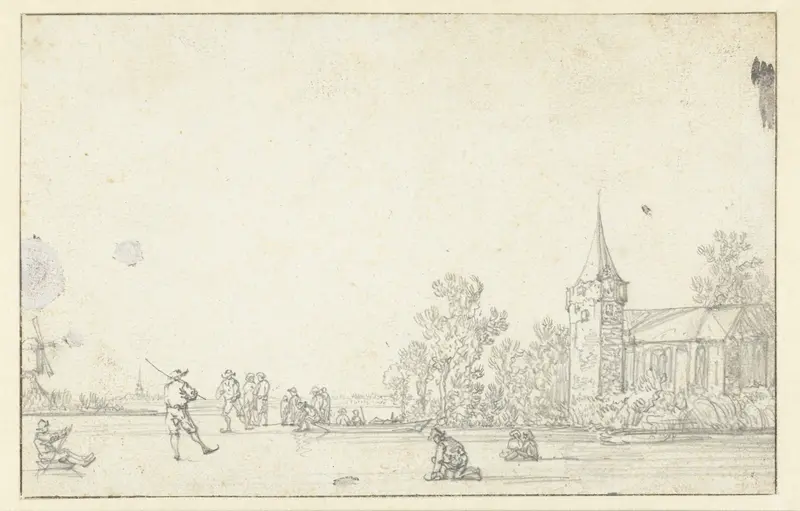
Bevroren rivier met schaatsers bij een kerk
Aelbert Cuyp

Cattle near a River
Aelbert Cuyp
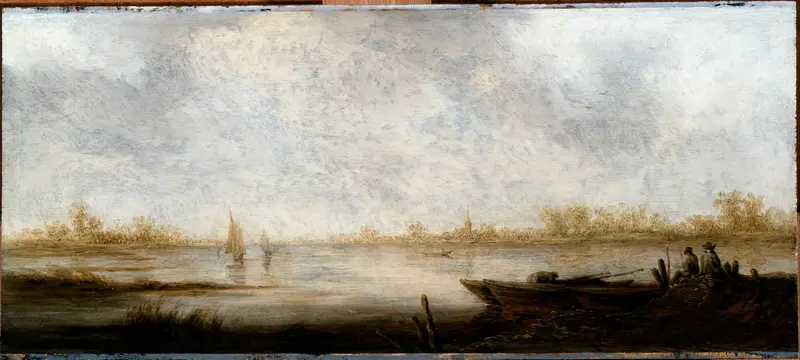
River Landscape
Aelbert Cuyp
More Landscape Art

The Starry Night
Vincent van Gogh

View of Delft
Johannes Vermeer

Water Lilies
Claude Monet

The Grand Canal, Venice, looking north-west from the Ca' Corner to the Ca' Contarini degli Scrigni, with the campanile of Santa Maria della Carità
Canaletto

Windsor Castle
Canaletto

The Grand Canal looking North-East from the Palazzo Dolfin-Manin to the Rialto Bridge
Canaletto