Rosenlaui Alp — History & Analysis
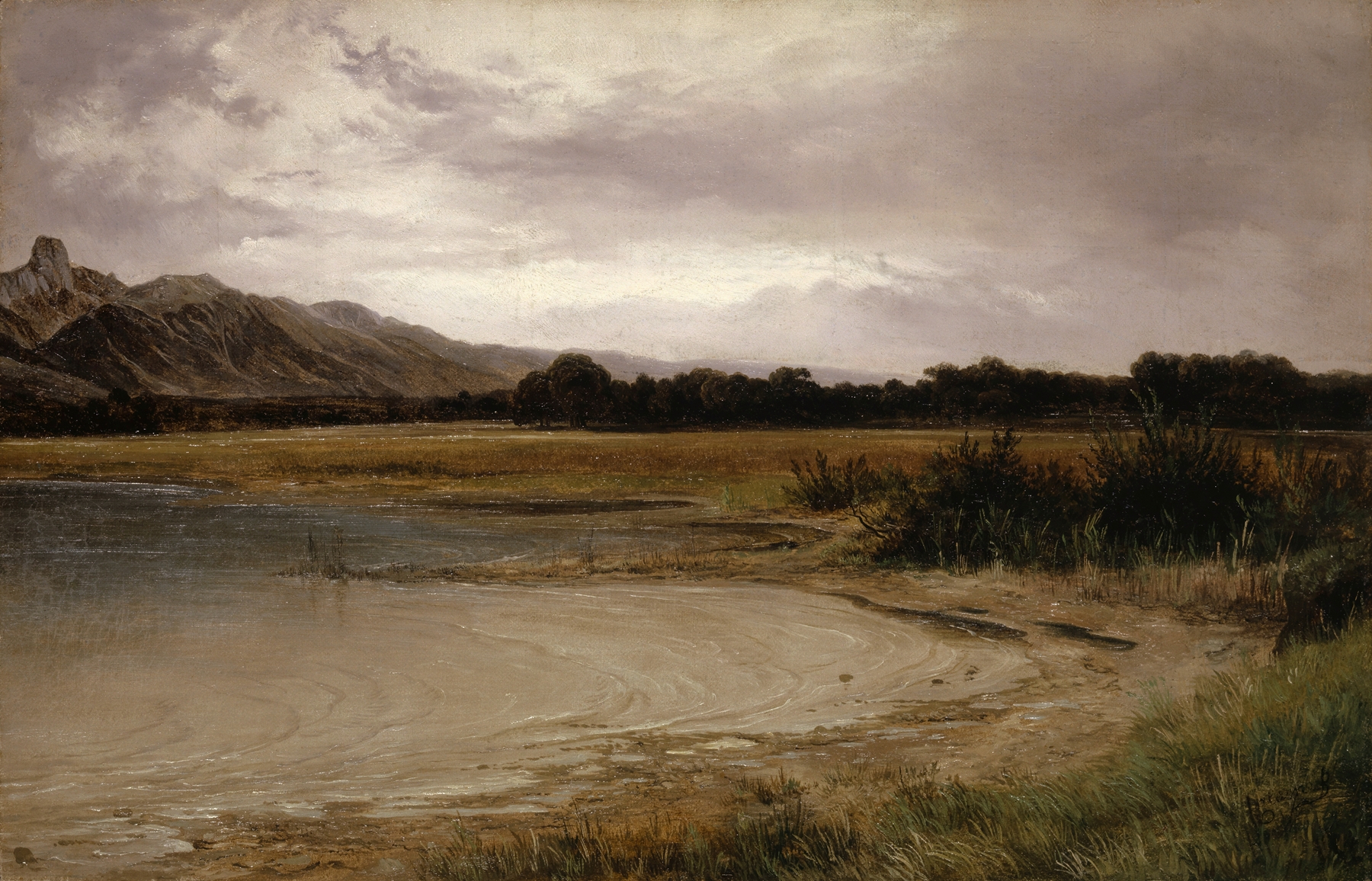
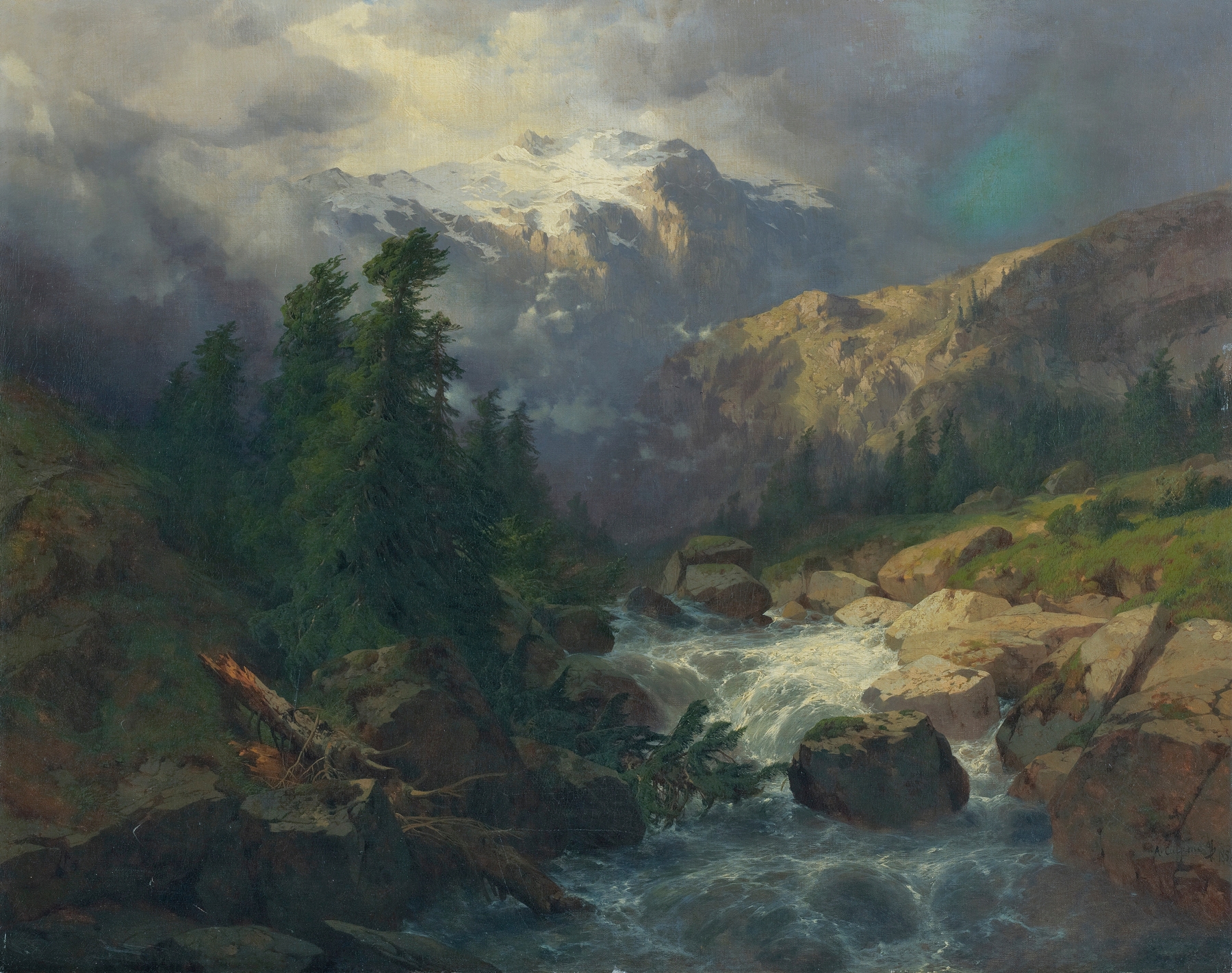
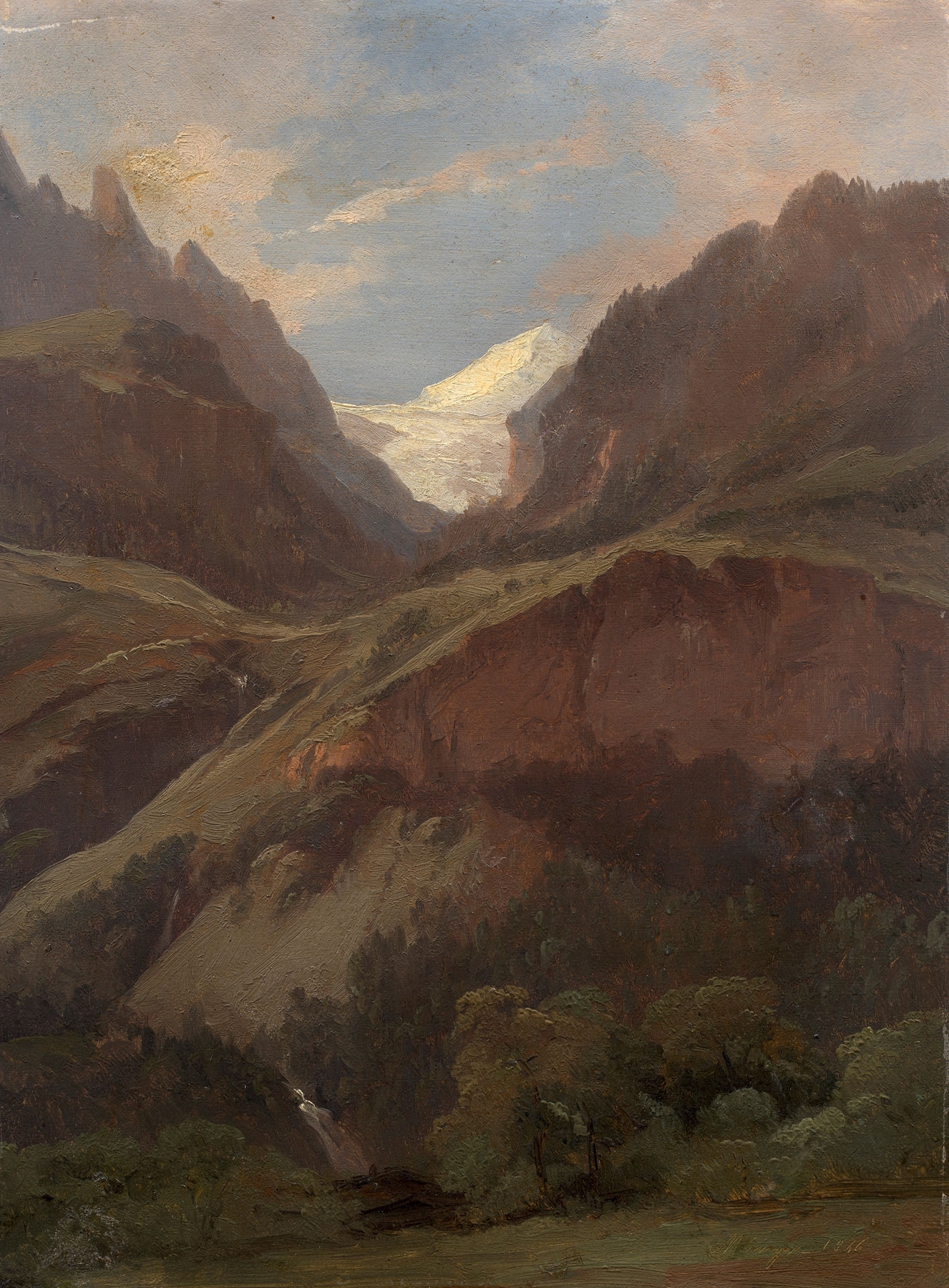
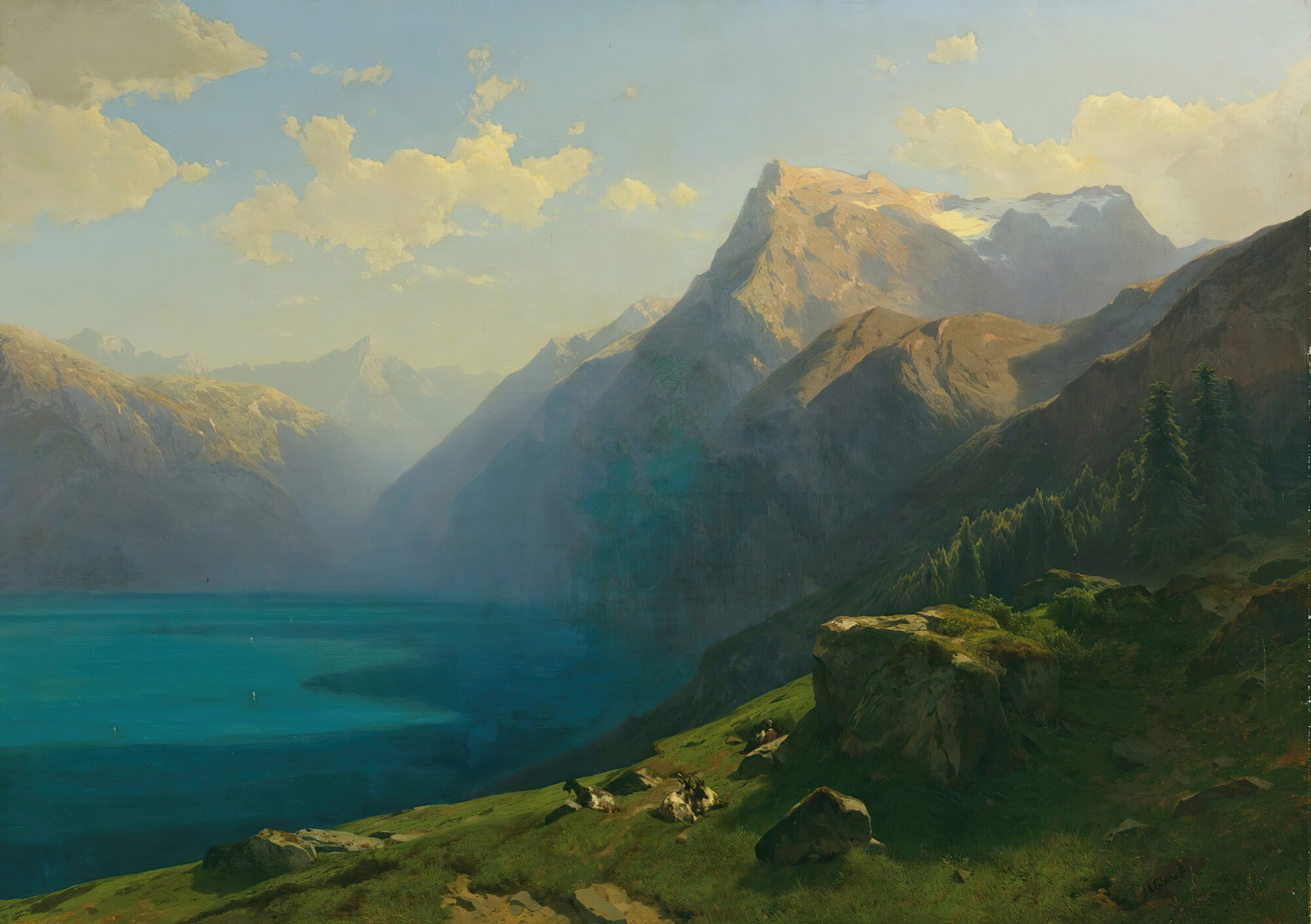
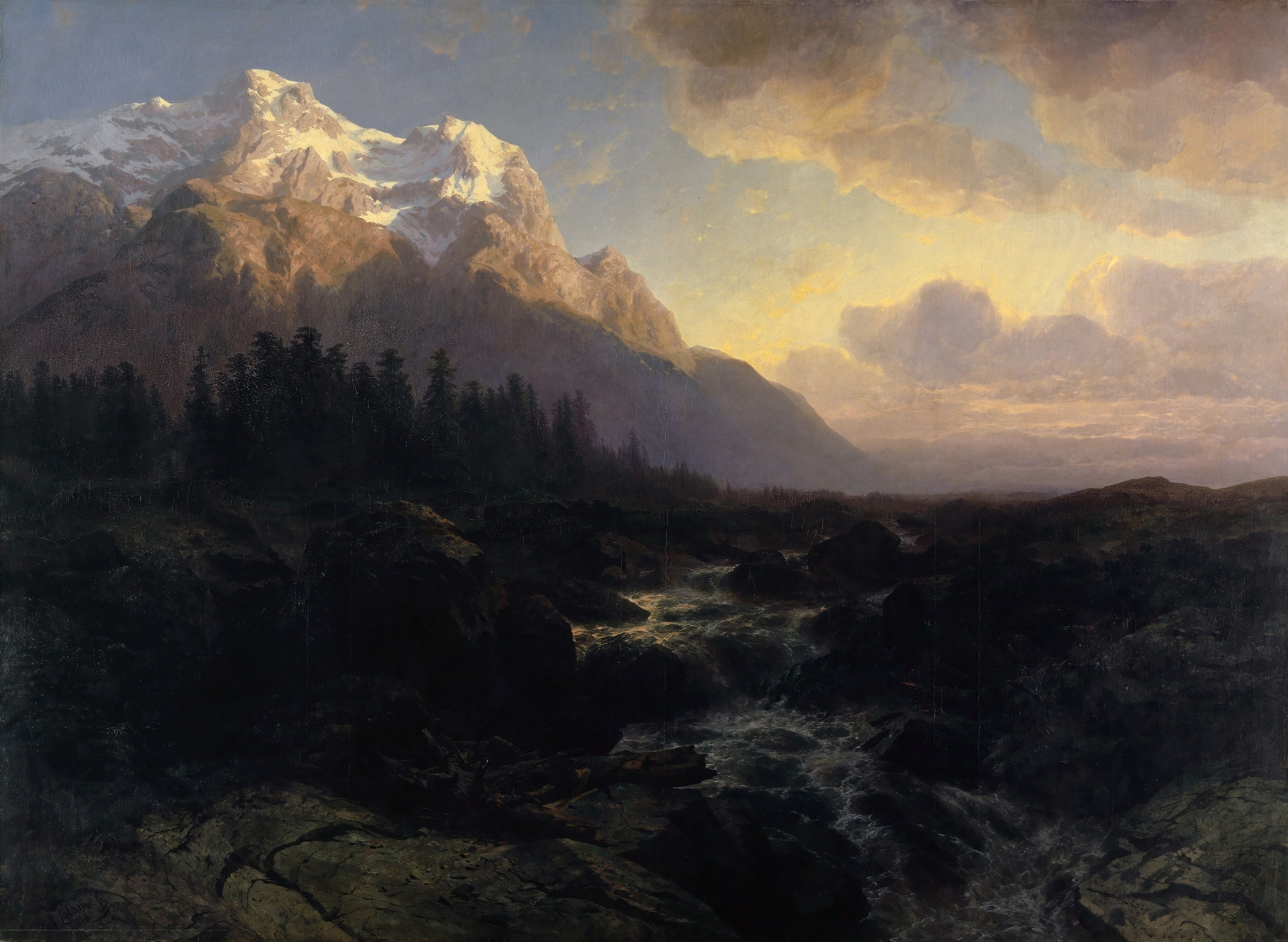
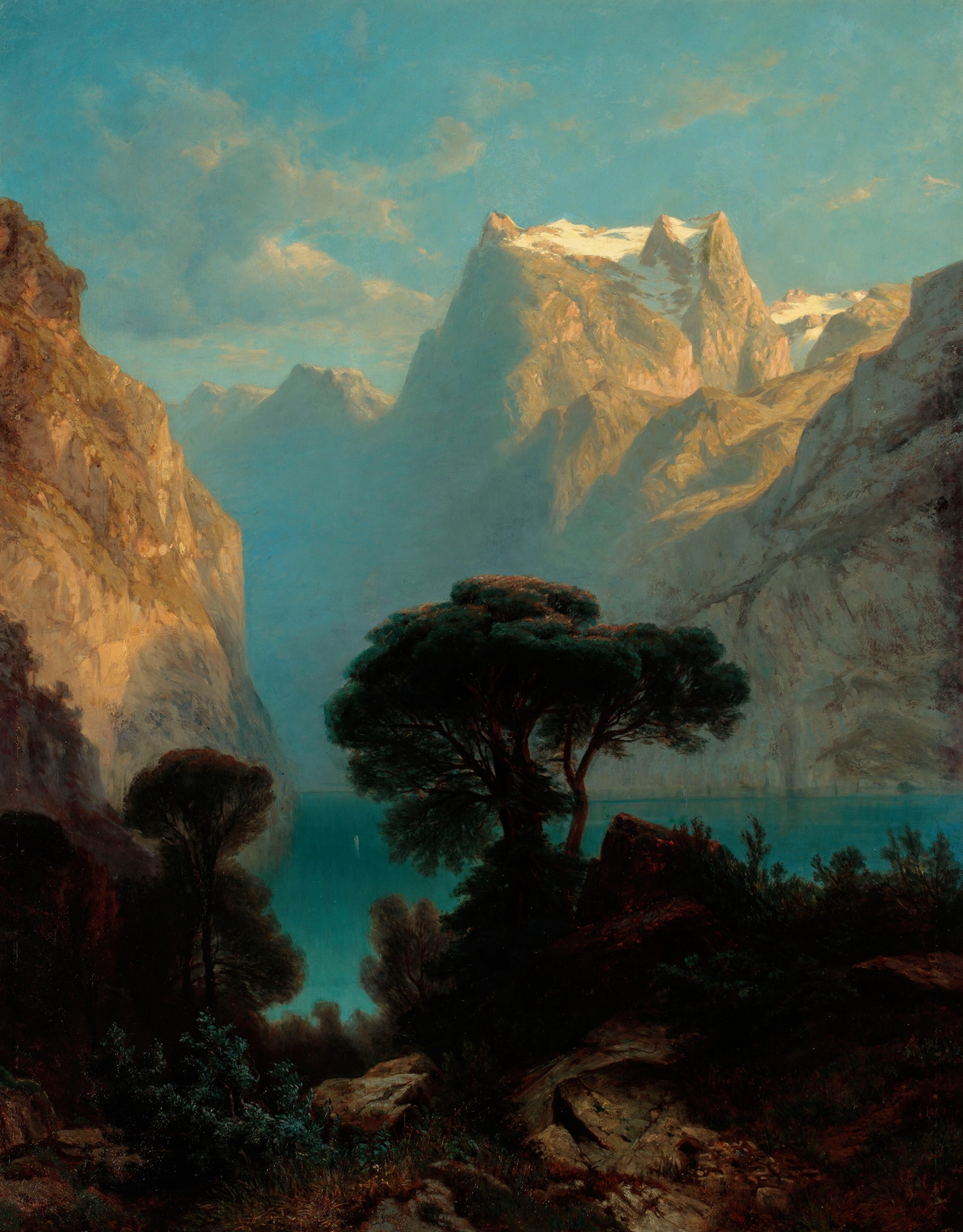
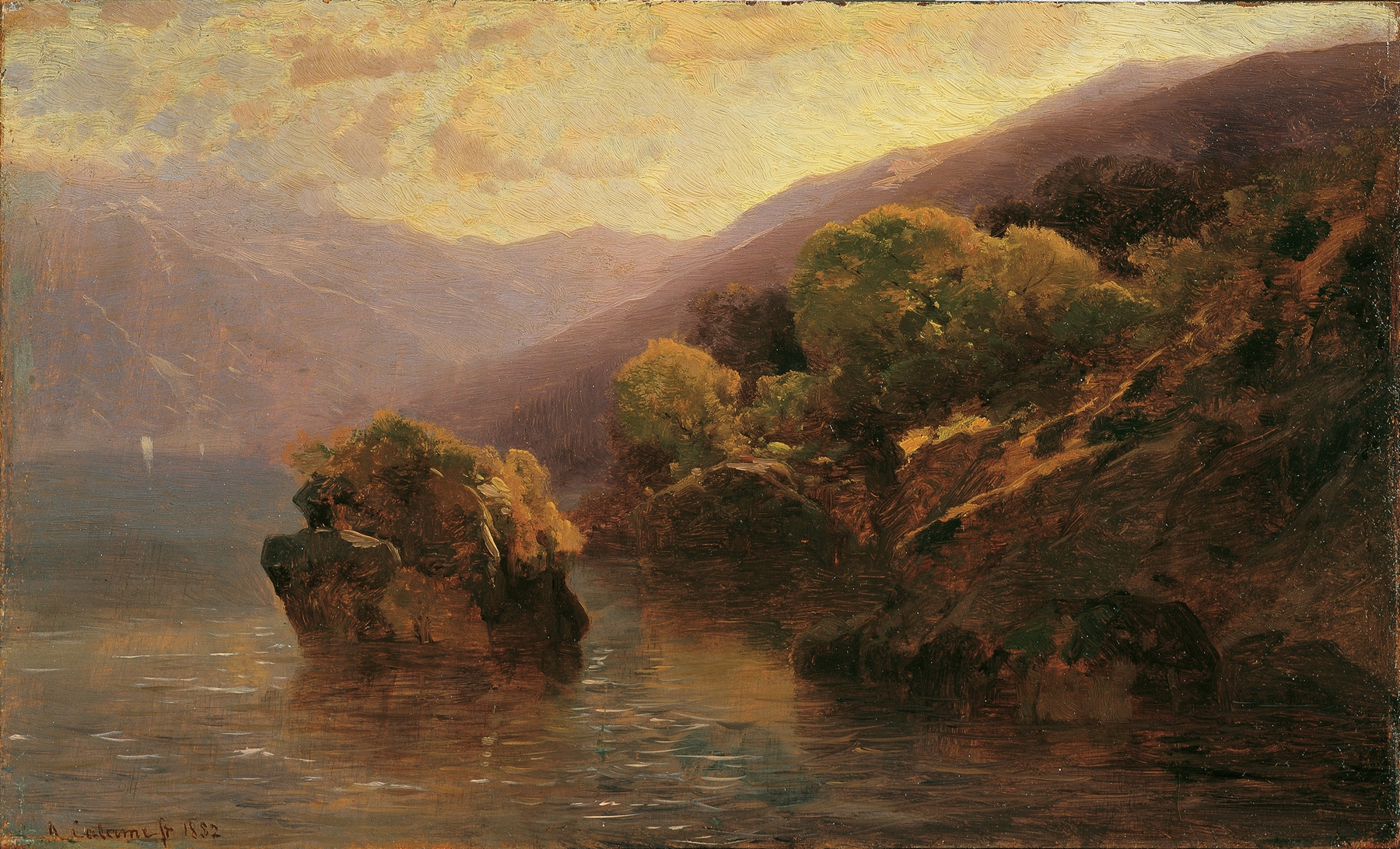
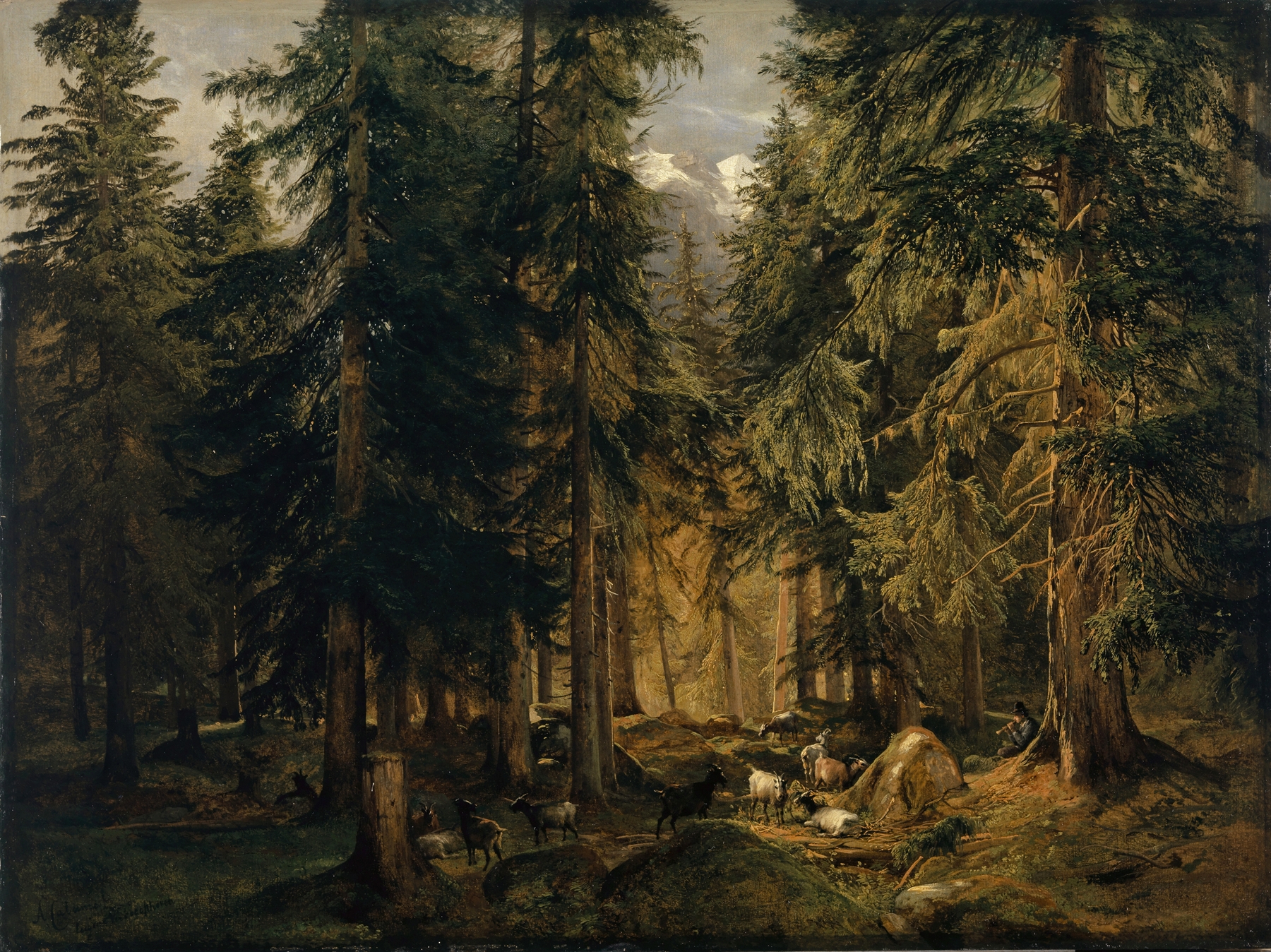
Can paint confess what words never could? The majesty of nature enveloped in brushstrokes speaks a language beyond mere conversation, inviting viewers to feel the awe of the alpine expanse. Look to the left at the towering peaks, their proud silhouettes framed against a brilliant azure sky. Notice how the light dances across the craggy surfaces, illuminating the rugged textures that breathe life into this mountain landscape.
The palette, rich with emerald greens and deep blues, invites you to travel down the winding path into the heart of this serene wilderness, drawing you into an intimate connection with the natural world. Within this portrayal lies a delicate tension between the powerful solidity of the mountains and the ephemeral quality of the clouds that drift above. The play of light creates an ethereal glow, hinting at the transient beauty of the moment, while the cascading waterfall symbolizes the relentless passage of time.
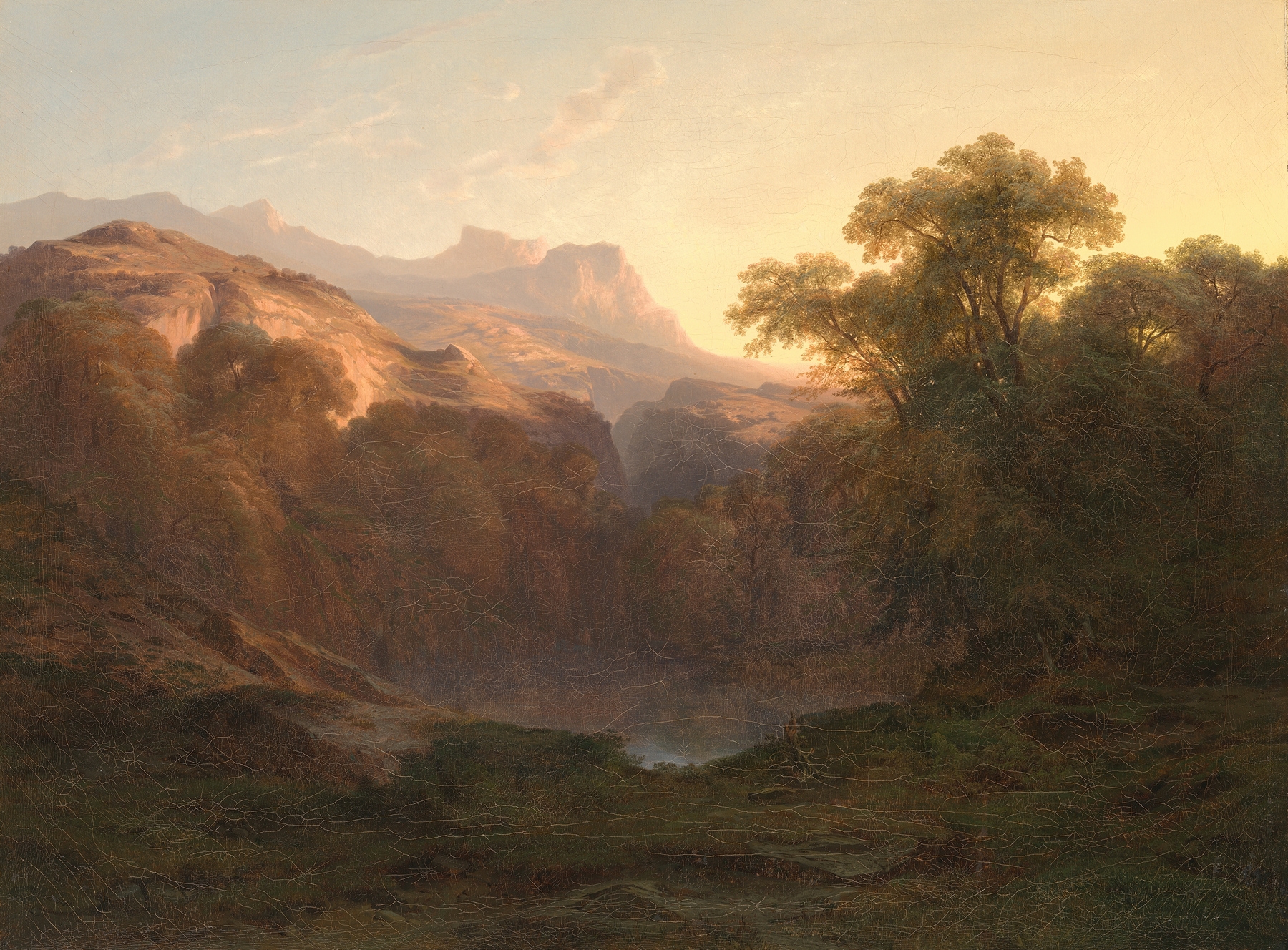
The gentle curves of the valley, juxtaposed with the jagged peaks, evoke a sense of harmony, reminding the viewer of nature’s duality: its fierce strength and its gentle serenity. In the early 1850s, a time marked by burgeoning Romanticism in Europe, the artist captured Rosenlaui Alp amid a personal and artistic exploration of the sublime. Working in Switzerland, Calame sought to convey his profound emotional responses to the landscape, reflecting the era's fascination with nature's grandeur and the quest for deeper meaning in art.