
Rue Chanoinesse, en 1905. 4ème arrondissement — History & Facts
Could beauty survive in a century of chaos? In Rue Chanoinesse, en 1905. 4ème arrondissement, the answer lingers in the air, palpable yet ephemeral, much like the fleeting moments captured within its strokes. Look to the left where the cobblestone street leads the eye into a labyrinth of architectural splendor. The warm glow of the sun bathes the buildings in a soft, golden hue, creating a stark contrast against the cooler, muted shadows that cling to the corners.
Notice how the delicate interplay of light and shadow enhances the textures of the weathered facades, inviting the viewer to explore the silent stories etched into the walls. The careful arrangement of the structures, with their ornate details, creates a sense of harmony, even amidst the chaos of urban life. Beneath the surface, emotional tensions simmer. The serene beauty of the scene contrasts sharply with the historical turbulence of the early 20th century—an era marked by political strife and social upheaval.
The gentle flow of the street suggests continuity and resilience, even as the world outside grapples with grief and uncertainty. Tiny details, like the solitary figure standing in the doorway, embody the weight of loss yet also signify a steadfast connection to place, as if they are guarding the memories of the past. In 1905, Frédéric Houbron was immersed in the vibrant life of Paris, a city alive with artistic fervor and emerging modernist ideals. As he painted this scene, he was navigating a world on the brink of monumental change, balancing personal experiences with the collective grief of a society in flux.
This work reflects not just his artistry, but the very essence of a city grappling with its identity amidst the chaos that lay ahead.
More Artworks by Frédéric Houbron
Browse all →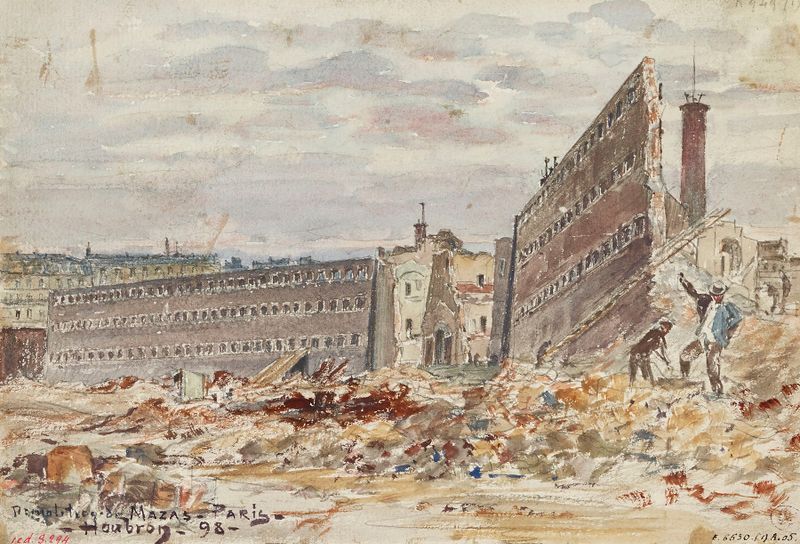
Démolition de la prison Mazas, 23, 25 boulevard Diderot (ancien boulevard Mazas)
Frédéric Houbron
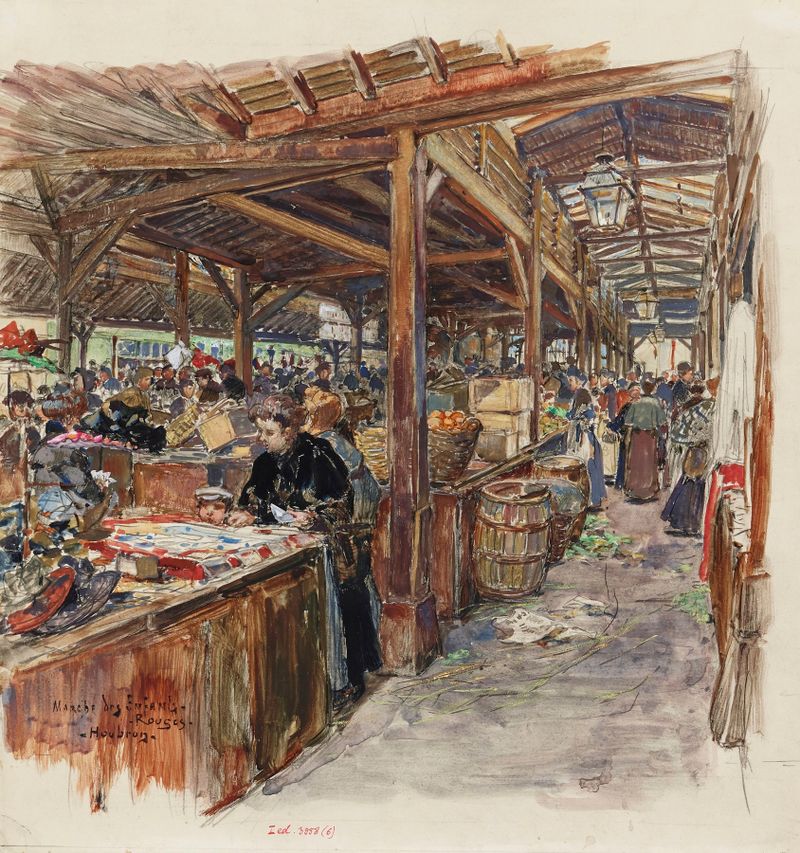
Intérieur du Marché des Enfants Rouges. 3ème arrondissement
Frédéric Houbron
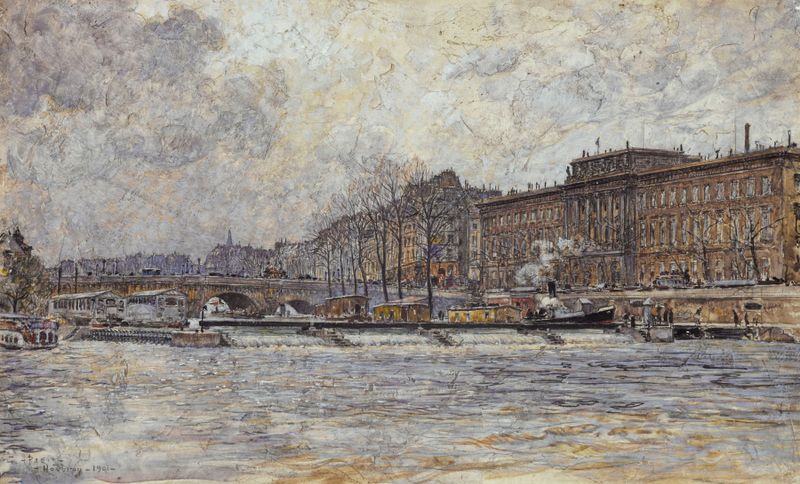
L’Hôtel de la Monnaie et le Pont-Neuf
Frédéric Houbron

Quai des Orfèvres. Paris. 1906
Frédéric Houbron
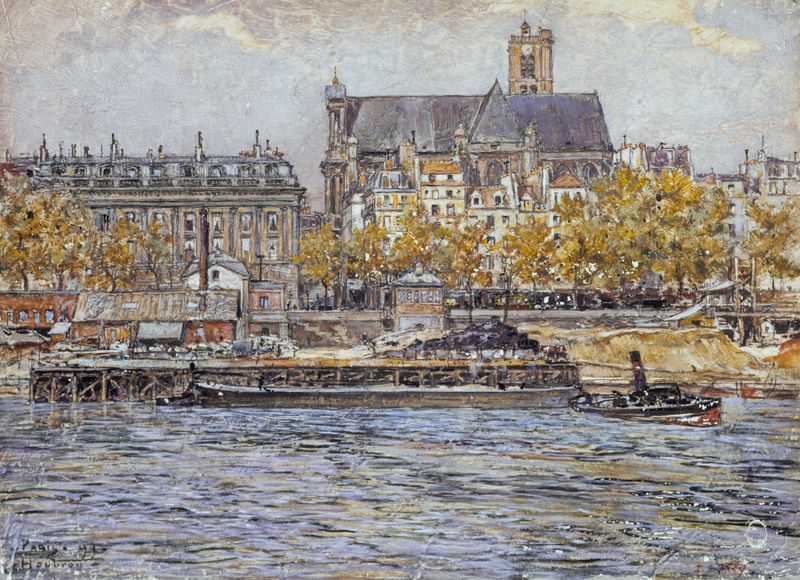
Le quai de l’Hôtel-de-Ville et l’église Saint-Gervais-Saint-Protais
Frédéric Houbron
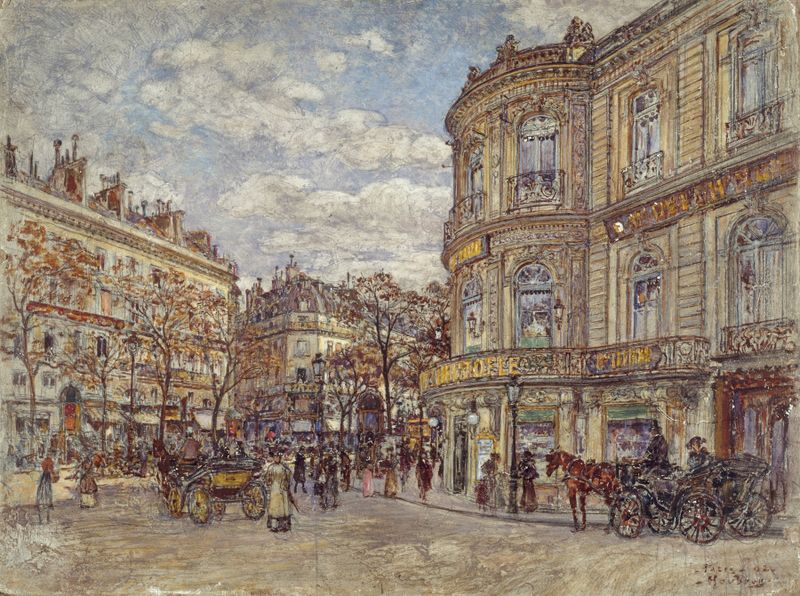
Le Pavillon de Hanovre, rue Louis-le-Grand
Frédéric Houbron

La rue du Chevalier-de-la-Barre, avec le Sacré-Cœur en construction
Frédéric Houbron
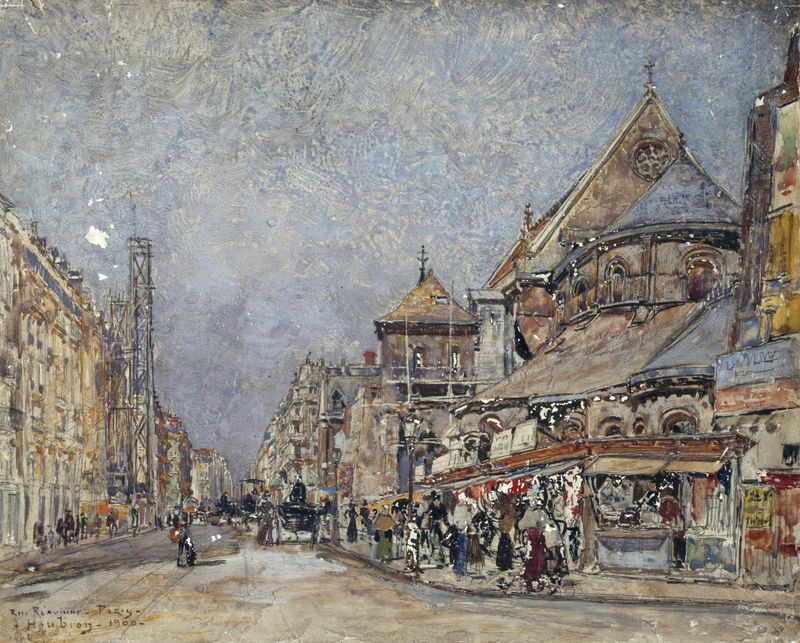
La rue Réaumur et le chevet de l’église Saint-Martin-des-Champs
Frédéric Houbron
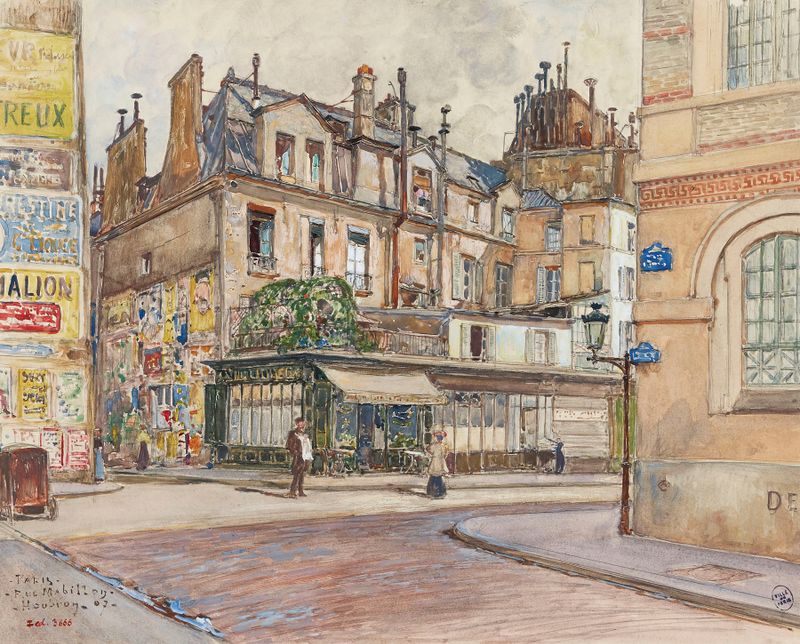
Angle rue Mabillon et rue Clément, en 1907. 5ème et 6ème arrondissements
Frédéric Houbron
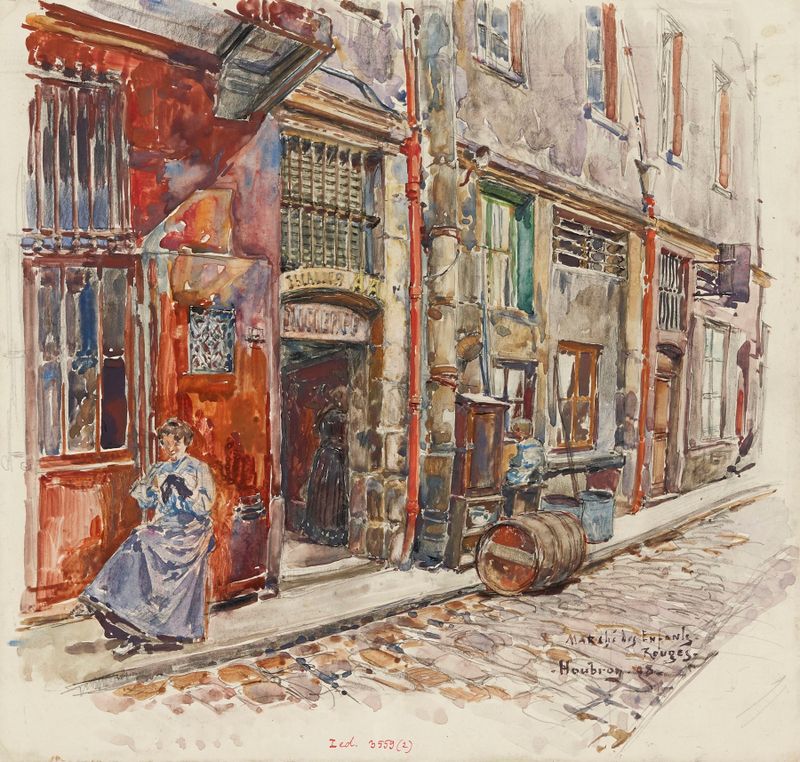
Entrée escalier A du Marché des Enfants-Rouges, en 1908. 3ème arrondissement
Frédéric Houbron





