
Rue Hermel à Montmartre — History & Facts
In the quiet corners of Montmartre, decay whispers stories of the past, revealing the beauty hidden in what has been abandoned. The remnants of life stand still, laden with memories yet unforgettable, each crumbling facade echoing the passage of time. Look to the left at the weathered buildings, their peeling paint and cracked walls capturing the essence of a neighborhood once vibrant. Frédéric Houbron employs a muted palette, blending gentle hues of ochre and gray, evoking a melancholy nostalgia.
The composition draws the eye down the cobblestone path, leading us deeper into the heart of the scene; light streams in softly, illuminating the details of a forgotten world, while the shadows hint at the stories yet to be told. Amidst the decay, the juxtaposition of life and abandonment is palpable. Observe the iron gate barely hanging on its hinges—an invitation to enter, yet a barrier to the memories within. The solitary figure in the distance, perhaps a poet or artist, stands as a silent witness to the transformations around him, embodying the tension between creation and dissolution.
The scene holds a delicate balance: hope entwined with despair, reflecting the cyclical nature of human existence. In 1899, Houbron painted this evocative piece during a time when Montmartre was transforming into a hub for artists and bohemians. The late 19th century marked a shift in artistic expression, as Impressionism was giving way to new movements. This period of his life was marked by exploration, as he sought to capture the essence of a rapidly changing world, where the echoes of the past lingered amidst budding creativity.
More Artworks by Frédéric Houbron
Browse all →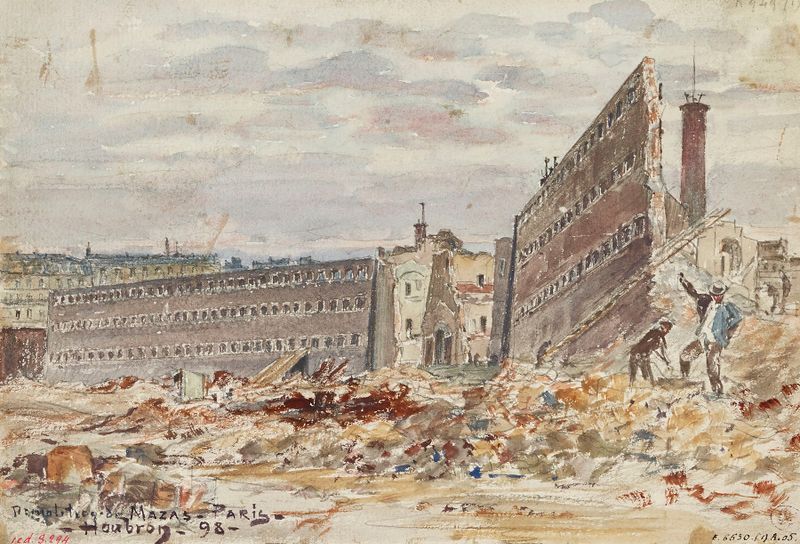
Démolition de la prison Mazas, 23, 25 boulevard Diderot (ancien boulevard Mazas)
Frédéric Houbron
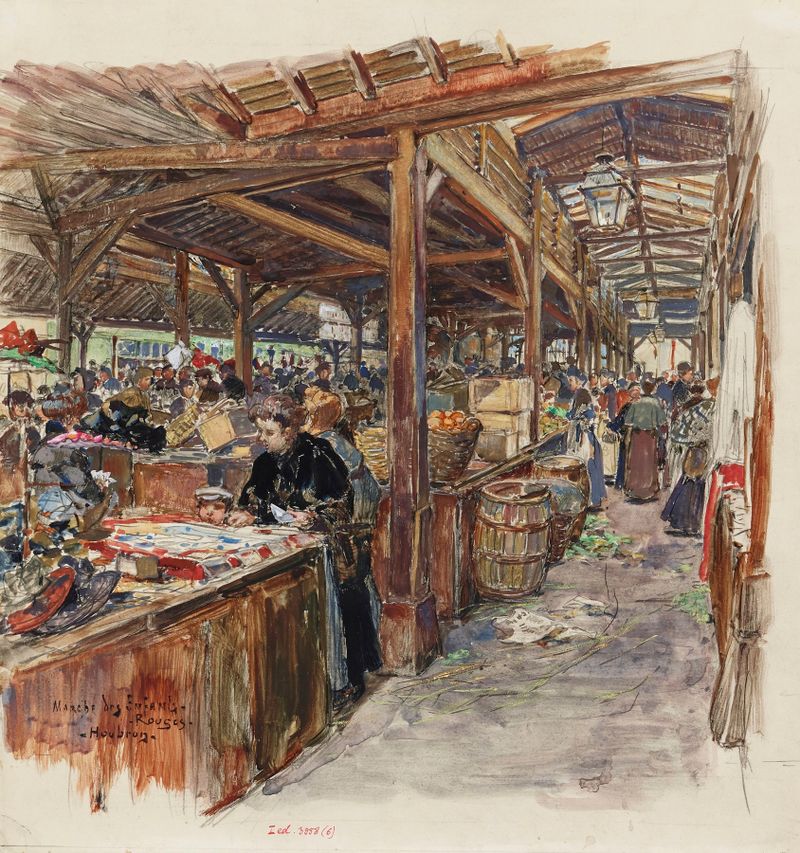
Intérieur du Marché des Enfants Rouges. 3ème arrondissement
Frédéric Houbron
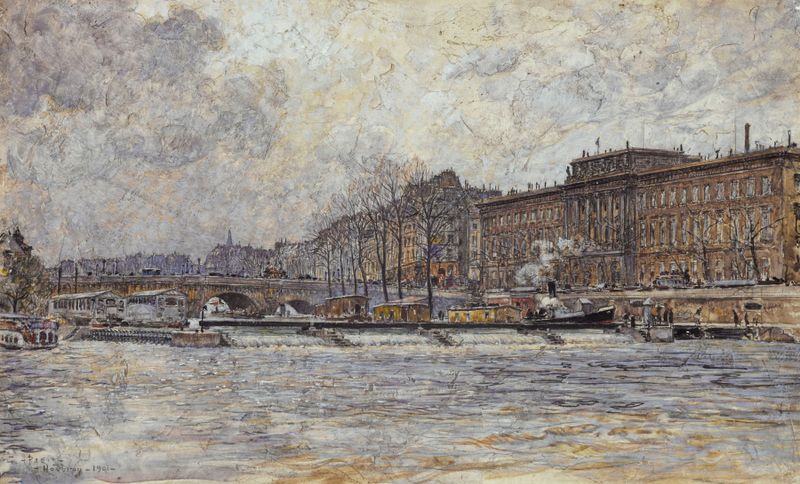
L’Hôtel de la Monnaie et le Pont-Neuf
Frédéric Houbron

Quai des Orfèvres. Paris. 1906
Frédéric Houbron
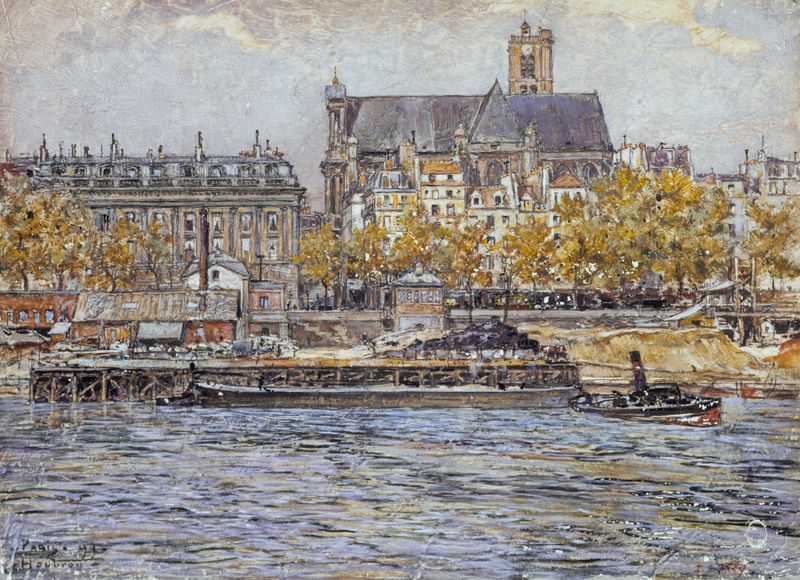
Le quai de l’Hôtel-de-Ville et l’église Saint-Gervais-Saint-Protais
Frédéric Houbron
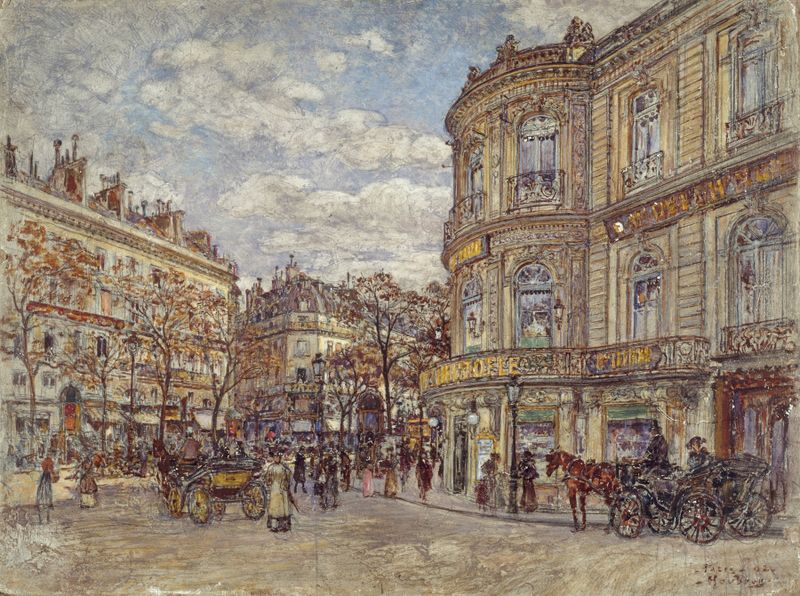
Le Pavillon de Hanovre, rue Louis-le-Grand
Frédéric Houbron

La rue du Chevalier-de-la-Barre, avec le Sacré-Cœur en construction
Frédéric Houbron
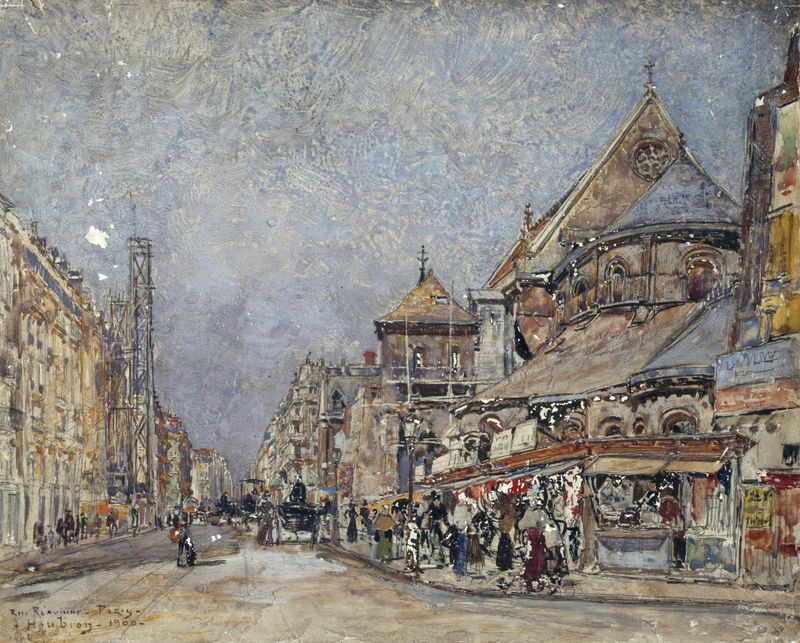
La rue Réaumur et le chevet de l’église Saint-Martin-des-Champs
Frédéric Houbron
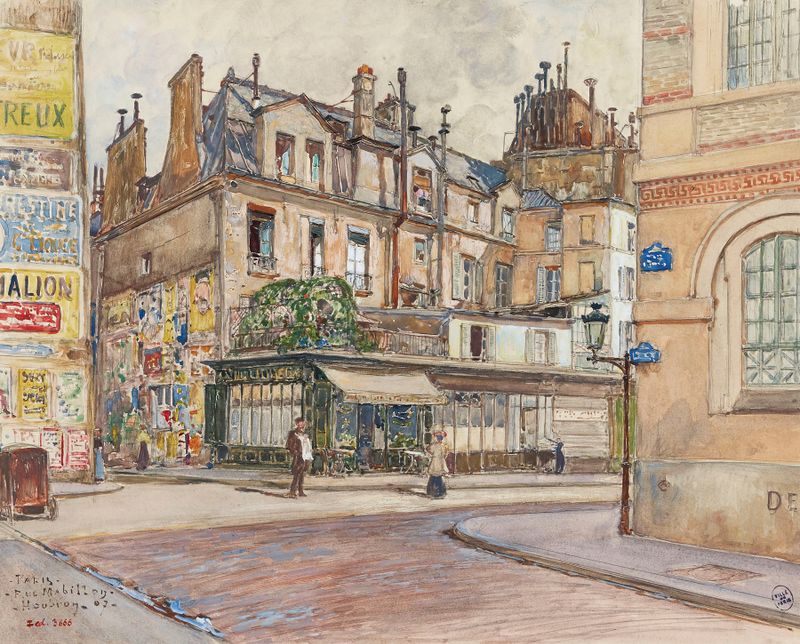
Angle rue Mabillon et rue Clément, en 1907. 5ème et 6ème arrondissements
Frédéric Houbron
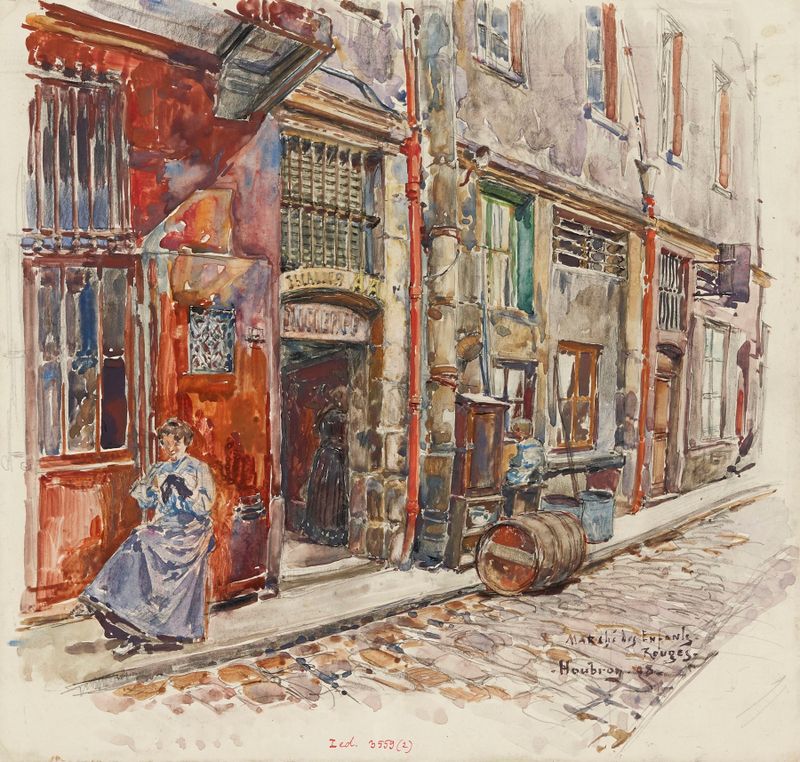
Entrée escalier A du Marché des Enfants-Rouges, en 1908. 3ème arrondissement
Frédéric Houbron





