Rustic arbor — History & Facts
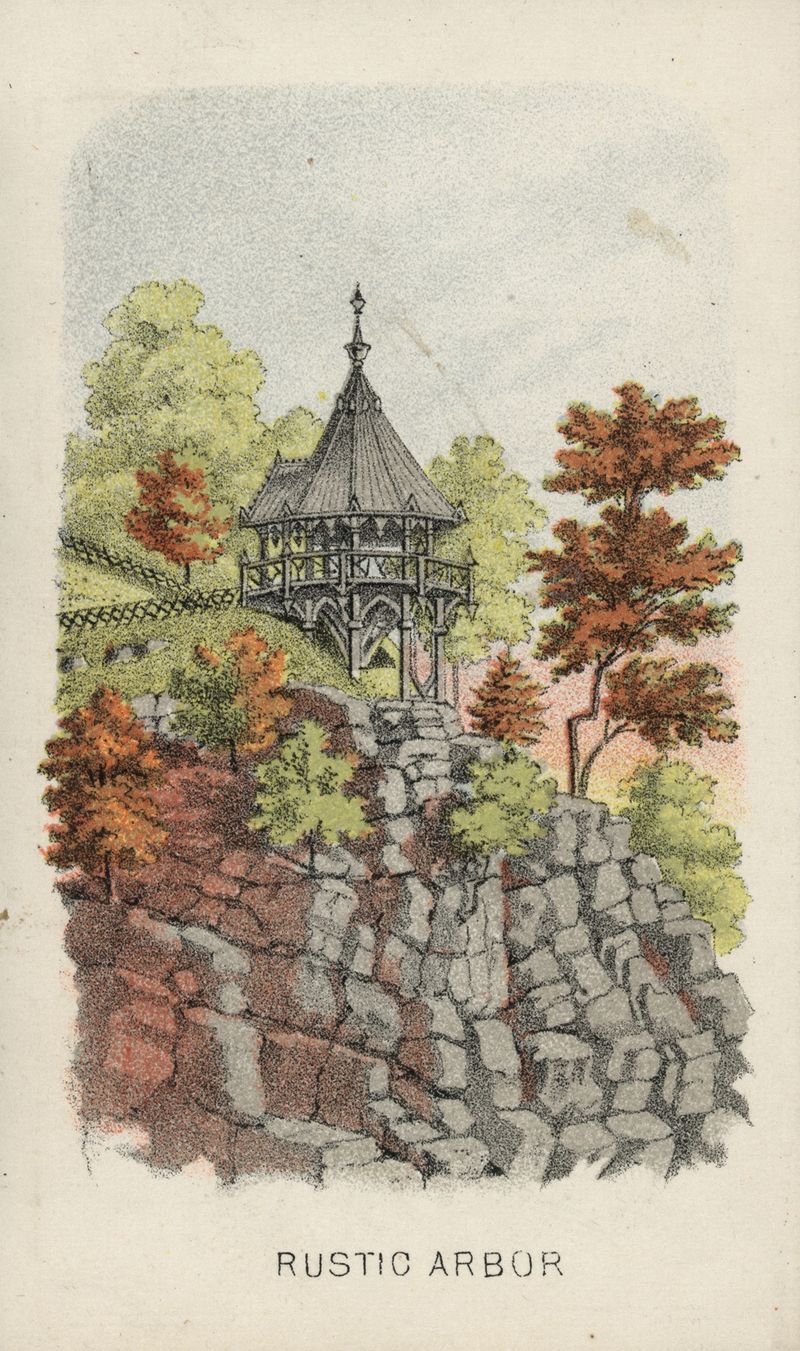
In the stillness of a moment, we find ourselves confronted with the rawness of human emotion, the violence that simmers beneath the surface of everyday life. Start your exploration at the center of the composition, where a rustic arbor stands, defined by its weathered wood and twisting vines. Notice the play of light filtering through the leaves, casting dappled shadows that dance across the ground. The earthy palette — muted browns and greens — evokes a sense of both comfort and decay, hinting at the passage of time and the inevitable cycle of life and death. Delve deeper into the painting's texture.
The roughness of the arbor and the delicate unfolding petals of flowers suggest a juxtaposition of strength and fragility. This tension reflects a struggle — perhaps the violence of nature’s unchecked force or the quiet chaos of human existence. Each stroke of the brush communicates not just botanical beauty, but an undercurrent of upheaval, evoking the emotional weight of a world teetering on the brink of change. In 1870, John C.
Sinclair painted this piece during a period of societal upheaval in America, marked by reconstruction and shifting ideals. Living in a time when art began embracing more introspective themes, he sought to capture the essence of existence beyond mere aesthetics. This work reflects his desire to convey complex emotional narratives, where beauty and violence coexist, revealing the soul of humanity amidst turmoil.