Saint-Jean le Rond avant 1748 — History & Facts
In the embrace of chaos, one finds the essence of life itself, a reminder that beauty often emerges from disorder. Focus your gaze on the vibrant swirl of colors that dominate this piece, creating a dynamic visual rhythm. Notice how the artist's bold strokes intertwine, forming a tapestry that seems to pulsate with energy. The cacophony of hues, from deep blues to fiery reds, invites the viewer to explore the nuances of emotion amidst the tumult.
Each section of the painting offers a different sensation, contrasting soft curves with sharp, jagged edges, intertwining the chaos of existence with fleeting moments of clarity. Delve deeper into the hidden meanings within the work. The tension between light and shadow suggests not just the struggle of chaos, but also the possibility of harmony emerging from it. This interplay evokes a sense of movement, as if the elements are in a constant state of flux.
Subtle details, like the faint outlines of figures or objects, hint at narratives lost in the tumult, inviting reflections on lost stories or forgotten moments entwined within the chaos. During an uncertain period in his artistic journey, Bénard created this piece in the mid-18th century, amidst the shifting currents of European art. Working in a time when the Rococo style was waning, he sought to break free from established conventions, experimenting with form and color. The broader context of his life, marked by personal and societal upheaval, influenced his exploration of chaos as both a subject and a technique, capturing the tumult of his era while paving the way for a more emotive expression in art.
More Artworks by Auguste-Sébastien Bénard
Browse all →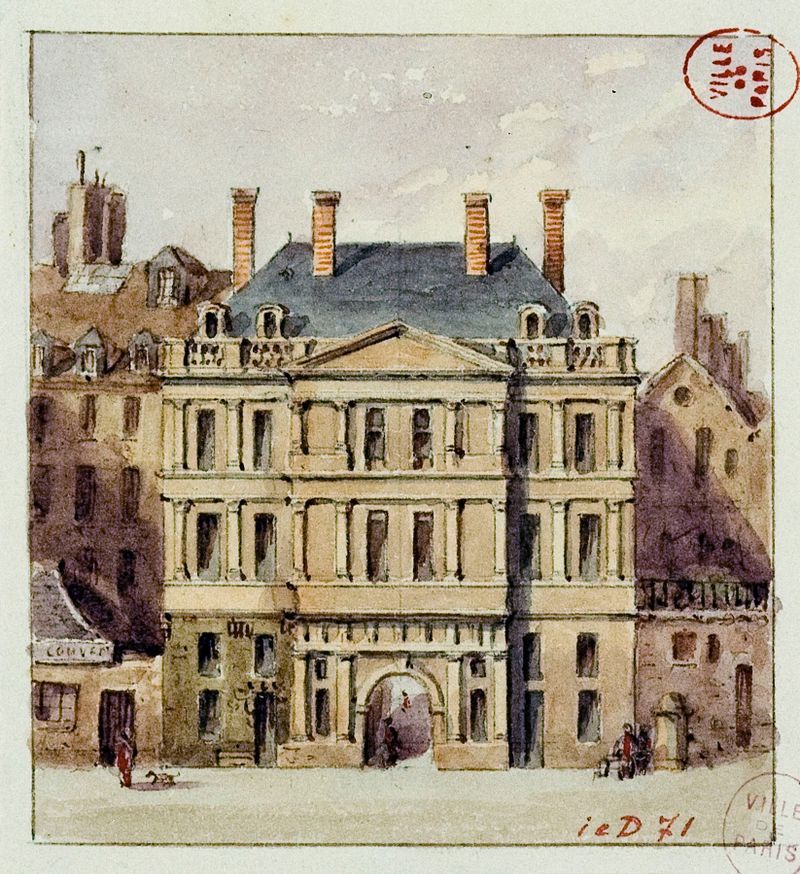
Cour de la Sainte Chapelle.
Auguste-Sébastien Bénard
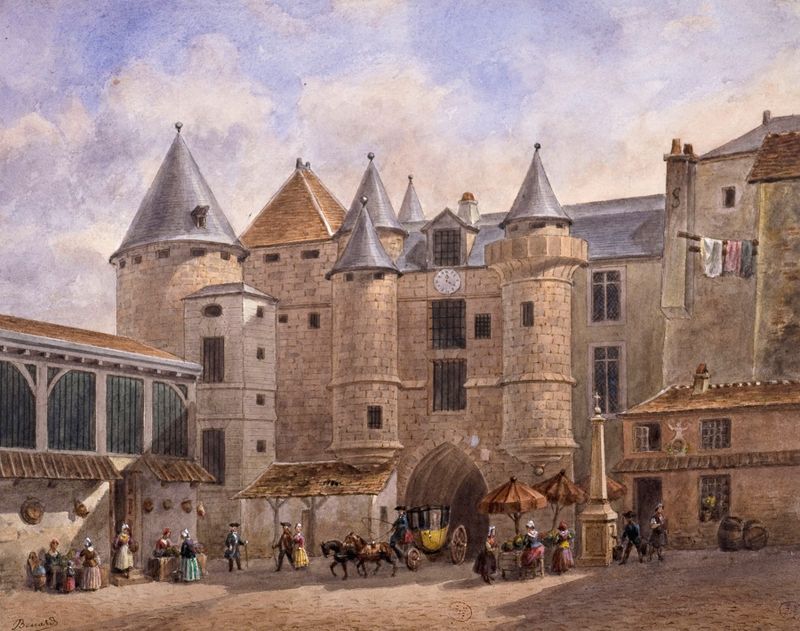
Le Grand Châtelet du XVIIIème siècle.
Auguste-Sébastien Bénard

Place de l’Hôtel de Ville.
Auguste-Sébastien Bénard

Salle souterraine du Palais de Justice.
Auguste-Sébastien Bénard

Voûtes du quai de Gesvres
Auguste-Sébastien Bénard

Monument expiatoire élevé à la mémoire du duc de Berry, à l’emplacement de l’ancien Opéra
Auguste-Sébastien Bénard
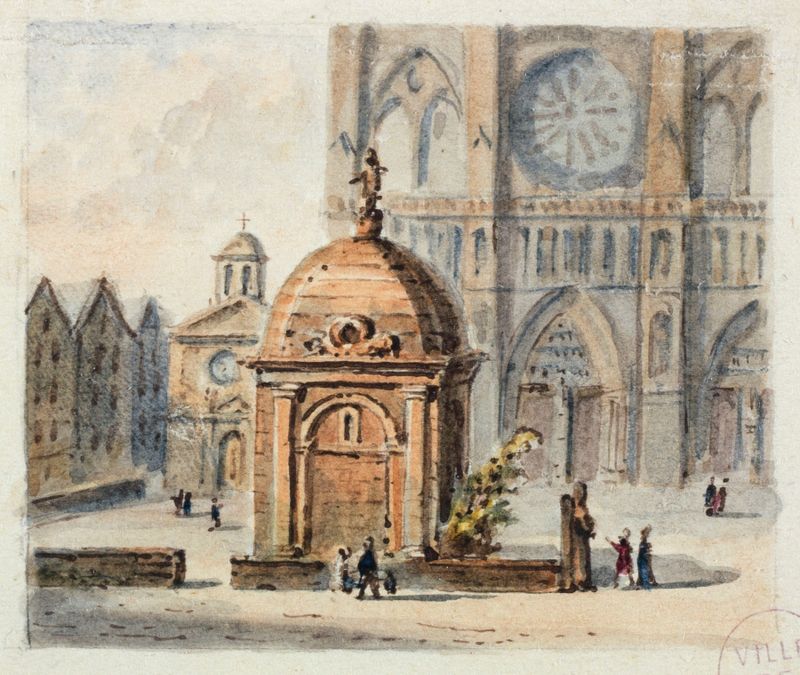
Le parvis de Notre-Dame de Paris
Auguste-Sébastien Bénard

Rue des chantres (entre le quai aux fleurs et la rue Chanoinesse).
Auguste-Sébastien Bénard

L’entrée de l’ancienne forteresse du Grand Châtelet, un jour de Carnaval
Auguste-Sébastien Bénard
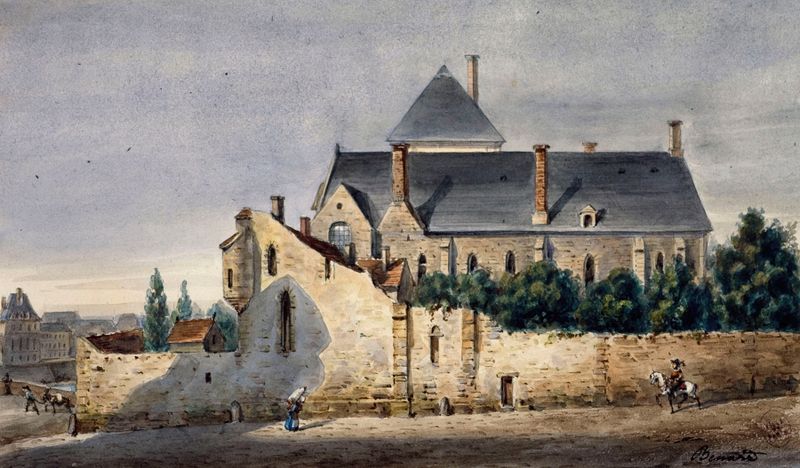
Les restes des bâtiments de l’hôtel du Petit Bourbon.
Auguste-Sébastien Bénard