
Saint Paul Seated, with his Conversion in the Background — History & Facts
Few biblical conversions have inspired as many artists as the dramatic transformation of Saul of Tarsus into Saint Paul, but Abraham Bloemaert brings a unique dual vision to his Saint Paul Seated, with his Conversion in the Background. Rather than choosing just the blinding moment on the road to Damascus, Bloemaert presents Paul twice: once as the meditative apostle, and again as the fallen persecutor struck by divine light. This unusual composition invites viewers to contemplate not only the miracle but also its enduring effect on Paul's life and teachings. In the foreground, Paul sits absorbed in scripture, his face marked by the gravity of newfound faith.
The sword at his side alludes to both his former violence and his later martyrdom, while the open book signals his role as the great interpreter of Christian doctrine. Behind him, barely contained within the same pictorial space, a second scene unfolds: Saul, thrown from his horse, arms raised in terror as a shaft of light breaks through the clouds. The juxtaposition of these moments—conversion and contemplation—echoes the approach of Caravaggio in his own Conversion of Saint Paul, yet Bloemaert’s version is gentler, emphasizing reflection over shock. The precise origins of this painting remain unclear; neither its commissioner nor its early whereabouts are securely documented, a common fate for works by Abraham Bloemaert, whose long career bridged late Mannerism and the dawn of the Dutch Baroque.
Bloemaert was a prolific teacher and innovator in Utrecht, and this painting reflects his interest in narrative complexity and expressive gesture. Today, Saint Paul Seated, with his Conversion in the Background is valued not only for its rare composition but also as a window into the shifting artistic currents of the early seventeenth century, where the drama of faith was rendered with both intellect and feeling.
More Artworks by Abraham Bloemaert

Adam and Eve
Abraham Bloemaert
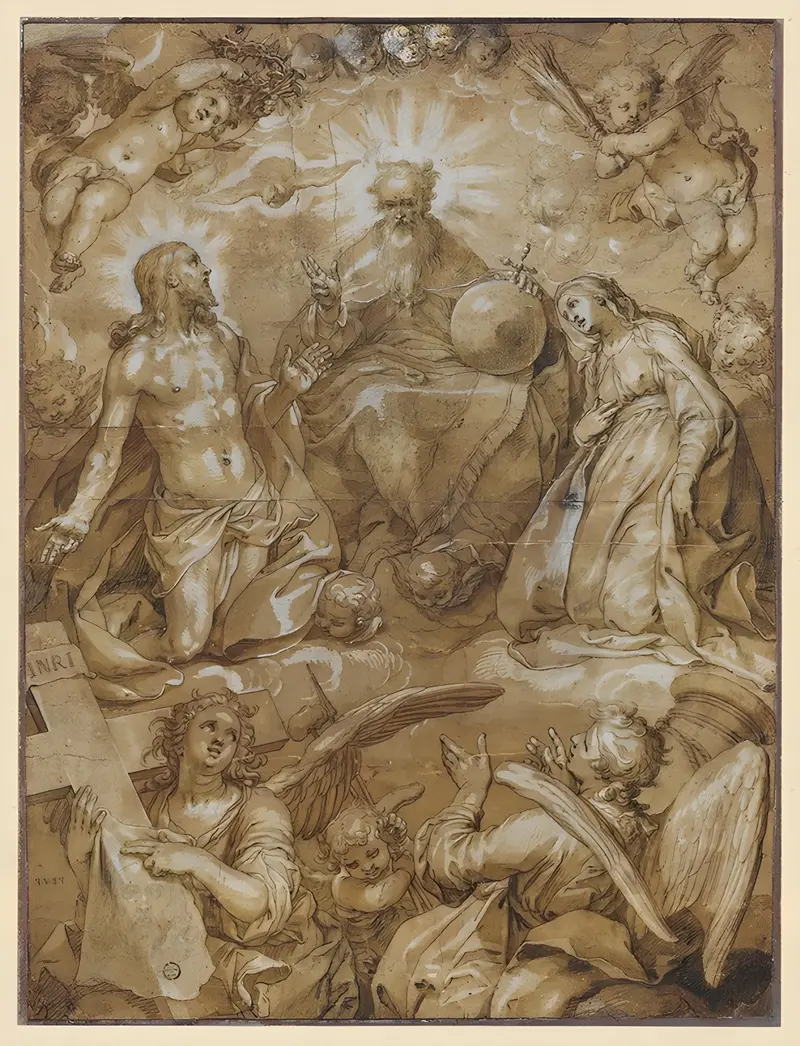
Intercession of Christ and Mary before God the Father
Abraham Bloemaert
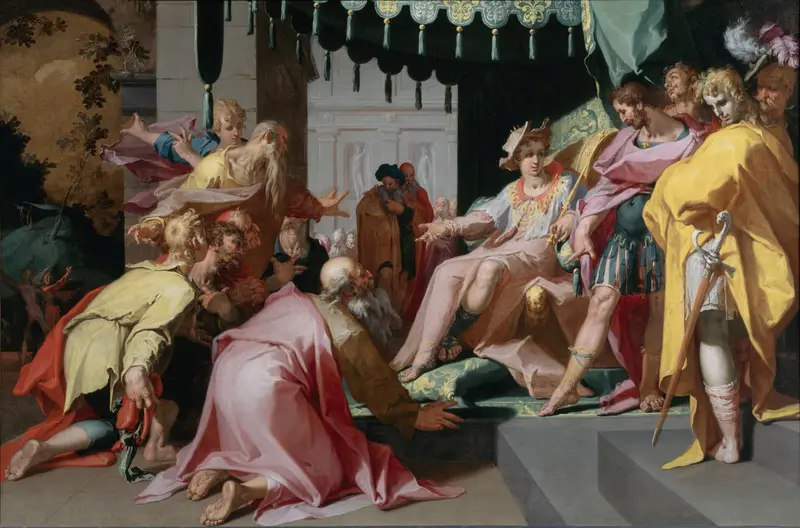
Joseph and his Brothers
Abraham Bloemaert
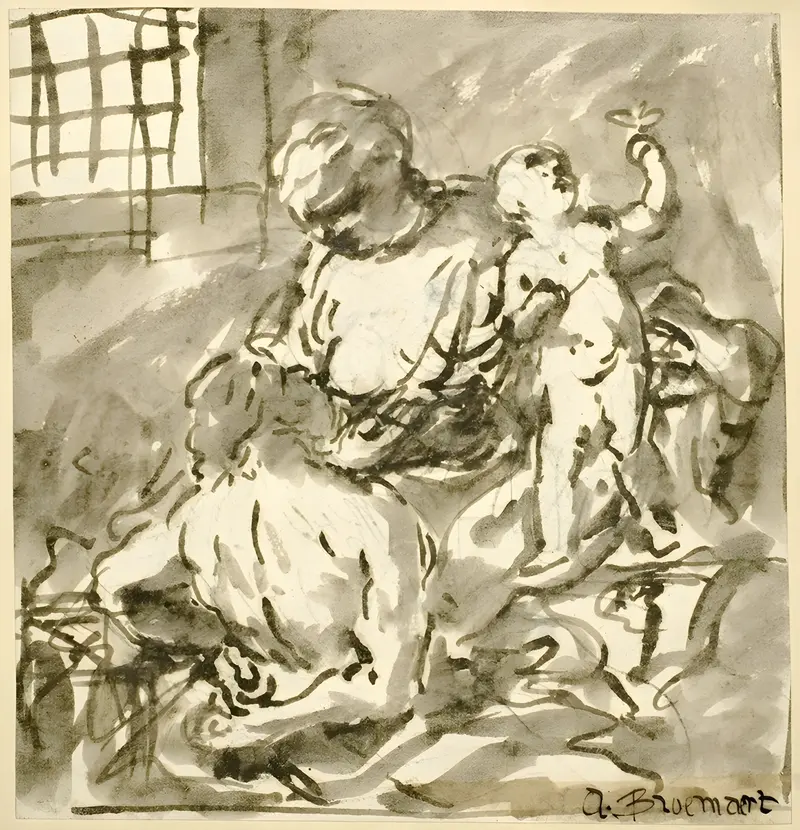
Caritas Romana
Abraham Bloemaert
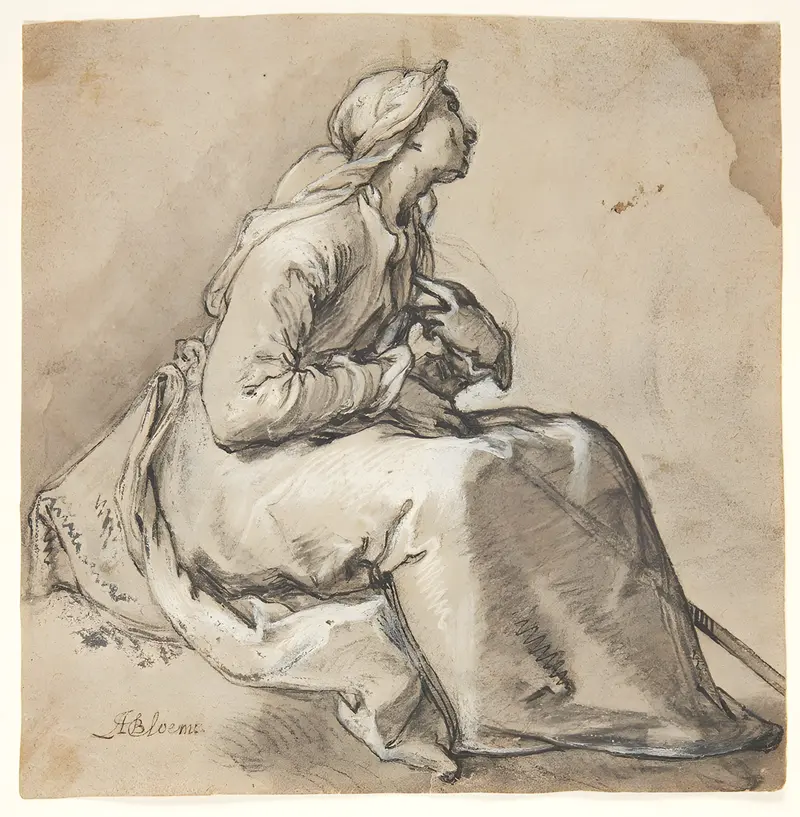
A seated woman facing right
Abraham Bloemaert
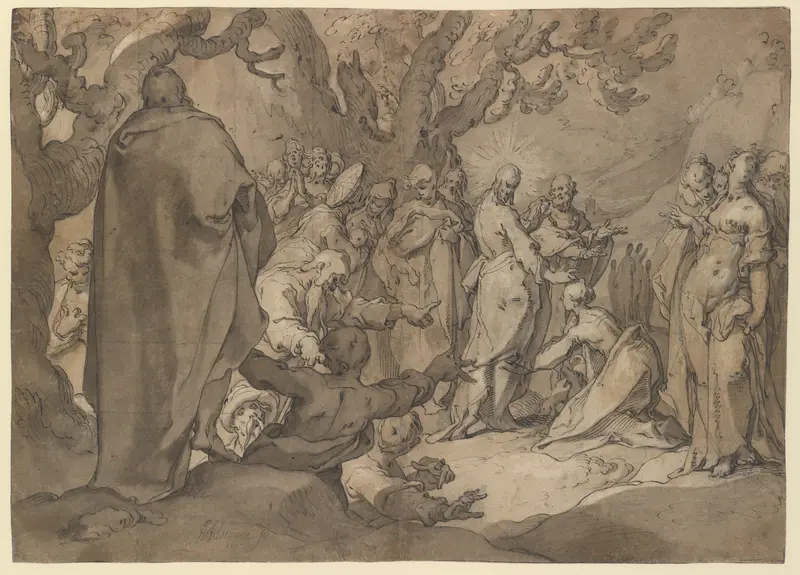
Christ and the Canaanite Women
Abraham Bloemaert
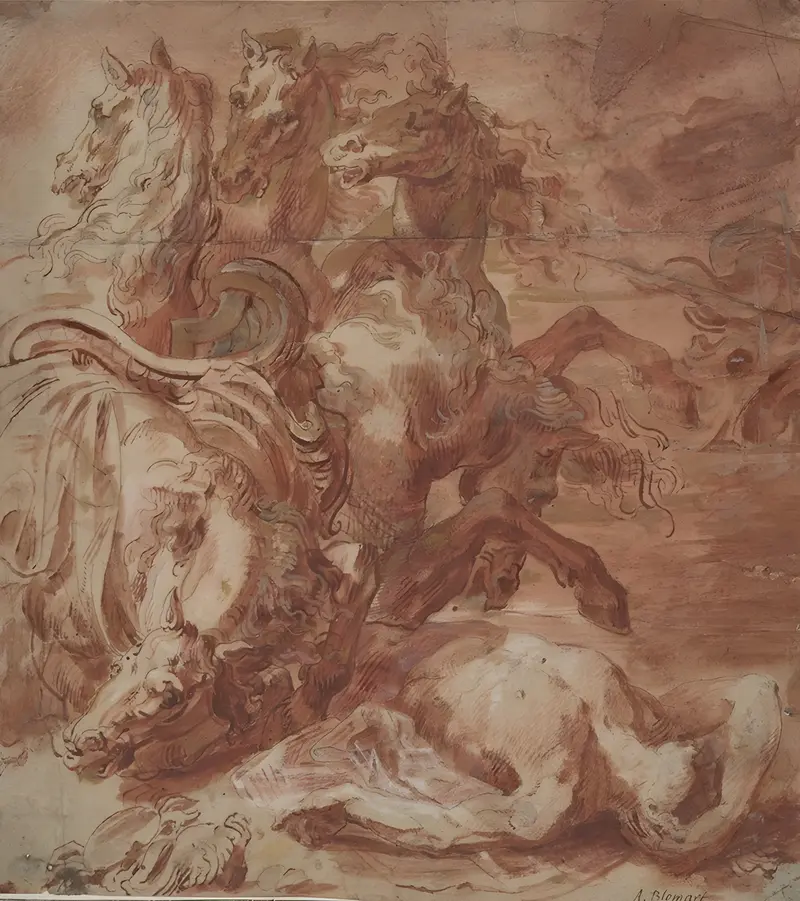
Hippolytus
Abraham Bloemaert
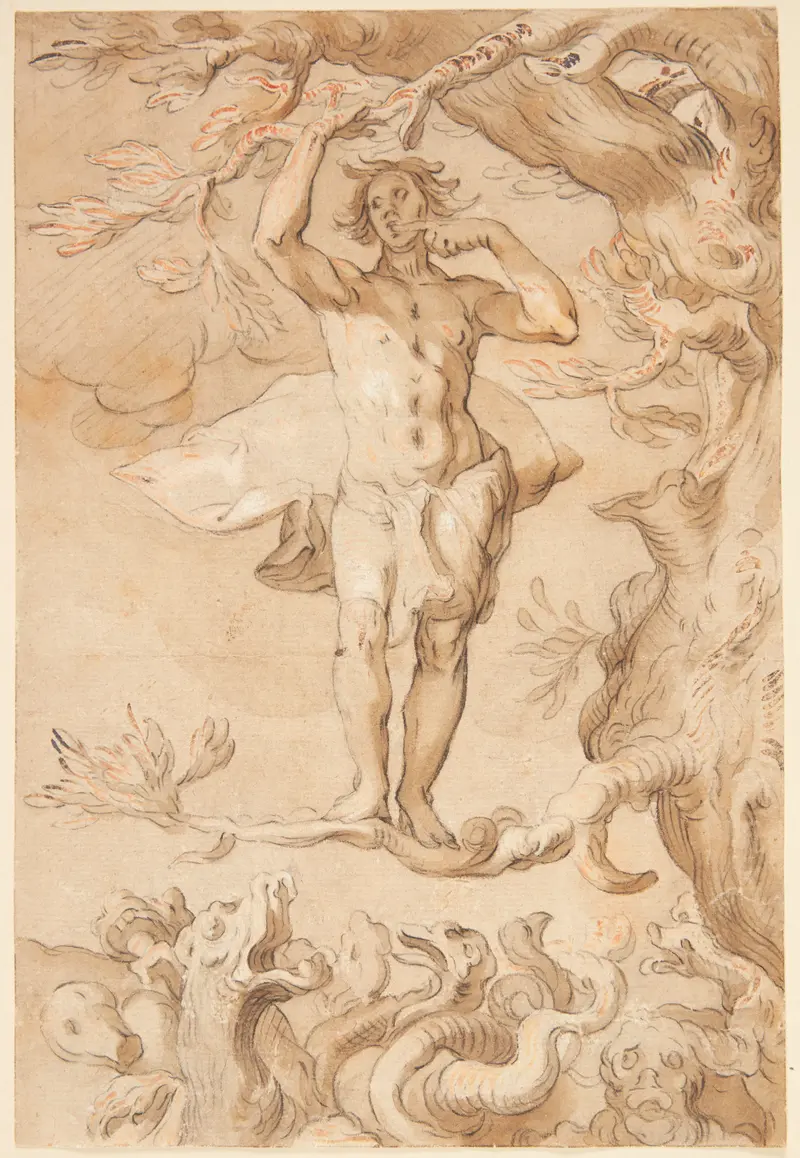
Den menneskelige glædes skrøbelighed En mand, der jages af en drage, klynger sig til en gren, mens han slikker honning af sin finger
Abraham Bloemaert

Moses Striking the Rock
Abraham Bloemaert
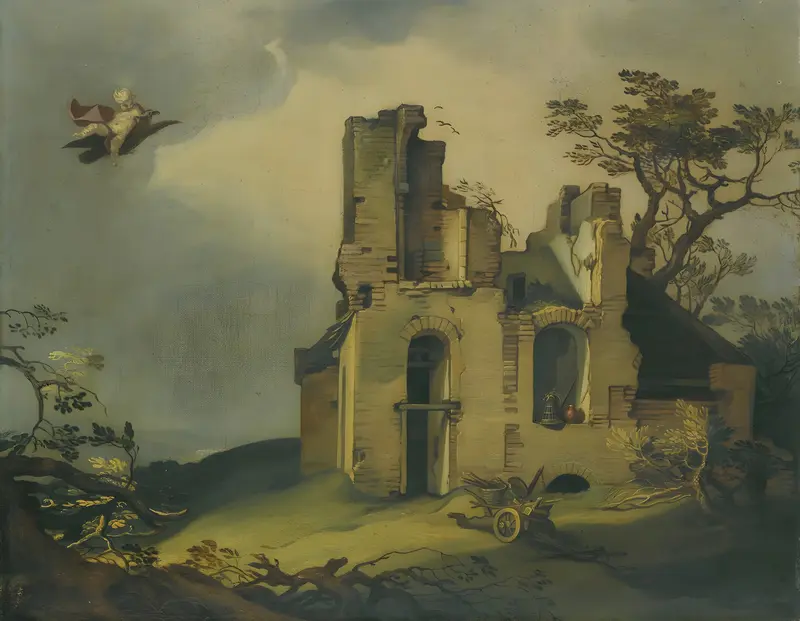
A Landscape With Ruins, With The Rape Of Ganymede
Abraham Bloemaert





