
Saints Peter, Martha, Mary Magdalen, and Leonard — History & Facts
When Saints Peter, Martha, Mary Magdalen, and Leonard left the ducal collections of Parma in the 18th century, it carried with it not just the prestige of Correggio’s hand, but also a cloud of mystery about its original commission and purpose. Unlike many of his celebrated altarpieces, there is no surviving record tying this painting to a particular chapel or patron, leaving scholars to piece together its origins from style and subject alone. Its grouping of saints is unusual, prompting speculation about the specific devotion or local cult that might have inspired such a gathering.
The painting’s journey through collections has only deepened its enigmatic allure, as each new owner added their own layer of interpretation. At the heart of the scene, Correggio chooses a moment of tranquil communion: the four saints, each with their distinct attributes, are drawn together in an imagined celestial assembly. Saint Peter, identifiable by his keys, stands as the rock of the Church; beside him, Mary Magdalen holds her jar of ointment, her gaze contemplative. Martha, her sister, is shown with a ladle or a vessel, referencing her role as a servant, while Saint Leonard, patron of prisoners, is marked by his chains.
The composition radiates gentle interaction, the figures softly illuminated by Correggio’s signature sfumato, their gestures weaving a silent conversation. Unlike the dramatic tension of Titian’s saintly gatherings, here the mood is intimate, the saints united not by narrative crisis but by a shared, serene devotion. The painting’s early history is obscure, but by the 18th century it had become a prized possession in Parma, admired for its grace and the delicate interplay of figures. Its attribution to Correggio has rarely been questioned, as the style—marked by tender modeling and atmospheric light—fits comfortably within his mature period.
Over time, the work passed into various European collections, sometimes misidentified or overshadowed by larger altarpieces, yet always valued for its quiet beauty. Today, it stands as a testament to Correggio’s ability to infuse even the most static of groupings with warmth and humanity, and as a puzzle that continues to invite new research into its origins and meaning.
More Artworks by Correggio
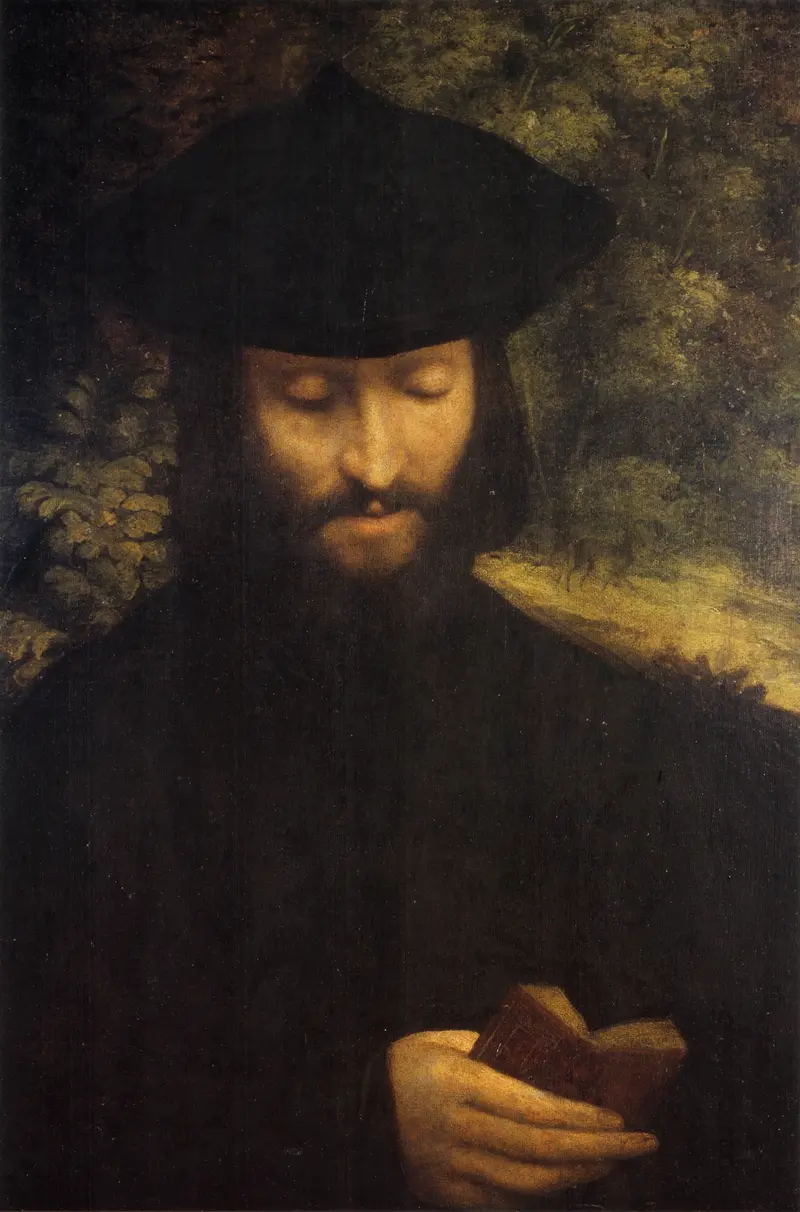
Portrait of a Man with a Book
Correggio

Holy Family with the Infant St. John
Correggio
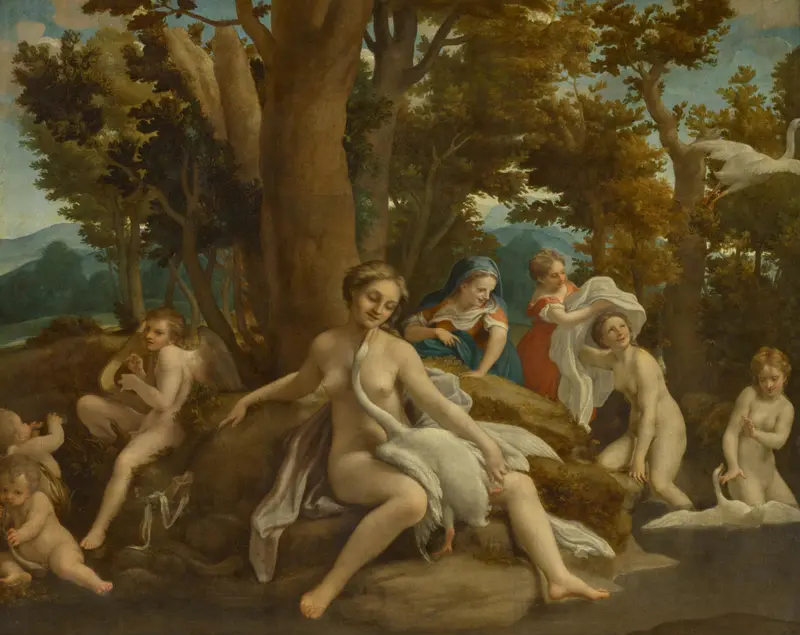
Leda and the Swan
Correggio

Madonna and Child with the Infant Saint John the Baptist
Correggio
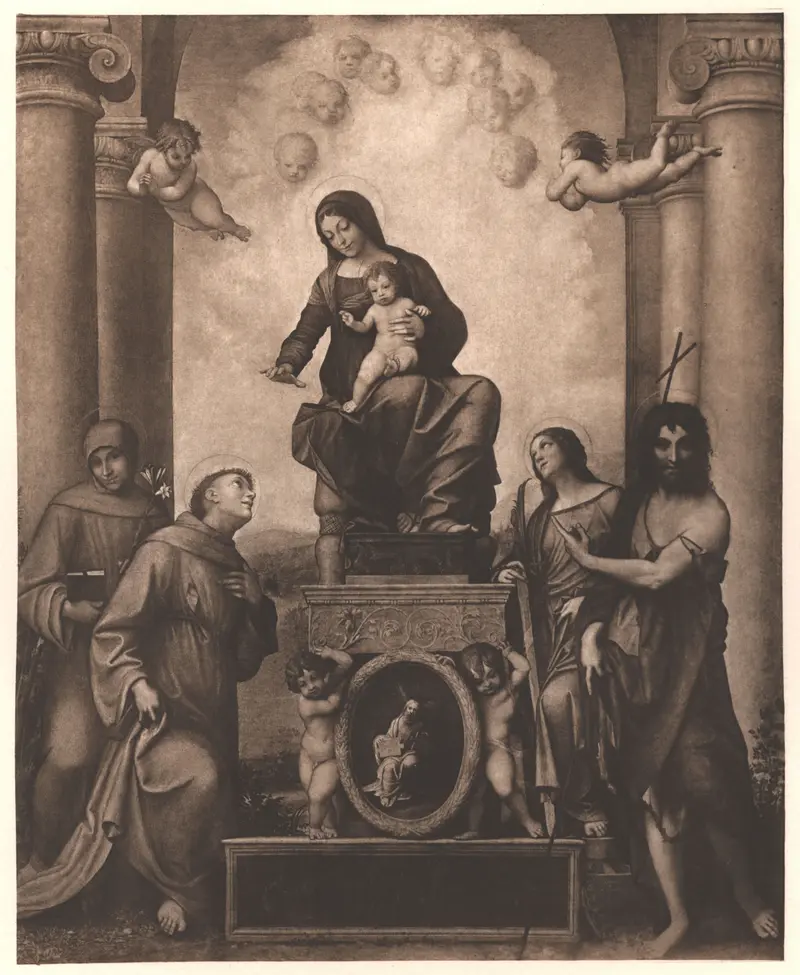
Madonna with St. Francis
Correggio
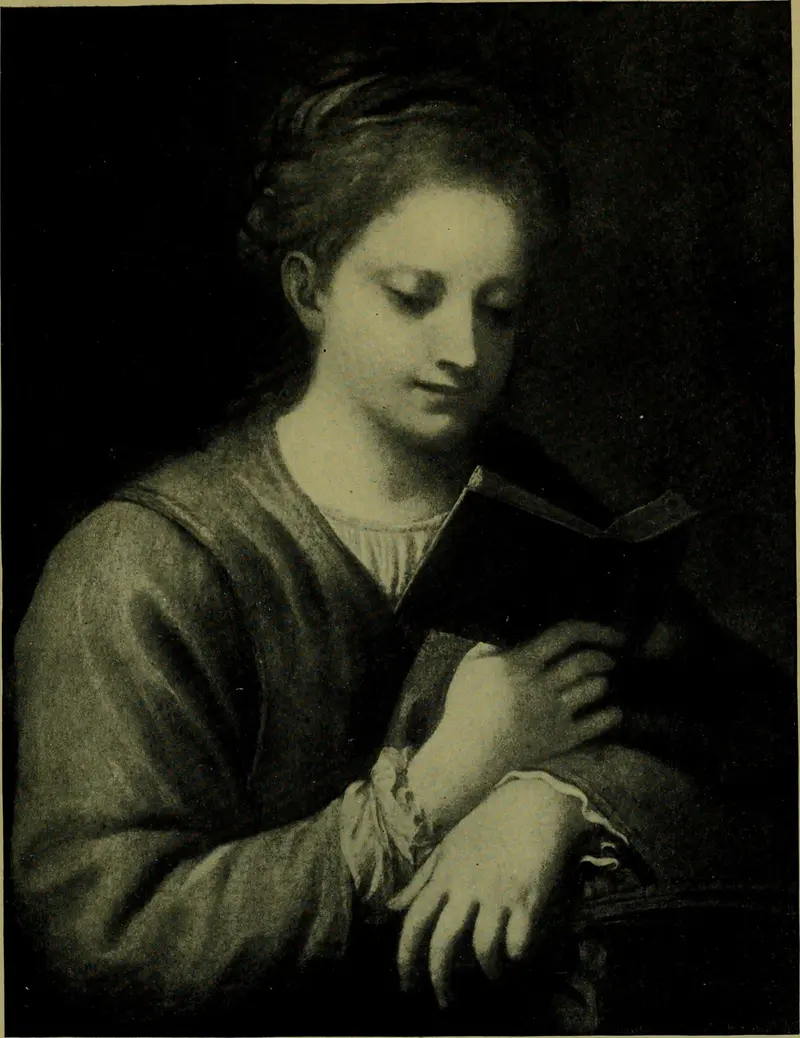
Saint Catherine Reading
Correggio

The Holy Night
Correggio
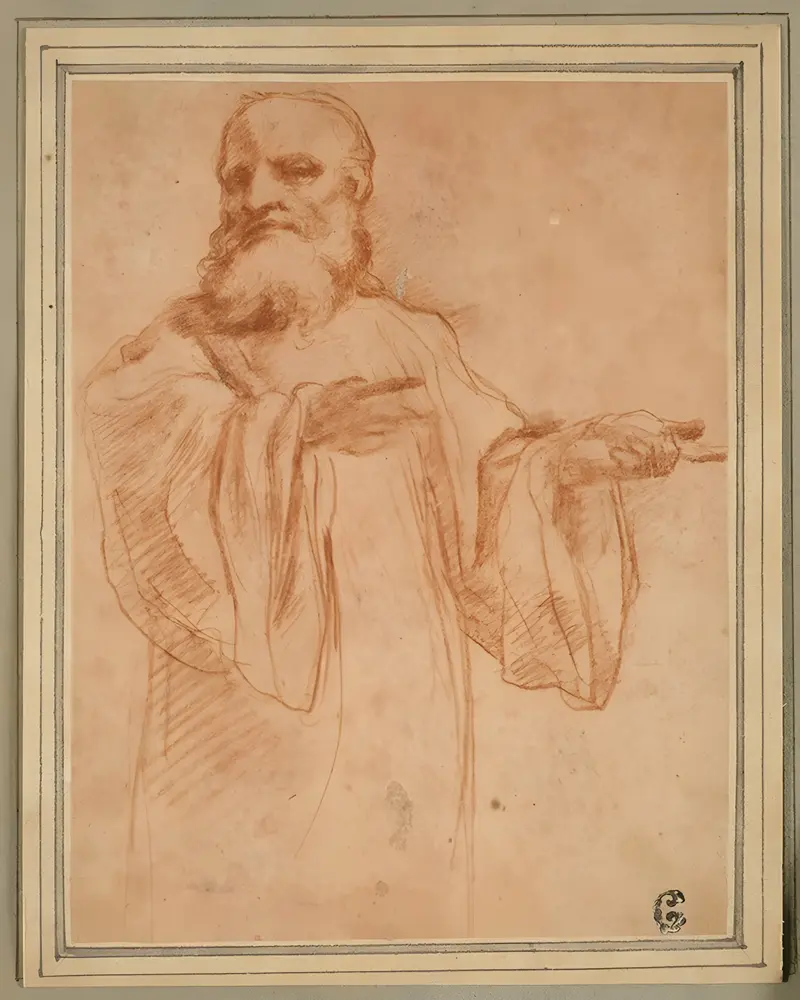
St. Benedict Gesturing to the Left; Study for the Coronation of the Virgin
Correggio
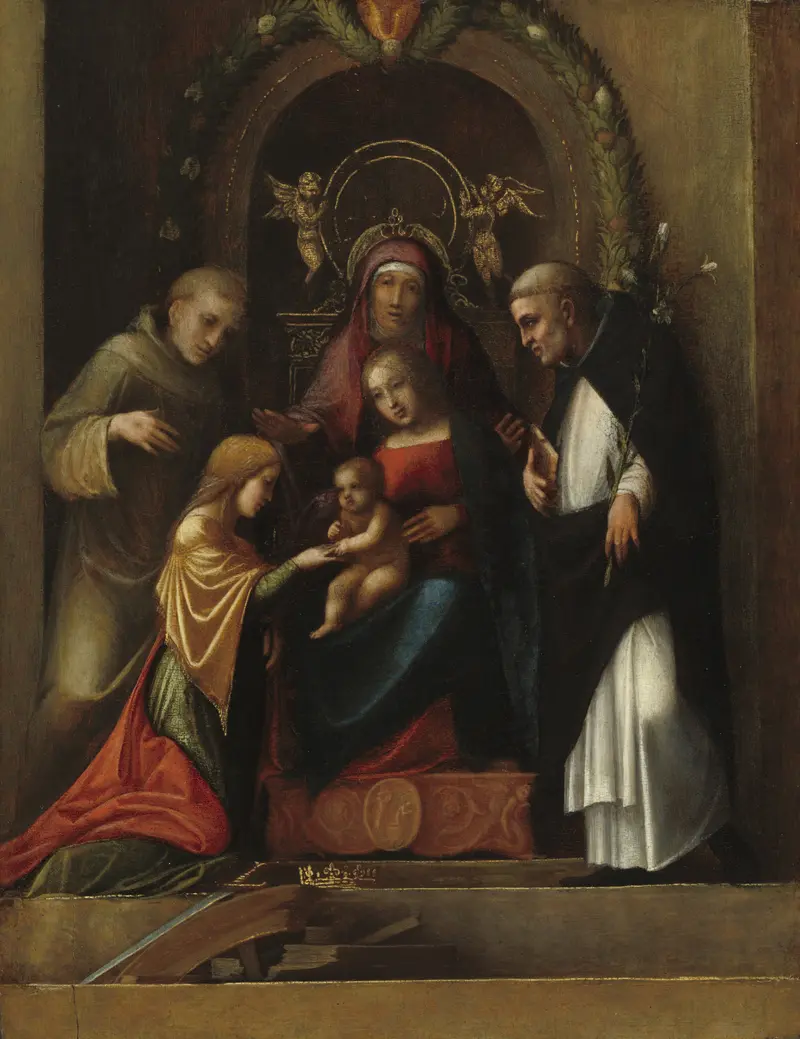
The Mystic Marriage of Saint Catherine
Correggio
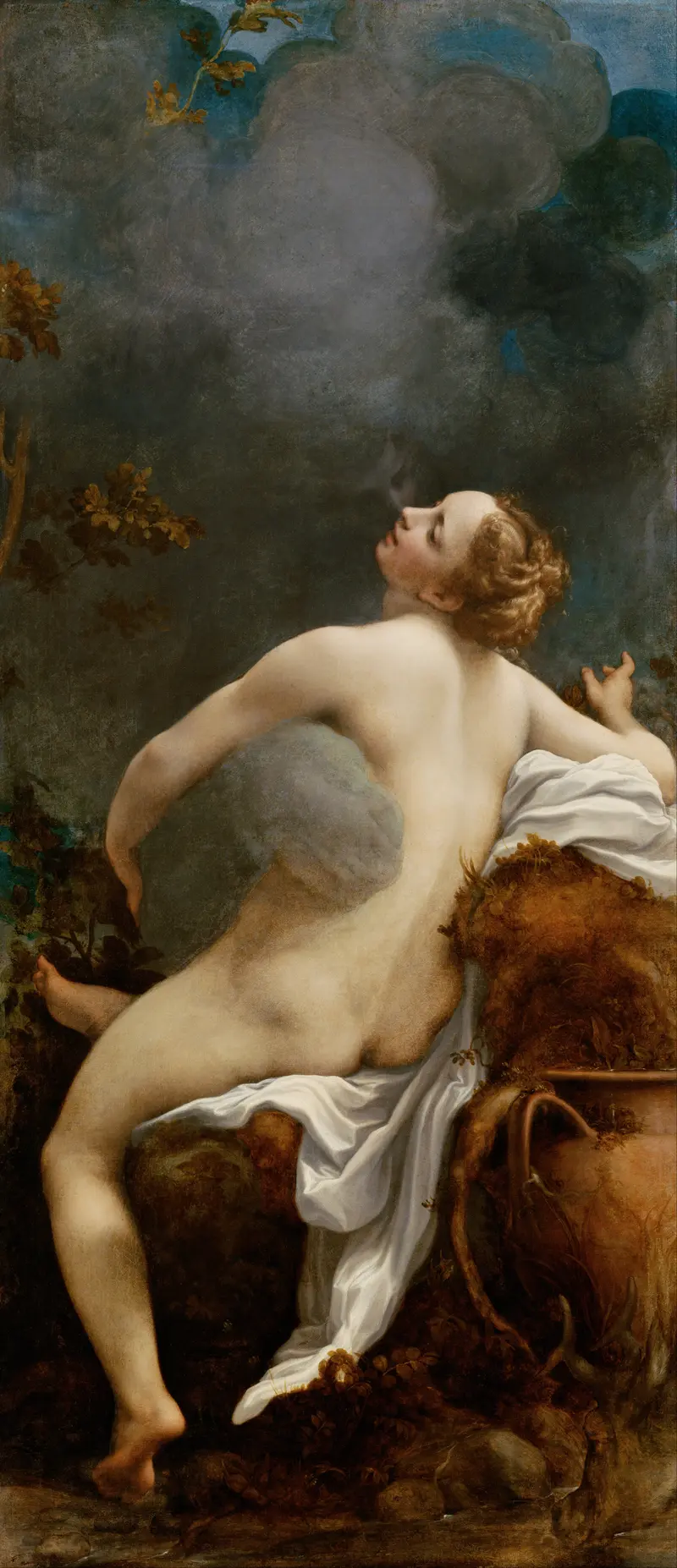
Jupiter and Io
Correggio





