
Saint Catherine Reading — History & Facts
No other artist of the Italian Renaissance is credited with so many lost or misattributed works as Correggio, and Saint Catherine Reading is a prime example. For centuries, its authorship was debated, with some attributing it to Parmigianino or even the young Titian—but most now agree on Correggio’s hand, thanks to its gentle sfumato and the tender, introspective mood so characteristic of his style. The painting’s date and commission remain uncertain, adding to its air of mystery.
What is certain is its enduring appeal: copies and variants appeared in noble collections across Europe from the seventeenth century onward, each seeking to capture the quiet grace of the original. At the heart of the image sits Saint Catherine of Alexandria, not at the moment of her martyrdom, but in a rare, contemplative pause. She is absorbed in a book, her fingers delicately turning the page—a symbol of her legendary wisdom and devotion to learning. The broken wheel at her side, barely visible in the shadows, alludes to her miraculous escape from torture, while the palm branch signals her ultimate martyrdom.
Correggio’s soft light caresses her face and hands, drawing the viewer into her private reverie. Unlike Caravaggio’s later, dramatic depictions of saints, here the intensity is inward, the drama quiet and psychological. The painting’s early history is shrouded in uncertainty, but by the eighteenth century, it was recorded in several prominent Italian collections. Its attribution was clarified only in the twentieth century, as scholars recognized Correggio’s unique handling of light and form.
Today, Saint Catherine Reading stands as a testament to the artist’s ability to blend spiritual subject matter with a deeply human sensibility. Though its original patron is unknown, the work’s gentle intimacy continues to invite viewers into the saint’s world, wherever it is displayed.
More Artworks by Correggio
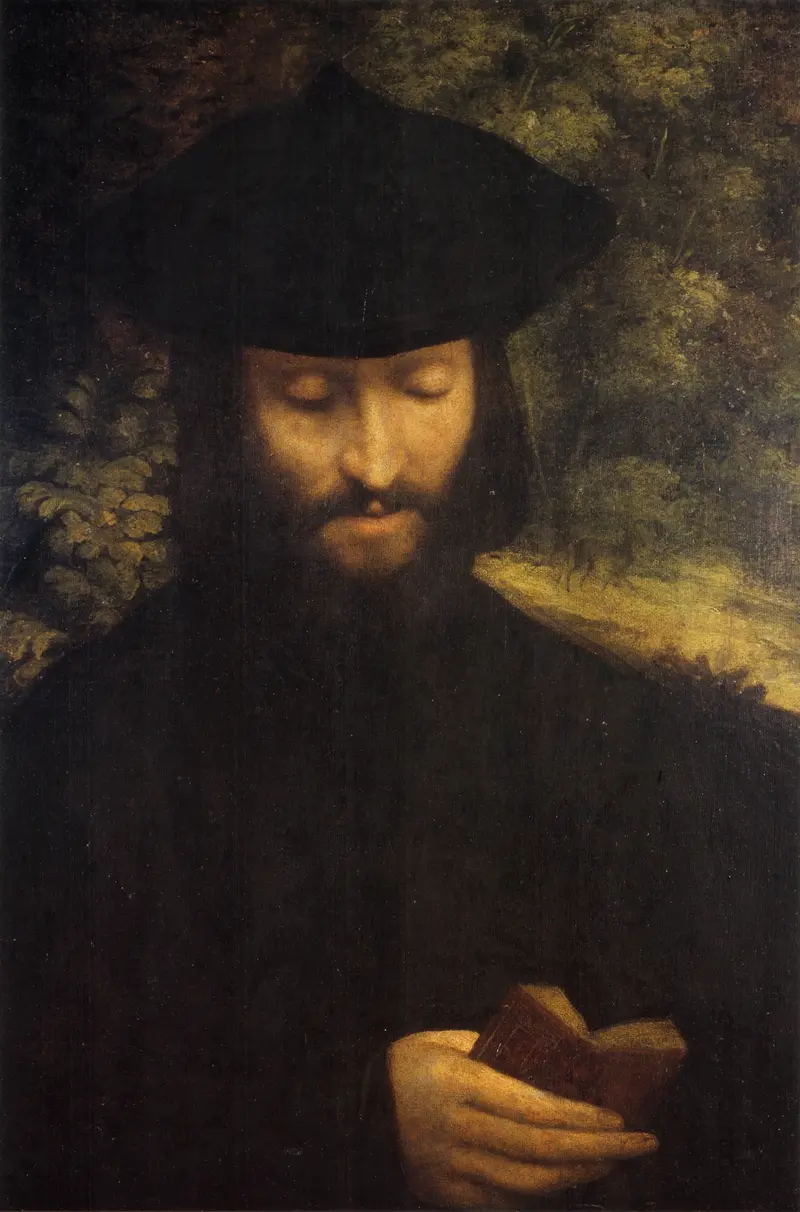
Portrait of a Man with a Book
Correggio

Holy Family with the Infant St. John
Correggio
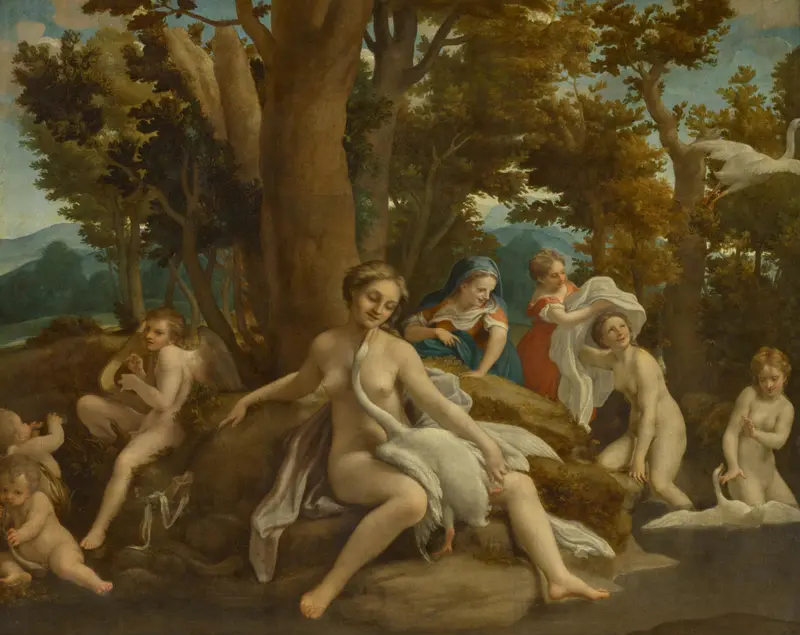
Leda and the Swan
Correggio

Madonna and Child with the Infant Saint John the Baptist
Correggio
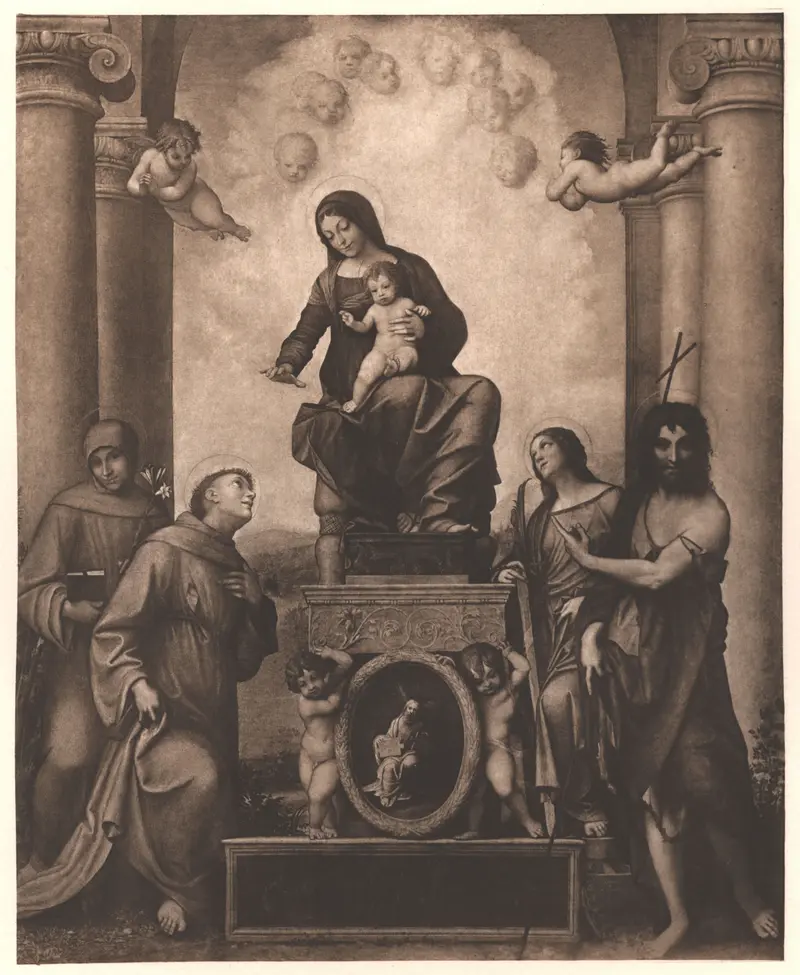
Madonna with St. Francis
Correggio

The Holy Night
Correggio
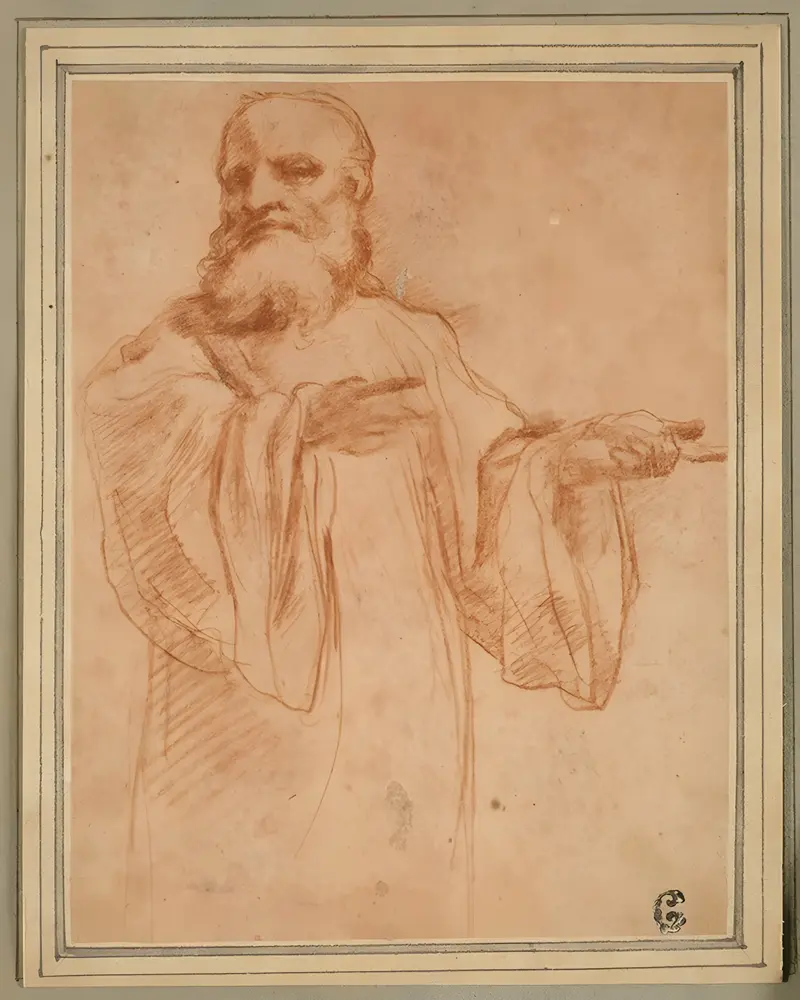
St. Benedict Gesturing to the Left; Study for the Coronation of the Virgin
Correggio
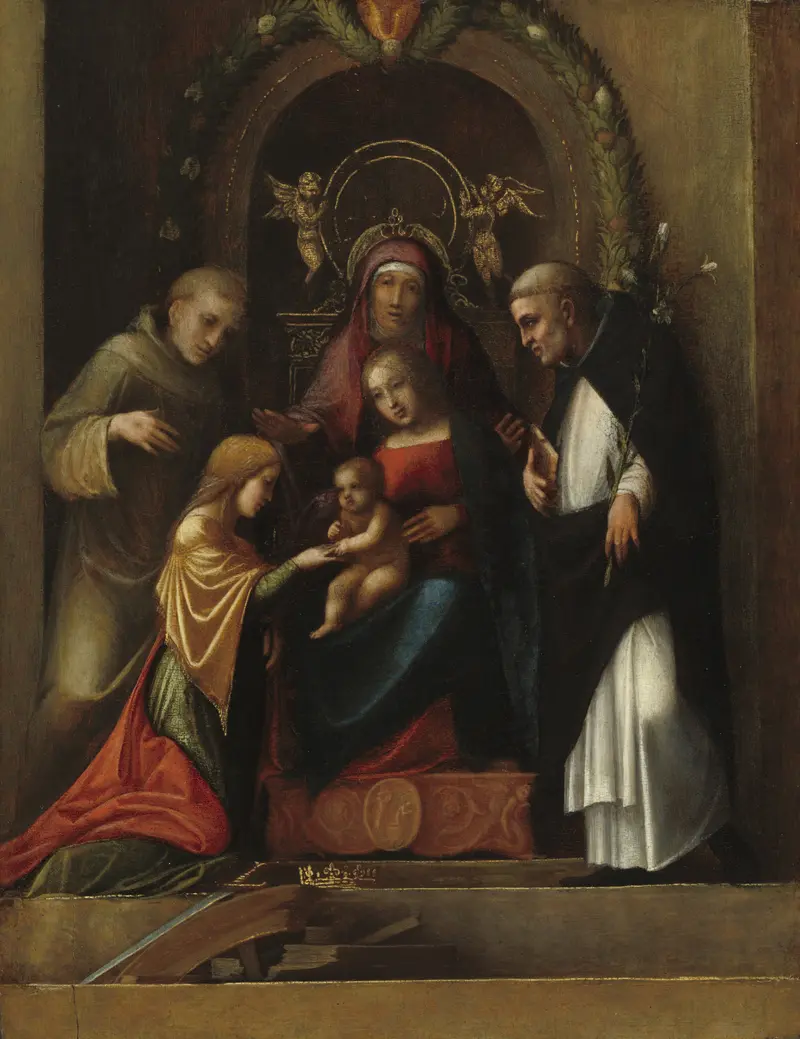
The Mystic Marriage of Saint Catherine
Correggio
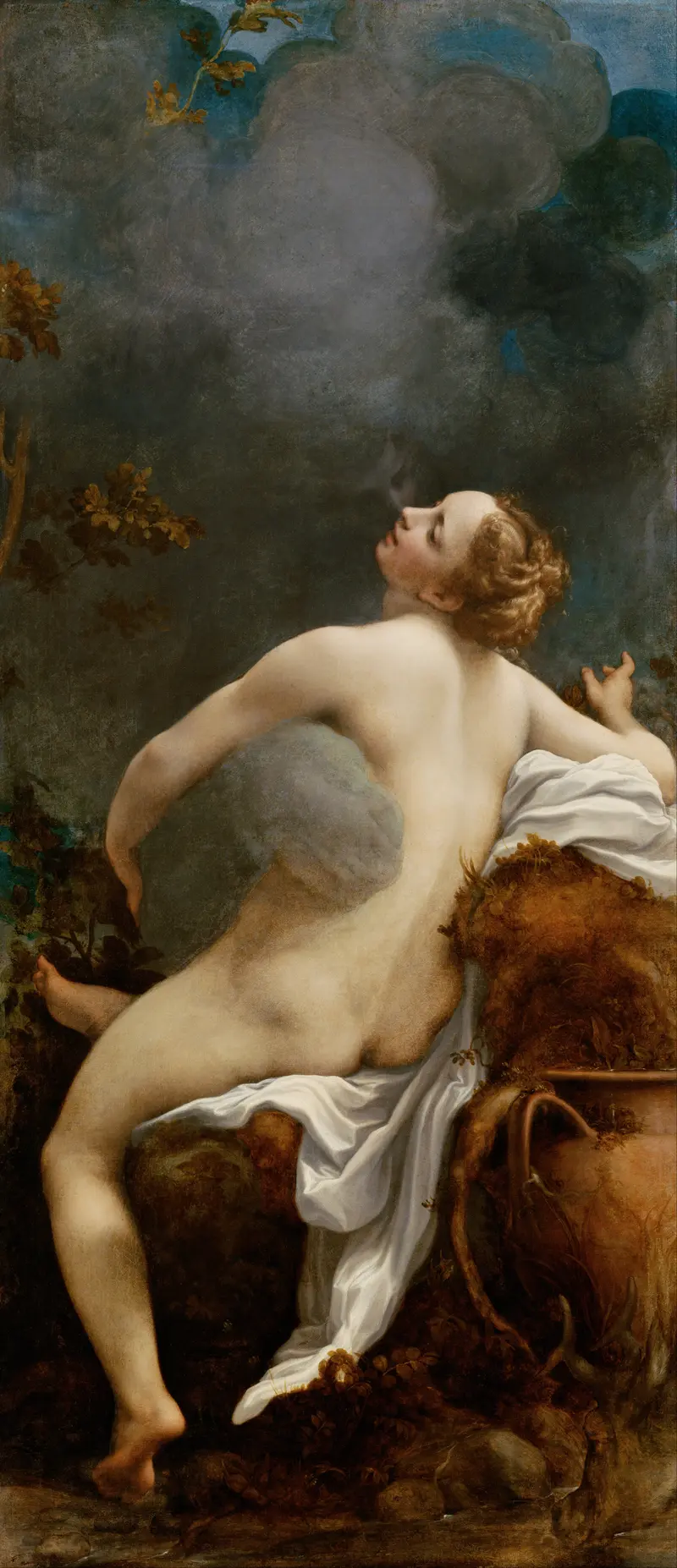
Jupiter and Io
Correggio
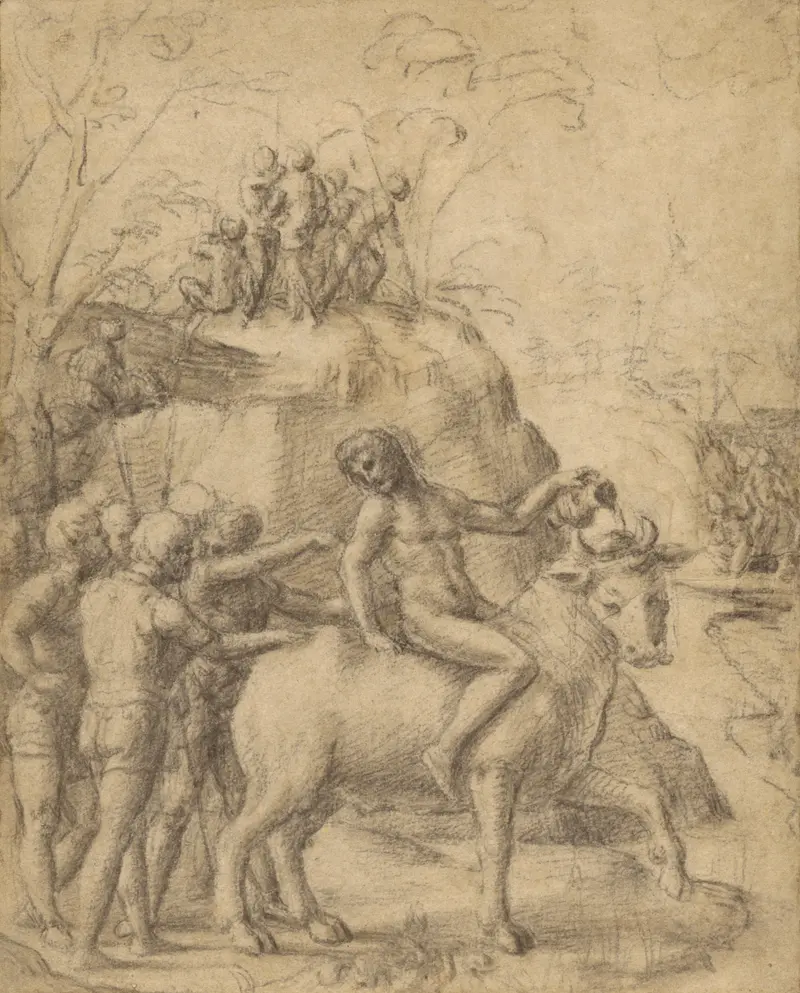
A Man Riding a Bull, and Other Figures
Correggio





