
Sakata Kintoki Drinking Sake Wine — History & Facts
When Katsushika Hokusai created Sakata Kintoki Drinking Sake Wine in 1804, he was already a celebrated figure in Edo-period Japan, but what makes this work especially intriguing is its link to a legendary folk hero whose exploits inspired countless artists, writers, and performers. The figure of Kintoki—known for his superhuman strength and wild upbringing—was so beloved that versions of his tale appeared in everything from kabuki plays to children’s toys. Hokusai’s interpretation stands out for its timing: it was produced during his prolific middle period, just as he was experimenting with new subjects and formats that would later culminate in his iconic Thirty-six Views of Mount Fuji. In this dynamic scene, Kintoki sits cross-legged, a massive sake cup in hand, surrounded by the creatures of the mountain who are his companions and admirers.
Hokusai captures the moment when Kintoki, still a child but already a giant among men, demonstrates his legendary capacity by downing a bowl of sake in a single gulp—a feat that cements his status as a folk hero. The animals gathered around him—a bear, a rabbit, and a monkey—are not just decorative; they symbolize his harmony with nature and his almost mythic strength. The bold lines and expressive faces are typical of Hokusai’s style, yet the composition’s warmth and humor set it apart from more formal depictions, such as those by Utagawa Kuniyoshi, who often portrayed Kintoki in the heat of battle rather than at leisure. The exact medium of Sakata Kintoki Drinking Sake Wine remains uncertain, as does its early provenance, but works of this type were commonly produced as woodblock prints or paintings for a broad audience in Edo Japan.
While there is no record of a specific patron, the popularity of Kintoki’s legend suggests it was created for the thriving urban market. Today, the piece is recognized as an example of Hokusai’s versatility and his ability to blend humor, folklore, and technical skill. Its survival and continued display in collections—whether in Japan or abroad—testify to the enduring appeal of both the artist and his subject.
More Artworks by Katsushika Hokusai

The Great Wave off Kanagawa
Katsushika Hokusai
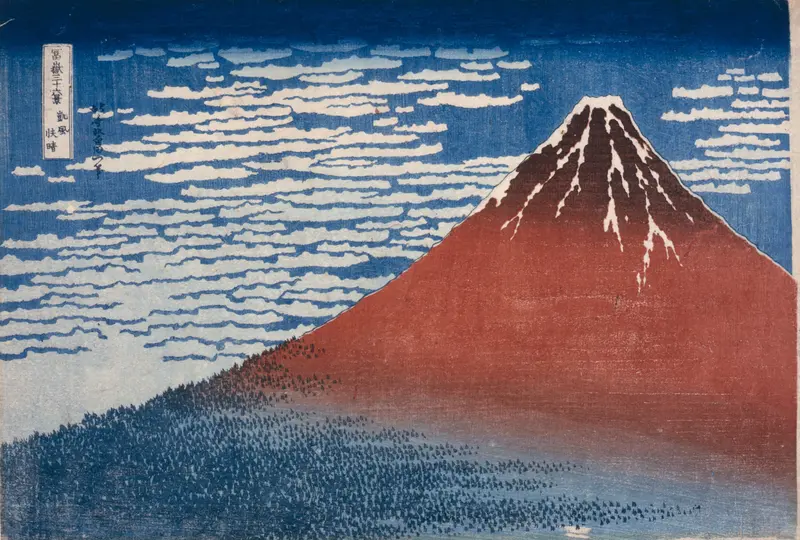
Fine Wind, Clear Morning (Red Fuji)
Katsushika Hokusai
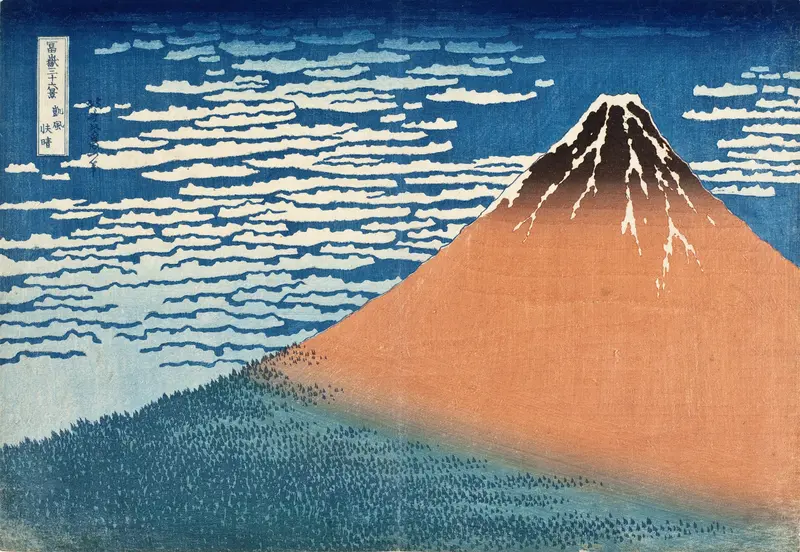
South Wind, Clear Dawn
Katsushika Hokusai
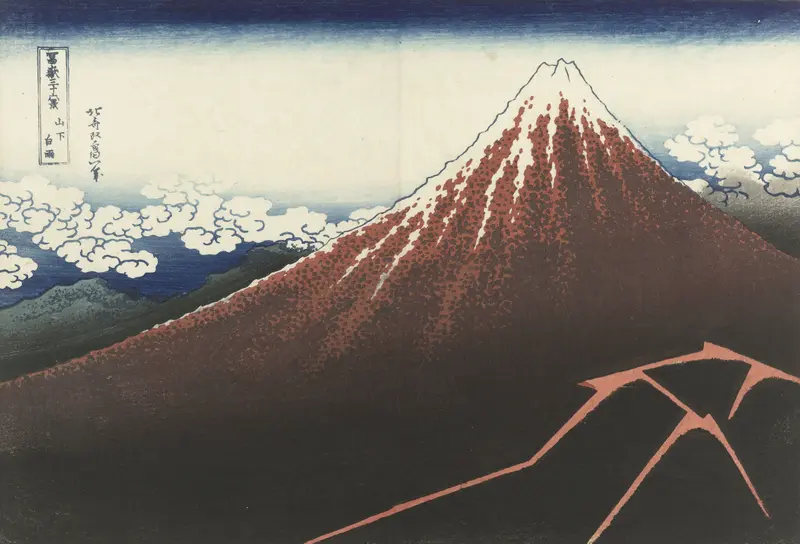
Rainstorm Beneath the Summit
Katsushika Hokusai
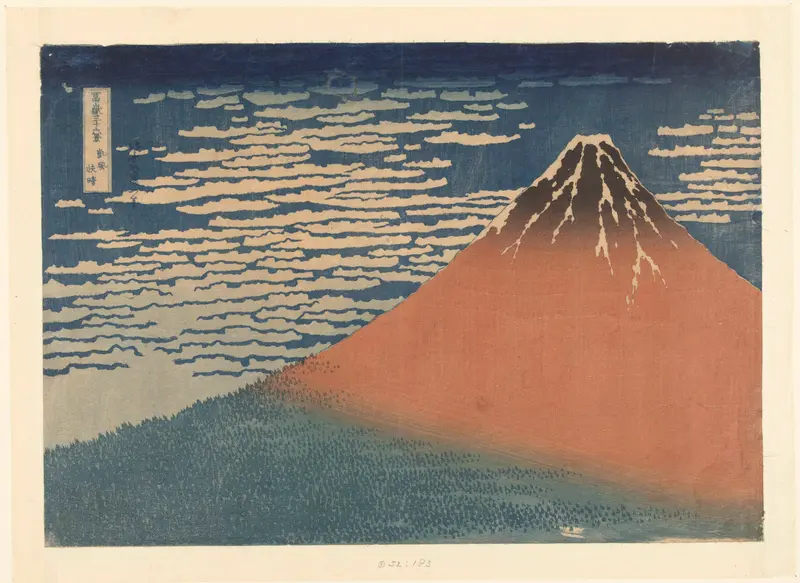
Clear Weather with a Southerly Wind
Katsushika Hokusai
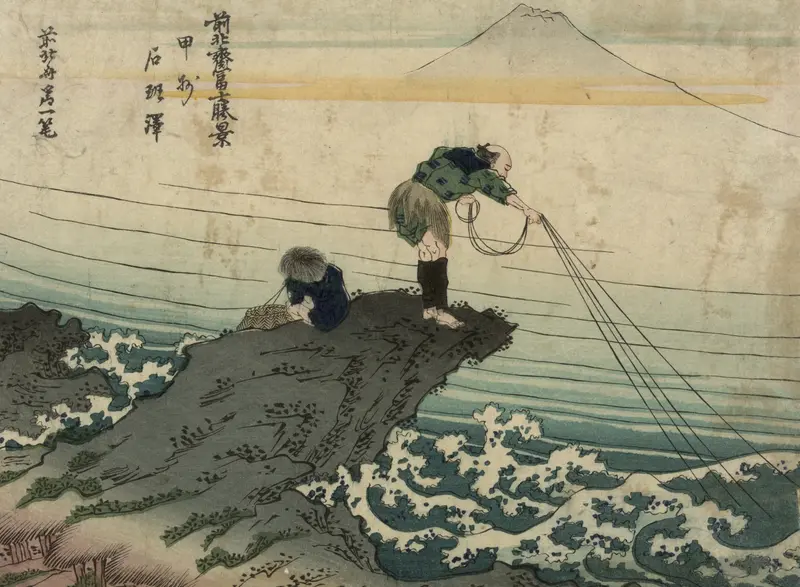
Kōshū kajikazawa
Katsushika Hokusai
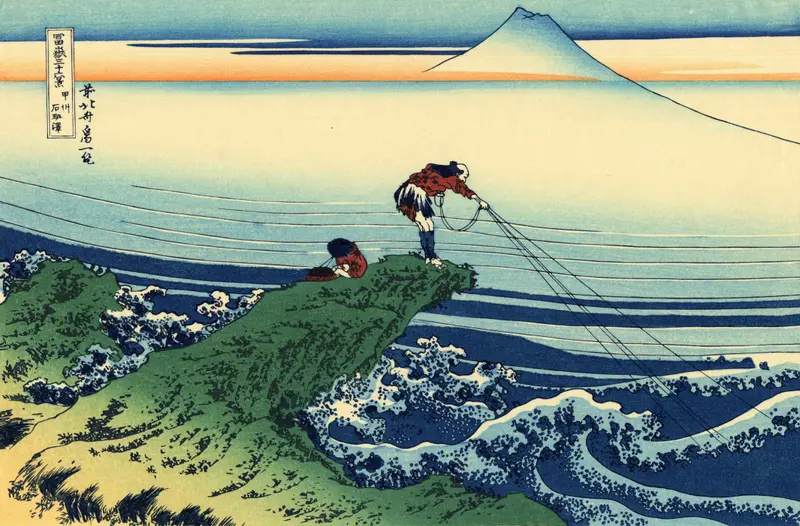
Kōshū kajikazawa 2
Katsushika Hokusai
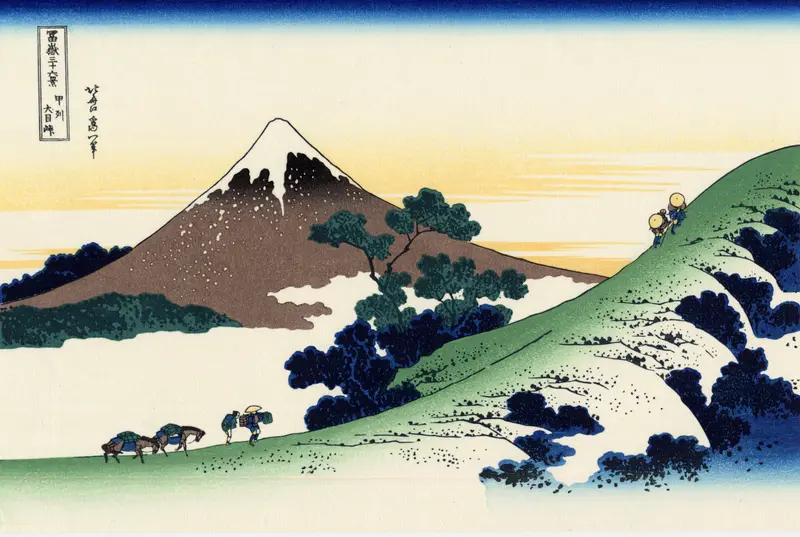
Inume Pass in Kai Province (Kôshû inume-tôge)
Katsushika Hokusai

Yoro Falls in Mino Province (Mino no Yoro no taki), from the series "A Tour of Waterfalls in Various Provinces (Shokoku taki meguri)"
Katsushika Hokusai
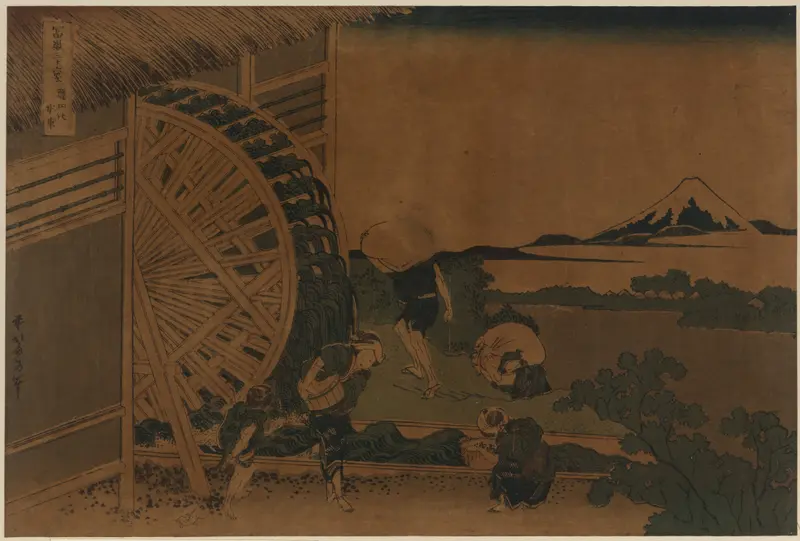
Onden no suisha
Katsushika Hokusai
More Genre Scene Art

Banquet of the Officers of the St George Civic Guard
Frans Hals

Rembrandt and Saskia in the Scene of the Prodigal Son
Rembrandt van Rijn

Bal du moulin de la Galette
Pierre-Auguste Renoir

Quadrille at the Moulin Rouge
Henri de Toulouse-Lautrec

A Burial at Ornans
Gustave Courbet

When Will You Marry?
Paul Gauguin