
Sakata Kintoki — History & Facts
When Katsushika Hokusai created Sakata Kintoki in 1804, he was already gaining fame for his innovative approach to Japanese woodblock prints and paintings. What makes this work particularly intriguing is that it belongs to a period when Hokusai was experimenting with heroic subjects drawn from Japanese folklore, long before his international fame with Thirty-six Views of Mount Fuji. The figure of Kintoki, a legendary child of superhuman strength, was a popular theme in Edo-period art, yet Hokusai’s interpretation stands out for its dynamic energy and psychological depth.
The exact medium of this piece remains uncertain, adding a layer of mystery to its physical history. At the center of the composition, the young Kintoki is captured at the moment of wrestling with a bear, a feat drawn from the ancient tales that celebrated his extraordinary might and affinity with animals. Hokusai’s Kintoki is not just a brute force; the artist gives him a lively, almost mischievous expression, emphasizing the innocence and vigor of childhood. The bear, rendered with expressive brushwork, seems both a playmate and an adversary, blurring the line between danger and companionship.
Details such as Kintoki’s red bib and axe are traditional symbols of his identity, while the lively composition recalls the spirited storytelling found in Utagawa Kuniyoshi’s later warrior prints, though Hokusai’s version is more intimate and less theatrical. The provenance of Sakata Kintoki is not fully documented, typical for many works from this early phase of Hokusai’s career, when he was still signing his works under various pseudonyms. It is likely that the piece was created for the popular market, catering to the Edo public’s appetite for heroic and folkloric imagery. Today, Sakata Kintoki is recognized as an important example of Hokusai’s early engagement with legendary subjects, foreshadowing the narrative vigor and technical innovation that would define his later masterpieces.
The artwork’s current location is not widely published, but it remains a key reference for scholars tracing the evolution of heroic themes in Hokusai’s oeuvre.
More Artworks by Katsushika Hokusai

The Great Wave off Kanagawa
Katsushika Hokusai
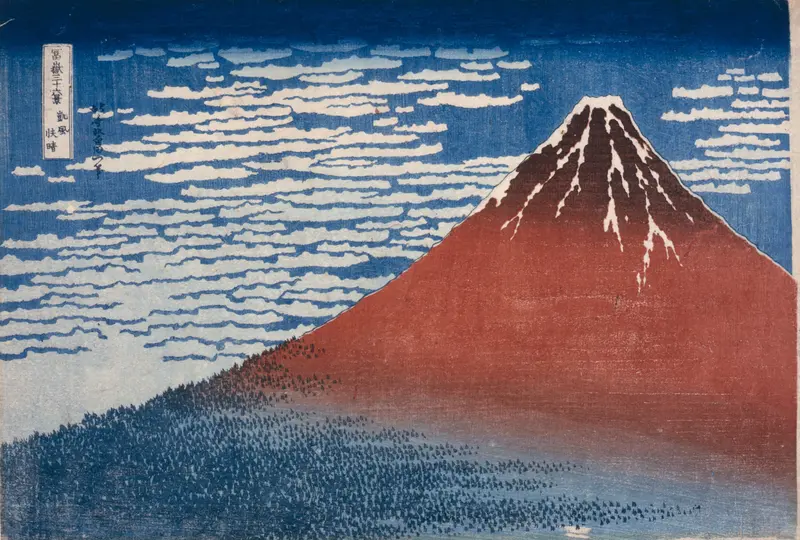
Fine Wind, Clear Morning (Red Fuji)
Katsushika Hokusai
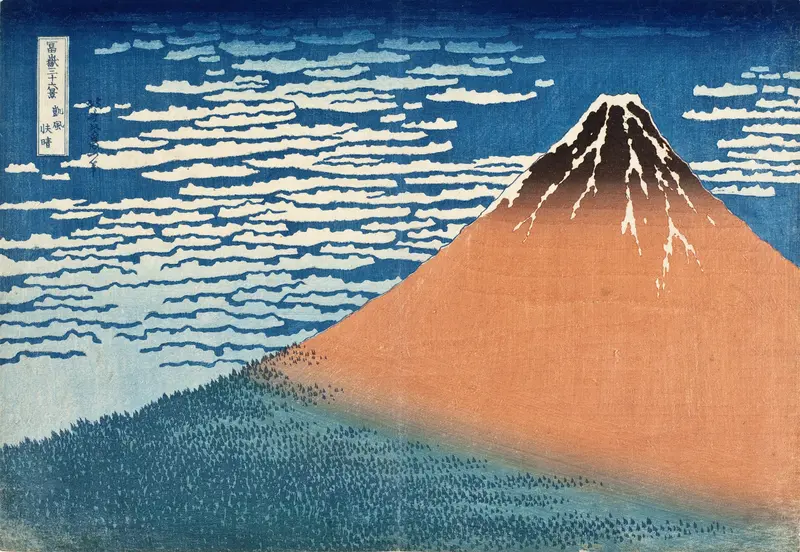
South Wind, Clear Dawn
Katsushika Hokusai
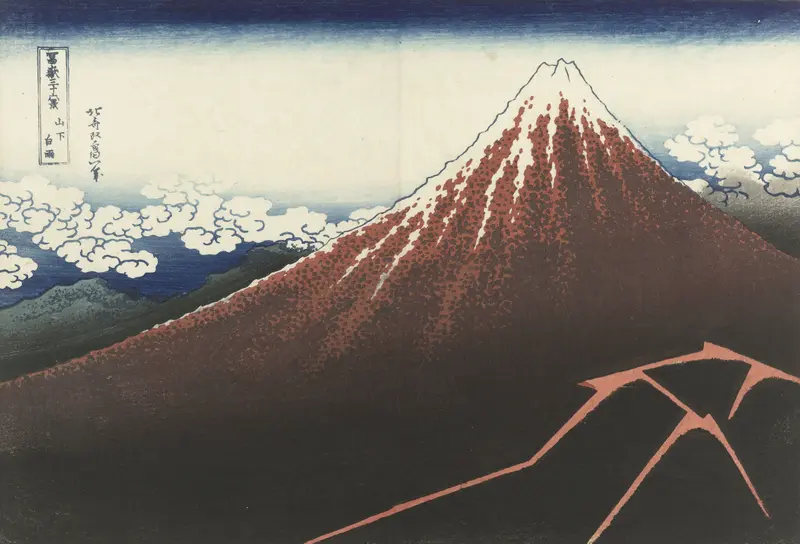
Rainstorm Beneath the Summit
Katsushika Hokusai
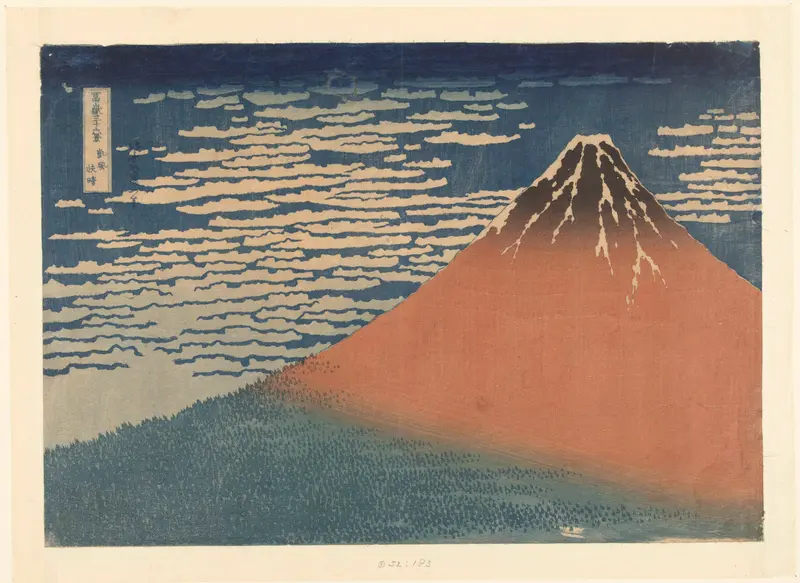
Clear Weather with a Southerly Wind
Katsushika Hokusai
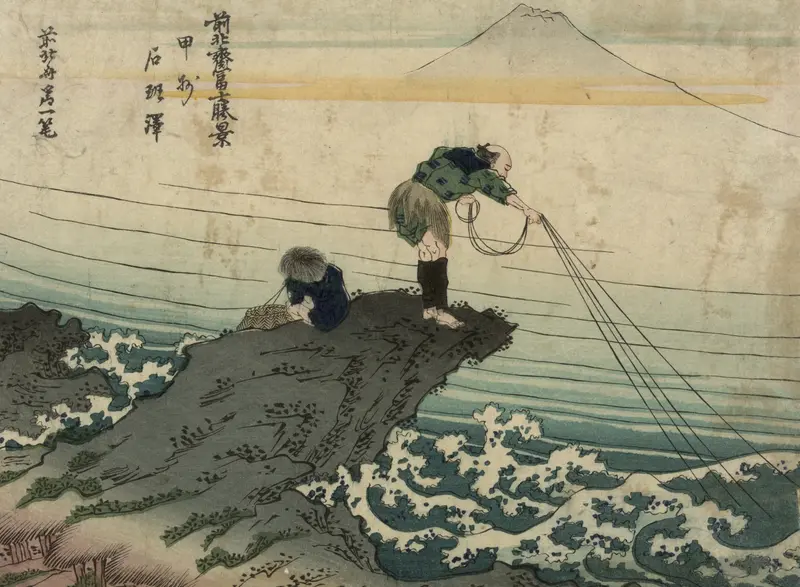
Kōshū kajikazawa
Katsushika Hokusai
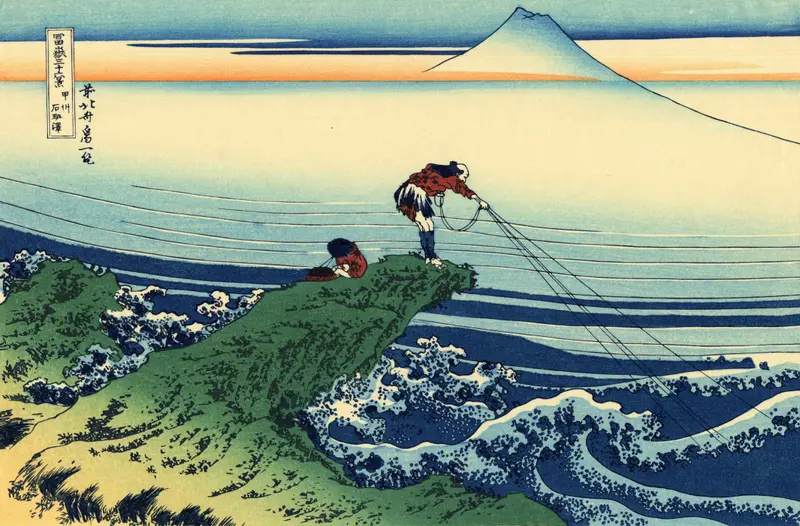
Kōshū kajikazawa 2
Katsushika Hokusai
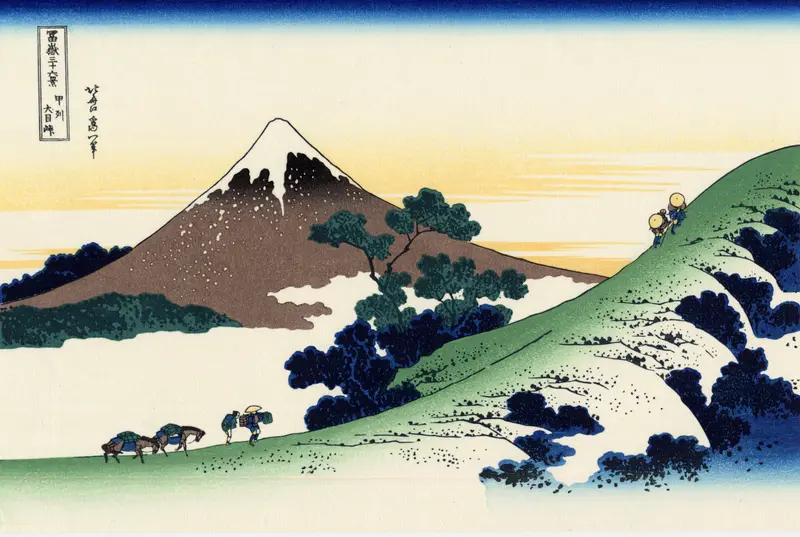
Inume Pass in Kai Province (Kôshû inume-tôge)
Katsushika Hokusai

Yoro Falls in Mino Province (Mino no Yoro no taki), from the series "A Tour of Waterfalls in Various Provinces (Shokoku taki meguri)"
Katsushika Hokusai
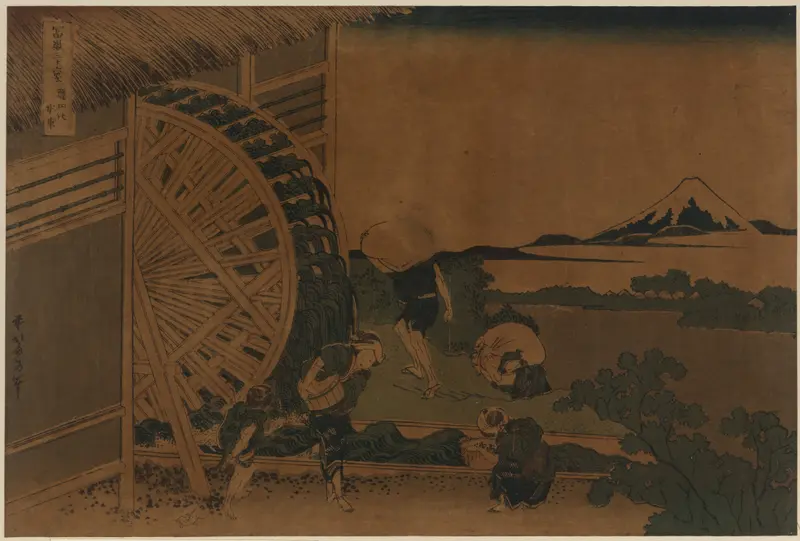
Onden no suisha
Katsushika Hokusai





