
Sea by Moonlight — History & Facts
A hush settles over the scene, where the moon’s pale glow slices through a heavy sky, casting a silver path across the water and drawing the eye to the silent choreography of ships at anchor. The drama here is not in a storm or a voyage, but in the patient pause between journeys—a quiet moment when the world holds its breath. The sails hang slack, their dark shapes looming against the luminous horizon, while the light pools and flickers on the gentle surface, suggesting both depth and stillness.
Every detail—the rigging, the faint silhouettes of sailors, the distant vessels barely hinted at—serves to heighten this sense of waiting, as if the night itself is a living presence. Painted around 1648, Sea by Moonlight belongs to the era when Dutch artists, like Aelbert Cuyp, transformed everyday maritime life into subjects worthy of contemplation and pride. In the bustling Dutch Republic, such images were prized by merchants and shipowners, reminders of both the nation’s prosperity and its intimate relationship with the sea. The painting’s low horizon and brooding palette are hallmarks of mid-seventeenth-century Dutch landscape, a period when artists experimented with light to evoke atmosphere and mood rather than explicit narrative.
Now in the collection of the Hermitage Museum, this work stands as a quiet testament to a world shaped by commerce, navigation, and the restless tides—inviting viewers to linger in the moon’s uncertain glow.
More Artworks by Aelbert Cuyp

The Maas at Dordrecht
Aelbert Cuyp
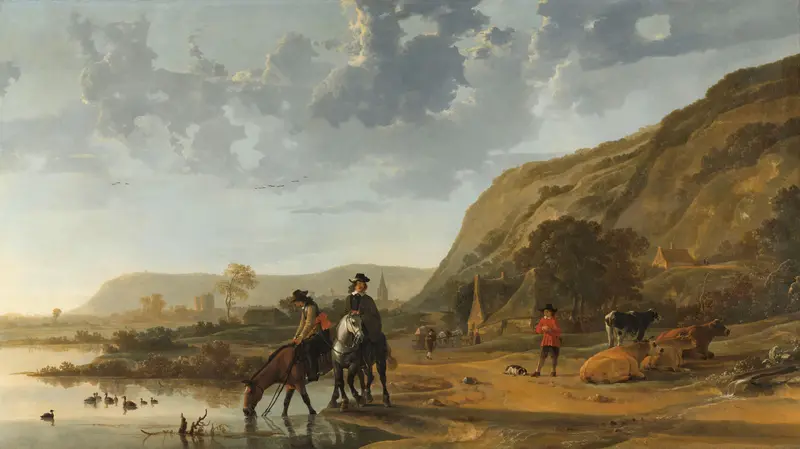
River Landscape with Riders
Aelbert Cuyp

The Maas at Dordrecht
Aelbert Cuyp
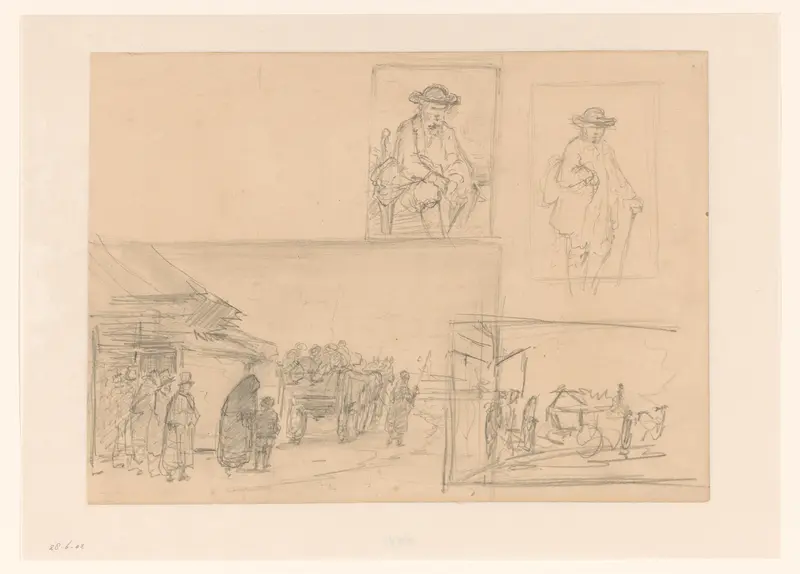
Gezicht op Dordrecht
Aelbert Cuyp
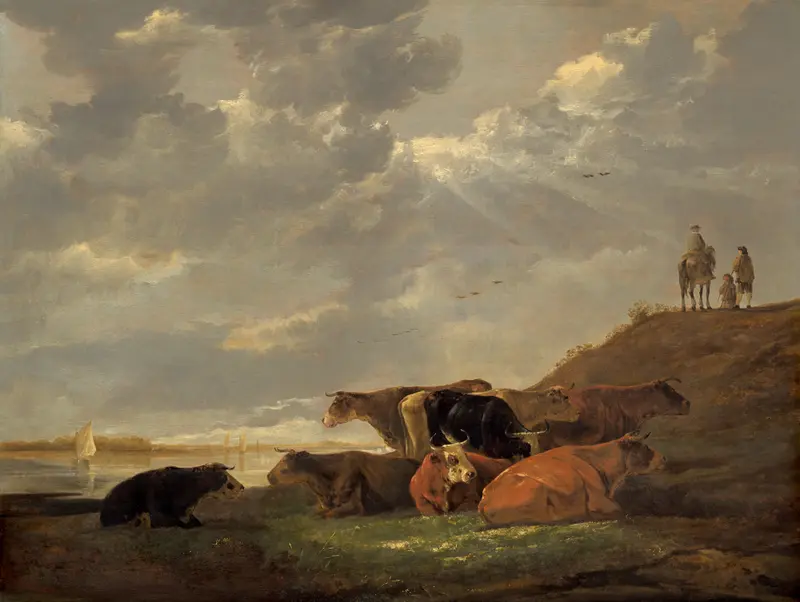
River Landscape with Cows
Aelbert Cuyp
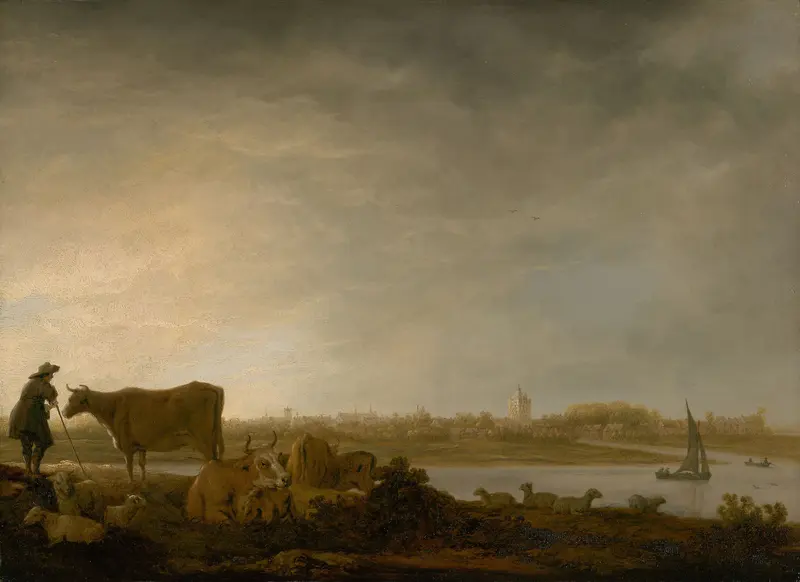
A View of Vianen with a Herdsman and Cattle by a River
Aelbert Cuyp
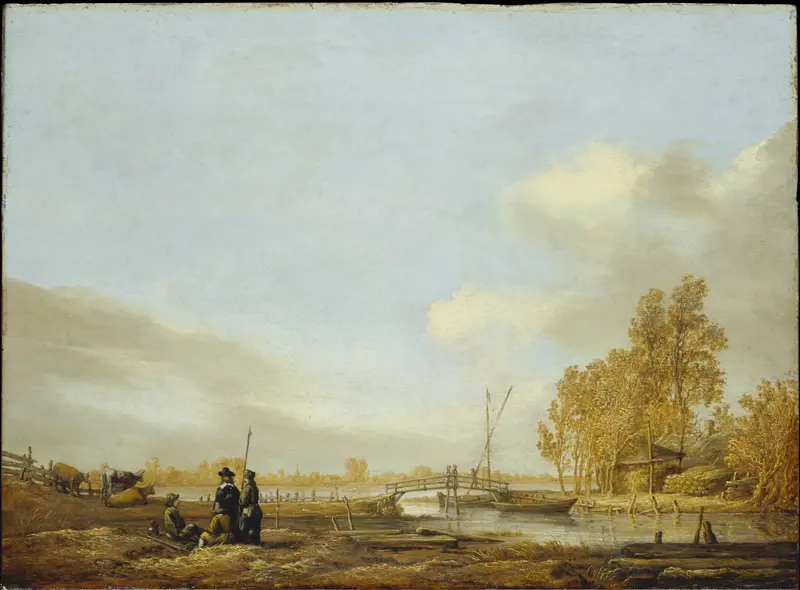
River Landscape with Footbridge
Aelbert Cuyp
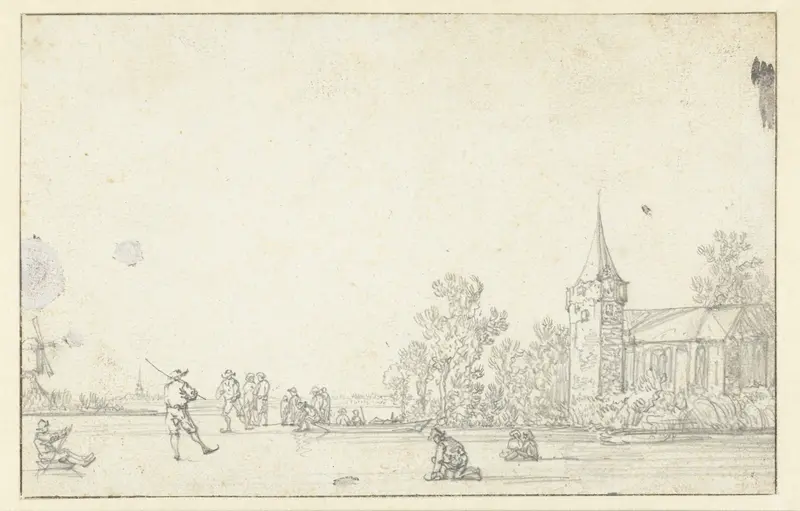
Bevroren rivier met schaatsers bij een kerk
Aelbert Cuyp

Cattle near a River
Aelbert Cuyp
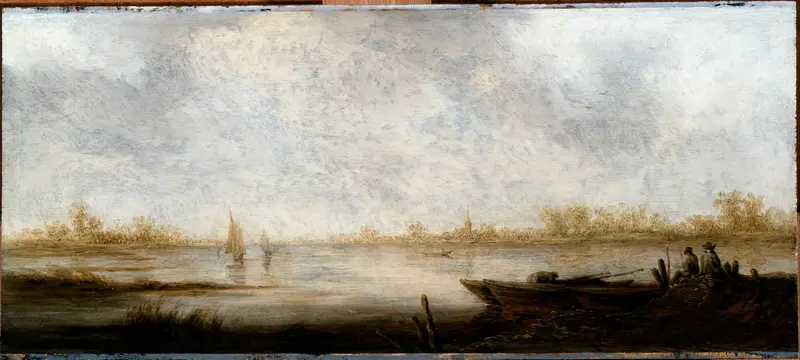
River Landscape
Aelbert Cuyp




