
Seated Figures, Study for La Grande Jatte — History & Facts
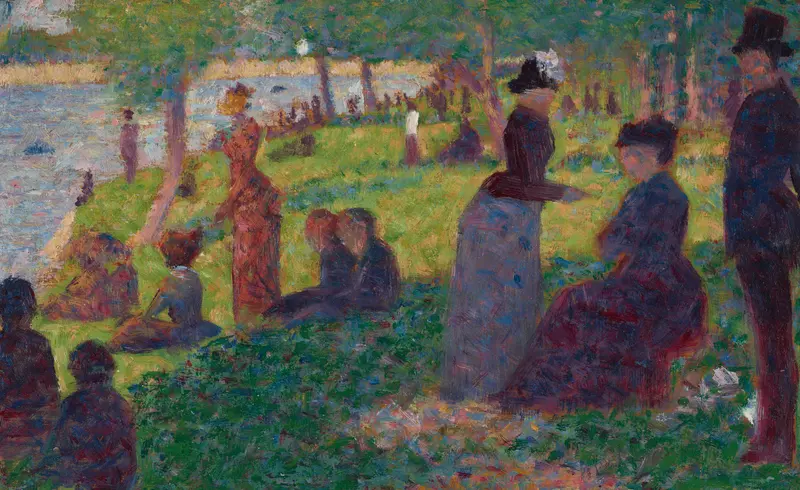
Few studies have shaped the course of modern painting as decisively as Seated Figures, Study for La Grande Jatte by Georges Seurat. This modest work, created in 1884, marks one of the earliest explorations of the technique that would become known as Pointillism. It stands as a preparatory step toward Seurat’s monumental A Sunday Afternoon on the Island of La Grande Jatte, a painting that would soon astonish the Parisian art world and help define the Neo-Impressionist movement.
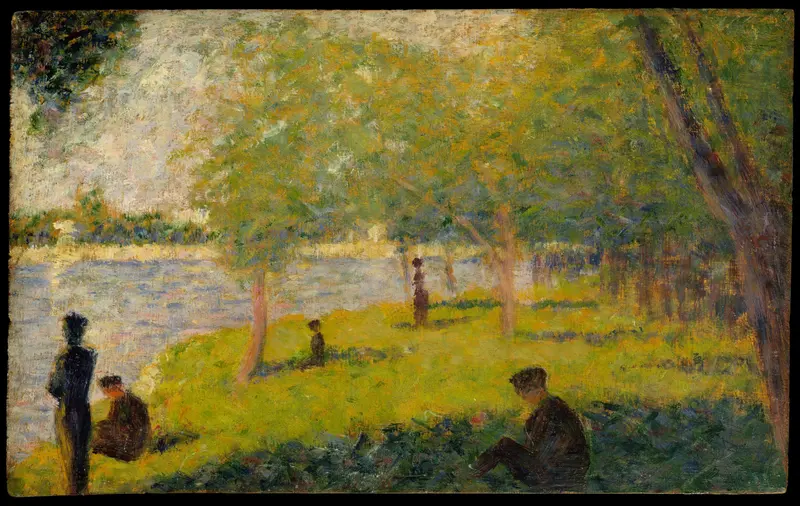
Scholars often return to this study to trace the first appearance of the precise, dot-based brushwork that would become Seurat’s signature. In this study, Seurat captures a quiet moment: figures resting along the riverbank, their postures relaxed yet composed. The artist chooses not a grand gesture, but the ordinary act of sitting—an everyday ritual elevated by his careful arrangement of bodies and space. The figures’ outlines are simplified, their forms almost statuesque, anticipating the stillness and order that dominate the final La Grande Jatte.
Light falls evenly, with color laid down in discrete touches, inviting the viewer’s eye to blend them at a distance. Unlike Monet’s vibrant, fleeting impressions of leisure, Seurat’s figures are anchored, their presence deliberate, hinting at the new scientific approach to color and vision that he so rigorously pursued. The physical history of Seated Figures, Study for La Grande Jatte is less documented than that of its famous descendant. As with many of Seurat’s studies, it was likely kept in his studio until after his early death in 1891, when his family and friends began to disperse his works.
Today, the study is prized not only for its connection to La Grande Jatte but also as a window into Seurat’s methodical process—each stroke a record of experimentation. It stands as a testament to a moment when the boundaries of painting were being redrawn, and when a young artist’s quiet observations would soon change the way the world saw itself.
More Artworks by Georges Seurat
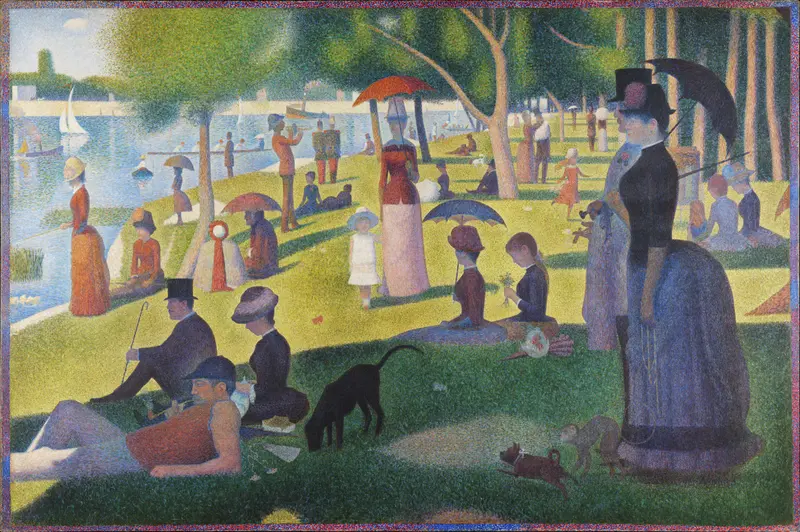
A Sunday Afternoon on the Island of La Grande Jatte
Georges Seurat
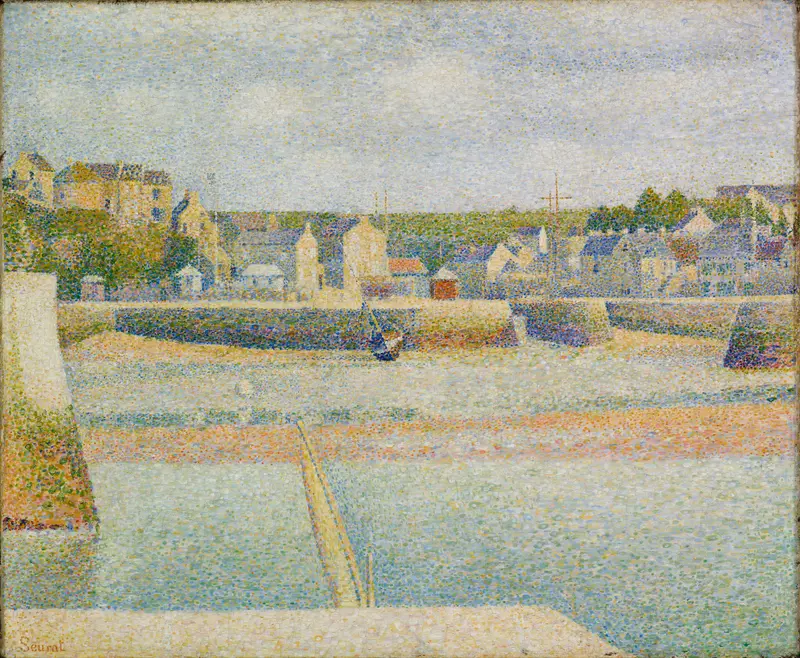
Port-en-Bessin, The Outer Harbor (Low Tide)
Georges Seurat
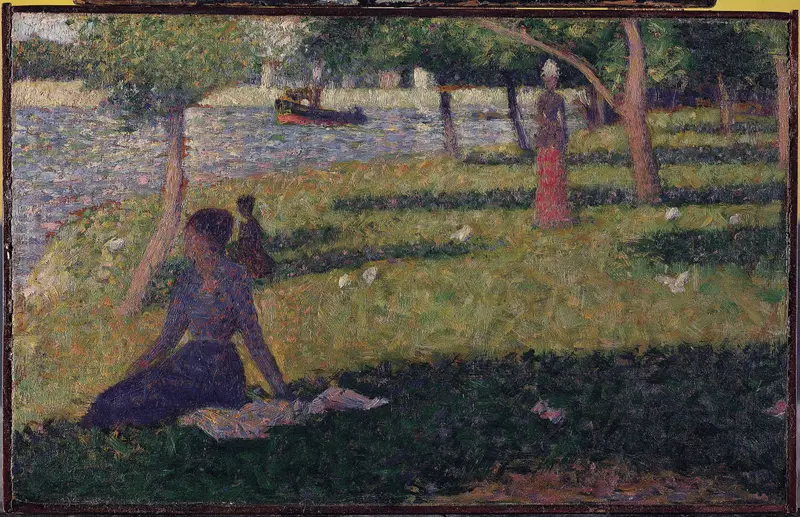
Étude pour ‘La Grande Jatte’ (Study for ‘La Grande Jatte’)
Georges Seurat
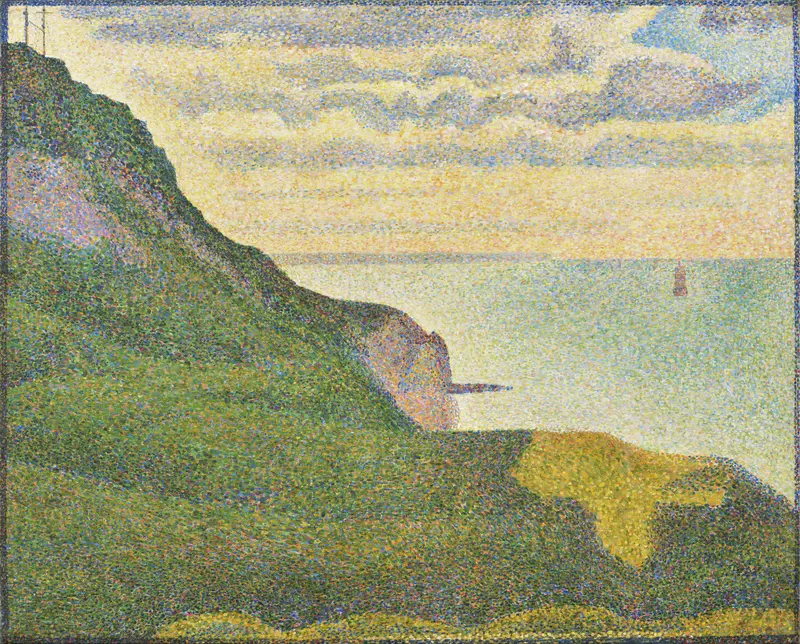
Seascape at Port-en-Bessin,Normandy
Georges Seurat
Oil Sketch for "A Sunday on La Grande Jatte — 1884"
Georges Seurat
View of the Seine
Georges Seurat
The Channel at Gravelines, Evening
Georges Seurat
Study for ‘A Sunday on La Grande Jatte’
Georges Seurat
Study for A Sunday on La Grande Jatte
Georges Seurat
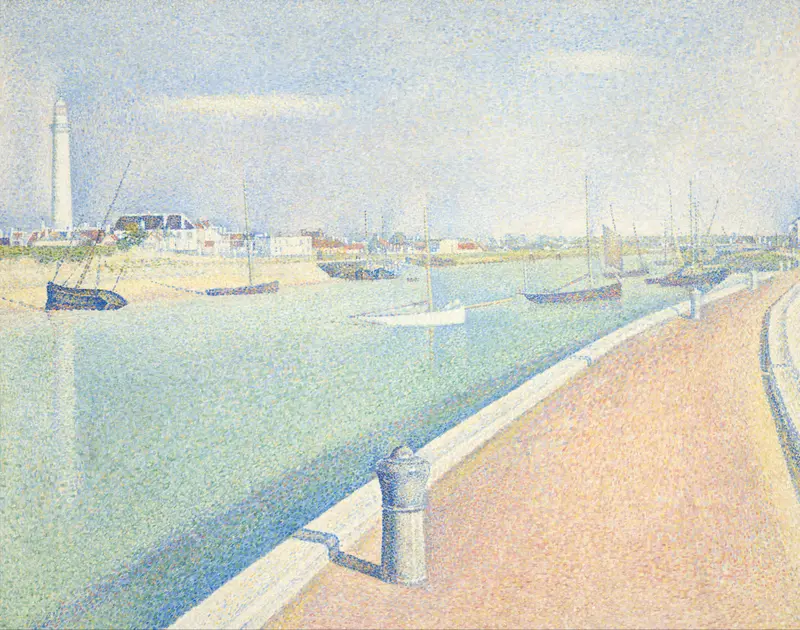
The Channel of Gravelines, Petit Fort Philippe
Georges Seurat



