
Seated Woman — History & Facts
Few works by Jules Schmalzigaug have sparked as much curiosity as Seated Woman, largely because both its creation date and medium remain undocumented, leaving scholars to puzzle over its place within the artist’s brief but restless career. The painting’s anonymity in these details has made it a touchstone for debates about Schmalzigaug’s stylistic evolution, as well as about the broader currents of early twentieth-century European modernism. Some have even speculated that the sitter may be a recurring muse in his oeuvre, though no firm identification has yet been made.
This air of mystery continues to draw viewers into the painting’s quiet, enigmatic world. The scene captures a woman in repose, her body angled slightly away from the viewer, yet her gaze seems to hover in thought. The brushwork is lively, suggesting movement in the folds of her dress and the subtle play of light across her figure. Unlike the sharply fractured forms of Italian Futurism, with which Schmalzigaug is often associated, here the composition feels more contemplative, the palette restrained and the lines softened.
The woman’s hands, resting gently in her lap, evoke a sense of introspection rather than action. Compared to Amedeo Modigliani’s portraits of seated women, Seated Woman is less about stylization and more about the quiet tension between presence and absence. The painting’s provenance is uncertain; no records of a commission or early exhibition have yet come to light, and its journey through collections remains largely undocumented. What is known is that Jules Schmalzigaug spent much of his career moving between Belgium, Italy, and France, absorbing influences from the avant-garde circles of each.
Seated Woman stands apart from his more kinetic works, hinting at a private moment or perhaps an experimental phase. Today, the painting is preserved in an online gallery, where its unresolved questions continue to invite new interpretations and research. Its quiet ambiguity makes it a rare and intriguing entry in the catalogue of Schmalzigaug’s work.
More Artworks by Jules Schmalzigaug

A View of Scheveningen
Jules Schmalzigaug
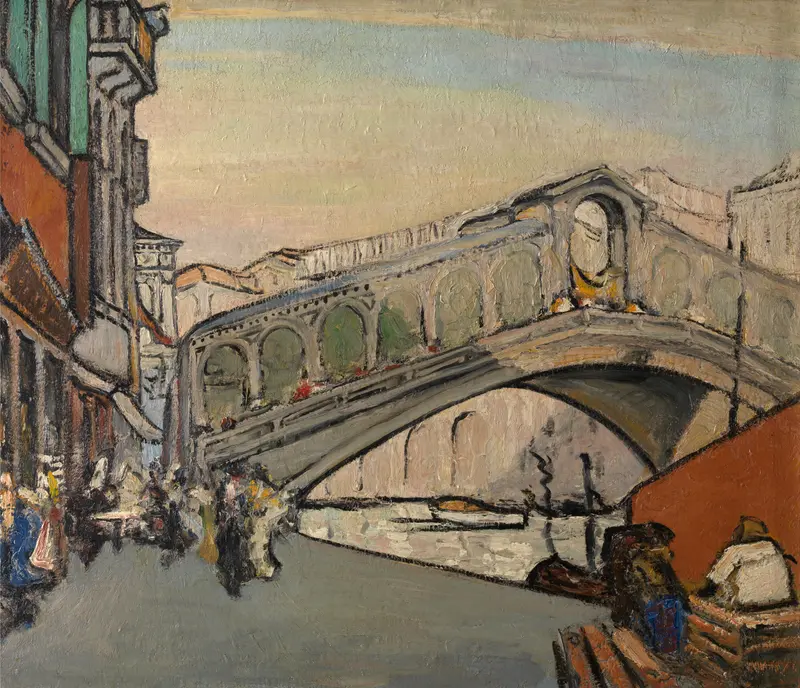
The Rialto Bridge in Venice
Jules Schmalzigaug

Abstract Bouquet
Jules Schmalzigaug
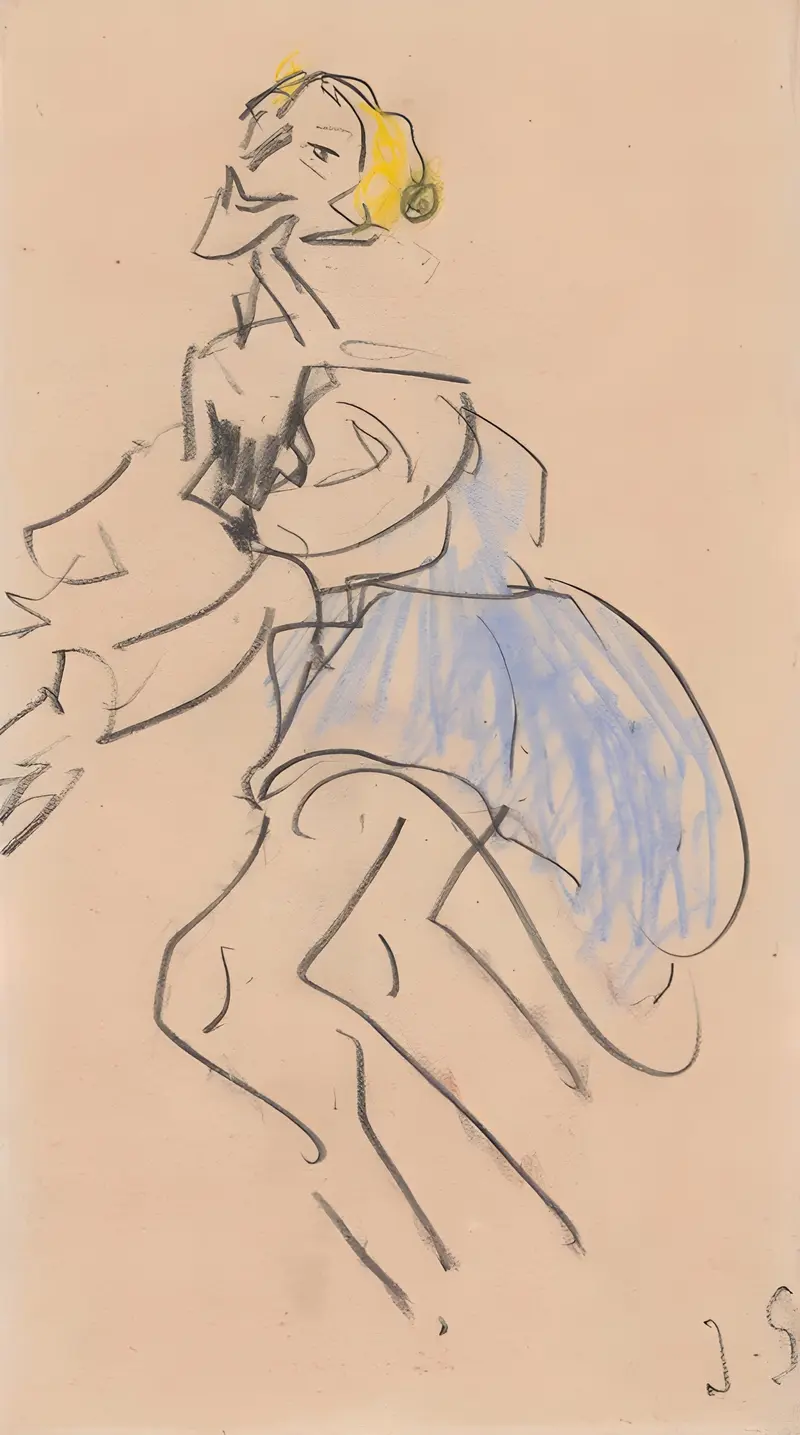
Dancer
Jules Schmalzigaug
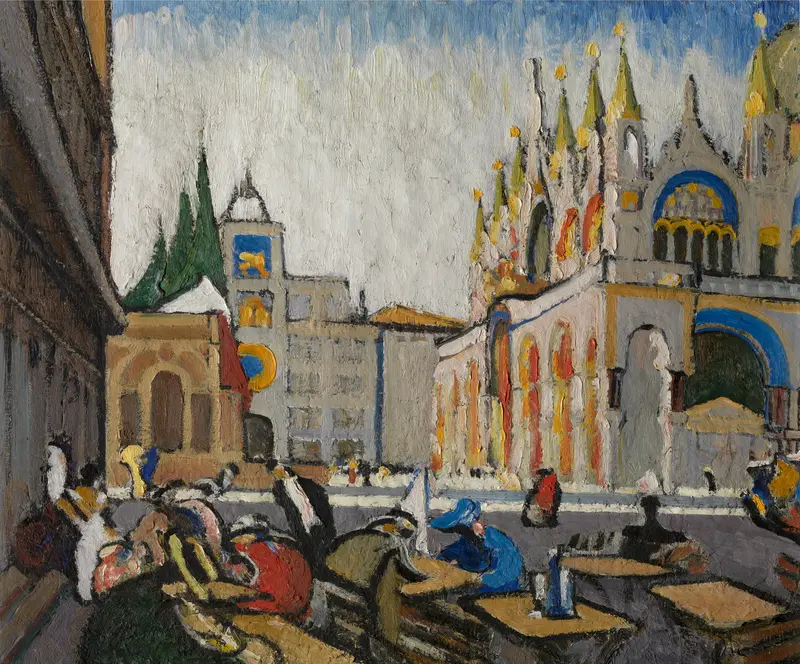
San Marco from the Piazetta
Jules Schmalzigaug
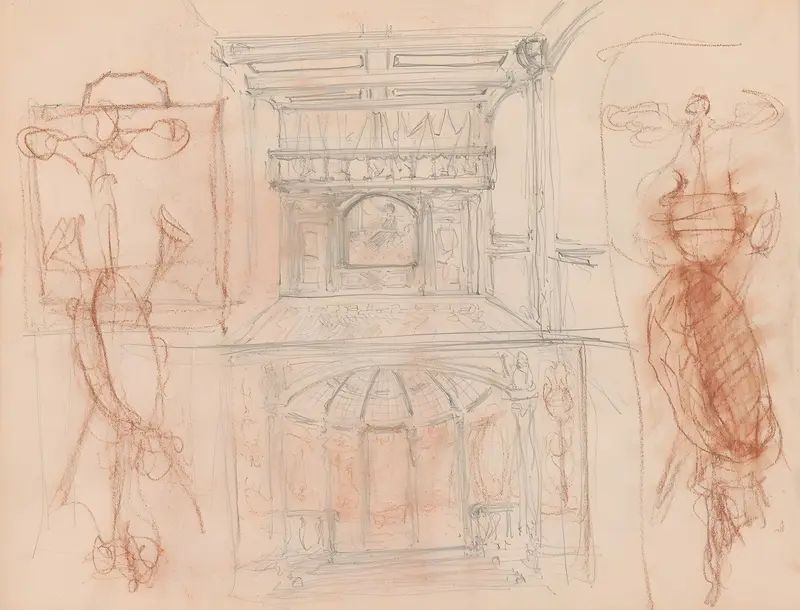
Architectural Elements
Jules Schmalzigaug
Blue, Red and Yellow Figures
Jules Schmalzigaug
Chiesa dei Gesuati in Venice
Jules Schmalzigaug
Café-chantant
Jules Schmalzigaug
Backyard
Jules Schmalzigaug





