
Self-portrait — History & Facts
In Self-portrait, Vincent van Gogh uses bold colors and expressive brushstrokes. The background is a swirling mix of blues and greens, contrasting with his bright yellow hair. His face is depicted with intense emotion, showcasing his unique style.
The painting captures his gaze, inviting viewers into his inner world. This artwork is an oil on canvas, measuring approximately 40.5 x 32.5 cm. Van Gogh's technique is evident in the thick application of paint, known as impasto, which adds texture and depth. The vibrant colors are characteristic of his Post-Impressionist style.
The work reflects his emotional state during a tumultuous period in his life. Vincent van Gogh created this self-portrait in 1889 while he was in the asylum at Saint-Rémy-de-Provence. This period was marked by intense creativity and personal struggle. Interestingly, this self-portrait is one of many he painted, reflecting his exploration of identity.
It serves as a window into his psyche and artistic evolution.
More Artworks by Vincent van Gogh

The Starry Night
Vincent van Gogh

Almond Blossom
Vincent van Gogh
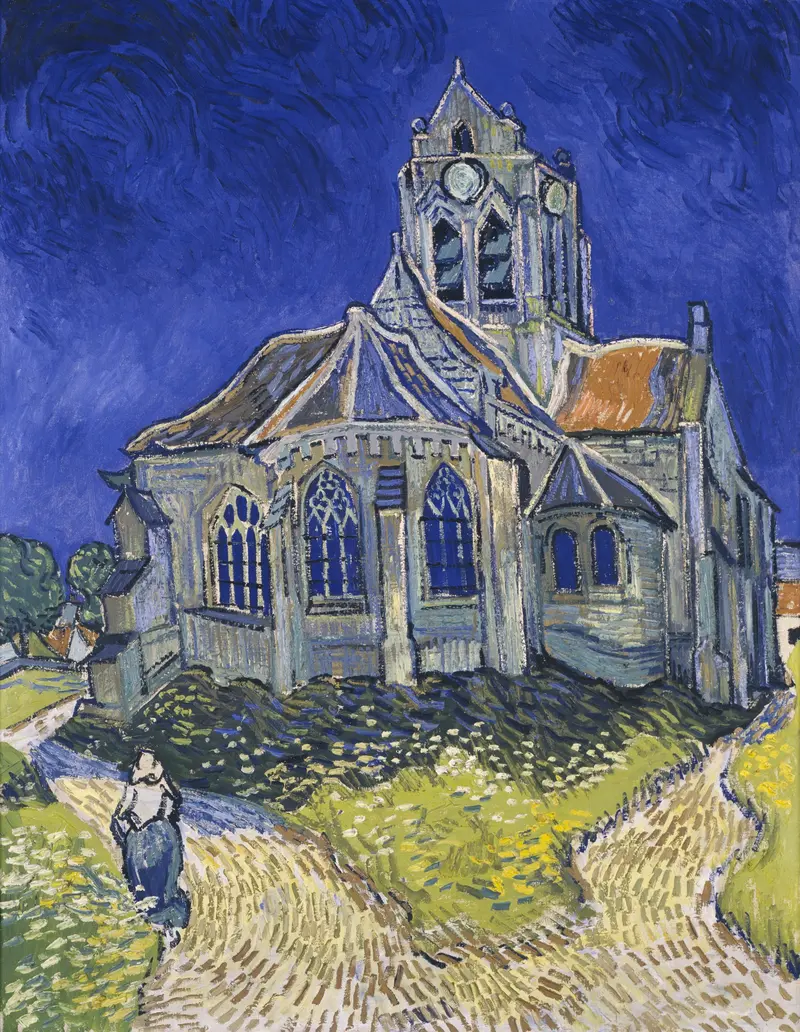
The Church at Auvers
Vincent van Gogh

Van Gogh's Chair
Vincent van Gogh

Sunflowers
Vincent van Gogh

Bedroom in Arles
Vincent van Gogh

The Night Café
Vincent van Gogh

A Wheatfield, with Cypresses
Vincent van Gogh

Café Terrace at Night
Vincent van Gogh
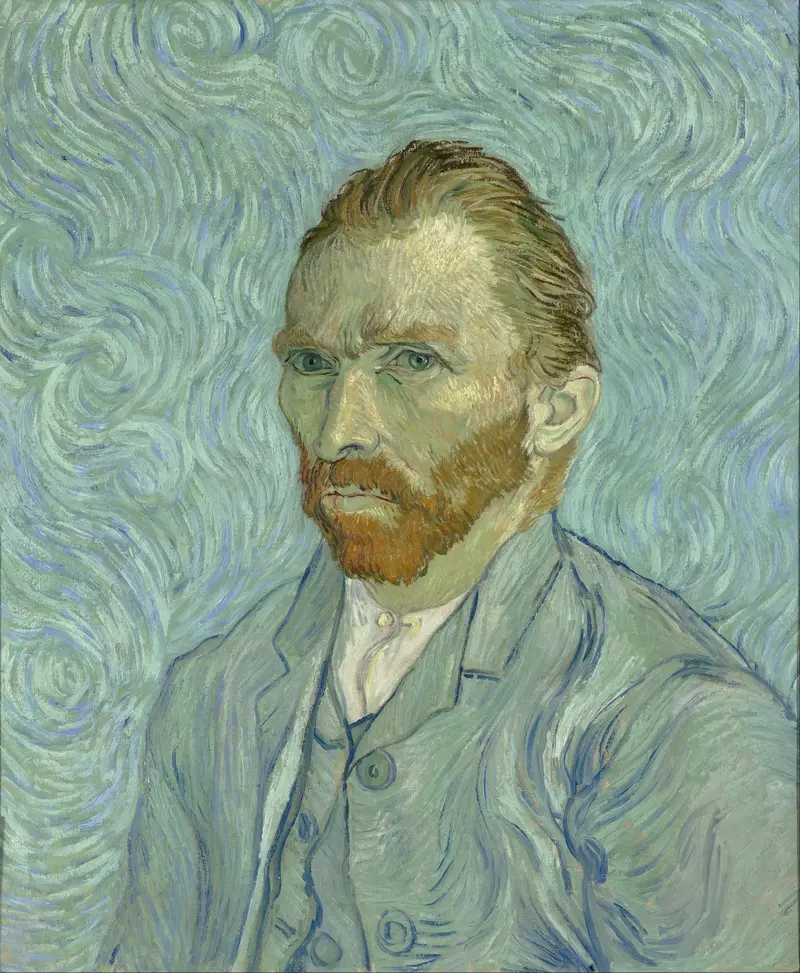
Self-Portrait (1889)
Vincent van Gogh





