
Shepherdess and Flock in front of Antique Ruins — History & Facts
Could a single brushstroke hold eternity? In Shepherdess and Flock in front of Antique Ruins, Johann Heinrich Roos captures a fleeting moment, yet paradoxically, it resonates with echoes of history and the violence of time itself. The contrast between the pastoral calm and the remnants of ancient structures invites contemplation on mortality and permanence. Look to the right at the shepherdess, her figure bathed in soft, golden light that radiates warmth against the cooler tones of the crumbling ruins. The flock is gathered close, their woolly forms providing a tactile contrast to the smoothness of the sunlit skin of their caretaker.
Notice how the delicate strokes create a sense of movement in the sheep's wool, while the ruins loom in the background, depicted with firmer, more deliberate lines that echo their enduring presence amid decay. The color palette, rich in greens and earthy browns, evokes a serene landscape yet hints at the underlying tension between life and the passage of time. The juxtaposition of the shepherdess with the antique structures reveals a tension between the innocence of rural life and the violent history that once unfolded within those very stones. The harmony of nature is beautifully at odds with the remnants of civilizations long gone, suggesting that beauty and brutality coexist in the fabric of existence.
Each sheep, each blade of grass, seems to whisper stories of resilience against the backdrop of inevitable decline. In 1667, Roos painted this work during a time of transformation in the art world, stepping away from the confines of strict realism as he embraced a more emotive, romantic style. Living in Germany, he was influenced by the Baroque emphasis on dramatic contrasts and rich textures, reflecting a society grappling with the remnants of its past while yearning for a peaceful connection to the natural world. This painting stands as a testament to Roos's ability to convey complex emotions through the simplicity of a pastoral scene.
More Artworks by Johann Heinrich Roos
Browse all →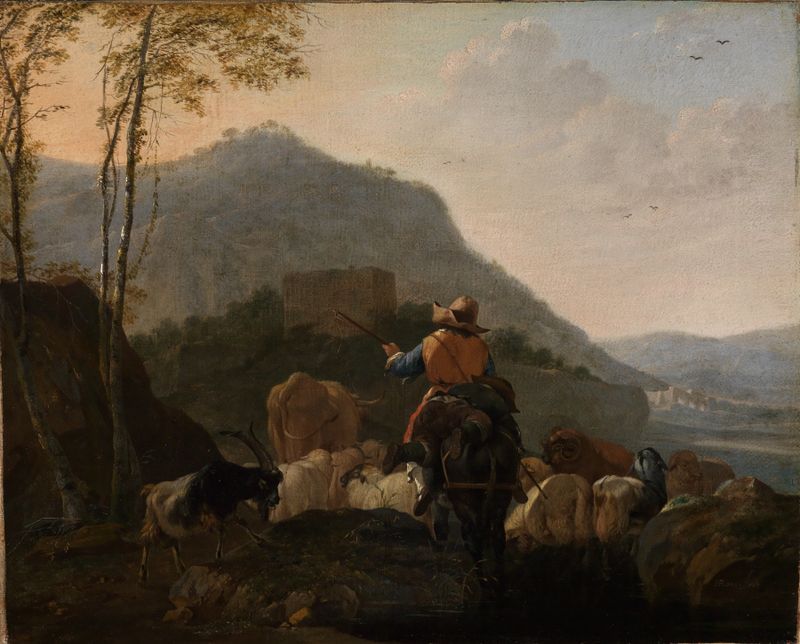
Ausziehende Hirten mit ihrer Herde in südlicher Berglandschaft
Johann Heinrich Roos
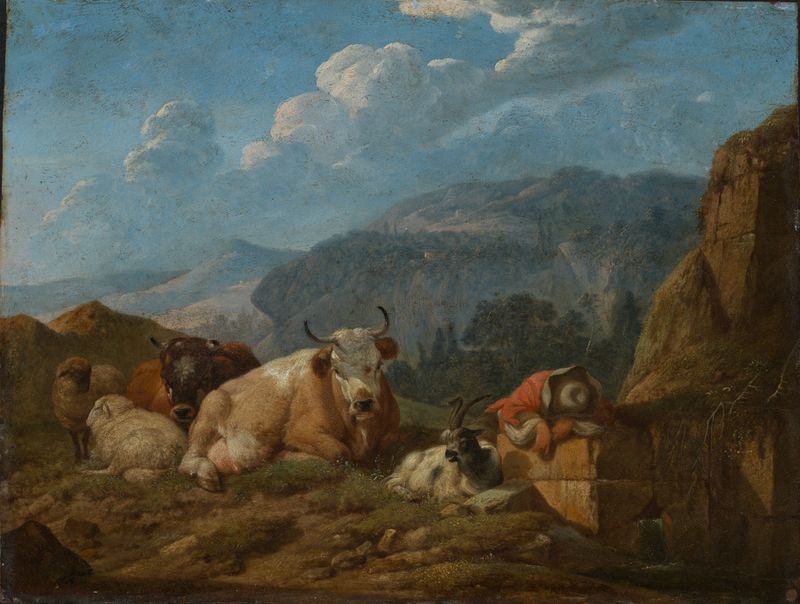
Italienische Berglandschaft
Johann Heinrich Roos
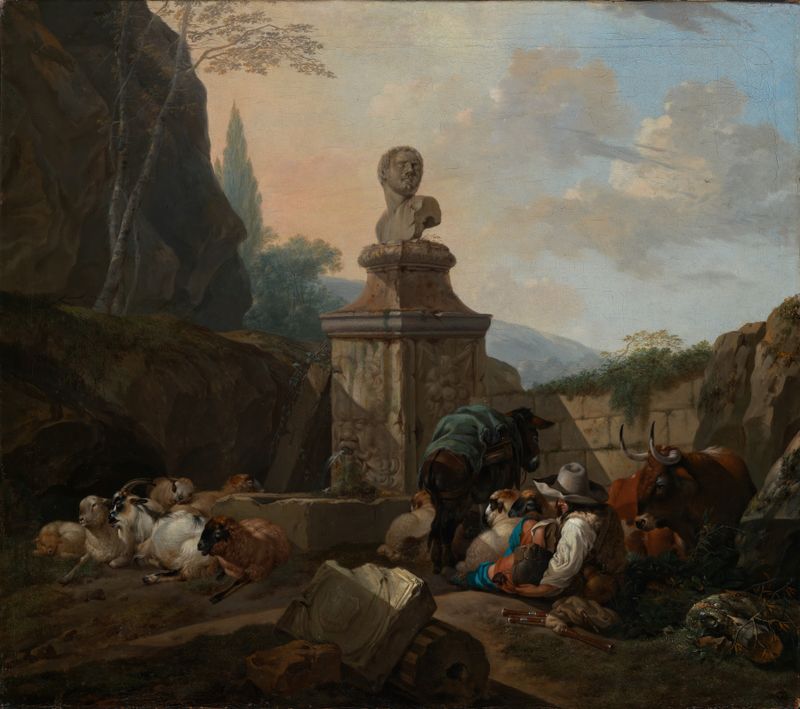
Ruhender Hirt und Herde an römischem Brunnen
Johann Heinrich Roos
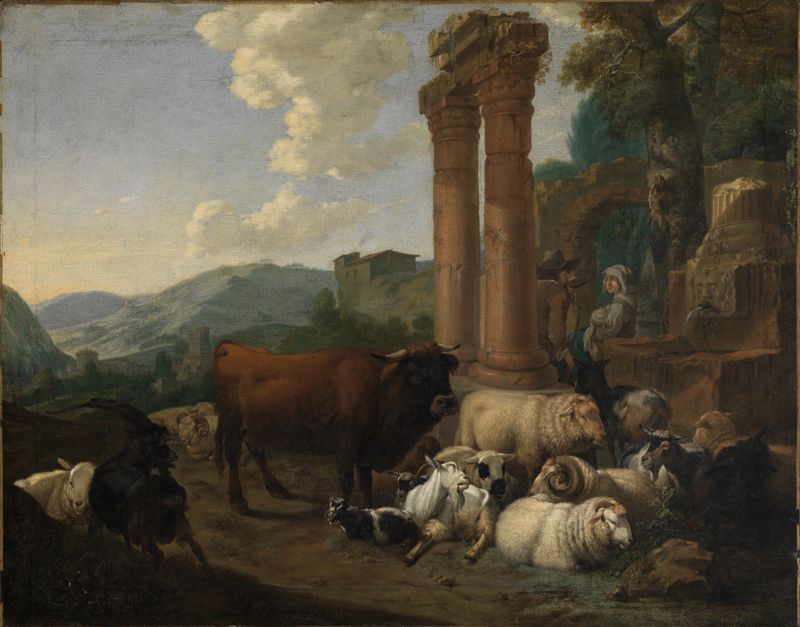
Hirtenszene in römischer Ruinenlandschaft
Johann Heinrich Roos
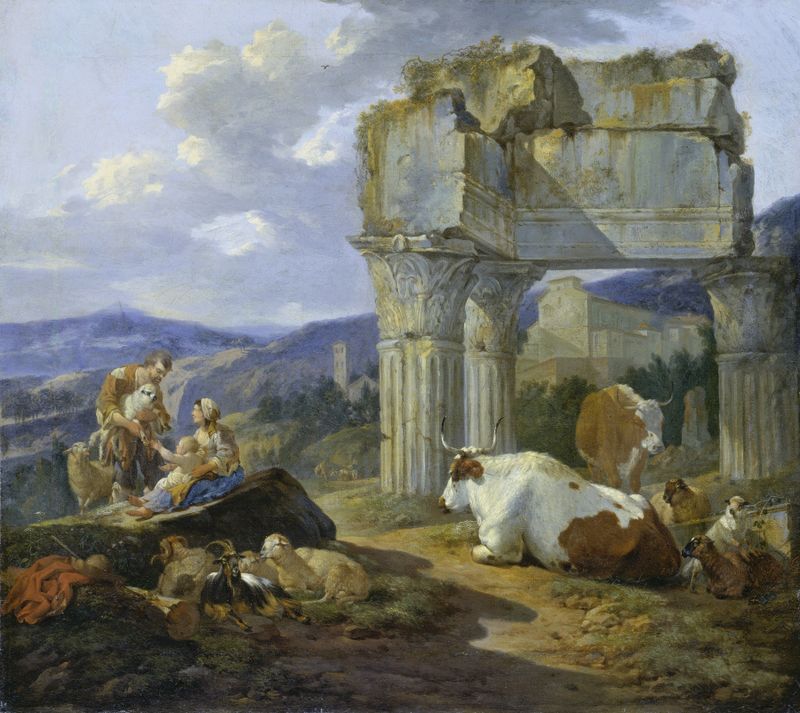
Shepherd’s Family at the Ruins of the Temple of Vespasian
Johann Heinrich Roos
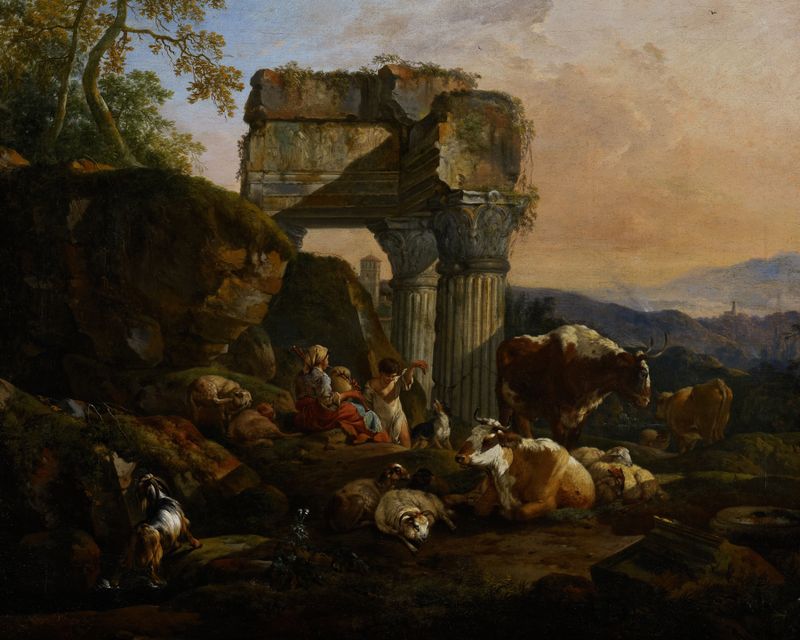
Roman Landscape with Cattle and Shepherds
Johann Heinrich Roos
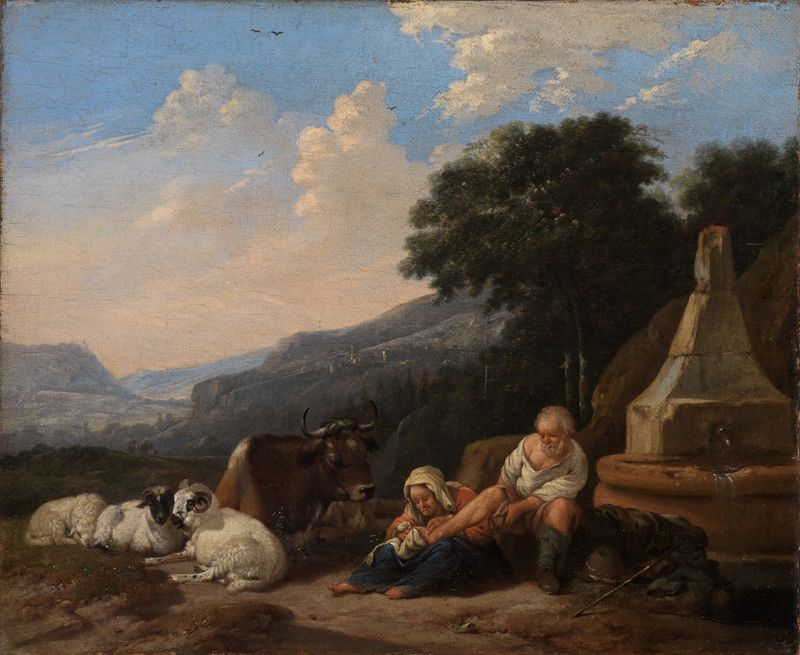
Berglandschaft mit Hirten am Brunnen
Johann Heinrich Roos
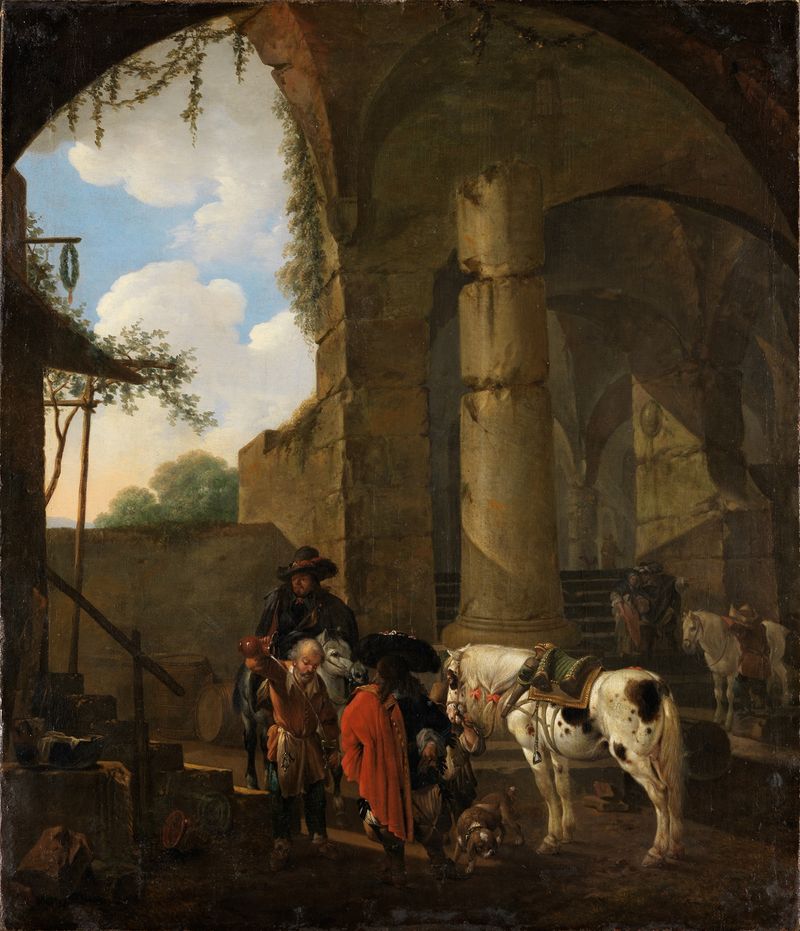
Osteria in römischer Ruine
Johann Heinrich Roos
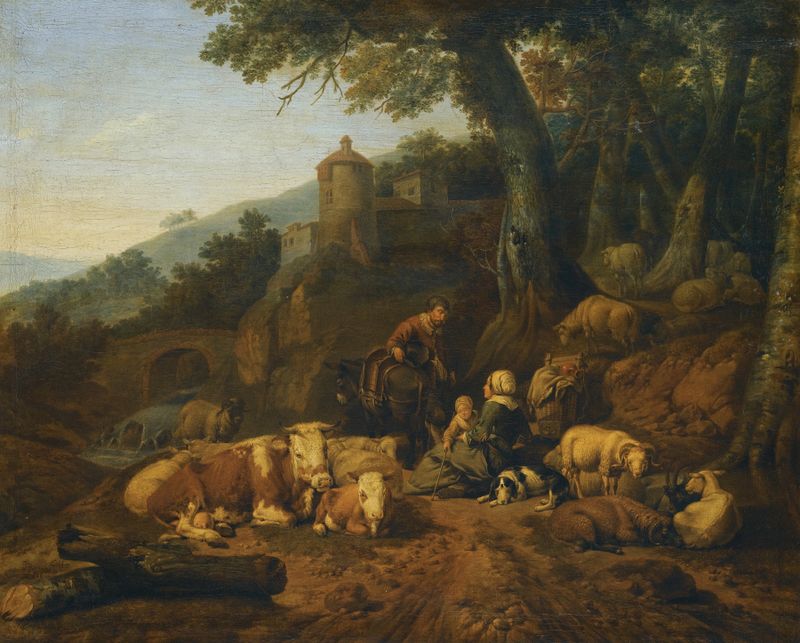
A Landscape With Drovers And Their Flock At Rest
Johann Heinrich Roos
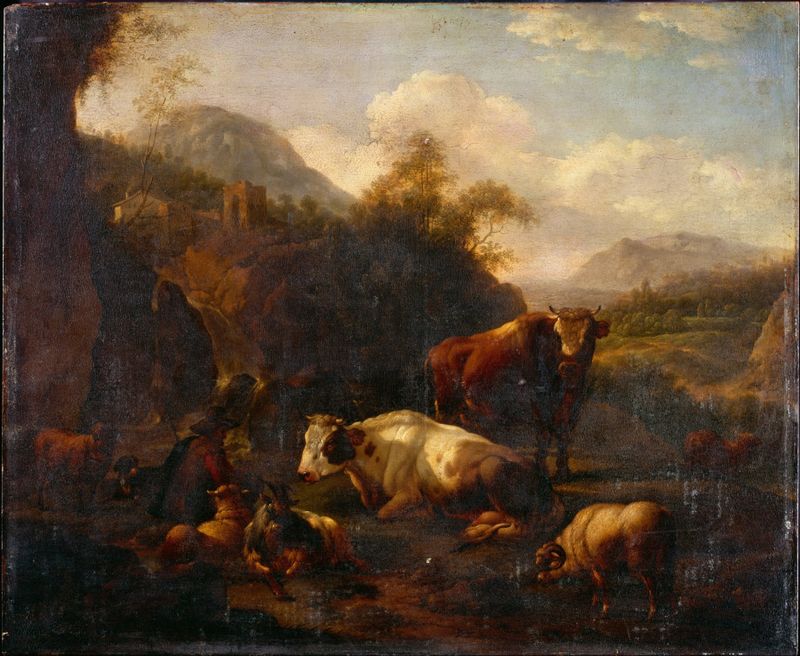
Landscape
Johann Heinrich Roos





