
Shepherds in a Landscape — History & Facts
What first draws the eye in Shepherds in a Landscape is the calm, almost conspiratorial glance of the young woman in blue, her hand pressed gently to her chest as if caught mid-conversation. Light pools around her face and dress, setting her apart from the muted browns and ochres of the land and animals that surround her. The shepherd, half-turned and absorbed in playing his flute, creates a quiet intimacy—his music, perhaps, is meant for her alone.
The animals, too, seem to participate in this moment: a dog watches attentively, while a cow leans in from the right, its head almost comically close to the viewer, breaking the invisible barrier between painting and audience. The sky, heavy with clouds but bright at the horizon, leads the gaze outward, suggesting a world both vast and quietly self-contained. Painted in the Dutch Golden Age, this kind of pastoral scene was more than a simple record of rural life. Artists like Aelbert Cuyp found eager patrons among the prosperous urban elite, who hungered for visions of peace and abundance far from the bustle of city trade.
Such works often blended observation with idealization: the livestock are healthy, the land fertile, the people content. The painting, documented here as photographed in 2020 and held in a private collection, stands as a testament to a time when the countryside was imagined as a place of harmony and gentle pleasures. Look again at the woman’s expression—there is a knowingness there, as if she is aware of being watched, inviting us to linger a little longer in her world.
More Artworks by Aelbert Cuyp

The Maas at Dordrecht
Aelbert Cuyp
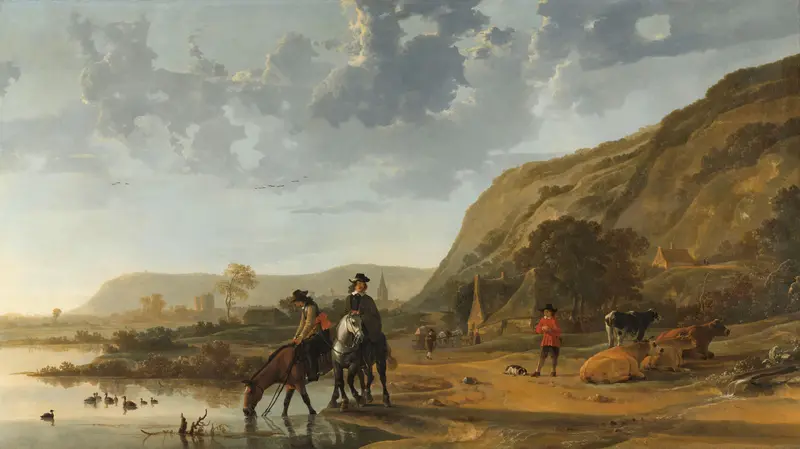
River Landscape with Riders
Aelbert Cuyp

The Maas at Dordrecht
Aelbert Cuyp
Gezicht op Dordrecht
Aelbert Cuyp
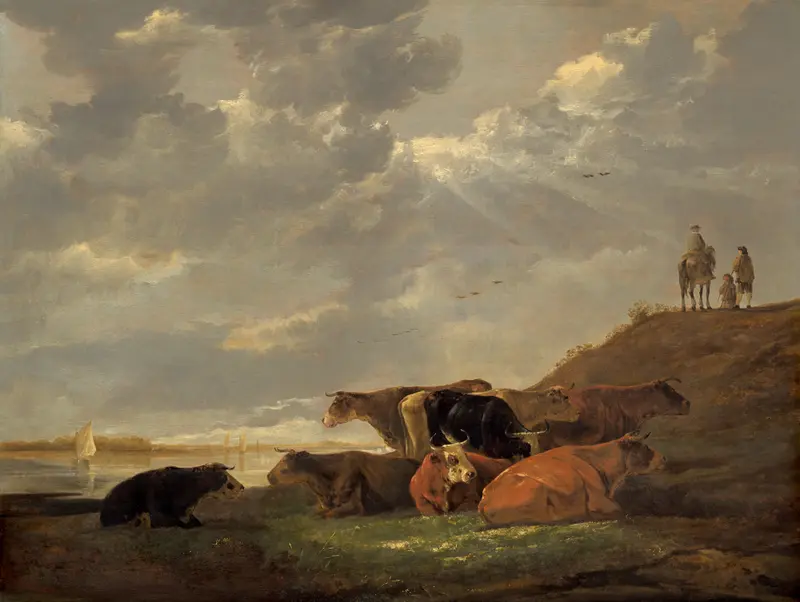
River Landscape with Cows
Aelbert Cuyp
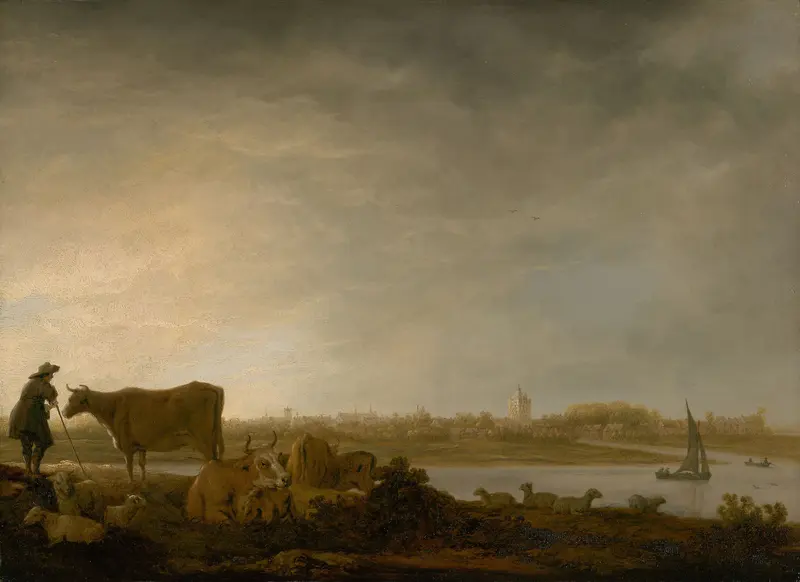
A View of Vianen with a Herdsman and Cattle by a River
Aelbert Cuyp
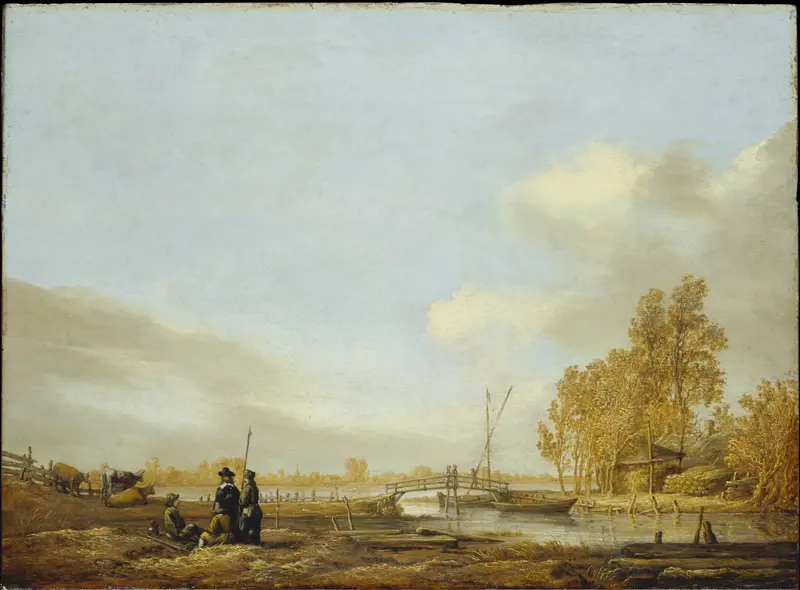
River Landscape with Footbridge
Aelbert Cuyp
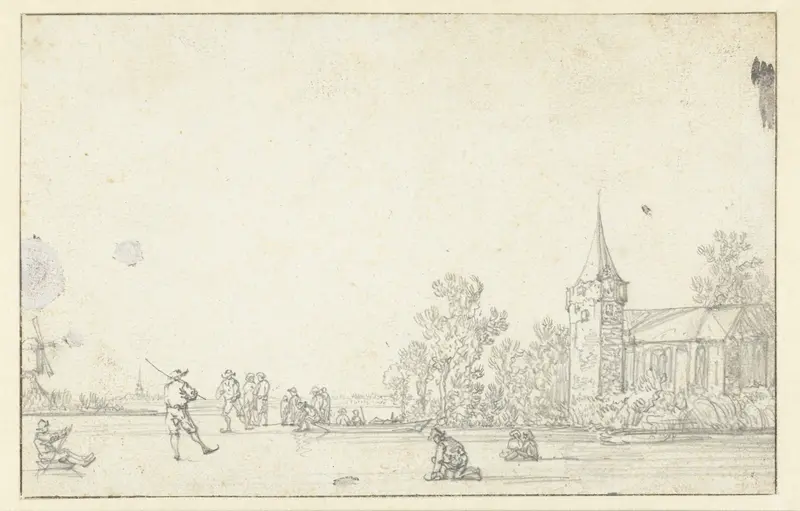
Bevroren rivier met schaatsers bij een kerk
Aelbert Cuyp

Cattle near a River
Aelbert Cuyp
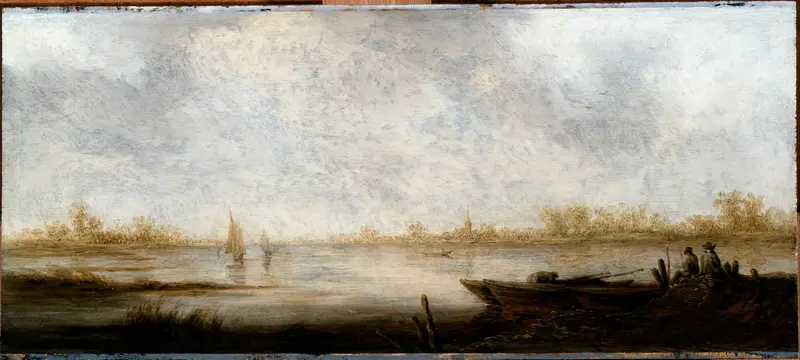
River Landscape
Aelbert Cuyp
More Landscape Art

The Starry Night
Vincent van Gogh

View of Delft
Johannes Vermeer

Water Lilies
Claude Monet

The Grand Canal, Venice, looking north-west from the Ca' Corner to the Ca' Contarini degli Scrigni, with the campanile of Santa Maria della Carità
Canaletto

Windsor Castle
Canaletto

The Grand Canal looking North-East from the Palazzo Dolfin-Manin to the Rialto Bridge
Canaletto