
Sir Galahad - The Quest for the Holy Grail — History & Facts
The first thing that draws the eye in Sir Galahad – The Quest for the Holy Grail by Arthur Hughes is the shimmering apparition that hovers above the brooding darkness—a trio of radiant angels, their forms woven from light, gliding silently across the night sky. Below, the young knight Galahad leans forward on his pale horse, his posture tense with awe and longing, his lance a staff of resolve. The landscape is rugged, with jagged rocks guiding the viewer’s gaze from the earthbound struggle to the celestial vision.
Hughes uses a palette of deep greens and browns to anchor Galahad in the mortal world, while the angels blaze in gold and white, their ethereal glow suggesting a realm just out of reach. The contrast between the knight’s heavy armor and the angels’ delicate, translucent robes tells us everything about the nature of his quest: a journey from darkness toward a light that is both a promise and a mystery. Painted in the mid-nineteenth century, this work belongs to the world of the Pre-Raphaelite movement, where artists revived medieval legend and spiritual yearning for a Victorian audience hungry for meaning. The story of the Holy Grail, especially as retold by Tennyson, was a favorite subject for painters seeking to unite poetry and vision.
Here, Hughes bases his bridge on the real Ashness Bridge near Derwentwater, grounding myth in the recognizable English landscape. The painting is almost certainly a study for a larger version exhibited at the Royal Academy in 1870 and once owned by the noted collector George Rae, but the date of this study remains unknown—history has kept few traces of its early journey. The painting’s uncertain origins only heighten its sense of suspended time, inviting the viewer to linger in the moment where the earthly and the miraculous nearly touch.
More Artworks by Arthur Hughes

Cecily Ursula, aged three years
Arthur Hughes

April Love
Arthur Hughes
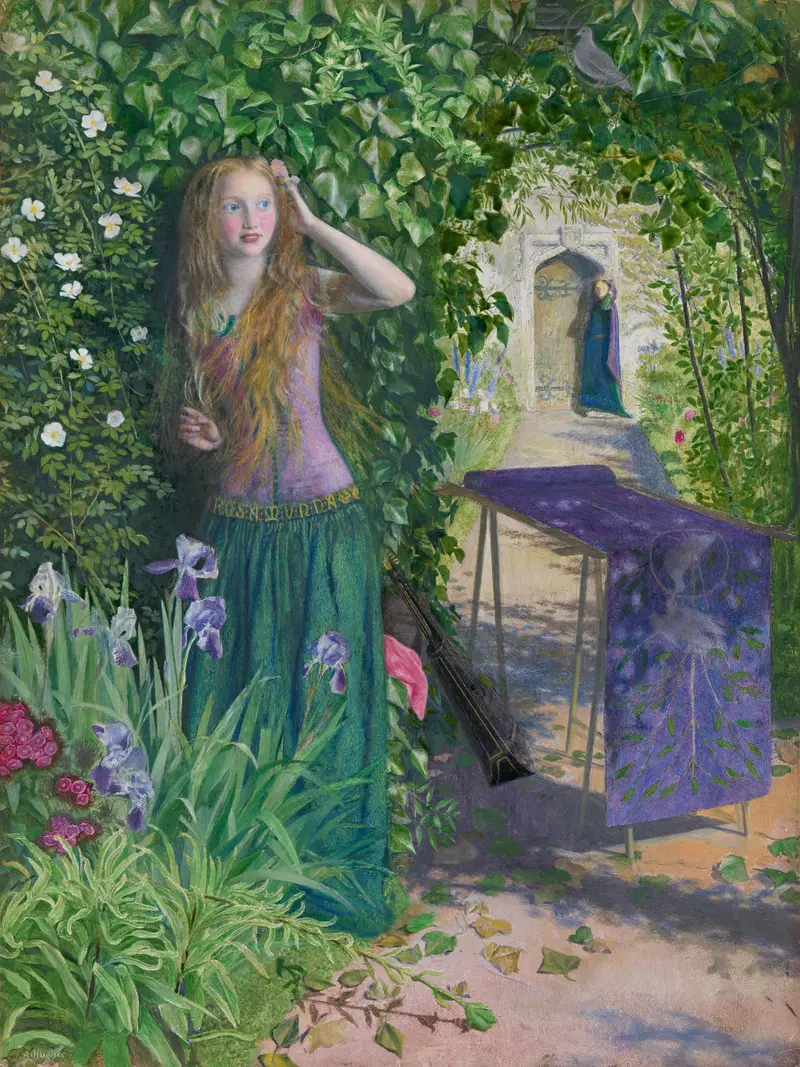
Fair Rosamund
Arthur Hughes
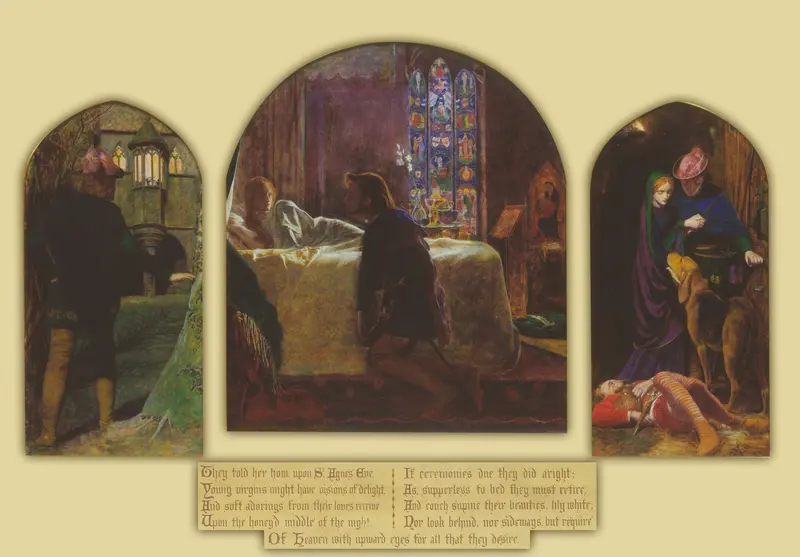
The Eve of St Agnes
Arthur Hughes
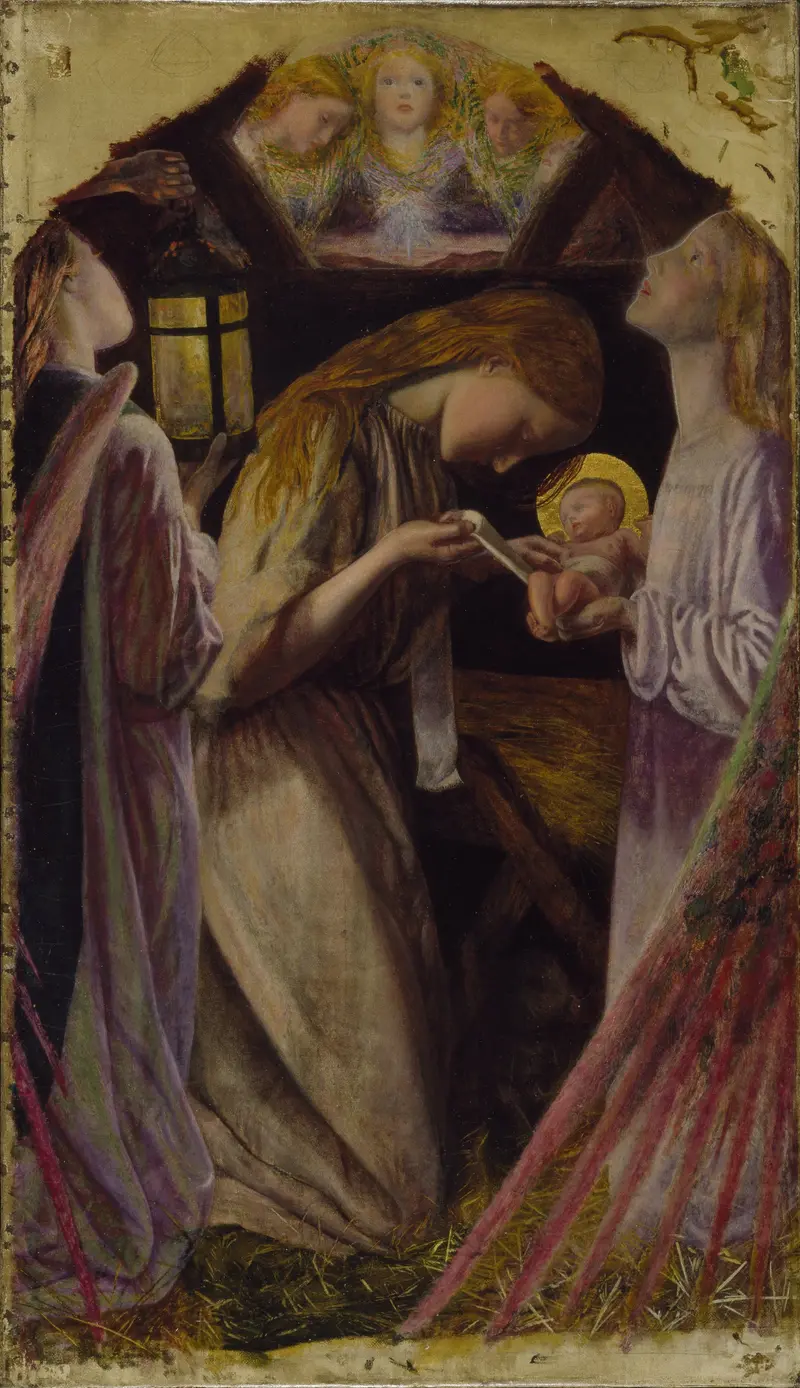
The Nativity
Arthur Hughes
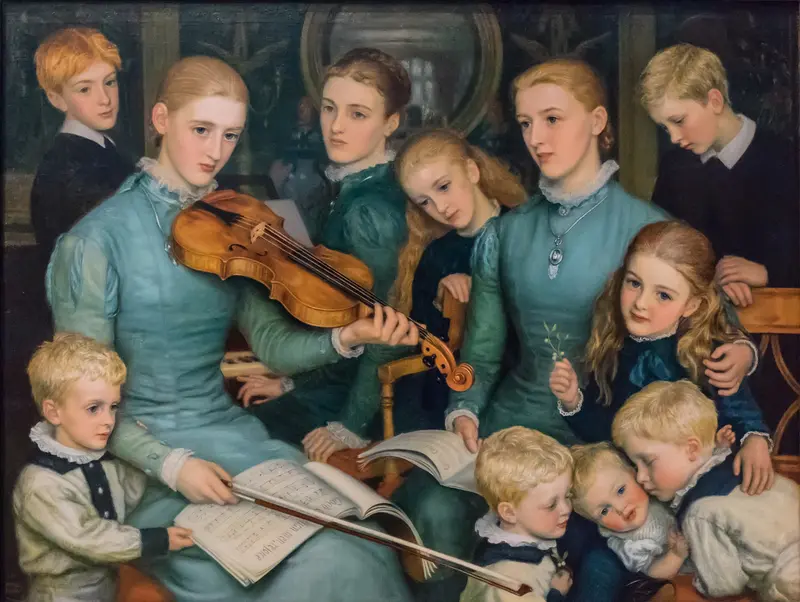
A Christmas Carol at Bracken Dene
Arthur Hughes
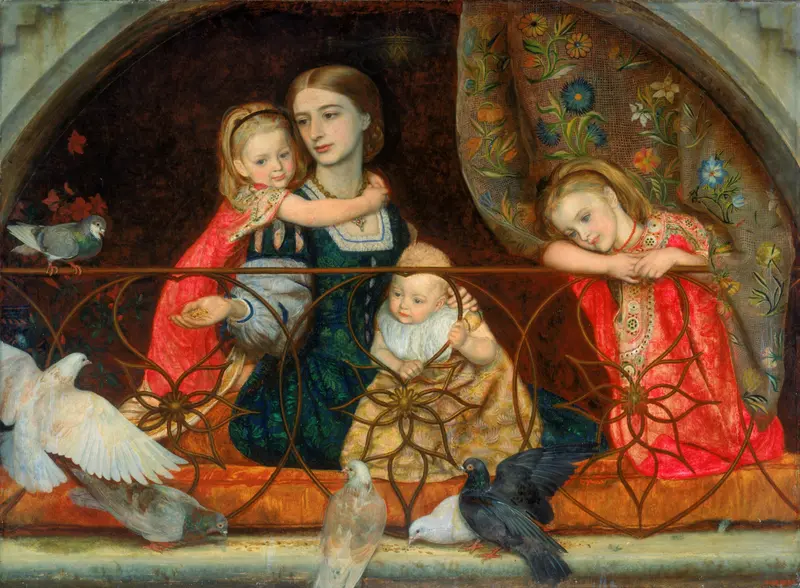
Mrs Leathart and Her Three Children
Arthur Hughes
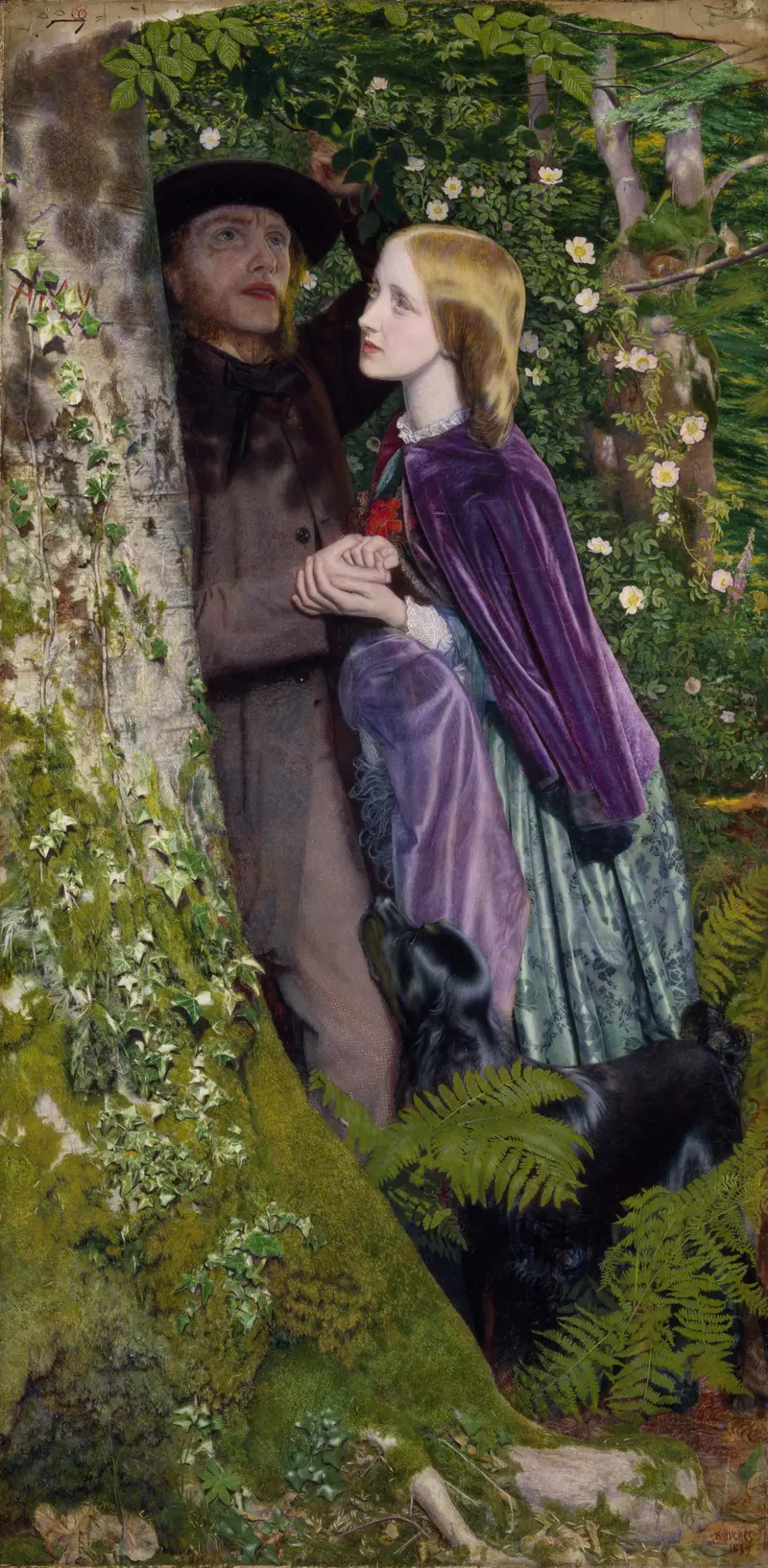
The Long Engagement
Arthur Hughes
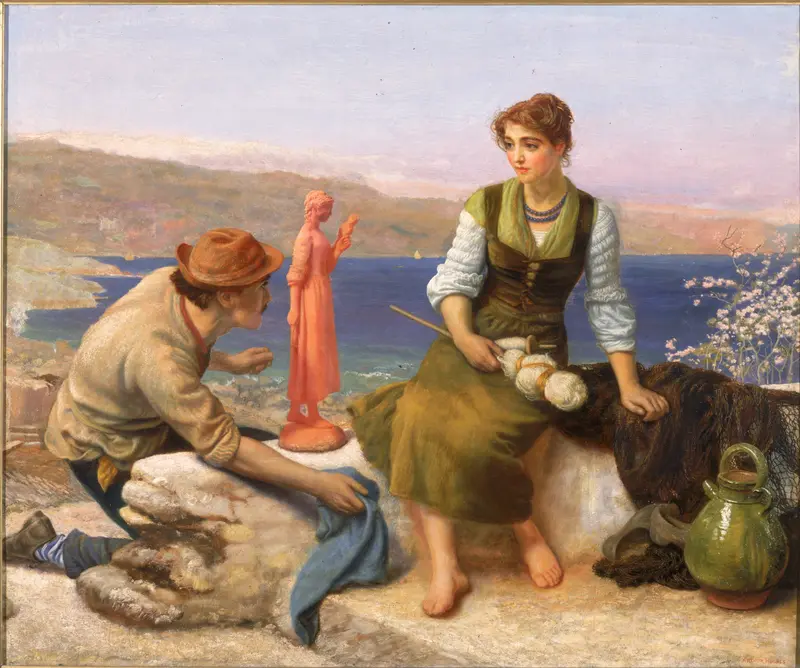
The Potter's Courtship
Arthur Hughes
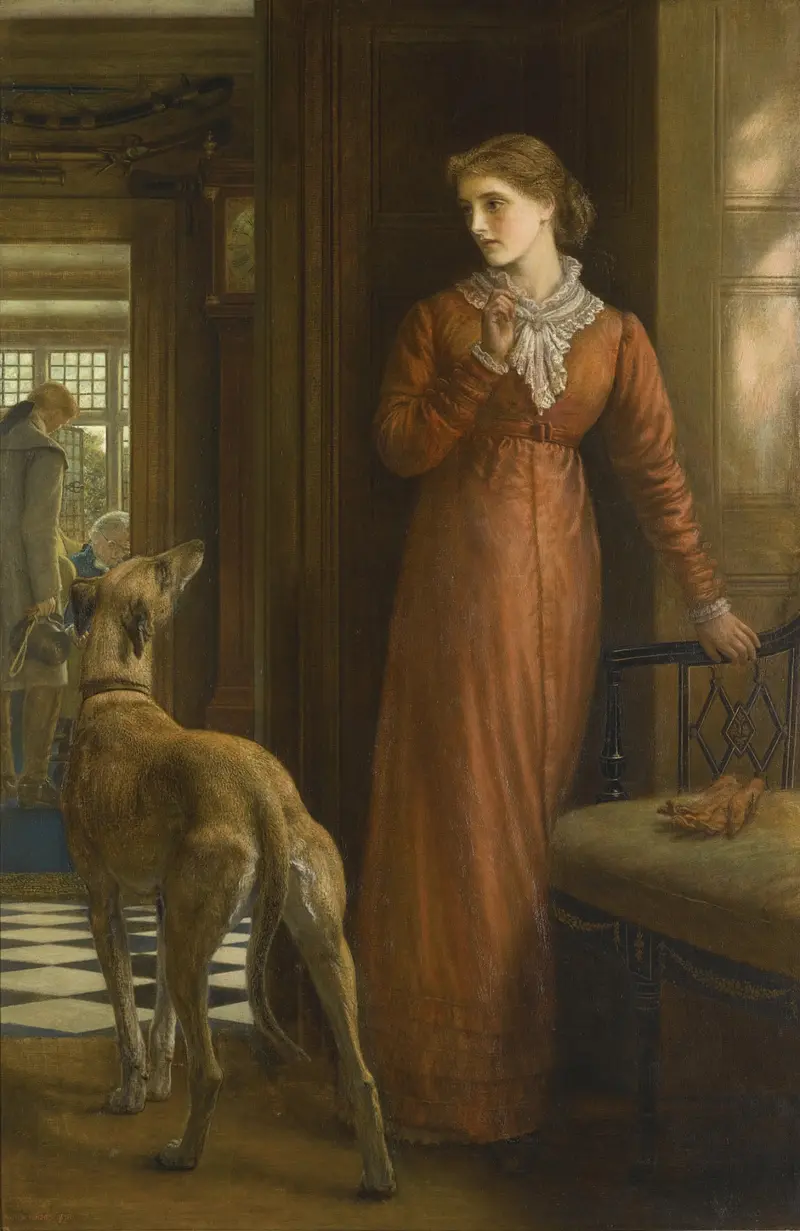
Uncertainty
Arthur Hughes





