
Slope with beeches — History & Facts
When did color learn to lie? Beneath the serene exterior of Slope with Beeches, a tension simmers, quietly echoing the violence of the world outside the canvas. Look to the left at the dense clusters of beech trees whose leaves are painted in vivid greens and yellows, contrasting with the earth tones of the sloping terrain. The interplay of light and shadow creates a sense of movement, almost as if the trees themselves are swaying under an unseen force. The brushwork is both deliberate and fluid, drawing the viewer's eye across the slope, inviting contemplation of the landscape's quiet beauty as it hides deeper truths. Beneath the surface, one can sense an unsettling dissonance.
The vibrant colors convey life and vitality, yet they mask the underlying violence of the era—World War I looming heavy in the backdrop of Bracht’s world. The harmonious composition belies a struggle, as the lushness of nature stands in stark contrast to the chaos of human conflict. Each leaf and trunk holds a whisper of what was lost, a bittersweet reminder of the fragility of peace. Eugen Bracht painted Slope with Beeches in 1918, during a time of profound upheaval in Europe.
This was the final year of the Great War, which saw immense suffering and loss. In the midst of this turmoil, Bracht sought refuge in the beauty of the natural world, creating a serene yet poignant depiction that reflects both the escape and the haunting reality of his time.
More Artworks by Eugen Bracht
Browse all →
Blick auf den Monte Rosa, Westseite
Eugen Bracht
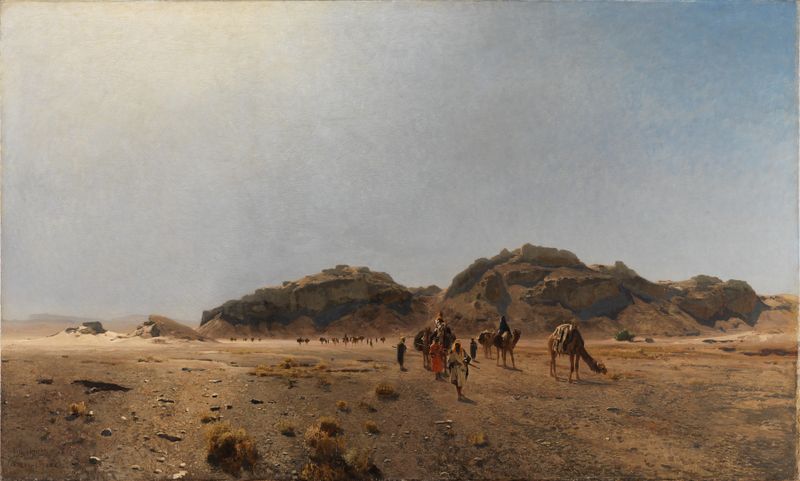
In der Wüste Araba
Eugen Bracht

‘Der alte Hof (n. d. N. Windisch-Eschenbach)’
Eugen Bracht
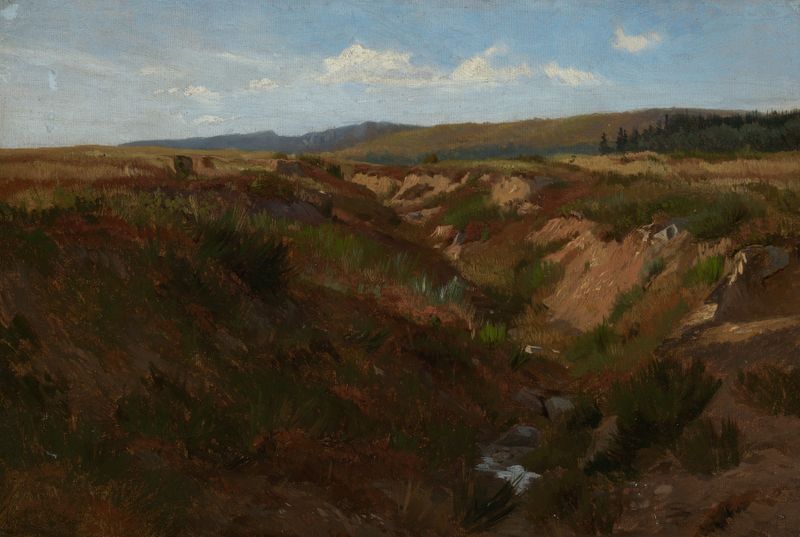
Heide im Soonwald
Eugen Bracht

Bemooste Felsen im Waldtal
Eugen Bracht
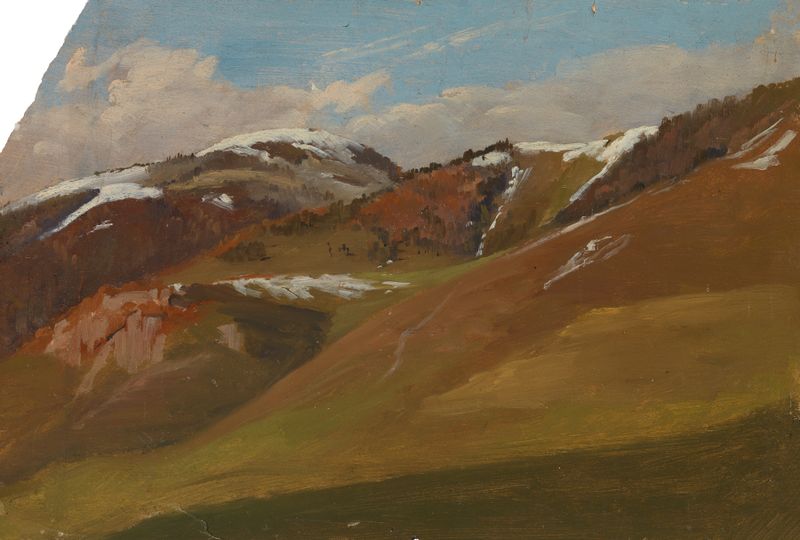
Blick auf Herzogenhorn und Kaiserberg
Eugen Bracht

Das Herzogenhorn im Neuschnee
Eugen Bracht

Abendlandschaft
Eugen Bracht

Nach dem Regenschauer
Eugen Bracht
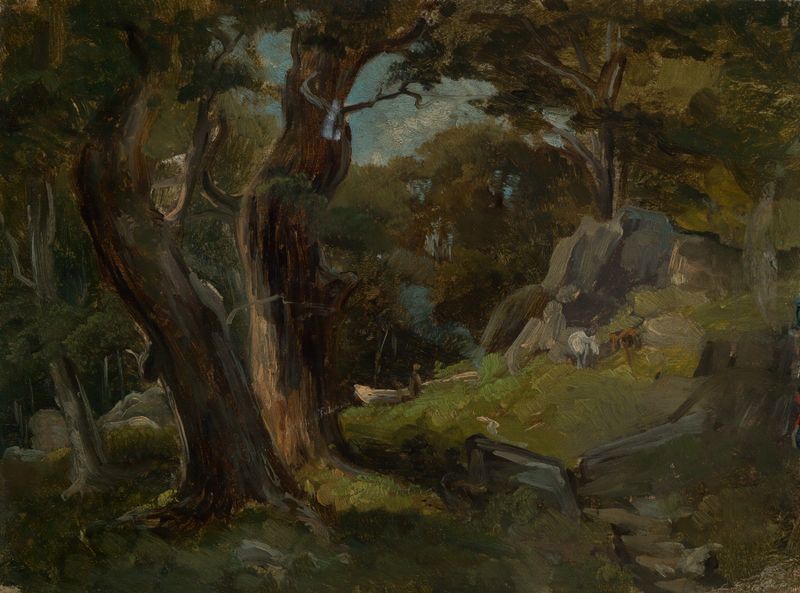
Waldlichtung mit Pferden
Eugen Bracht





