
Spanish horse in a stable — History & Facts
When Théodore Géricault painted Spanish horse in a stable in 1811, he was just twenty years old and still a student, yet already obsessed with the anatomy and spirit of horses—a fascination that would define his short, intense career. This early work belongs to a formative period when Géricault spent hours sketching at the imperial stables of Versailles, seeking to capture not just the animal’s form but its restless energy. The painting is one of several studies he made of horses, which later informed his monumental The Charging Chasseur and the iconic The Raft of the Medusa.
Scholars have long noted how, even in these youthful works, Géricault’s horses seem to pulse with life, setting him apart from his contemporaries. The scene unfolds in the quiet gloom of a stable, where the Spanish horse stands tethered, its powerful body half-turned as if caught between rest and sudden movement. Géricault selects a moment of tension: the horse’s ears are pricked, nostrils flared, and one hoof lifts slightly from the straw-strewn floor, suggesting alertness or impatience. Light falls from an unseen window, tracing the animal’s muscular flank and glinting off its dark, intelligent eye.
The sparse setting, with its rough-hewn beams and simple tack, keeps focus on the horse itself—a living sculpture of strength and sensitivity. Unlike George Stubbs, whose horses often appear calm and idealized, Géricault’s study is all raw potential and nervous grace. The precise early provenance of Spanish horse in a stable remains uncertain, as is typical for Géricault’s student works, which were often kept in private hands or traded among friends and patrons. It is likely that the painting was executed as part of his academic exercises, possibly for the Salon or a private commission, though no definitive record survives.
Over the years, such studies have become prized for their insight into Géricault’s developing style, especially his bold brushwork and acute observation. Today, this work is recognized as a key piece in understanding the artist’s lifelong engagement with the horse as both subject and symbol—a passion that would later find dramatic expression in his mature masterpieces.
More Artworks by Théodore Géricault
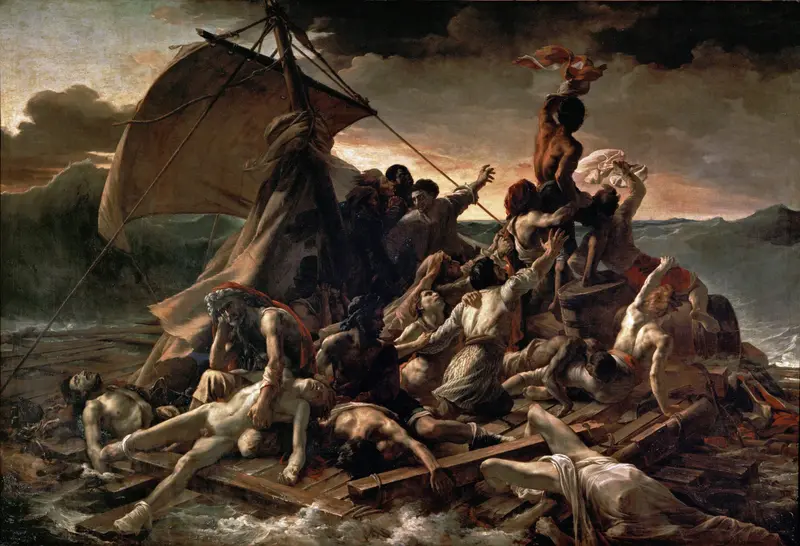
The Raft of the Medusa
Théodore Géricault

Géricault - Le naufrage du radeau de la Méduse, MBA 790
Théodore Géricault
Cattle Market
Théodore Géricault
Evening; Landscape with an Aqueduct
Théodore Géricault
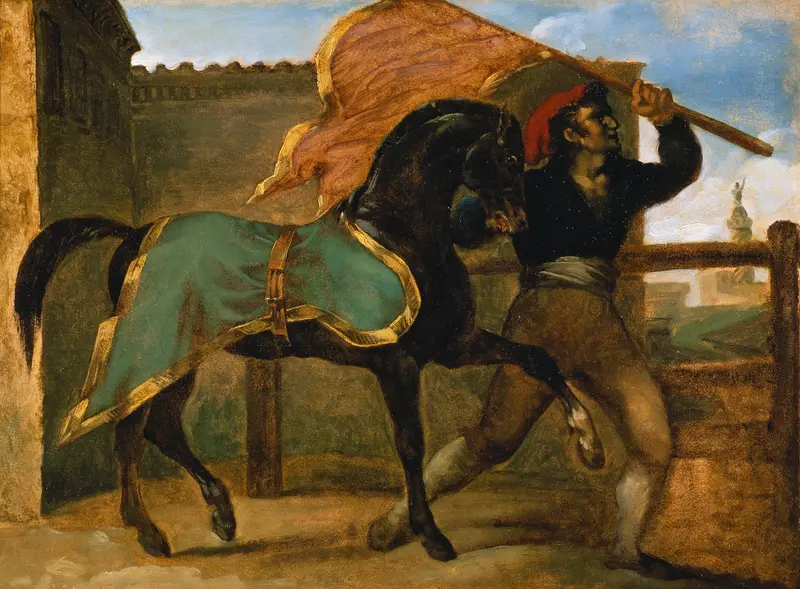
Horse Race
Théodore Géricault

Horses Standing in a Mews
Théodore Géricault
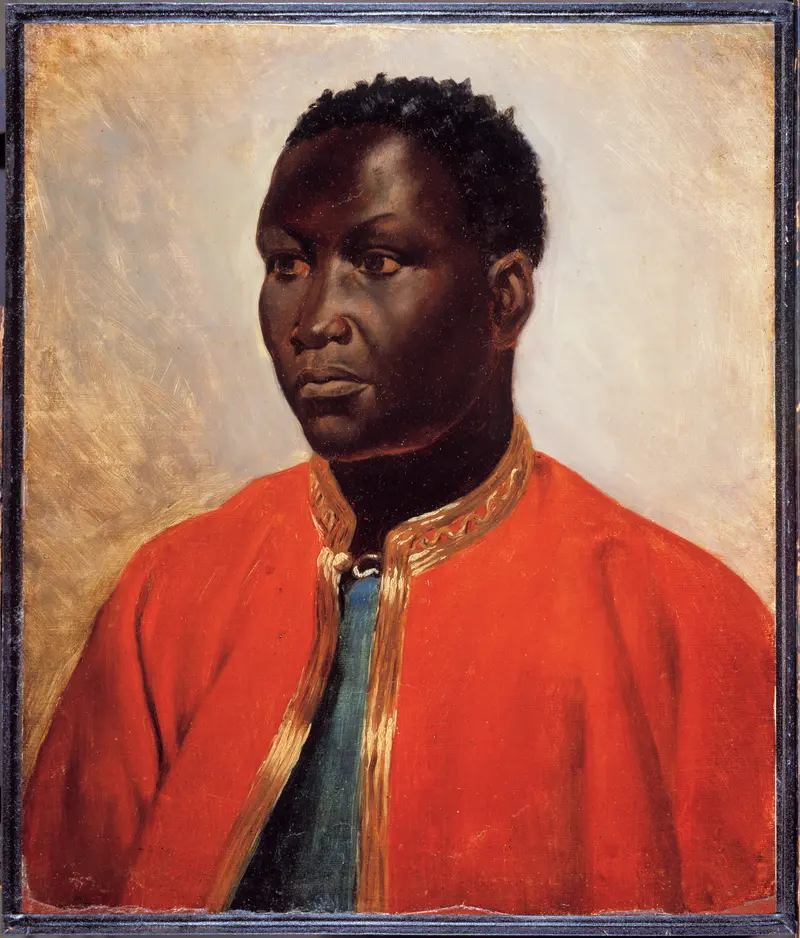
Portrait of a Negro
Théodore Géricault
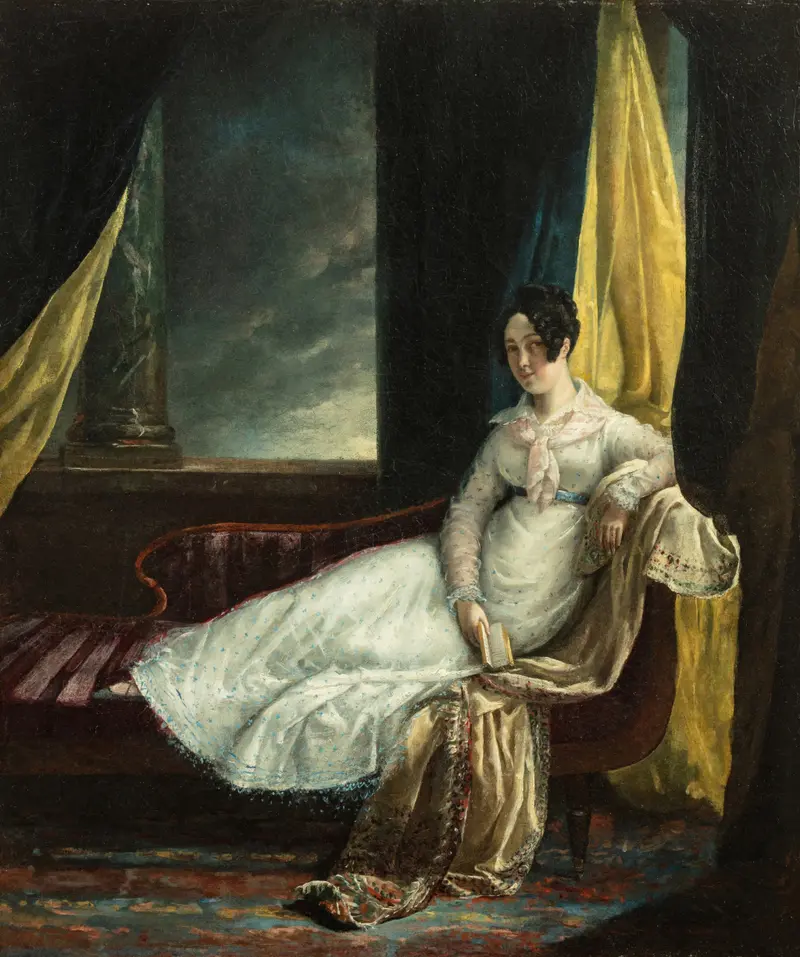
Portrait of Zoë Elmore
Théodore Géricault
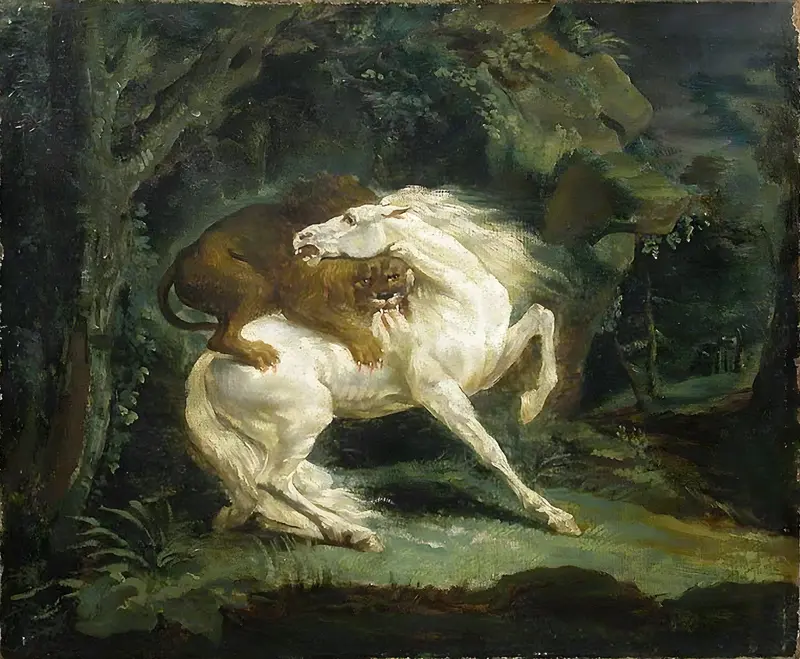
Cheval attaqué par un lion
Théodore Géricault
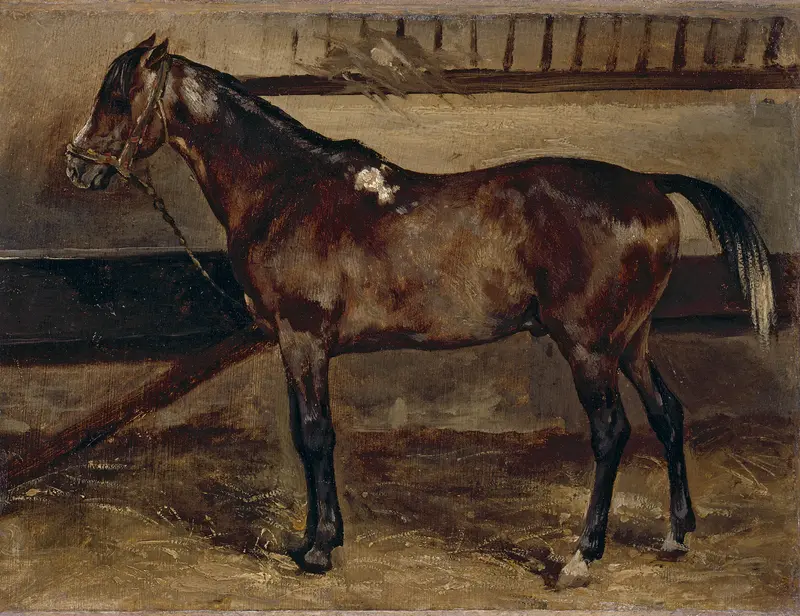
Cheval brun à l'écurie
Théodore Géricault





