
Square in Xanten, with the Church of St. Victor beyond — History & Facts
A shaft of late afternoon light draws the viewer’s gaze from the shadowed brickwork of the town’s edge to the open square, where the twin spires of a distant church rise above the trees. The eye lingers on the gentle bustle of daily life: a woman leans on her cane, a dog noses about the cobbles, and small groups gather in conversation or pass beneath the leafy canopy. The painting’s calm palette of golds and browns, touched with the cool blue of the sky, creates a sense of quiet anticipation, as if the town is pausing between the business of the day and the hush of evening.
Every figure is placed with care, their gestures and postures hinting at stories just out of earshot—children confide in one another, a lone man strides purposefully, while others linger in the square’s soft light. Works like this, created between 1675 and 1725, belong to a tradition that prized the depiction of everyday spaces and the subtle drama of ordinary life. In the Dutch and German lands of this era, such paintings were often commissioned by prosperous townsfolk who recognized their own world in these scenes—familiar streets, local landmarks, and the rituals of communal gathering. The artist, Adriaen van de Velde, was known for his sensitive approach to landscape and townscape, capturing not only the architecture but the lived rhythms of a place.
Though little is recorded about this specific painting’s journey, its presence in a modern collection—documented by a photograph taken in 2017—reminds us how these quiet moments, once so ordinary, have become windows into a vanished world. The next time you look, notice how the light shapes not just the buildings, but the lives unfolding beneath them.
More Artworks by Adriaen van de Velde

Staande stier
Adriaen van de Velde
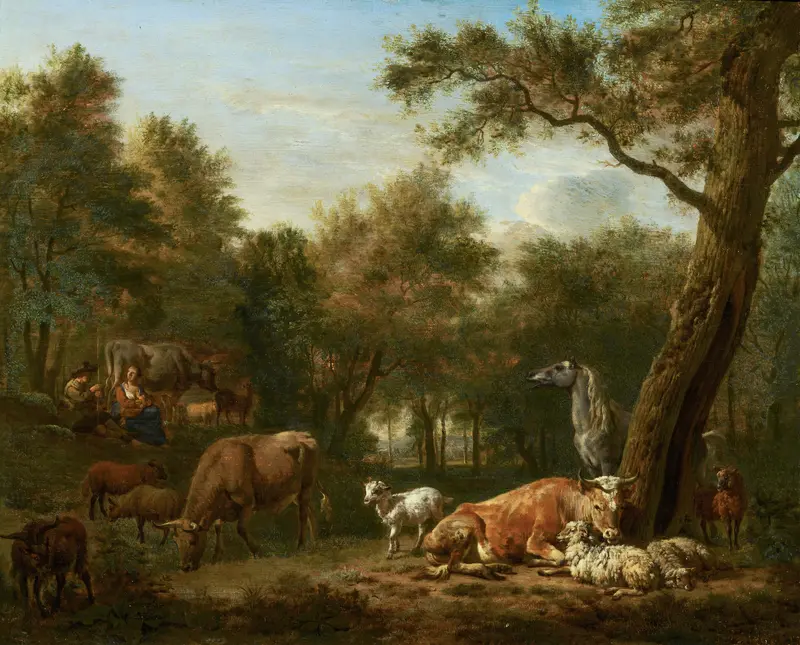
Wooded Landscape with Cattle
Adriaen van de Velde
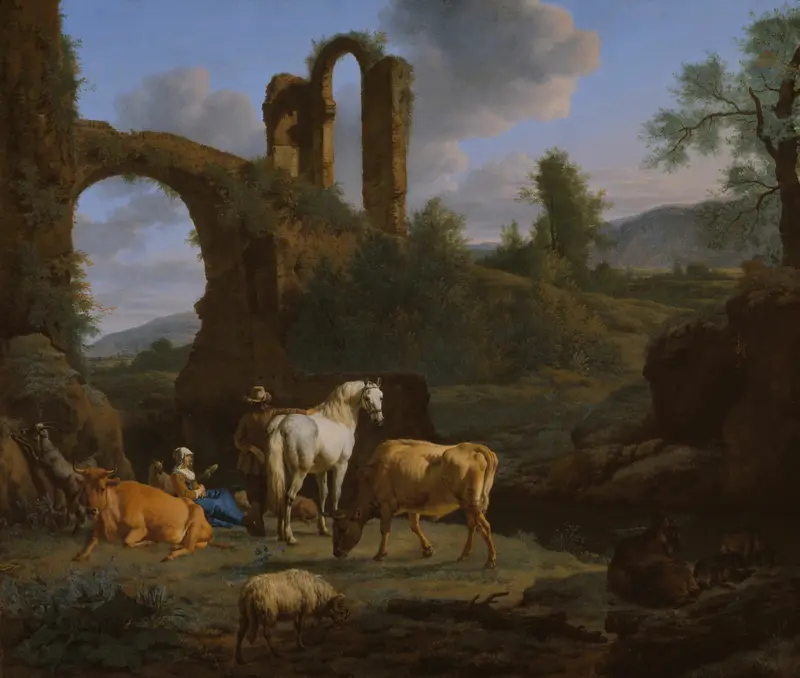
Pastoral Landscape with Ruins
Adriaen van de Velde
Pastoral Landscape with Ruins
Adriaen van de Velde
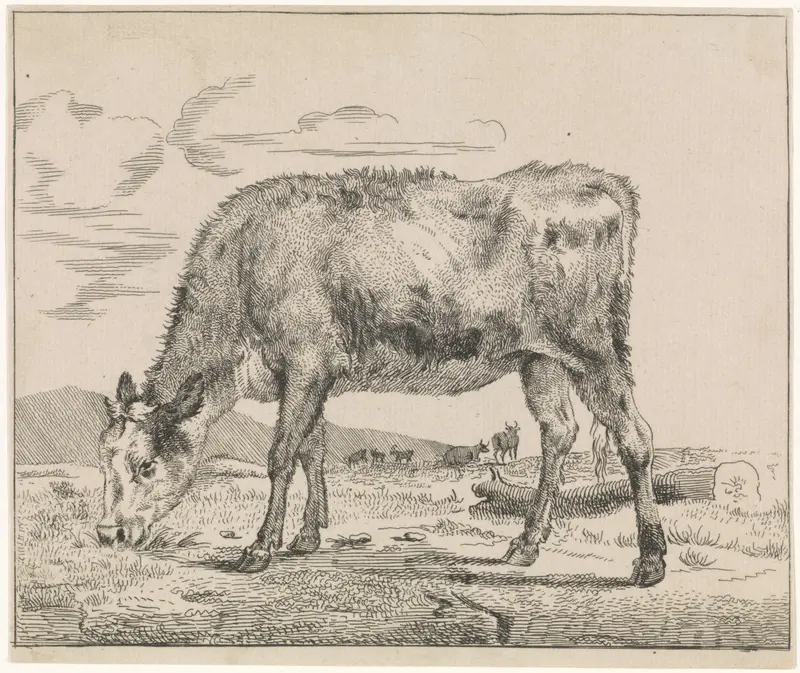
Grazend kalf
Adriaen van de Velde
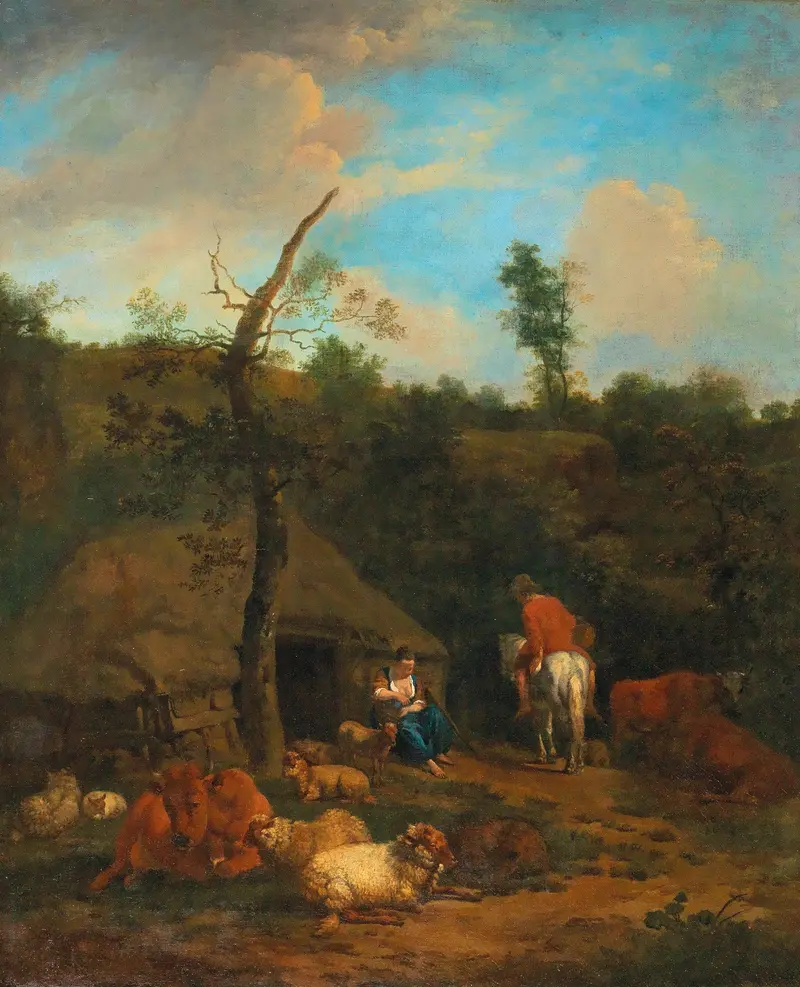
A herdsman and a shepherdess in front of a wooden farmhouse
Adriaen van de Velde
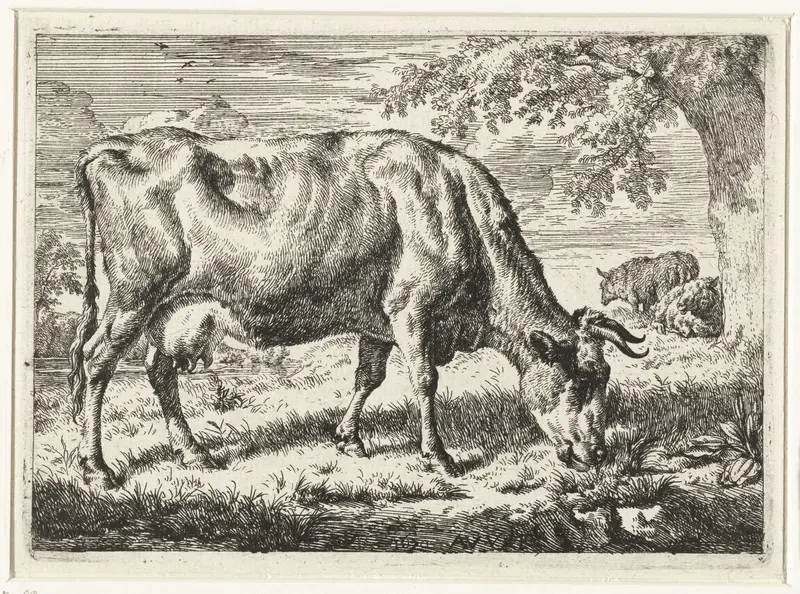
Grazende koe en twee schapen
Adriaen van de Velde
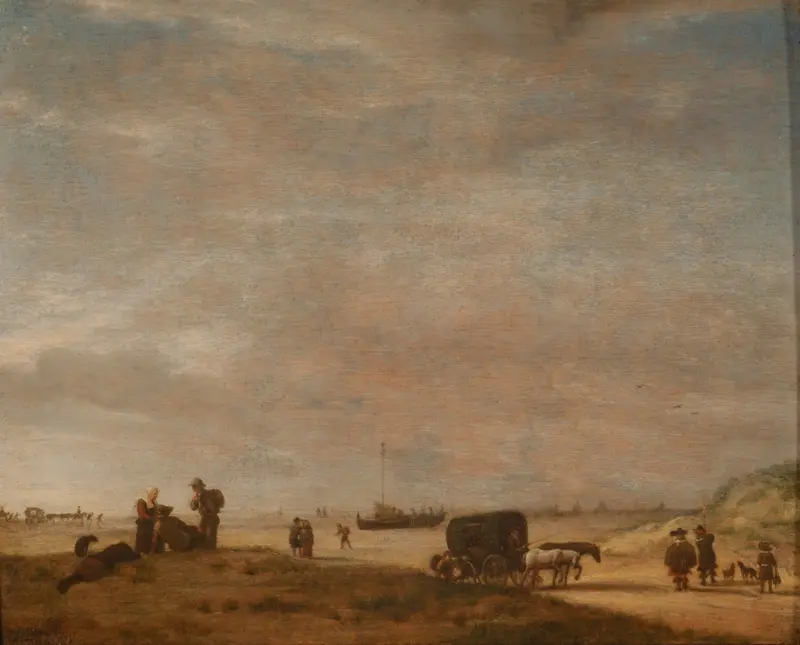
Scheveningen Beach
Adriaen van de Velde
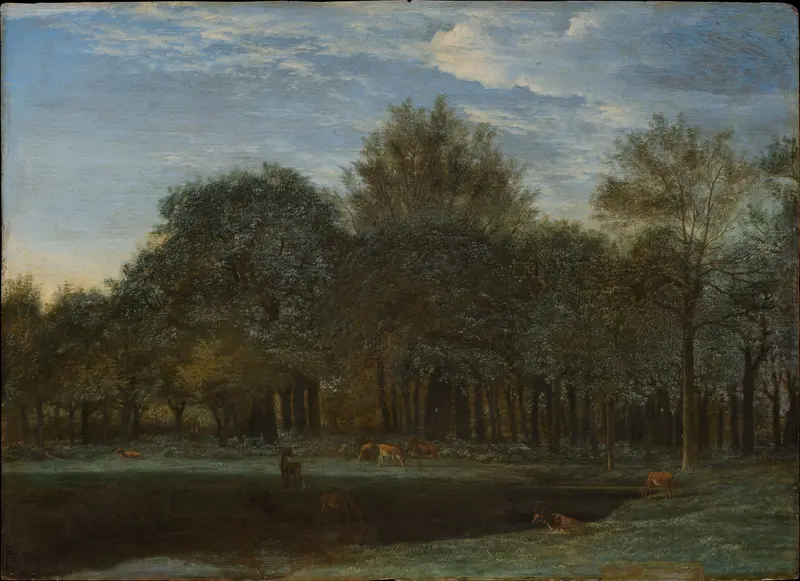
Forest Clearing with Grazing Deer
Adriaen van de Velde
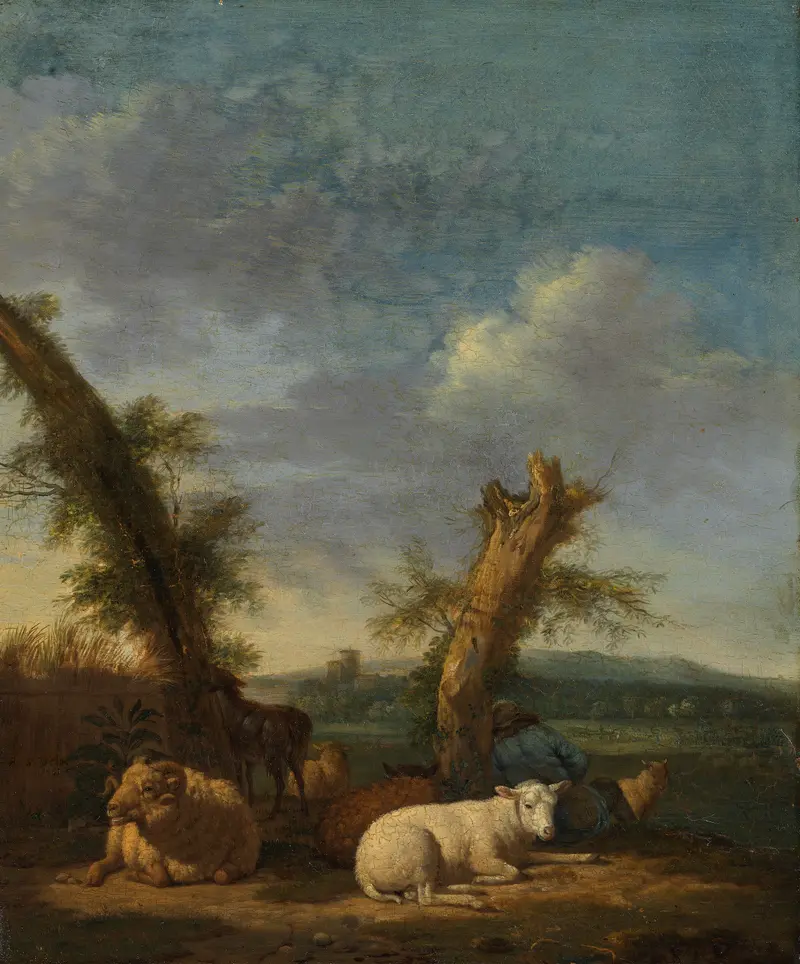
Landscape with Sheep and a Sleeping Shepherd
Adriaen van de Velde
More Genre Scene Art

Banquet of the Officers of the St George Civic Guard
Frans Hals

Rembrandt and Saskia in the Scene of the Prodigal Son
Rembrandt van Rijn

Bal du moulin de la Galette
Pierre-Auguste Renoir

Quadrille at the Moulin Rouge
Henri de Toulouse-Lautrec

A Burial at Ornans
Gustave Courbet

When Will You Marry?
Paul Gauguin